
Hellebores bloom in winter and early spring under deciduous trees, when most perennials are still dormant. Give them part shade, soil that stays moist but drains, and a crown set at or slightly above the soil. All parts are toxic if chewed. Wear gloves when you cut.

Christmas rose and Lenten hybrids are not the same calendar. Sort that on Types of Hellebores. Leaf cutback lives on Pruning Hellebores. Pots live on Hellebores in Containers.
Part shade, moist soil, and drainage
| Factor | Recommended | Avoid |
|---|---|---|
| Light | Morning sun or dappled canopy; summer shade | Hot west bake after bloom; deep dark shade that thins flower |
| Soil | Moist, organic, free-draining; slightly alkaline is fine | A winter puddle on the crown |
| Crown | At or slightly above soil level | Burying the growing point |
| Water | Even moisture the first seasons; deep soaks in drought | Soggy mulch packed over the crown |
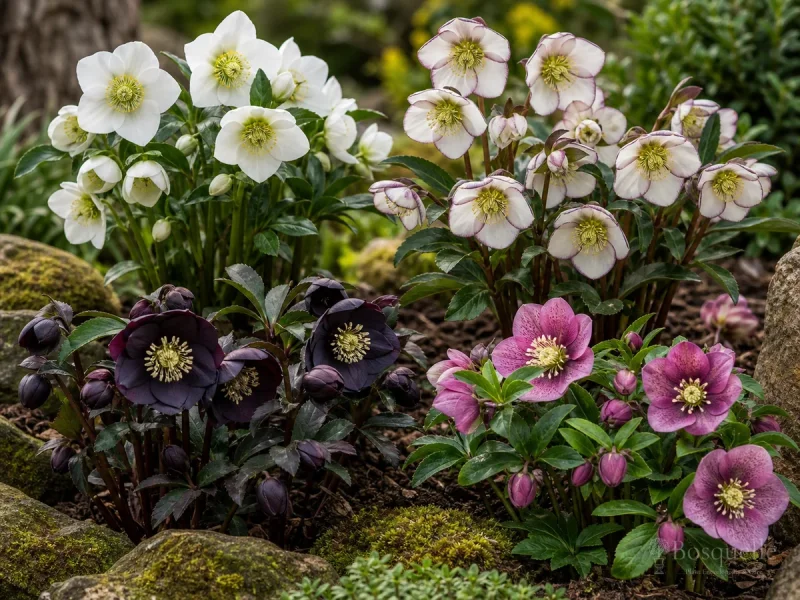
Plant under deciduous trees so winter light reaches the clump and summer shade arrives with the leaves. A site that grows hostas will usually grow hellebores, as long as water does not sit. Clay is workable if you add organic matter and plant a little high.
Example: Ivory Prince and Phoebe want the same shade and drainage. Color does not rewrite the crown. A wet bowl kills more plants than a missed watering.
Mulch around the plant, not over the growing point. Two inches of leaf mold or shredded bark holds moisture without sealing the crown. Pull the mulch back if rain packs it into a wet collar.
Browse bloom window and habit on Types of Hellebores before you buy by flower color alone. Corsican and stinking types take more sun than a classic Lenten hybrid, but they still need drain.
Deer usually leave hellebores alone. That is not a reason to site them in a soggy low spot. Shade is the job. Wet clay is the fail.
If the bed is a summer bake with no tree canopy, wait for a deciduous shrub or a north wall. Afternoon scorch after bloom is common on west exposures. Morning light is enough for flower.
Neutral to slightly alkaline soil is the usual woodland match. Slightly acid beds still work if they drain. Do not pack a peat-heavy azalea mix into a bowl that holds water. Organic matter in the top layer is enough. A winter puddle is not a fertility problem.
Salt and wind on an open coast are harder on evergreen leaves than on the crown, as long as water leaves. A still courtyard with drip irrigation on clay is a poorer site than a windy woodland edge with leaf mold and grit.
Plant the crown high and leave the clump
Set the knobbly growing point just under a thin cover of soil, or level with the surface. Too deep and flower thins. Too high and the crown dries. Firm gently. Water once to settle, then keep even moisture while roots leave the nursery mix.
Clumps are slow. A small pot may take two or three years to look like a garden plant. Do not dig every season to “check.” Divide only when a mature clump is crowded, in early spring or autumn — the lift and split of that clump is on Dividing Hellebores.
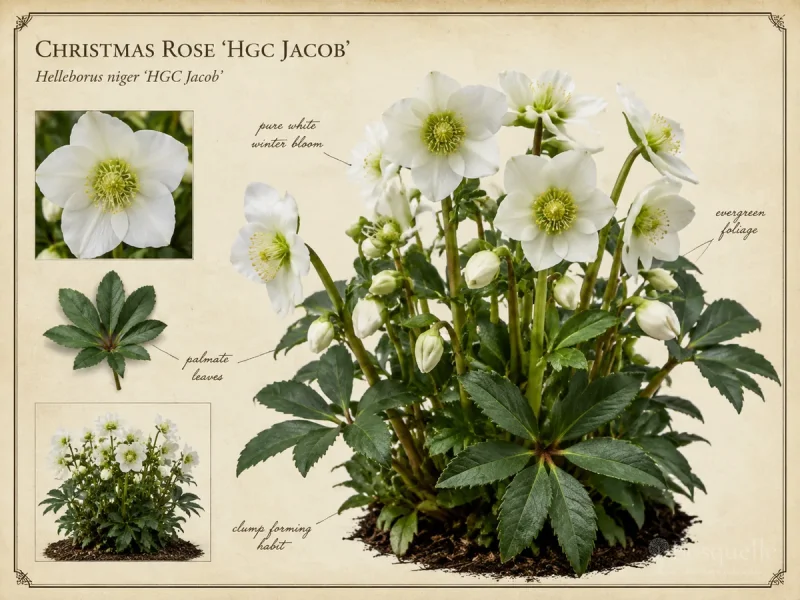
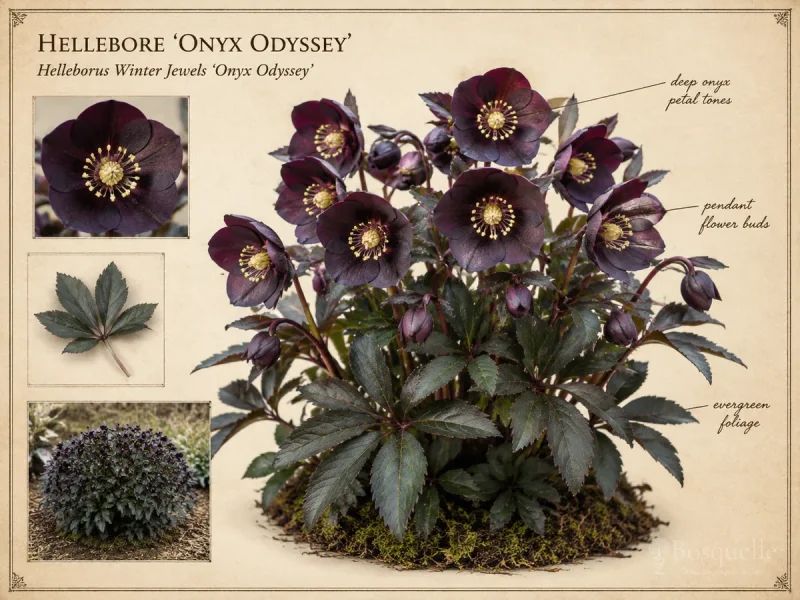
HGC Jacob is a Christmas rose type that often opens earlier whites. Onyx Odyssey is a dark Lenten hybrid on a later calendar. Corsican hellebore (Corsican hellebore) is a taller stem-forming species with different leaf-cut timing. Confirm class before you copy a neighbor’s prune date.
Plant in spring or autumn when soil is workable. Avoid midsummer transplant into heat. New plants dry out in the potting mix faster than the surrounding soil, so check the root ball the first months.
Space about 18 inches for hybrids so air moves and you can cut leaves without crushing neighbors. Taller species need more room. Do not jam a Corsican against a path that snags sleeves.
A nursery gallon that has sat wet in a shop aisle needs a dry bright day before the hole. The soilless mix in the pot dries faster than garden soil, so water the root ball even when the bed feels damp. Once roots run out, ease off.
If you must move a young plant, do it in cool weather and keep the root ball intact. A mature clump with a thick crown is a stay-put plant. Replace by planting a new young plant nearby, not by tearing the old one apart unless you are deliberately dividing.
Water, feed, gloves, and toxicity
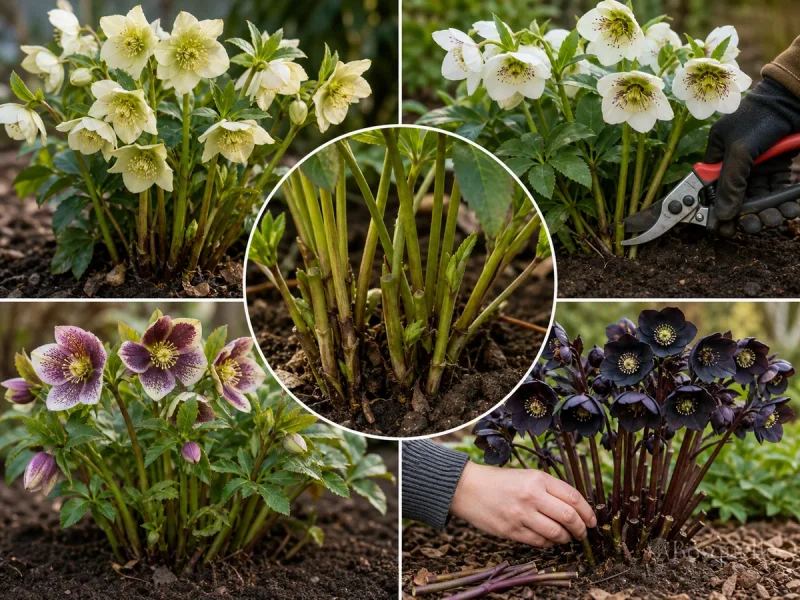
All hellebores are toxic if ingested. Keep pets and children from chewing leaves, roots, or seed. Sap can irritate skin. Wear gloves when you prune or divide. Wash tools after a cut. This is an ornamental, not an edible.
Water new plantings through the first growing season. Once established, water in a long dry spell, deeply at the base, and let the surface dry between soaks. Overhead spray on spotted leaves spreads disease. Water in the morning.
Feed lightly after bloom if growth is thin — compost or a modest organic fertilizer. Skip heavy late nitrogen that pushes soft growth into heat. Most garden beds with leaf mold need little extra.
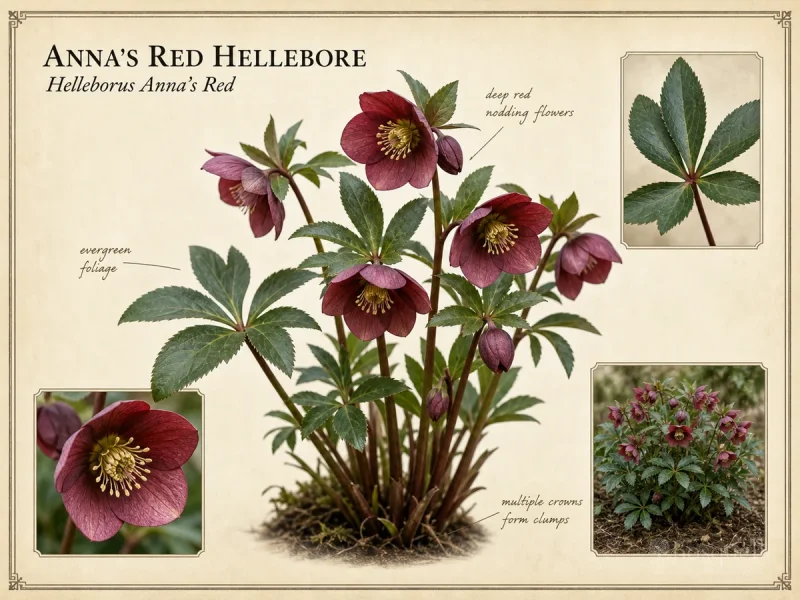
Anna's Red is a garden hybrid with the same water and glove rule. Stinking hellebore (stinking hellebore) reseeds and has a short-lived stem; crush a leaf and you will know the common name. Pink Frost is an interspecific type — still toxic, still drained shade.
Aphids sit on soft new growth. Leaf spot shows as dark marks on old foliage. Cut those leaves and bag them. Crown rot tracks a wet winter bowl. Raise the next plant. More fungicide will not fix a puddle.
Seed and roots are as toxic as leaves. Do not use hellebore as a kitchen garnish. Wash tools after a cut. This is a shade ornamental, not an herb.
Slugs hide in dense old foliage. The winter leaf cut removes cover as well as spotted tissue. Check the crown after a wet week. A clean open crown is the first step.
Bloom window, leaf cut, and next jobs
Christmas rose types often open midwinter. Lenten hybrids carry late winter into spring. Cut last year’s hybridus and niger leaves before flower stems rise so blooms sit clean. Stem-forming species such as Corsican hellebore and Stinking hellebore wait until after flower. The full cut lives on Pruning Hellebores.
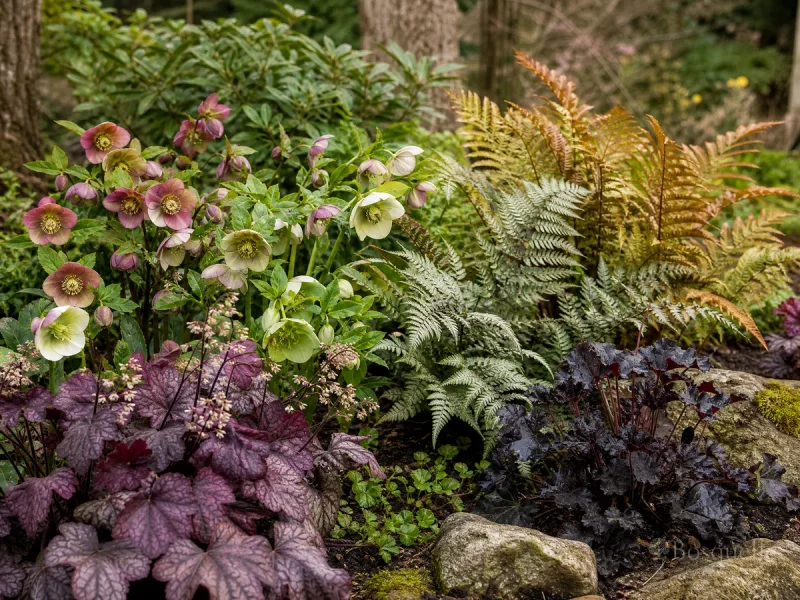
Partners that share this shade and drainage live on Hellebore Companion Plants. Deep pots live on Hellebores in Containers.
If bloom was poor, check shade that is too dark, a buried crown, or a first-year plant that is still settling. Do not flood a quiet clump. Wait a second winter before you replace it, unless the crown is mush.
Label the clump. Mixed hybrids look the same in leaf by June. Write Christmas vs Lenten vs species on a stake that survives winter so next year’s cut lands on the right calendar.
Self-sown seedlings appear around hybridus. Move them while small if you want them. Named colors often do not come true. Buy named plants if you need the same flower.
Windburned leaves after a hard winter are a reason to cut, not a reason to move the plant. Keep the site. Cut the leaves. Leave the crown.
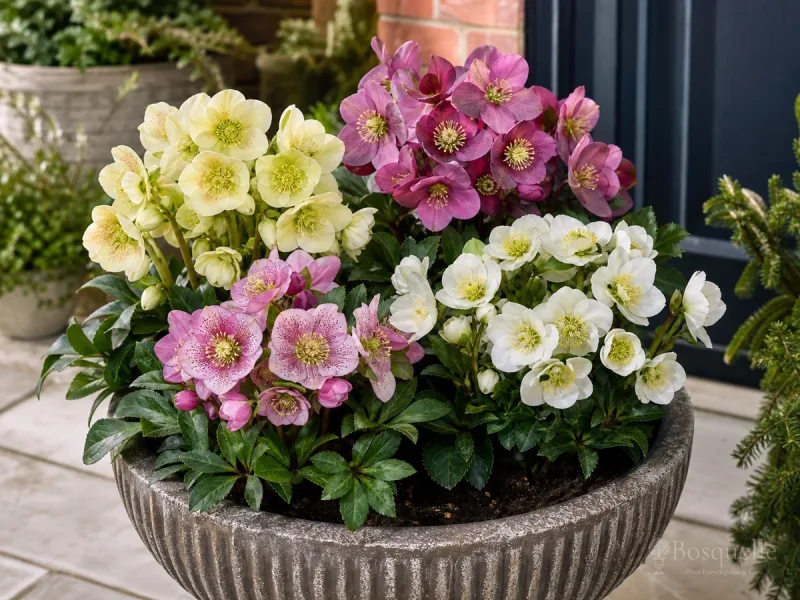
Indoor forcing is not the default. These are outdoor woodland plants. A dim heated room invites weak growth. Patio pots are a winter display that still needs drain and summer shade.
When two instincts compete — chase every flower color versus master one drained shade hole — master the hole. Color is easy to swap. A wet clay bowl wastes every type.
Keep one care sentence: part shade, moist drain, high crown, water to establish, gloves, toxic if chewed. Types, prune, partners, and pots have their own pages. This page is that sentence, expanded so you can site and keep the plant.
Late frost can brown open flowers. That is cosmetic. Do not cover the clump with plastic that sweats on the crown. A light cloth on a forecast night is enough if you care about the show. Remove it in the morning.
If neighbors say hellebores are “just Christmas roses,” check the Latin. Most garden bags are Lenten hybrids. A true niger often wants even sharper winter drain. Match the plant you bought, then keep the same shade and high-crown rule.
Keep a short note: class (Christmas, Lenten, interspecific, or species), cultivar, and plant year. Next year that note beats buying a stem-forming Corsican when you wanted a low hybridus you can cut before bloom. Write it on a stake that survives winter.
When extra nitrogen made floppy soft growth, skip the feed this cycle and judge again next summer. Replacing a starved crown without changing drainage repeats the same fail. Sun, drain, and a high crown do more than another soluble dose.
Indoor forcing is a florist extra. Garden plants stay outdoors. A dim heated room invites weak growth and a wet crown.
FAQ
Are hellebores toxic to dogs, cats, or children?
Yes. All parts are toxic if chewed. Wear gloves when you cut. Keep pets and children from eating foliage or roots.
Do hellebores need sun or shade?
Part shade. Morning light or a deciduous canopy. Hot afternoon sun after bloom scorches leaves.
When should I plant hellebores?
Spring or autumn in workable soil. Avoid midsummer heat for new transplants. Set the crown high.
How often should I water hellebores?
Keep new plants evenly moist the first seasons. Then water in drought, deeply at the base. Do not leave a wet crown.
Why won't my hellebore bloom?
Often too much shade, a buried crown, or a young plant still settling. Wait a second winter before you replace it.
When do I cut the leaves?
Hybridus and niger: before flower stems rise. Corsican and stinking types: after flower. See Pruning Hellebores.
Can I grow hellebores in a pot?
Yes in a deep drained pot. See Hellebores in Containers.
Do they need fertilizer?
Little. Compost or a light feed after bloom if growth is thin. Skip heavy nitrogen.
Are Christmas rose and Lenten rose the same?
No. Christmas rose (niger) often opens earlier. Lenten hybrids bloom later. See Types of Hellebores.
Where is planting depth?
Crown at or slightly above soil. Do not bury the growing point. Cool-season plant-out is on this page.
Can I divide hellebores?
Yes, a crowded Lenten clump. Lift, split so each piece has a growing point, and replant high. See Dividing Hellebores.
Related guides

Recommended plants




This note is part of Hellebore Guides.
More first-season notes by plant are gathered in How to Grow Guides.
Updated: Reviewed by Bosquelle Editors