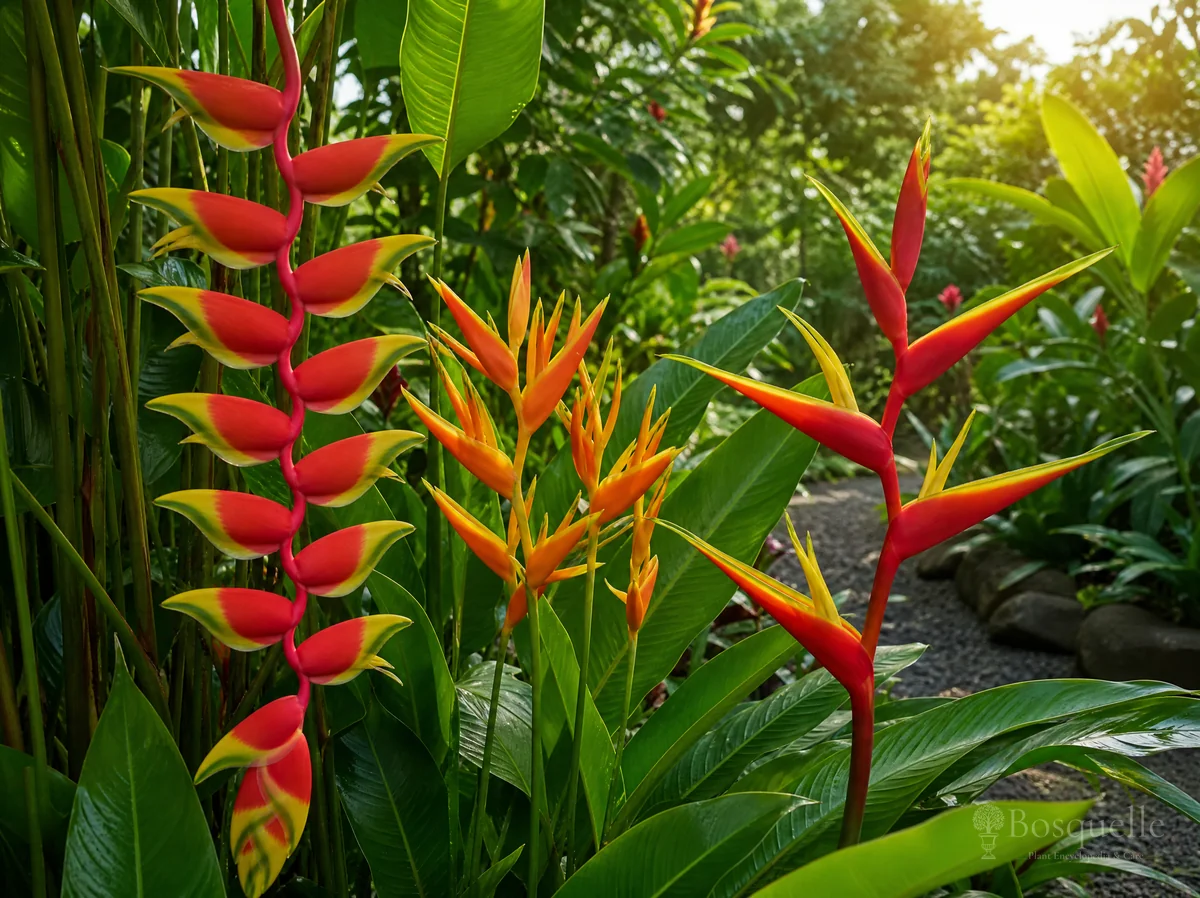
Grow heliconia in part sun and moist, fertile soil. Heliconia is also sold as lobster claw. Bird of paradise is a different plant.

Give it part sun, moist soil, and shelter from wind
| Factor | Recommended | Avoid |
|---|---|---|
| Sun | Part sun or light shade. Morning sun with afternoon shade is a good default | Do not site it in a windy, open lawn where the leaves tear along the veins |
| Soil | Fertile, moist soil that still drains. Mix compost into sandy ground | Do not plant in dry, lean sand with no organic matter |
| Water | Keep the soil moist through the growing season | Do not skip water because the tag looks tropical |
| Frost | Tops die back in a freeze; rhizomes sprout when it warms | Do not leave a frozen clump in a pot outdoors through a hard freeze |
| Feed | A general fertilizer with micronutrients three times during the growing season | Do not skip feed in rich soil and then expect heavy bloom |
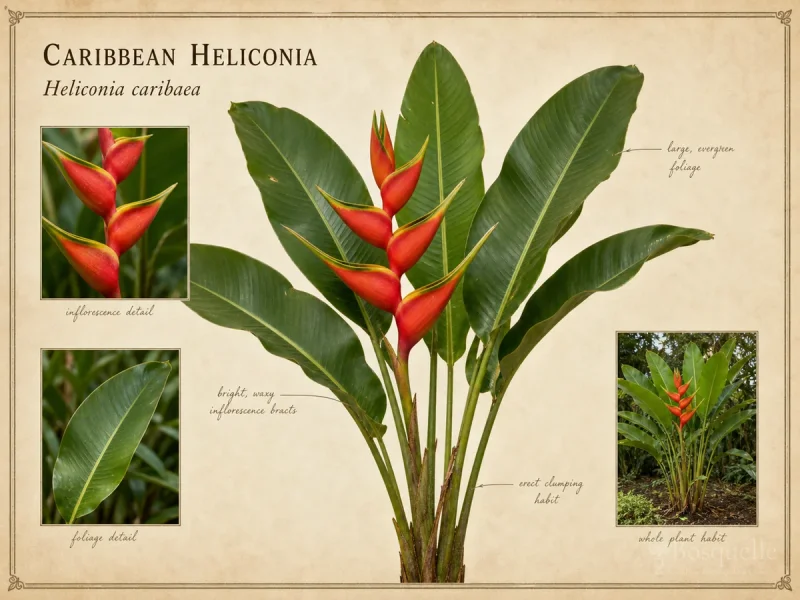
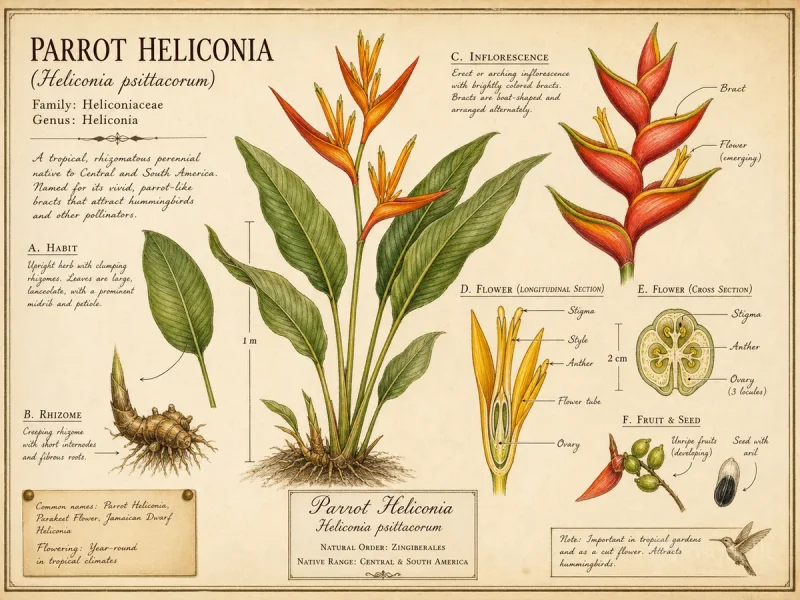
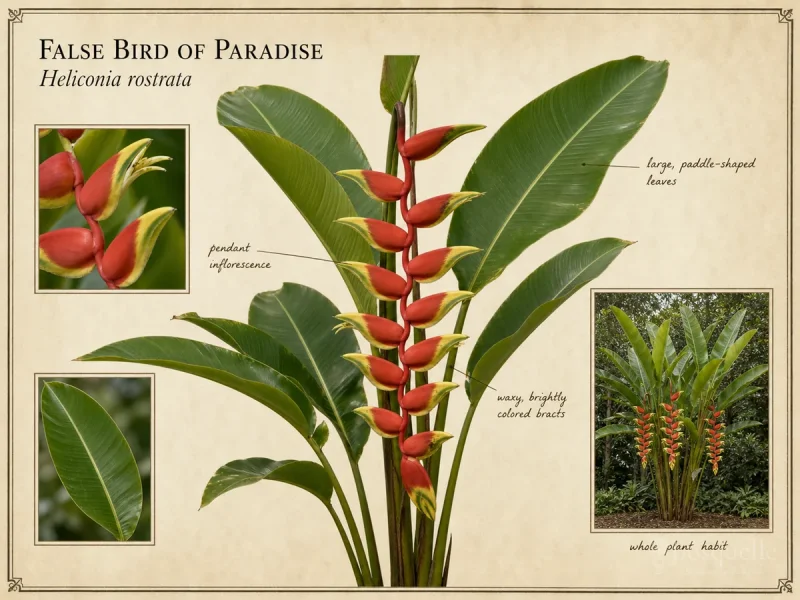
Heliconia is a tropical rhizome with banana-like leaves and waxy, long-lasting bracts. Give it part sun and soil that stays moist. It will sit in wet ground for a while, but it does not tolerate drought or salt spray, so skip a dry bed and a coastal exposure. Shelter the clump from wind so the leaves do not shred. [1] [2] A freeze kills the tops. The rhizomes usually sprout again when the weather warms. Caribbean heliconia wants that same moisture. Parrot heliconia and hanging lobster claw share the water and the wind shelter, but you buy those for a different size and bract habit — pick the kind on Types of Heliconia.
- Site it in part sun, with a wall, fence, or canopy on the windward side. Open wind tatters the leaves.
- Keep the soil moist. Water when the surface starts to dry, and do not let a new clump bake in full afternoon sun on sand.
- Feed during the growing season, about three times a year with a general fertilizer that includes micronutrients.
Does heliconia need full sun?
Part sun is the default. Some kinds, including hanging lobster claw, can take more sun if the soil stays moist. A windy full-sun lawn shreds the leaves.
How often should I water heliconia?
Keep the soil moist through the growing season. Do not let it dry out between waterings the way you would a drought-tolerant shrub.
Will frost kill heliconia?
A freeze kills the tops. In a frost-free garden the clump stays evergreen. In a cooler garden, the rhizomes often sprout again when it warms, or you grow a smaller kind in a pot you can bring inside.
Is heliconia drought tolerant?
No. Keep the soil moist. It is not a plant for a dry bed or a salty coastal strip.
How to plant heliconia
Plant when the weather is warm. Set a nursery plant at the same depth it grew in the pot, or set a rhizome so the top of the root mass sits at grade or just under the surface. Leave about 3 to 5 feet between clumps. Parrot heliconia especially runs; put in a root barrier if you do not want it in the next bed.
- Plant only after the soil is warm. Compost the whole bed if the ground is sandy, so it holds moisture.
- Set the rhizome or root ball at grade or no more than an inch or two under. Do not bury it like a deep tulip.
- Space clumps 3 to 5 feet apart. Install a root barrier if you need a hard edge.
- Water in, then keep the soil moist while it roots.
How deep do I plant a heliconia rhizome?
Set it at grade or just under the surface — the same depth it grew in the pot. Do not bury it like a tulip.
How to grow heliconia in a pot
In a garden that freezes hard, grow a smaller kind in a pot with a drainage hole and bring it inside before the first frost. A giant Caribbean clump belongs in the ground only where frost stays off. [3]
- Pick a compact kind such as parrot heliconia, not a 12-foot Caribbean clump.
- Use a pot with a hole. Fill it with a fertile mix that stays moist but can drain.
- Keep the mix moist through the growing season, and feed while it is in active growth.
- Move the pot inside before a freeze. Give it the brightest, warmest room you have, and do not leave it on an unheated porch.
Can I grow heliconia in a pot?
Yes, if you pick a smaller kind such as parrot heliconia, use a pot with a hole, and keep the mix moist. Bring it in before a freeze.
Cut the cane at the ground after it flowers
Each shoot flowers once. After that, that cane dies, and new shoots come from the rhizome. Cut the whole cane at the ground — when the bracts already show the color you want if you are taking a stem for a vase, or when they fade if you are leaving it on the plant. [4]
- If you want a vase, cut the whole cane at the ground when the bracts already show the color you want, then stand the stem in water right away.
- If the bracts have already browned, still cut that cane to the ground so new shoots can come up clean.
- After a freeze, wait until the danger of another cold night has passed, then cut the dead stalks to the ground.
When do I cut heliconia canes?
Cut the whole cane at the ground after it flowers. Take it for a vase while the bracts still hold color, or cut a faded cane the same way. After a freeze, wait until warm weather holds, then cut the dead stalks.
Not bird of paradise — and not a banana or canna
Bird of paradise is Strelitzia. The shop flower is a stiff orange or white crane bloom, not a waxy heliconia bract. Grow that plant on How to Grow Bird of Paradise. Confirm the Latin on the tag. False bird of paradise is a nursery name for heliconia, not a second Strelitzia.
Banana is Musa — see How to Grow Banana. The leaves look similar; the bracts do not. Canna is a different rhizome with a different flower — see How to Grow Canna Lilies. Tags sometimes say Japanese canna for parrot heliconia. Check for Heliconia on the label.
Is heliconia the same as bird of paradise?
No. Heliconia has waxy boat-shaped bracts. Bird of paradise is Strelitzia, with a crane flower. They are not interchangeable.
How to divide heliconia
Start a new clump from a large section of rhizome, not from a single leafless scrap. Divide in warm weather, when the plant is growing.
- Wait until the clump is crowded, then lift a section with several shoots and a thick piece of rhizome.
- Replant each piece at the same depth it grew before. Do not bury the shoots.
- Water in, and keep the soil moist until new growth is obvious.
How do I divide heliconia?
Lift a large section with several shoots, replant it at the same depth, and keep it moist. A nursery plant is still the usual start.
If the leaves shred, the site is too windy — move it to a sheltered, moist bed.
FAQ
Can I grow it as a houseplant all year?
A smaller kind can sit in a bright, warm room, but it wants more heat and humidity than most houses give. Most gardeners summer a pot outside and bring it in before frost. A giant Caribbean clump is a ground plant, not a windowsill.
Can I grow it from seed?
Seed is slow and often variable. Division from a large clump is the usual start, or buy a nursery plant.
Related guides

Recommended plants
References
- [1] UF/IFAS Extension -
https://ask.ifas.ufl.edu/publication/FP249 - [2] UF/IFAS Gardening Solutions -
https://gardeningsolutions.ifas.ufl.edu/plants/ornamentals/heliconia/ - [3] University of Wisconsin Horticulture -
https://hort.extension.wisc.edu/articles/heliconias/ - [4] UF/IFAS Extension Charlotte County -
https://blogs.ifas.ufl.edu/charlotteco/2017/11/03/called-wild-bananas-false-birds-paradise-plant-now-answers-heliconia/
This note is part of Heliconia Guides.
More first-season notes by plant are gathered in How to Grow Guides.
Updated: Reviewed by Bosquelle Editors