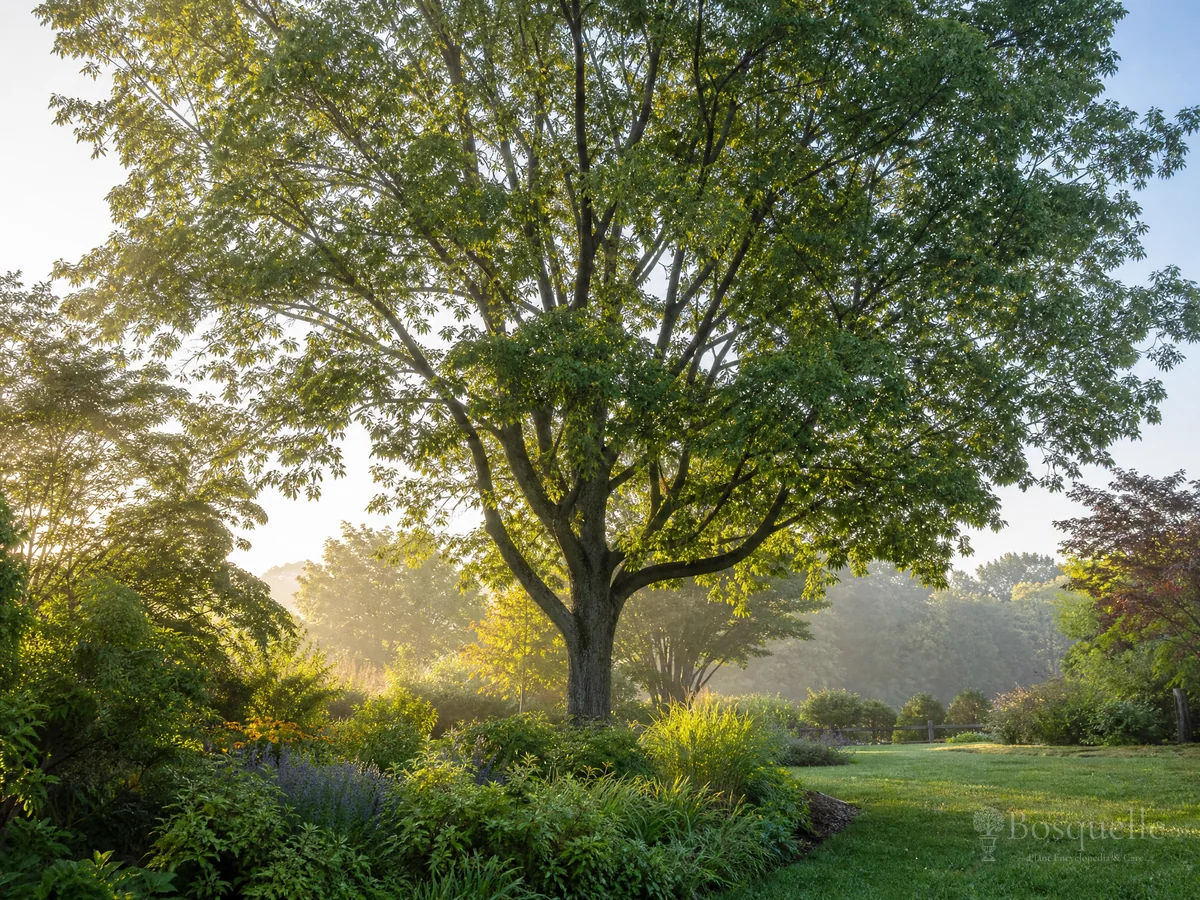
Grow hackberry in full sun, on soil that drains, and water it through the first year. Hackberry is Celtis occidentalis.
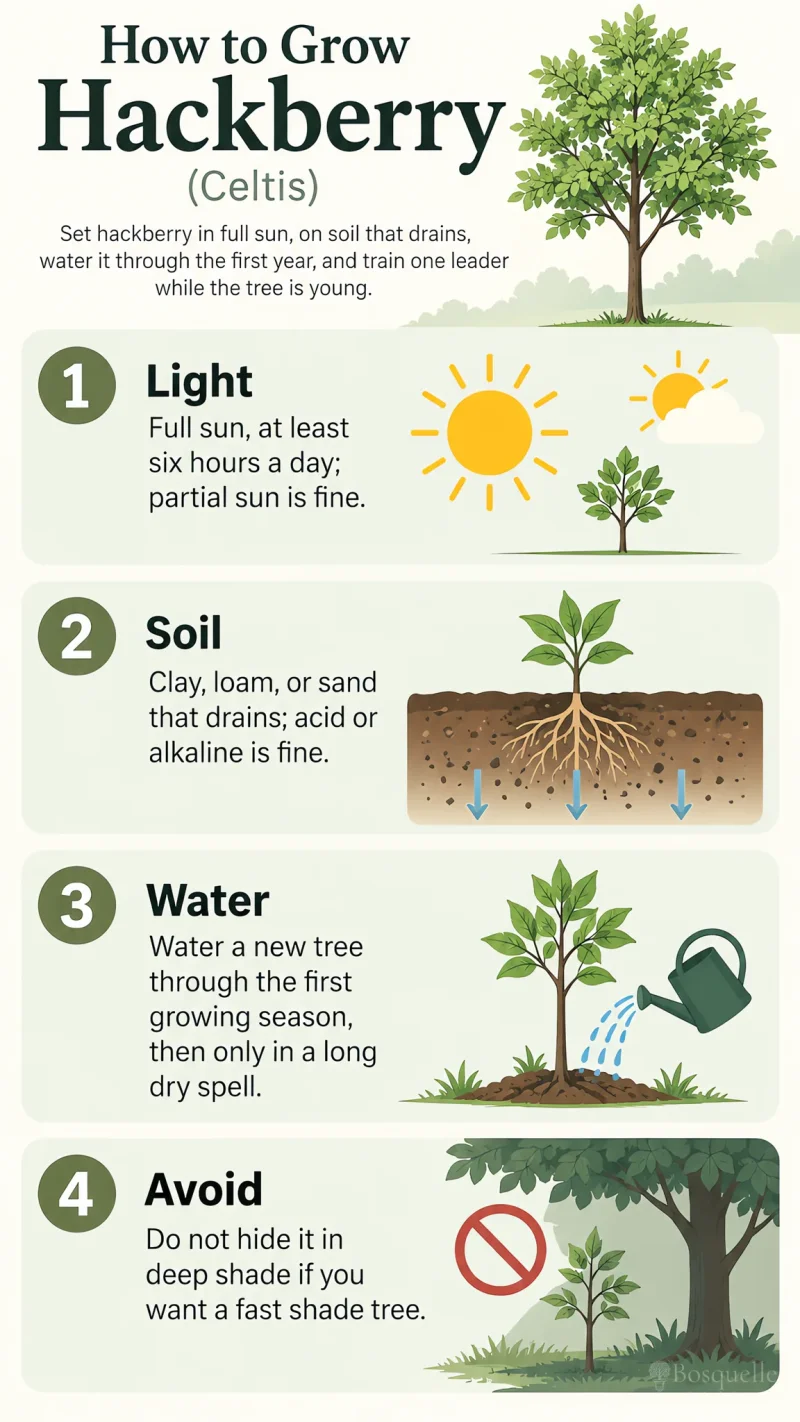
Give it full sun, soil that drains, and room to mature
| Factor | Recommended | Avoid |
|---|---|---|
| Light | Full sun, at least six hours a day; partial sun is fine | Do not hide it in deep shade if you want a fast shade tree |
| Soil | Clay, loam, or sand that drains; acid or alkaline is fine | Do not plant it in a hole that stays wet |
| Water | Water a new tree through the first growing season, then only in a long dry spell | Do not keep an established tree on a weekly watering calendar |
| Room | Leave 40 to 60 feet for the canopy, and keep fruit off a walk you want kept clean | Do not crowd it against a house or a patio you cannot sweep |
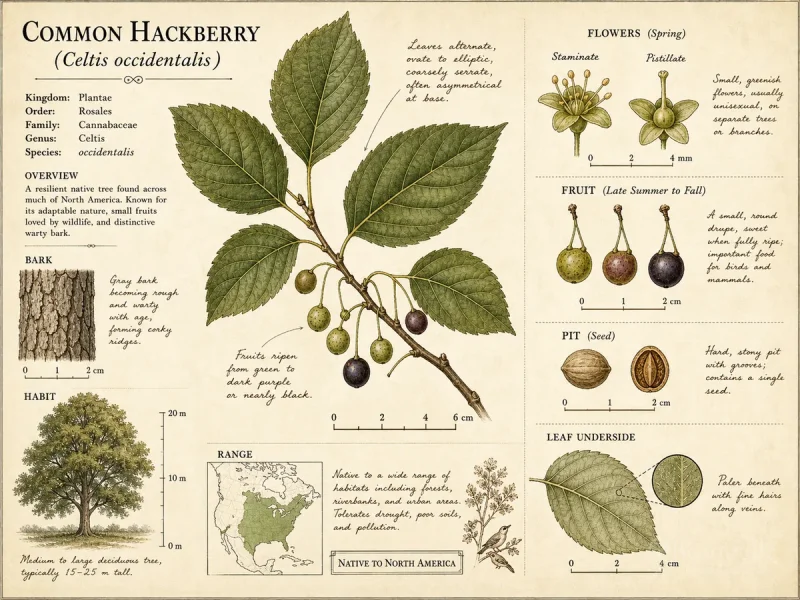
Hackberry wants full sun and ground that drains. Water a new tree through the first growing season, then ease off; an established tree takes a long dry spell better than a soggy hole. [1] Hackberry is Celtis occidentalis, with uneven leaf bases, warty cork bark, and small purple-brown fruit that birds eat. Leave room for a 40-to-60-foot canopy so fallen fruit does not stain a walk you cannot sweep. [2]
- Choose full sun and soil that drains. Partial sun is fine; deep shade slows the tree.
- Leave 40 to 60 feet for a vase-to-rounded canopy. This is a shade tree, not a patio shrub.
- Water through the first growing season, then water again only when a long dry spell hits.
- Keep a mulch ring over the roots, and keep that mulch off the trunk.
Does hackberry need full sun?
Full sun gives the fastest shade. Partial sun is fine. Deep shade slows the tree.
How often do I water a new hackberry?
Water a new tree through the first growing season. After that, water only in a long dry spell.
Is hackberry a good yard tree?
Yes, if you have 40 to 60 feet of room and can keep fruit off a walk. It is a large shade tree, not a small patio plant.
Plant a container tree in spring, and set the flare at grade
Buy a young container tree and set the root flare at grade. A field-dug tree is slow to take because the roots are coarse and wide, so a container start settles faster. [3]
- Plant in spring, or in fall while the tree is still dormant.
- Dig a hole no deeper than the root ball, and two to three times as wide.
- Set the flare at the soil line. Do not bury the trunk deeper than it grew in the pot.
- Backfill with the native soil, water to settle it, and keep the first summer from going dry.
How young a tree should I plant?
Buy a young container tree. A large field-dug tree is slow to take. Pick the final spot before you dig.
How to grow hackberry from seed
Collect the purple-brown fruit in fall, scrape the pulp off the seed, and give the seed a cold, moist rest before you sow in spring. [4]
- Pick ripe fruit in late summer or fall, and scrape the pulp off the seed. Pulp left on the seed slows germination.
- Mix the cleaned seed with damp sand, and keep it cold for about 90 days.
- Sow in spring about a quarter inch deep, and keep the mix moist until the seedlings show.
Can I grow hackberry from seed?
Yes. Clean the pulp off the seed, give it a cold, moist rest of about 90 days, and sow in spring.
Train a strong leader in the first years
Hackberry needs training while it is young. Narrow V-shaped crotches split in ice and wind, so keep one central leader, cut competing upright stems, and wait until late winter, when the tree is dormant and the form is easy to see.
- Wait until late winter, after the leaves have fallen and insects are quiet.
- Keep one central leader. Cut a second upright stem that wants to share the top.
- Cut a narrow V-shaped crotch. Leave a wide side limb that sits closer to a right angle.
- Cut dead, broken, or crossing wood. Do not top the canopy, and do not shear for shape.
Do I prune a young hackberry?
Yes, in the first years. Keep one leader and cut narrow crotches in late winter so ice does not split a limb later.
Not an elm — warty bark and berry fruit
Elm is Ulmus, a different tree with papery winged seeds in spring — see How to Grow Elm. Hackberry has warty cork bark and small round fruit that turns purple-brown. Dutch elm disease does not hit this tree. If the tag says Celtis occidentalis, you have hackberry. Sugarberry is a southern cousin with smoother bark; this catalog lists common hackberry only.
Is hackberry the same as elm?
No. Elm drops papery winged seeds in spring. Hackberry has warty bark and small round fruit.
Set hackberry in full sun, on soil that drains, water it through the first year, and train one leader while the tree is young.
FAQ
Can I grow hackberry in a pot?
Only as a nursery start. It is a shade tree that needs 40 to 60 feet. Move it into the ground while it is still young.
Can I grow it from a cutting?
Seed is the usual home start. A named kind will not come true from seed.
Can you eat the fruit?
The thin flesh is edible and a little sweet, with a large seed. Birds eat most of it. Do not treat it as a kitchen crop.
Are the roots a problem near a walk?
Large surface roots can lift a walk if the tree sits too close. Give the canopy its 40 to 60 feet, and keep fruit off pavement you cannot sweep.
Do you list Prairie Pride or sugarberry?
This catalog holds common hackberry. Prairie Pride, Prairie Sentinel, Chinese hackberry, and sugarberry are extra names, not extra cards here.
Do nipple galls kill the tree?
The bumps on the leaves look rough, but they do not kill the tree. Witches' broom is a twig cluster that you can cut out when you can reach it.
Recommended plants
References
- [1] NC State Extension Gardener -
https://plants.ces.ncsu.edu/plants/celtis-occidentalis/ - [2] The Morton Arboretum -
https://mortonarb.org/plant-and-protect/trees-and-plants/hackberry/ - [3] University of Florida IFAS Extension -
https://edis.ifas.ufl.edu/publication/ST140 - [4] GrowIt BuildIT -
https://growitbuildit.com/hackberry-celtis-occidentalis/
More first-season notes by plant are gathered in How to Grow Guides.
Updated: Reviewed by Bosquelle Editors