
Grow golden rat tail cactus in full sun and cactus mix that dries. Golden rat tail is Cleistocactus winteri. The common rat tail cactus in shops is usually a different plant.

Give it full sun, mix that dries, and a dry winter
| Factor | Recommended | Avoid |
|---|---|---|
| Sun | Full sun, at least six hours — a south or west window indoors | Do not leave it in a dim room that stretches the stems |
| Mix | Cactus mix with grit or coarse sand | Do not use peat that stays wet around the roots |
| Water | Soak in spring through fall when the mix is dry | Do not water on a winter calendar |
| Winter | Cool and almost dry, about 45 to 55 F | Do not keep a warm, wet pot all winter |
| Drought | Dry spells once the mix drains | Do not keep the mix wet because the tag says drought-tolerant |
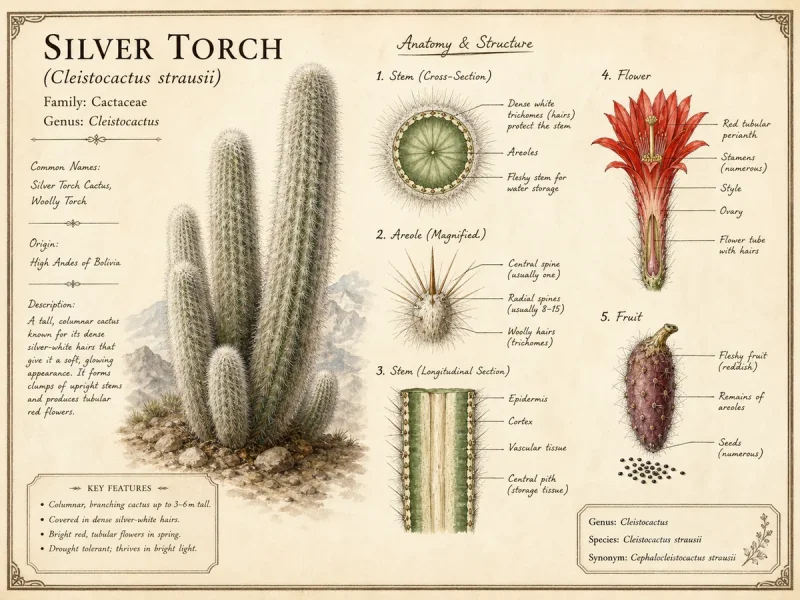
Golden rat tail cactus is a trailing cactus with short golden spines. Give it full sun and mix that dries. Water when the mix is dry in the growing season. In winter, keep it cool and almost dry so the tubular flowers can form. [1] [2] golden rat tail cactus wants that same dry mix. Monkey tail and silver torch share the sun and the dry rest, but you buy those for a different habit — pick the kind on Types of Cleistocactus.
- Site it in full sun. A south or west window is the indoor default. A dim room stretches the stems and skips bloom.
- Use cactus mix with grit. Ordinary potting soil holds water against the roots.
- Soak until water runs out, then wait until the mix is dry. Empty the saucer. Skip extra water in cool, low light.
- In winter, keep the pot cool and almost dry. That rest is what sets the flowers — not a warm, wet sill.
Does golden rat tail cactus need full sun?
Yes. Give it at least six hours. A dim room stretches the stems and skips the flowers.
How often should I water golden rat tail cactus?
In spring through fall, soak when the mix is dry, then empty the saucer. In winter, keep it almost dry.
Why won't it bloom?
It needs a cool, dry winter rest, then full sun in spring. A warm wet pot all winter skips the tubes. Flowers also wait until the plant is older.
Hang trailing stems, or stand a column in a draining pot
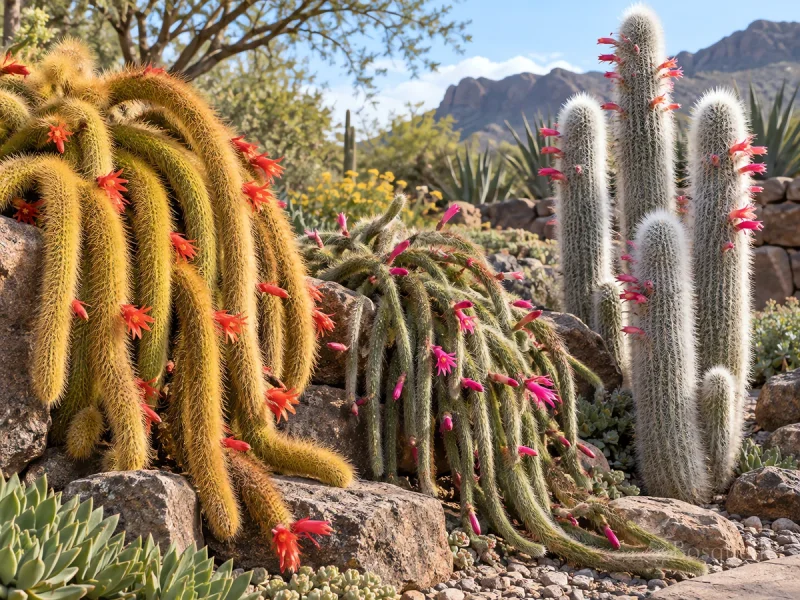
In most of the US this is a pot plant. Trailing kinds belong in a hanging basket or a high pot so the stems can hang. An upright silver torch stands in a terracotta pot with a hole. Outdoors it belongs in a rock garden only where frost stays off. [3]
- Use a pot with a hole and cactus mix. Do not put a layer of gravel in the bottom — that holds water against the roots.
- Hang trailing stems so they can fall. Stand a column in a pot only a little wider than the roots, so the mix dries.
- Set a nursery plant at the same depth it grew in the pot. Do not bury the crown.
- Wait several days after you pot or move it before the first soak, so broken roots can dry. Then soak once, and wait until the mix is dry again.
- Bring the pot in before a freeze. A frost-free rock garden is the only in-ground option.
Can I grow it in a hanging basket?
Yes, if the stems trail. Use a basket with a drainage hole and cactus mix. Bring it in before a freeze.
Start a new plant from a stem cutting
You do not prune this cactus to shape it. If a stem is too long, cut that piece and root it. A nursery plant is the usual start, but a cutting is the reliable way to make another plant. [4]
- Wear gloves. Cut a healthy stem several inches long with a clean knife.
- Let the cut end dry in a shaded spot until it calluses — a few days, not a wet wound in mix.
- Stick the callused end into cactus mix. Do not water a fresh cut.
- Keep it in bright light and water sparingly until the stem resists a gentle tug, then treat it like the parent plant.
How do I start a cutting?
Cut a healthy stem, let the wound dry until it calluses, then stick it in cactus mix and water sparingly until roots form.
Not the rat tail cactus — and not a Christmas cactus
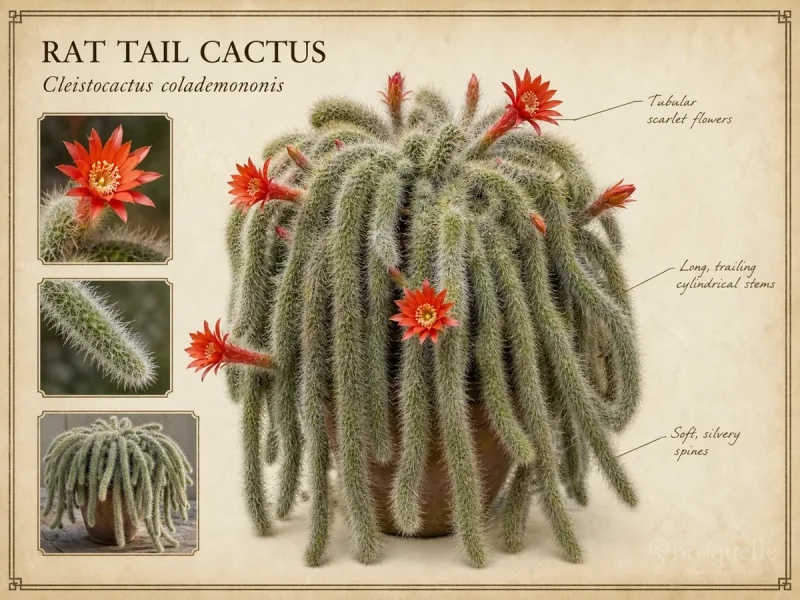
The common rat tail cactus is Aporocactus flagelliformis — thin green stems with short bristles, not golden spines and not long white hair. Confirm the Latin on the tag.
Christmas cactus is Schlumbergera — see How to Grow Christmas Cactus. Those flattened pads want more water and less direct sun. Golden rat tail is a desert cactus with round, spiny stems.
Is golden rat tail cactus the same as rat tail cactus?
No. Golden rat tail is Cleistocactus winteri. The common rat tail cactus is Aporocactus. They are not interchangeable.
If the stems go soft, the mix stayed wet — move it onto grit, and keep winter almost dry.
FAQ
Do I fertilize golden rat tail cactus?
You do not have to. If you feed, use a weak cactus fertilizer in spring and summer only. Skip winter.
What is the white fluff near the spines?
That can be mealybug. Wipe it off when you see it. Wet, still air makes pests worse. Do not start with a spray.
Can I grow it from seed?
You can sow seed in spring, but it is slow. A stem cutting is the usual start.
Is it safe around pets?
The spines can irritate skin and mouths. Hang the basket out of reach, and do not treat the plant as food.
Related guides
Recommended plants

References
- [1] Clemson Cooperative Extension HGIC -
https://hgic.clemson.edu/factsheet/indoor-cacti/ - [2] Missouri Botanical Garden -
https://www.missouribotanicalgarden.org/Portals/0/Gardening/Gardening%20Help/Factsheets/Cactus%20and%20Succulents10.pdf - [3] Iowa State University Extension -
https://yardandgarden.extension.iastate.edu/how-to/growing-succulents-indoors - [4] Colorado State University Extension -
https://planttalk.colostate.edu/topics/houseplants/1306-cactus/
This note is part of Cleistocactus Guides.
More first-season notes by plant are gathered in How to Grow Guides.
Updated: Reviewed by Bosquelle Editors