
Gentian (Gentiana) wants cool roots and soil that stays moist without sitting wet. Alpine kinds want grit and sharp drain. Meadow and bottle kinds want even moisture in cool humus. It is not a hot-border annual. Match the kind before you water. G. acaulis is the usual alpine trumpet. Leave established crowns alone.

Cool roots, grit, and meadow moisture
| Factor | Recommended | Avoid |
|---|---|---|
| Light | Open sun to part shade; afternoon shade in hot summers | Deep shade that thins bloom; reflected heat off paving |
| Alpine soil | Moist, gritty, well-drained; cool root run | Rich wet clay that rots cushions |
| Meadow soil | Even moisture, cool humus, still drained | Bone-dry sand; a stagnant sump with no air |
| Roots | Plant once and leave the crown | Digging and moving young plants |
| Pace | A full season before you judge bloom | Hot-border annual bedding expectations |
Give gentian cool roots and moisture that matches the kind. Alpine cushions and meadow bottle gentians are not one hose schedule. Open sun works where summers stay cool; afternoon shade helps where heat bleaches leaves. North Carolina Extension: trumpet gentian wants moist, well-drained, gritty soil, full sun to part shade, and afternoon shade to prevent leaf bleach — it struggles in hot, humid lowland summers.
A north or east bed that already grows rock-garden plants is closer to alpine kinds than a west wall that bakes. Meadow kinds sit better beside a cool, moist border than in a raised grit trough. Do not copy one site onto both jobs. Deep shade thins bloom. Reflected heat off paving cooks roots even when the air feels mild.
Do not overfeed. Cool soil and the right drain beat a nitrogen schedule that makes soft growth and fewer flowers. Water new plants until they root, then follow the kind: never-soggy grit for alpines, even moisture for meadow types. Ice water sitting on an alpine crown all winter is a faster kill than a missed watering in a cool, mulched meadow.
For alpine kinds, mix grit or coarse sand into the top 6–8 inches so water runs and air stays in the root zone. For meadow and bottle kinds, work in leaf mold or compost so the soil holds even moisture but still drains after rain. Do not use the same mix for both. If you can squeeze a handful and water streams out, alpine cushions will rot. If the handful falls apart bone-dry, meadow kinds stall.
- Cool roots. Open light. Afternoon shade in heat.
- Alpine = grit and drain. Meadow = even moisture, still air in the soil.
- Leave the crown. Do not treat gentian as instant bedding.
How to plant gentian
- Read the kind first. Gritty, well-drained soil for alpine types. Cooler, evenly moist soil for meadow and willow types. Skip hot paving and tropical bedding beds.
- Plant in spring or early fall. Set the crown at soil level. Do not bury growing points under a wet mulch blanket. Space so air moves — often 8–16 inches, more for willow gentian.
- Water to settle. Then follow the kind: alpines stay never-soggy; meadow kinds resent drought once settled. Mulch to cool roots in heat, but keep grit open around alpine crowns.
- Do not disturb roots. Prefer buying the right kind and siting it correctly over dividing young plants.
- Buy nursery plants. Never dig wild gentians. Wild collects rarely transplant, and many natives are scarce.
Plant in spring or early fall into the moisture the kind needs, crown at soil level, then leave the roots. Rutgers: never let the plant dry out, yet keep it well drained, and do not touch the roots. Year one often looks quieter than a nursery photo. Give the correct moisture a full season before you decide the plant failed. Overfeeding softens plants. Cool roots beat bloom tonic. Firm the backfill so the crown does not rock and dry. Water the day you plant, then keep the first dry spells from baking meadow kinds or drowning alpine grit.
Do not lift a young plant to “check the roots.” If you must move one, wait until a mature clump has several crowns, and take a division in spring — still the exception, not the plan. Nursery plants in pots can sit a day in shade while you finish the hole; do not leave them on hot concrete. After planting, a thin mulch cools meadow roots. Alpine kinds get grit at the crown, not bark that stays wet against the growing point.
Common fails: one water recipe for every Gentiana; hot paving; wet clay on alpine cushions; dry neglect of meadow bottle gentians; yanking a quiet first-year plant. If bloom thins, check kind moisture and root heat before you buy a feed. If plants vanish, check rot versus drought against the kind before blaming the tag.
Alpine, bottle, and willow kinds
Cool roots are shared. Moisture and habit still differ. Sort the kind after the site is right, not before.
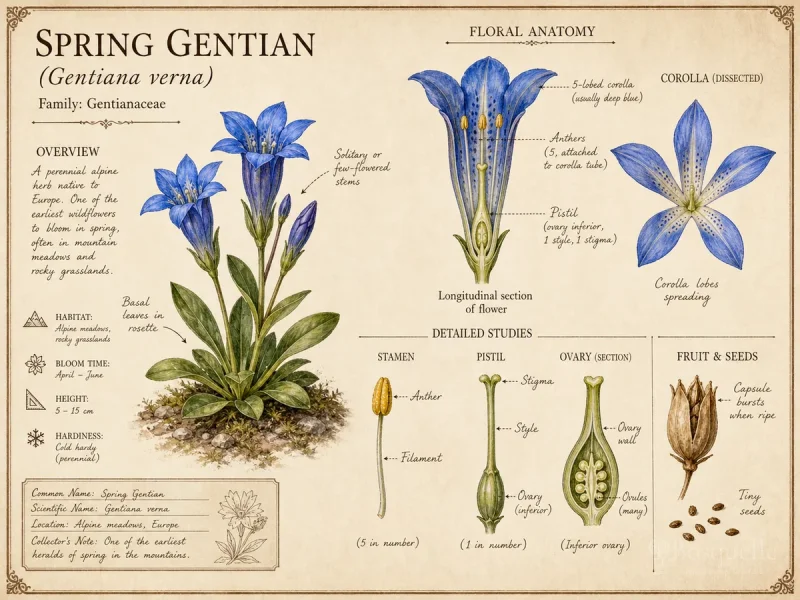
- Alpine / rock — G. acaulis and G. verna are low cushions or mats that want sharp drainage, grit, and cool roots in open light. They rot in heavy wet clay sold as “rich garden soil.” Flower color does not cancel drain.
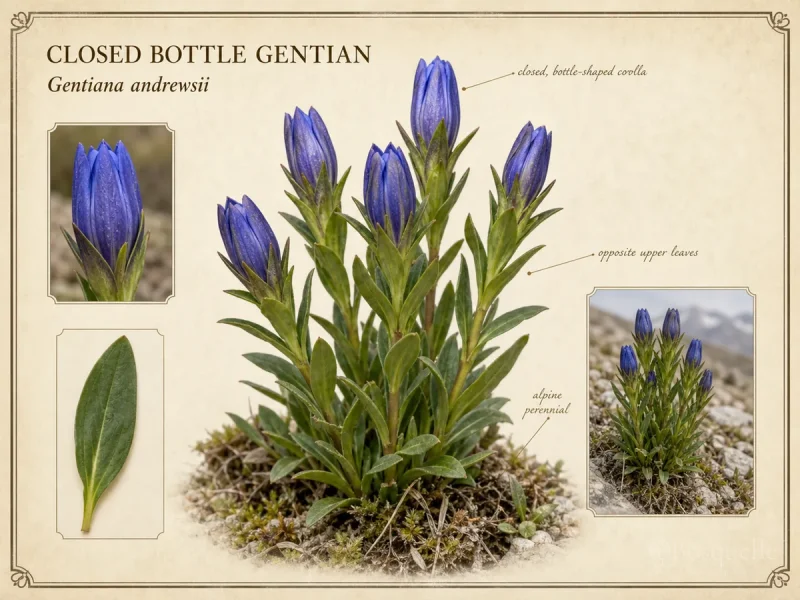
- Meadow / bottle — G. andrewsii and G. clausa lean toward cooler, evenly moist soils and often bloom later. Leave undisturbed once the crown is set.
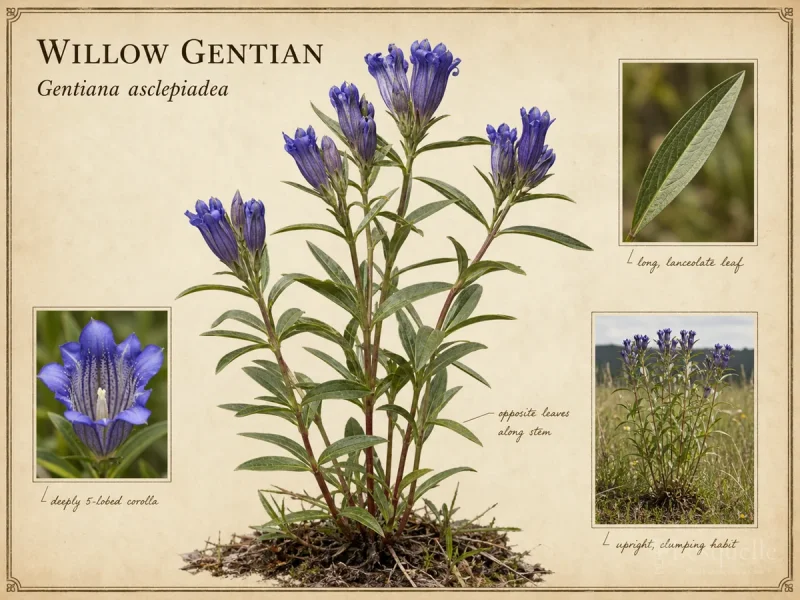
- Willow and garden — G. asclepiadea brings taller arching stems for a cool border with even moisture. ‘Strathmore’ is a garden kind on the same cool-root wait — match moisture to the label, not to a generic “gentian water” myth.
If you wanted a rock-garden trumpet and bought a bottle gentian, you bought the wrong moisture. If you wanted a moist meadow and bought an alpine cushion, the clay will rot it. Confirm Latin on the tag. All six fail on hot paving and in a stagnant sump. Read height too: cushions stay low; willow gentian needs room for arching stems. A garden cultivar such as ‘Strathmore’ still follows the cool-root rule on the label — do not assume it wants alpine grit just because the flowers are blue.
Water, slugs, and rot
Keep moisture even for meadow kinds through the growing season. Keep alpine grit moist but never a winter pond at the crown. Missouri Botanical Garden: bottle gentian wants moist, rich, cool, humusy soil that still drains, in part shade. Slugs chew soft spring growth in damp gardens — protect emerging shoots with grit around the crown, which also helps drain. Root and crown rot follow the wrong wetness more often than a mystery virus: alpine kinds in clay, meadow kinds in a baked pot.
Aphids can cluster on soft tips. A strong hose in the morning usually settles them. If foliage yellows, check kind moisture and heat at the root before assuming disease. Collapse after a hot dry summer on meadow types, or a wet winter on alpines, is a kind mismatch. Do not fertilize a dormant or rotting crown hoping to force growth.
Check moisture at the root, not the calendar. Alpine grit should feel damp a finger-joint down and never sit as a puddle at the crown. Meadow soil should not crust dry between waterings in heat, but water should still run through after a soak. Water in the morning so foliage dries. In a wet week, skip the hose. In a hot dry week, meadow kinds need the extra water first; alpine kinds in grit still get a light soak, then drain.
After bloom, leave the foliage until it fades. Cutting green leaves to tidy the bed steals food the crown needs. Mark the patch so you do not dig it in fall. Meadow kinds may still show late color; alpine kinds often peak earlier. That is season, not a failed plant. A light grit mulch around alpine crowns sheds splash and deters slugs. Meadow kinds take a thin leaf-mold top-dress in spring — not a wet blanket on the growing point.
Pots, partners, and first-year wait
| Factor | Recommended | Avoid |
|---|---|---|
| Alpine pot | A deep, draining trough with grit; empty the saucer | Standing water; mixing alpine and meadow in one small pot |
| Meadow pot | A larger volume that does not dry to dust daily, still with holes | A tiny pot on hot paving |
| Partners | Rock-garden plants with alpine kinds; cool moist-border plants with meadow kinds | Tropical heat-lovers or true bog plants on the same water |
Alpine kinds can work in a deep, draining trough with grit-heavy mix and a cool place. Add grit so water runs, then keep the mix evenly moist — not a saucer of standing water. Meadow kinds need more volume so the mix does not bake, still with drainage holes. Empty saucers. Do not mix alpine and meadow kinds in one small pot. Do not pair gentian with plants that force a hot, dry root run, or with bog plants that keep alpine grit underwater. In summer heat, move troughs into afternoon shade rather than adding fertilizer.
Over winter, keep alpine troughs where rain does not pond in the crown. A cold frame or a spot under an eave that still gets light helps. Meadow pots should not freeze solid on a balcony if the mix stays saturated. In the first year, count a few flowers as extra, not the test. Keep the tag photo, keep roots cool, and judge the plant after it has been through one summer and one winter in your soil.
- Alpine trough: G. acaulis or G. verna in grit and open light with other cool rock-garden plants.
- Meadow late color: G. andrewsii or G. clausa where even moisture and cooler soils support bottle-gentian timing.
- Willow border: G. asclepiadea as taller cool-border stems beside plants that share moisture without stagnant water.
Open ground in the right moisture still beats a pot once the kind is matched. First-year bloom can be shy. Photograph the tag, keep roots cool, and wait a full cycle. Success is a settled crown with blue the next season, not an instant carpet.
Match alpine grit or meadow moisture, keep gentian roots cool, plant the crown at soil level, and leave it undisturbed through the first quiet season. It is not a hot-border annual.
FAQ
Why are gentians hard to grow?
They need cool roots and soil that stays evenly moist without sitting wet. Average hot, heavy beds fail. Match alpine vs meadow kinds before you plant.
Do gentians like wet soil?
They want moisture with air — not stagnant mud. Winter waterlogging rots alpine crowns. Bone-dry sand stalls meadow kinds. Aim moist and free-draining, then refine for grit vs meadow.
Does gentian need full sun?
Open sun to bright light with cool roots works for many kinds. Afternoon shade helps in hot climates. Deep shade thins bloom. Reflected heat cooks roots.
Are bottle gentians the same as alpine gentians?
No. Bottle and meadow kinds such as G. andrewsii and G. clausa lean toward cooler moist soils. Alpine cushions need sharp drainage.
Can I grow gentian in a pot?
Yes if you match the mix to the kind: gritty draining troughs for alpines; larger, evenly moist but drained pots for meadow kinds. Empty saucers.
When does gentian bloom?
It depends on the kind. Many alpine types flower earlier. Meadow and bottle types often peak later in summer or fall.
Do gentians spread?
Some meadow natives slowly form clumps. Many alpines stay tight mats. None are lawn runners. Success is keeping the crown cool and drained.
Should I fertilize gentian heavily?
No. Overfeeding softens growth. Match soil and moisture to the kind instead.
Do all gentians want the same water?
No. Alpine kinds such as G. acaulis want sharp drainage. Meadow and bottle kinds such as G. andrewsii want even moisture without stagnation.
Is gentian a good hot-border annual?
No. Gentians are cool-rooted specialists that settle slowly, not tropical bedding for instant midsummer carpet.
What is willow gentian?
Gentiana asclepiadea — a taller arching kind for cooler borders with even moisture, not an alpine grit cushion.
Why is my gentian not blooming?
Often heat at the roots, the wrong moisture kind, deep shade, or first-year wait. Check site before blaming the plant.
What is Gentiana acaulis?
An alpine trumpet gentian that wants grit, drainage, and cool roots — not wet meadow clay.
When should I plant gentian?
Spring or early fall into the correct moisture, crown at soil level, with cool-root placement — then leave the roots alone.
What companions work with gentian?
Partners that share the same cool roots and moisture — alpine with rock-garden grit plants; meadow with cooler moist-border plants.
Recommended plants



More first-season notes by plant are gathered in How to Grow Guides.
Updated: Reviewed by Bosquelle Editors