
Grow gazania (treasure flower) in full sun and lean, well-drained soil. Treat it as a warm-season annual wherever frost is routine. The daisy blooms close at night and on cloudy days.

Sun, drainage, and annual vs perennial
| Factor | Recommended | Avoid |
|---|---|---|
| Light | Full sun, at least six hours, so blooms open | Shade (leafy growth, flowers stay shut) |
| Soil | Sandy to average, well-drained, low fertility | Heavy wet clay and rich, soggy mulch on the crown |
| Water | Water to establish, then let the soil dry between waterings | Constant drip and standing water in the saucer |
| Winter | Tender perennial in zones 9–11; annual or indoor overwinter elsewhere | Leaving plants outdoors through a hard freeze |
Full sun and sharp drainage are what the plant needs. Flowers close at night and may stay half-shut on cloudy days — that is normal, not a weak plant. [1]
Is gazania an annual or perennial?
A tender perennial in zones 9–11. Most U.S. gardeners grow it as a warm-season annual, or overwinter pots indoors.
Does gazania need full sun?
Yes. Full sun — at least six hours — opens the blooms and keeps growth compact. Shade keeps flowers shut.
Why do gazania flowers close?
They close at night and often stay partly shut on cloudy days. Check the bed at noon in bright sun before you blame the plant.
Does gazania like wet soil?
No. Sandy to average well-drained, low-fertility soil is best. Wet clay and overwatering cause crown and root rot.
How to plant gazania
Plant after frost into draining ground. Set the crown at soil level, water in, then let the soil dry between waterings.
- Plant after the last frost, once nights stay mild.
- Choose the sunniest open spot. Skip shade and winter puddles.
- Dig a hole as deep as the root ball and a little wider. Set the crown at the old nursery line.
- Backfill with the native soil. Skip a rich compost pocket — low fertility beats wet, overfed ground.
- Space plants about 8–12 inches apart so air moves between clumps.
- Water until the hole settles. Then let the soil dry between waterings. Empty saucers after rain.
- From seed, start indoors 6–8 weeks before the last frost and set plants out after frost. Named hybrids often do not come true from saved seed. [2]
When should I plant gazania?
After frost in spring, once the soil has warmed. From seed, start indoors 6–8 weeks before the last frost date.
Deadhead, humidity, and overwinter
Deadhead spent blooms to keep the display tidy and push more buds. High humidity plus overwatering in poor drainage is the usual fail — shorter kinds hold up better than tall, soft growth. [3]
- Snip spent daisies back to a leafy joint through the season.
- Do not soak the crown to force flowers in a humid week. Fix drainage first.
- Before frost, move pots to a bright, frost-free place and water sparingly.
- Take basal cuttings in late summer if you want the same color next year, and overwinter those indoors.
Should I deadhead gazania?
Yes — removing spent blooms keeps the plant tidy and encourages more flowers. It does not fix shade or soggy soil.
How do I overwinter gazania?
Move pots indoors before frost, with bright light and little water, or root late-summer basal cuttings. Outdoor plants rarely survive a hard freeze.
Why did my gazania fail in humidity?
High humidity plus overwatering in poorly drained soil is the main fail. Prefer compact kinds, full sun, and dry intervals between waterings.
Kinds, pots, and partners
Kinds
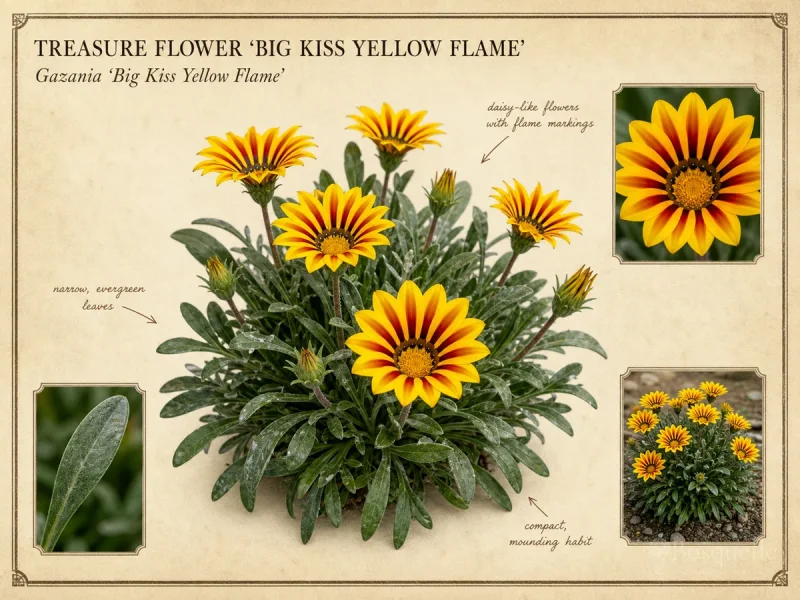
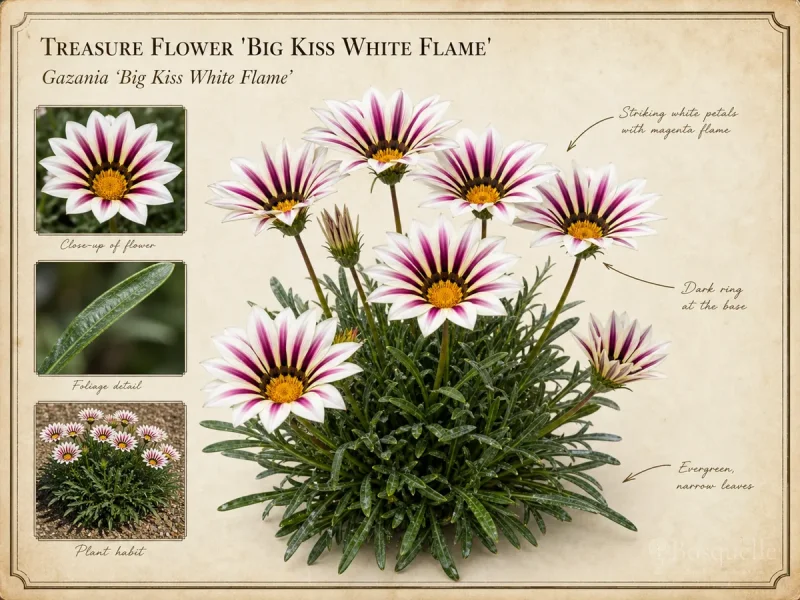
- Big Kiss flame — ‘Big Kiss Yellow Flame’ and ‘Big Kiss White Flame’ are bold flame-and-contrast daisies for hot borders and patio pots. Same sun, drain, and dry-between-waterings as the rest.
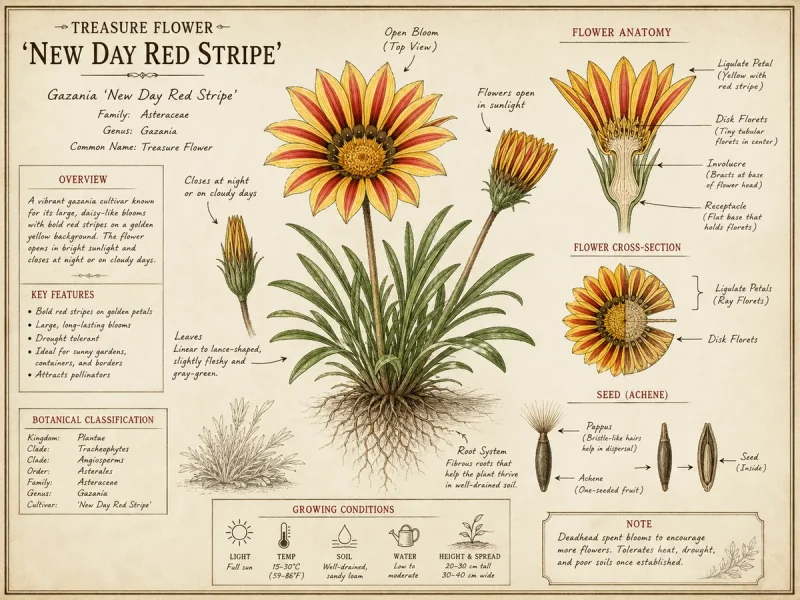
- New Day stripes — ‘New Day Red Stripe’ and ‘New Day Rose Stripe’ bring striped red and rose patterns on the same lean-sun culture.
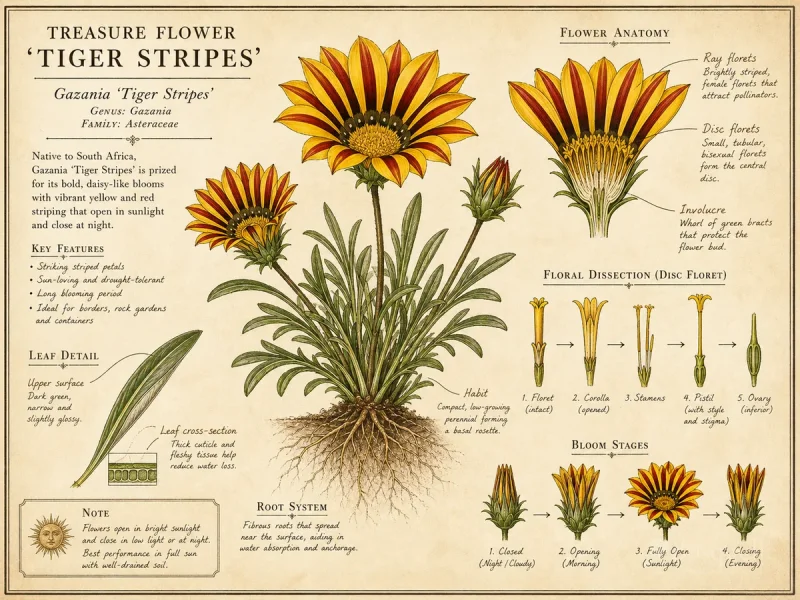
- Tiger Stripes — ‘Tiger Stripes’ is the tiger-stripe kind. Closing on cloudy days is still normal. In frost-free gardens, mass them as a hot-sun ground cover in lean soil.
Pots
- Use a pot with drainage holes and a gritty, free-draining mix — terracotta dries faster than plastic.
- Set the pot in full sun. Empty the saucer after rain. [4]
- Move the pot indoors before a hard freeze if you want the plant back next year. A hanging basket works for trailing kinds on the same dry-sun brief.
Can I grow gazania in a pot?
Yes — often the best match. Use a gritty mix in full sun and empty saucers after rain. Move indoors before frost in cold climates.
Partners
Share full sun and sharp drainage: other dry-sun annuals and Mediterranean herbs. Keep thirsty shade plants off this bed.
Plant after frost in full sun with drainage. Let the soil dry between waterings. Deadhead spent blooms. Before the first freeze, move pots indoors or take cuttings.
FAQ
What is treasure flower?
Another common name for gazania, from the bold daisy blooms. Care is the same: full sun and lean drainage.
Should I fertilize gazania?
Little or none. Low-fertility soil is the point. Heavy feed pushes soft growth that rots in humidity.
What is the difference between Big Kiss and New Day?
Color pattern, not a different watering story. Big Kiss is a flame-and-contrast series; New Day is a stripe series. Both want sun and drain.
What pests bother gazania?
Mealybugs and powdery mildew show up sometimes. Aphids can follow pots indoors. Root and stem rot follow wet soil — fix drainage first.
Recommended plants

References
- [1] NC State Extension -
https://plants.ces.ncsu.edu/plants/gazania-rigens/ - [2] Missouri Botanical Garden -
https://www.missouribotanicalgarden.org/PlantFinder/PlantFinderDetails.aspx?kempercode=a517 - [3] University of Illinois Extension -
https://web.extension.illinois.edu/hortanswers/plantdetail.cfm?PlantID=15&PlantTypeID=1 - [4] Illinois Extension -
https://extension.illinois.edu/flowers/gazania
More first-season notes by plant are gathered in How to Grow Guides.
Updated: Reviewed by Bosquelle Editors