
Grow gas plant in full sun and soil that drains. Gas plant is Dictamnus — a herbaceous perennial with lemon-scented leaves. Wear gloves when you work around it, because the oils can raise a rash in sun. It is not the burning-bush shrub.
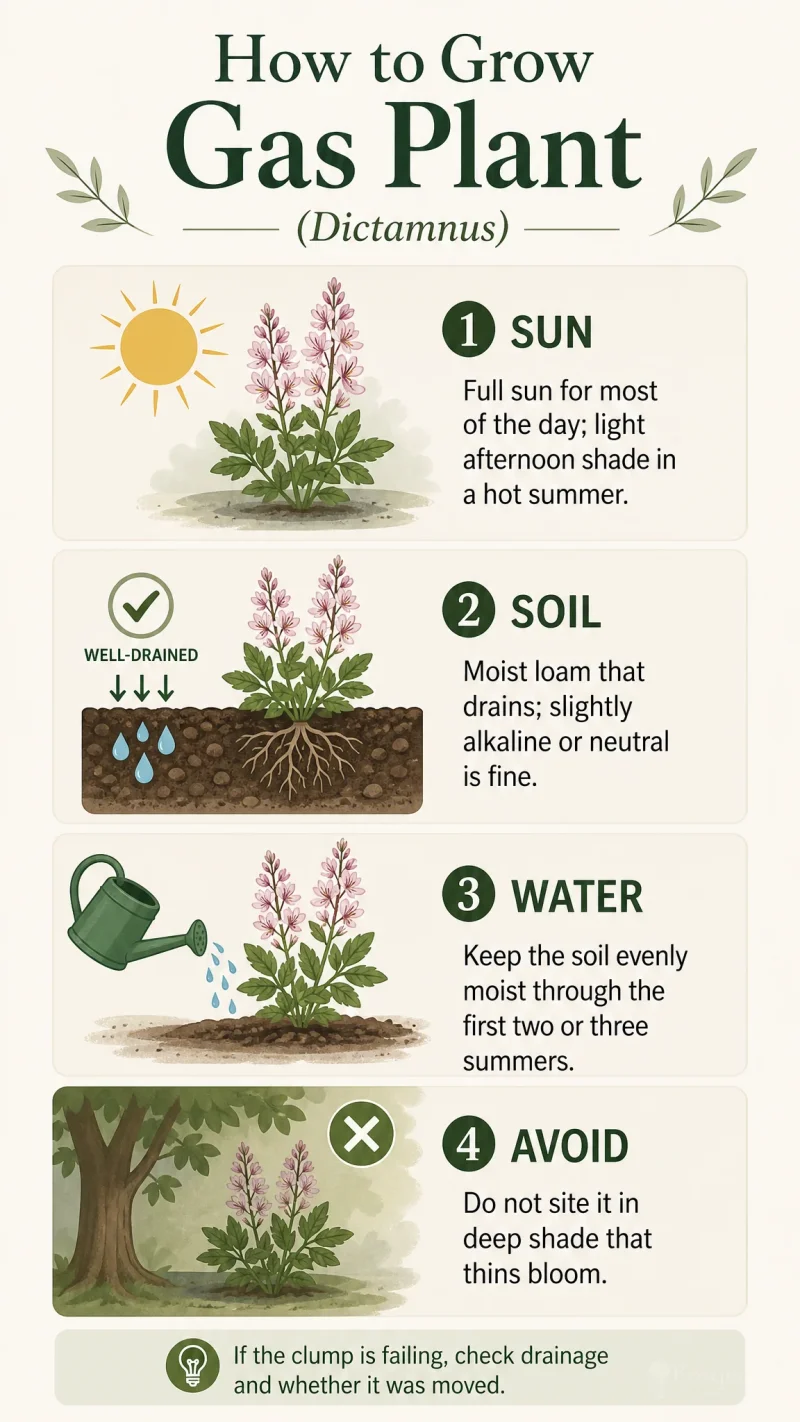
Give it full sun and soil that drains, and water until it is established
| Factor | Recommended | Avoid |
|---|---|---|
| Sun | Full sun for most of the day; light afternoon shade in a hot summer | Do not site it in deep shade that thins bloom |
| Soil | Moist loam that drains; slightly alkaline or neutral is fine | Do not leave the crown in standing water |
| Water (new) | Keep the soil evenly moist through the first two or three summers | Do not let a new plant dry out before the taproot is down |
| Water (established) | Water in a long dry spell; the plant then handles drought | Do not keep the bed soggy after it is settled |
| Handling | Wear gloves and long sleeves when you cut or weed around it | Do not brush the foliage with bare skin in sun |
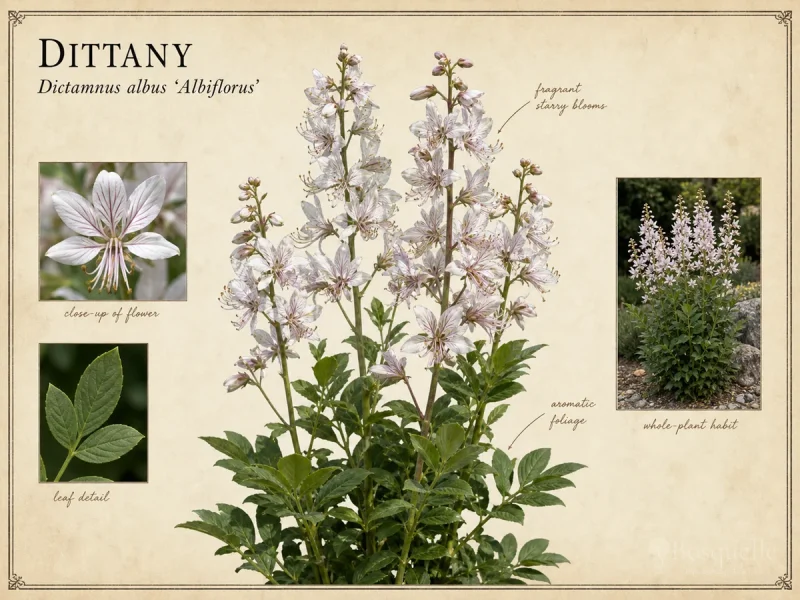
| Flower color | White or purple-pink spikes; both want the same sun and drain | Do not assume a white flower wants more shade |
Gas plant wants a sunny bed that drains. Keep a new plant evenly moist for the first couple of years. Once the taproot is down, it handles dry spells. Soggy soil around the roots is the primary cause of rot. For more drought-tolerant planting ideas, see Drought-Tolerant Plants. [1]
How much sun does gas plant need?
Full sun for most of the day. Light afternoon shade is fine in a hot summer. Deep shade makes fewer flowers.
How often should I water gas plant?
Keep a new plant evenly moist for the first two or three summers. After that, water in a long dry spell. Do not leave the crown in standing water.
Plant it once in a permanent spot — do not move it
Gas plant makes a long taproot. Choose the bed once, and leave it. Division often injures a settled clump, so start a new plant from seed if you want another one. purple gas plant and white gas plant take the same hole and the same wait. [2]
- Wear gloves and long sleeves. The oils on stems and leaves can raise a rash after sun hits the skin. [3]
- Plant in spring when the soil is workable, after frost.
- Dig a hole as deep as the pot and a little wider. Set the crown even with the soil. Do not bury the stems.
- Leave about 2 to 3 feet between plants so the clump can fill in.
- Backfill with the soil you dug, firm, and water in. Do not load the hole with fertilizer.
- Mark the spot. The plant is slow to come up in spring, so you do not dig into it by mistake.
- Do not move it later, and do not try to split a settled clump.
Can I transplant gas plant?
No, not once it has settled. The taproot does not take kindly to a move. Leave it, and start a new plant from seed if you want another clump.
How far apart should I plant gas plant?
Leave about 2 to 3 feet. Measure to the mature clump, not the nursery pot.
Not burning bush — and not dittany of Crete
Nursery burning bush is usually Euonymus alatus, a woody shrub grown for red fall color and corky wings on the stems. Gas plant is a herbaceous perennial with lemon-scented leaves and white or purple-pink flower spikes. For the shrub, see How to Grow Euonymus. [4]
Dittany of Crete is Origanum dictamnus, a tender gray mint used as an herb. It is not this rue-family perennial. See How to Grow Oregano. The biblical burning bush is a different story, not a nursery tag for this plant.
Is gas plant the same as burning bush?
No. Gas plant is Dictamnus, a herbaceous perennial. Burning bush in the nursery is usually Euonymus, the fall-color shrub.
Is gas plant the same as dittany of Crete?
No. Dittany of Crete is Origanum, a tender mint. Gas plant is Dictamnus. Some tags print dittany on both.
Leave the seed heads, then cut dead stems in spring
The flowers last only a couple of weeks. Leave the star-shaped pods. They are part of the show, and the plant does not need a hard cut after bloom.
- Do not deadhead the spikes if you want the seed heads, or if you hope for a few self-sown seedlings.
- In early spring, before new shoots push, cut only the dead stems back to the woody base. Wear gloves and long sleeves.
- Do not carve into the woody crown. The plant resents that kind of disturbance the same way it resents a move.
Should I cut the seed heads?
Leave them unless you need to stop seedlings. In early spring, cut only dead stems, still wearing gloves.
Sow fresh seed in fall if you want another plant
Seed is the reliable way to start a new clump. Stem cuttings are a poor bet, and splitting a settled plant often injures it.
- Collect fresh seed when the pods dry, or buy seed. Stored seed is slower and less even.
- Sow it outdoors in fall, in the bed where the plant will live, and cover it only lightly.
- Let winter cold break dormancy. Seedlings may keep appearing into the next year.
- Keep those seedlings evenly moist through their first summers, then leave the taproot alone.
- Expect two to four years before a new plant flowers. Do not move the seedling once it has a real root.
Can I start gas plant from seed?
Yes. Sow fresh seed outdoors in fall so winter cold can break dormancy. Seedlings are slow.
Will it bloom the first year?
Often not. A new plant can take two to four years to flower. Keep it watered and leave the taproot alone.
If the clump is failing, check drainage and whether it was moved. Leave the taproot, and keep a new plant watered.
FAQ
Can I grow gas plant in a pot?
A pot is a poor match. The taproot wants open ground, and the plant resents a move. Grow it in a draining bed, not on a patio.
Will gas plant light on fire?
On a still, hot day the flowers and seed pods give off a lemony vapor that can flash if you hold a match to it. Do not try that. The real hazard is a rash on skin that then sits in sun.
Is dittany another name for this plant?
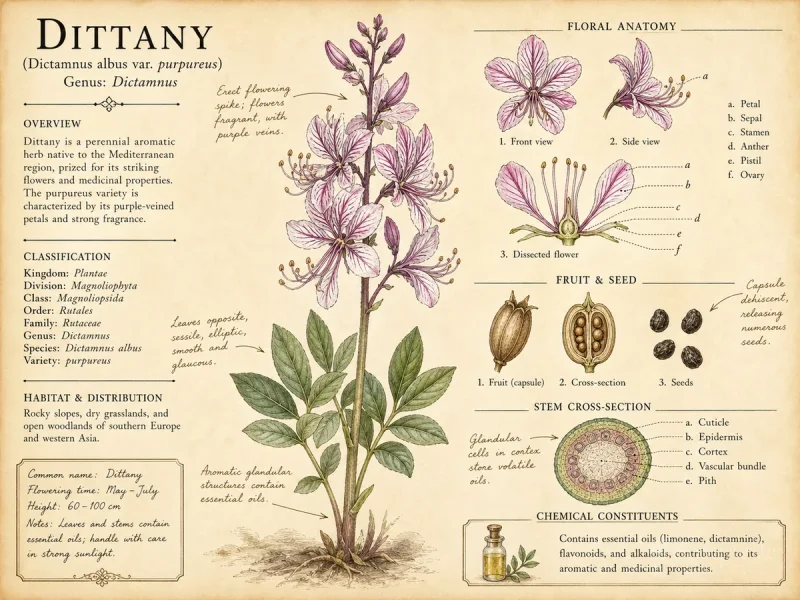
Some catalogs print dittany or fraxinella on Dictamnus. Dittany of Crete is still oregano. American dittany is a different mint, not this plant.
Is gas plant toxic to pets?
Keep pets from chewing the leaves. Leaves can upset the stomach if eaten, and the oils can raise a rash on skin that then sits in sun.
Recommended plants
References
- [1] NC State Extension Gardener -
https://plants.ces.ncsu.edu/plants/dictamnus-albus/ - [2] Cornell Home Gardening -
http://gardening.cornell.edu/homegardening/scene4faf.html - [3] White Flower Farm -
https://www.whiteflowerfarm.com/how-to-grow-dictamnus-gas-plant - [4] Gardening Know How -
https://www.gardeningknowhow.com/ornamental/flowers/gas-plants/growing-gas-plants.htm
More first-season notes by plant are gathered in How to Grow Guides.
Updated: Reviewed by Bosquelle Editors