
Grow dill in full sun, in soil that drains, and keep the soil evenly moist so heat does not push it into flower too soon. Dill is Anethum, an annual with feathery leaves.
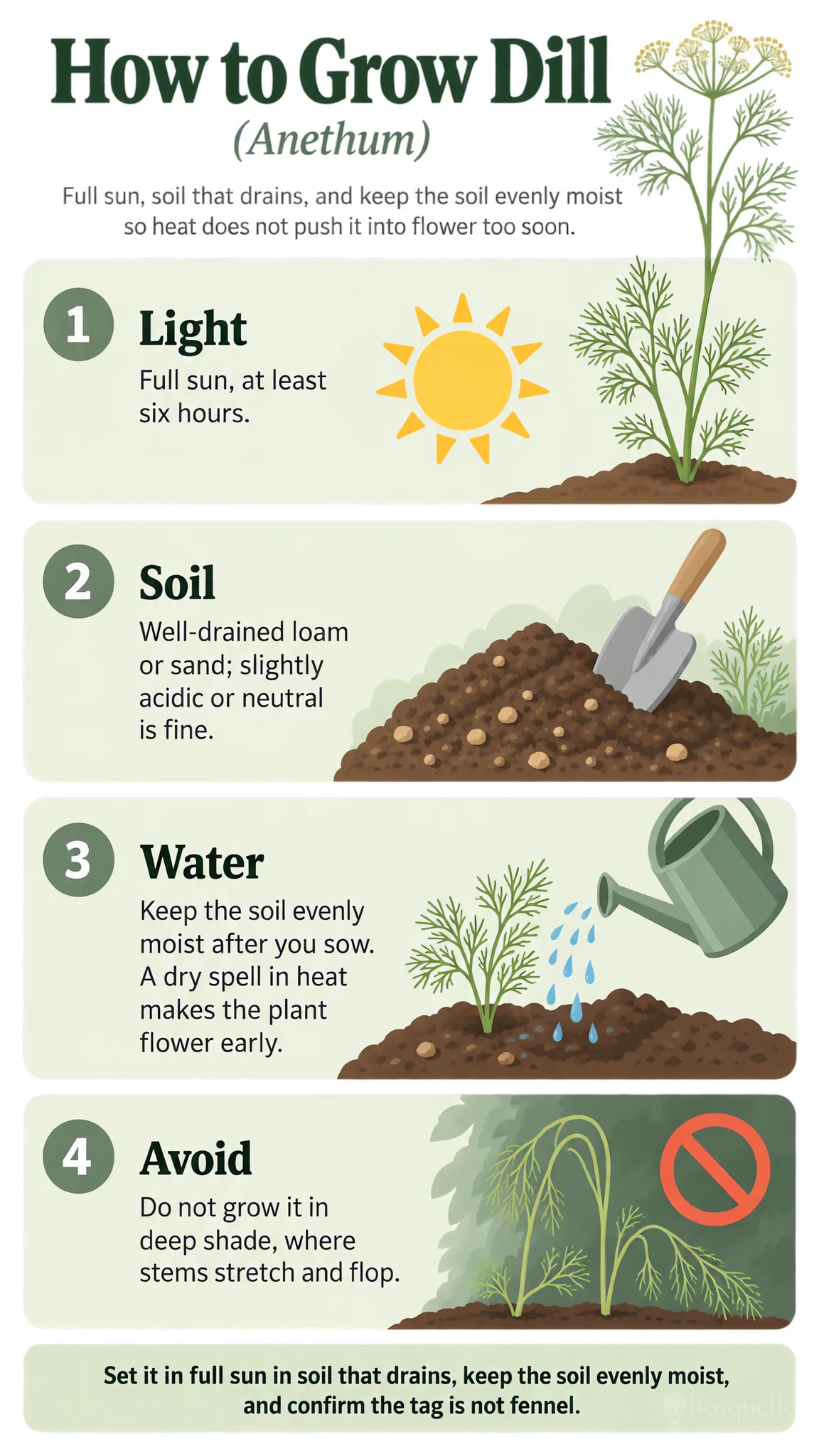
Give it full sun and soil that drains
| Factor | Recommended | Avoid |
|---|---|---|
| Light | Full sun, at least six hours | Do not grow it in deep shade, where stems stretch and flop |
| Water | Keep the soil evenly moist after you sow. A dry spell in heat makes the plant flower early | Do not leave the roots in soggy soil |
| Soil | Well-drained loam or sand; slightly acidic or neutral is fine | Do not plant in a wet pocket or heavy clay that stays soggy |
| Feed | Little or no extra fertilizer once it is in the ground | Do not keep it in rich, wet soil |
| Deer | Aromatic foliage; deer usually leave it | Do not count on it if deer pressure is extreme |
dill wants an open, sunny bed and ground that does not stay wet. Shade and soggy soil make weak, floppy stems, and a dry week in heat pushes the plant to flower before you have much leaf. [1] Keep the soil evenly moist, never soggy, once the seed is in. [2] If you are sowing this spring, the seed depth and spacing are on Planting Dill. Leaves and seed for the kitchen are on Harvesting Dill.
- Set it in full sun. Light shade is tolerable, but the stems stay tighter and the leaf stays more flavorful in open light.
- Water enough to keep the soil evenly moist. Do not let the bed dry out in heat if you still want leaf, and do not flood the roots.
- Skip heavy feeding. Rich, wet soil makes lanky stems that need a stake when wind hits the hollow stalks.
How much sun does dill need?
Full sun, at least six hours. Deep shade makes weak stems that flop.
How often should I water dill?
Keep the soil evenly moist after you sow. A dry spell in heat makes the plant flower early. Do not leave the roots in standing water.
Grow it in a deep pot with a drainage hole
A patio pot works when the pot is deep enough for the taproot and has a hole in the bottom. Water when the top of the mix is dry, because a pot dries faster than open ground. [3] A sunny windowsill can carry a plant indoors if you give it enough light and a stake for the hollow stems.
- Choose a deep pot with a drainage hole. Empty the saucer so the roots do not sit in standing water.
- Use a potting mix that drains, not packed garden soil. The mix should shed water after you water.
- Water when the top of the mix is dry. Indoors, give at least five to six hours of direct sun, or about twelve hours of grow light, and stake the stems because they stretch in lower light.
Can I grow dill in a pot?
Yes. Use a deep pot with a hole so the taproot can run, and water when the top of the mix is dry.
Not fennel
Dill is Anethum, a tall annual with fine, feathery foliage. [4] Fennel is Foeniculum, a taller plant with a similar ferny leaf — see How to Grow Fennel. Crush a leaf and look at the hollow stem: fennel smells sweeter and more like anise. Parsley is Petroselinum, a kitchen herb with broader leaflets — see How to Grow Parsley. Cilantro is Coriandrum, a different annual with broader leaves, not this feathery plant.
Is dill the same as fennel?
No. This plant is Anethum. Fennel is Foeniculum. Smell the crushed leaf: fennel is sweeter and more like anise.
Set it in full sun in soil that drains, keep the soil evenly moist, and confirm the tag is not fennel.
FAQ
Will dill come back next year?
No. Frost kills the annual. Seed that drops can sprout in spring, so a new row may appear on its own if you leave the flower heads.
Should I kill swallowtail caterpillars on dill?
No. Black swallowtail caterpillars feed on the leaves. Leave them if you can; sow a second row if you still want a kitchen cutting.
Can I plant dill next to carrots?
Keep it off a tight carrot row. Close planting can cut the carrot crop. Cucumber and broccoli share the same sun and drain.
Is Fernleaf dill a different plant?
No. Short seed strains stay easier to stake in a pot. Tall pickling strains are still the same annual with the same sun and drain.
Can dogs chew dill?
The plant is not toxic to dogs, cats, or horses. Still keep pets from stripping a small pot you need for the kitchen.
Related guides

Recommended plants

References
- [1] NC State Extension -
https://plants.ces.ncsu.edu/plants/anethum-graveolens/ - [2] University of Minnesota Extension -
https://extension.umn.edu/vegetables/growing-dill - [3] Wisconsin Horticulture -
https://hort.extension.wisc.edu/articles/dill-anethum-graveolens/ - [4] Illinois Extension -
https://extension.illinois.edu/herbs/dill
This note is part of Anethum Guides.
More first-season notes by plant are gathered in How to Grow Guides.
Updated: Reviewed by Bosquelle Editors