
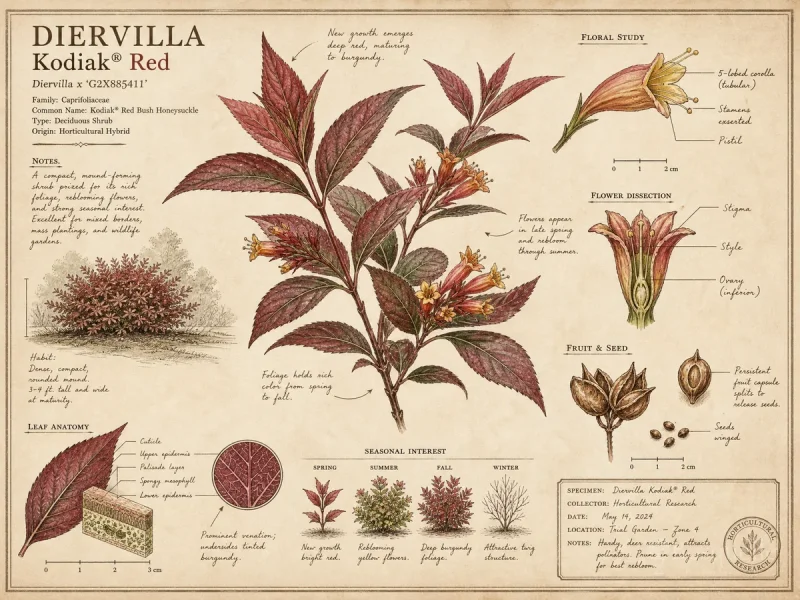
Diervilla is a suckering deciduous shrub sold as bush honeysuckle. It is not invasive Lonicera — not Japanese honeysuckle vine, not Amur or Tartarian shrub honeysuckle. Kodiak Red is a red-foliage Kodiak kind. Diervilla lonicera is northern bush honeysuckle, still this genus. Sun to shade, soil that drains, and a plan for suckers.

Sun to shade, drain, and a suckering shrub
| Factor | Recommended | Avoid |
|---|---|---|
| Light | Full sun to part shade; sun for strongest foliage color | Deep dark shade if you want flowers and bright Kodiak color |
| Soil | Average soil that drains; sand, loam, or clay that does not pond | Standing water, or a salty roadside strip |
| Water | Water the first season; established plants handle short dry spells | A stagnant puddle around the crown |
| Habit | Suckering thicket for slopes, massing, and tough edges | A single non-spreading specimen with no editing |
Diervilla wants a site you can leave as a colony. University of Minnesota Extension: sun to full shade; adaptable soils; drought and compaction tolerance; good for massing, hedges, and slopes. Full sun deepens Kodiak foliage color. Deeper shade still grows the shrub; flowers and leaf color soften. Standing water is the usual fail, not cold.
Confirm Diervilla on the tag before you dig. The word honeysuckle on a nursery stick can mean invasive Lonicera. Yellow summer flowers look similar; the genus is not. Suckers are the plant’s job for a bank or a mass, not a defect. If you need one stem and zero colony, buy a different shrub.
How to plant Diervilla
University of Wisconsin Arboretum: water to establish, then little extra care. Suckering can run in a new bed. Space for the colony you want, not the nursery pot you brought home.
- Plant in spring or early fall while you can water the first month. Skip a July heat wave unless daily water is already a habit.
- Dig a hole as deep as the root ball and a little wider. Set the crown at the old nursery line. Firm. Water in.
- Tease circling roots on container stock. Do not bury the stem.
- Space 3–5 feet for a mass that knits. Wider if you will edit suckers at the edge every year.
- Mulch lightly to hold moisture the first season. Keep a thick wet mound off the crown and off suckers you want to keep.
- Water through the first dry season. Established plants on a slope handle short dry spells. New plants do not.
A pot can hold a compact Kodiak for a season on a patio. Use a deep pot with holes. Empty the saucer. Part sun. The shrub still wants open ground for its colony job — a pot is a pause, not the usual site. Divide by digging a rooted sucker in early spring or fall and replanting the same day.
Water, prune, and edit the colony
North Carolina Extension: blooms sit on the tips of new growth. Prune in late winter or early spring to shape and remove dead wood. It is not Lonicera japonica. It spreads by suckers into a thicket and is not treated as invasive. Avoid salt and poor-draining clay.
- Water new plants when the top few inches dry. Soak the root zone. Do not mist the leaves and call it done.
- Once established, water in a long drought. Skip a weekly flood on a lean slope that already drains.
- Feed lightly in spring, or not at all on decent soil. Extra nitrogen makes soft growth and can dull Kodiak color.
- Prune in late winter or early spring. Cut damaged stems. Thin crowded wood. Flowers still come on the new tips that follow.
- Renew a tired patch every few years by cutting stems near the ground in early spring. The colony usually resprouts.
- Spade-cut suckers outside the outline you want each spring or fall. Leave suckers where you want the thicket to widen. Mark the edge so a helper does not pull the colony as weeds.
Pests are usually light in sun and air. Weak color in deep shade is a light miss, not a spray job. Mushy collapse is stagnant water. A honeysuckle vine on the fence is likely Lonicera, not this shrub. Winter stems look empty — that is deciduous, not dead. Scratch for live wood at the base before you dig it out in March.
Kodiak colors, pots, and partners
Culture is shared. Foliage color is the browse. All of these are Diervilla. None replace a fragrant climbing Lonicera.
- Kodiak Red — red foliage in sun; yellow summer flowers.
- Kodiak Orange — orange foliage on the same suckering shrub.
- Kodiak Black — dark foliage for contrast in a mass.
- Kodiak Fresh — chartreuse to lime foliage sheet.
- Diervilla lonicera — northern bush honeysuckle without branded foliage color; yellow flowers and classic suckers. The species name is not the genus Lonicera.
Partners that share sun to part shade and average drain — other tough native shrubs, grasses, or a slope mix — sit beside the colony, not in the same hole. Dry-shade hostas want more even moisture than a lean Diervilla bank. A climbing honeysuckle on the same fence is a different plant and a different problem. Pots, as above: holes, empty saucer, then into the ground when you want the thicket. Deadhead is optional; yellow flowers come on new wood either way.
Plant Diervilla where a suckering shrub is welcome: sun to part shade, soil that drains, a slope or a massing bed. It is bush honeysuckle, not invasive Lonicera. Confirm the genus on the tag. Water the first season. Established plants handle short dry spells. Prune in late winter or early spring; flowers sit on new tips. Cut a tired patch near the ground every few years if you want a renew. Spade-cut suckers outside the outline you want, or leave them for a thicket. Kodiak Red, Orange, Black, and Fresh share that culture; foliage color is the browse. Diervilla lonicera is northern bush honeysuckle without branded leaf color. A pot with holes can hold a plant for a season; empty the saucer, then give it ground if you want the colony. Do not plant into standing water. Do not feed hard for extra color. Do not dig a leafless winter stem until you check for live wood at the base. Partners sit beside the clump, not in the same hole. Space 3–5 feet for a mass that knits. Wider if you will edit the edge every year. Mulch lightly the first season. Keep a thick wet mound off the crown. Full sun deepens Kodiak color; deeper shade still grows the shrub. Salt and poor-draining clay are the usual soil fails. Yellow summer flowers feed bees. Deer browse is local. Mark the colony so spring shoots are not pulled as weeds. A vine on the fence is likely Lonicera. This shrub stays a thicket in the bed. Plant true Diervilla. Water to set. Prune on new wood. Edit or keep the suckers on purpose. Plant in spring or early fall while the soil is workable. Set the crown at the old nursery line. Tease circling roots. Do not bury the stem. Water until the hole settles. A 3-to-5-foot grid knits a bank faster than a single pot dropped in a lawn. Keep the first-year hose in reach; a missed July on a new shrub browns the tips. Once the roots take, skip a weekly flood on a lean slope. Extra fertilizer does not turn a shaded plant red. Move it toward morning sun if color stays dull. If the tag said only honeysuckle, walk back to the bench and read the Latin. Diervilla stays a shrub in the bed. Lonicera japonica climbs. Amur honeysuckle is a different invasive shrub. Northern bush honeysuckle is Diervilla lonicera. Kodiak kinds are still Diervilla. Mix colors if you like; suckers will blur the edge unless you edit. Cut damaged wood in late winter. Leave a marked outline for whoever weeds in May. Empty a patio saucer if the plant is still in a pot. Then plant it in the ground when you want the thicket to work. Scratch the bark in March before you toss a leafless stem. Live wood is green under the bark. Dead wood is brown and dry. Resprout from the base is the usual spring story. A hard renew cut to a few inches still flowers that summer because bloom is on new tips. Light after-flower trim is optional for a tidy mass. Do not shear it like a boxwood hedge unless you will keep that shape every year. Do not plant it in a bed you soak every week with soft perennials. Group it with other tough sun-to-part-shade shrubs that share a draining bank.
FAQ
Is bush honeysuckle invasive?
Diervilla is a native North American suckering shrub, not an invasive. In many regions “bush honeysuckle” means Lonicera shrubs or vines. Confirm Diervilla on the label.
Is Diervilla the same as Lonicera honeysuckle?
No. Flowers can look similar. Diervilla is bush honeysuckle. Lonicera includes vines and shrubs, including invasive species.
Does Diervilla need full sun?
Full sun to part shade. Full sun intensifies Kodiak foliage color. Deeper shade still grows the shrub with softer color and fewer flowers.
Does bush honeysuckle spread?
Yes, by suckers into a colony. Edit the edge with a spade if you want a tight outline. Leave suckers for a thicket or slope cover.
When should I prune Diervilla?
Late winter or early spring. It blooms on new growth tips, so a dormant cut still leaves summer flowers. You can cut a tired patch near the ground to renew it.
What is Kodiak Diervilla?
A series of Diervilla selections grown for colorful foliage — Red, Orange, Black, Fresh, and similar — on the same suckering shrub.
Is Diervilla lonicera a Lonicera?
No. Diervilla lonicera is northern bush honeysuckle. It is still Diervilla. The species epithet is not the honeysuckle genus.
Will Diervilla grow in shade?
Yes, often into quite a bit of shade. Sun still gives better flowers and stronger Kodiak color.
Can I grow Diervilla in a pot?
For a season, in a deep pot with holes. Empty the saucer. The usual job is open ground so suckers can make a colony.
Will Diervilla take dry soil?
Established plants often handle short dry spells on a draining slope. Water new plants until roots take. Skip stagnant clay.
Does Diervilla attract pollinators?
Yellow summer flowers commonly feed bees and other insects.
Why did my honeysuckle take over the fence?
That is often invasive Lonicera, not Diervilla. Check the genus. Remove invasives per local guidance.
Recommended plants


More first-season notes by plant are gathered in How to Grow Guides.
Updated: Reviewed by Bosquelle Editors