
Dianthus spans a wide range — from annual sweet Williams to compact border pinks and rock-garden alpines — but all share one non-negotiable: sharp drainage and full sun. The plants that fail in dianthus are almost always in wet or rich soil. A gritty, alkaline-tending, well-drained position in full sun, combined with a post-bloom shear to prevent legginess, covers most of the care for most dianthus types.
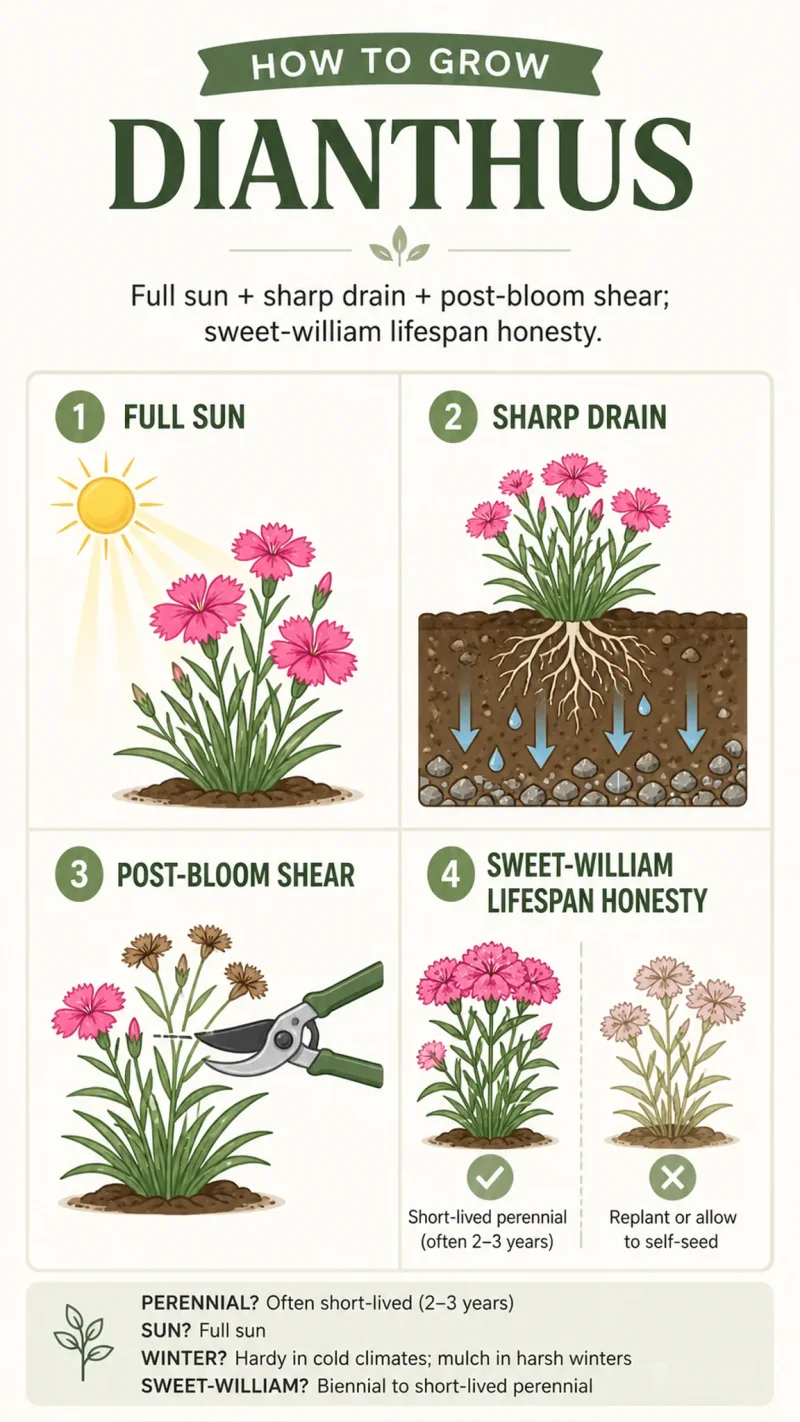
Dianthus care brief — sharp drainage, full sun, post-bloom shear
- Light: full sun — mats stretch and bloom poorly in deep shade.
- Soil: sharp drainage; lean toward neutral to alkaline — winter-wet acid clay rots crowns more often than lean gravelly loam.
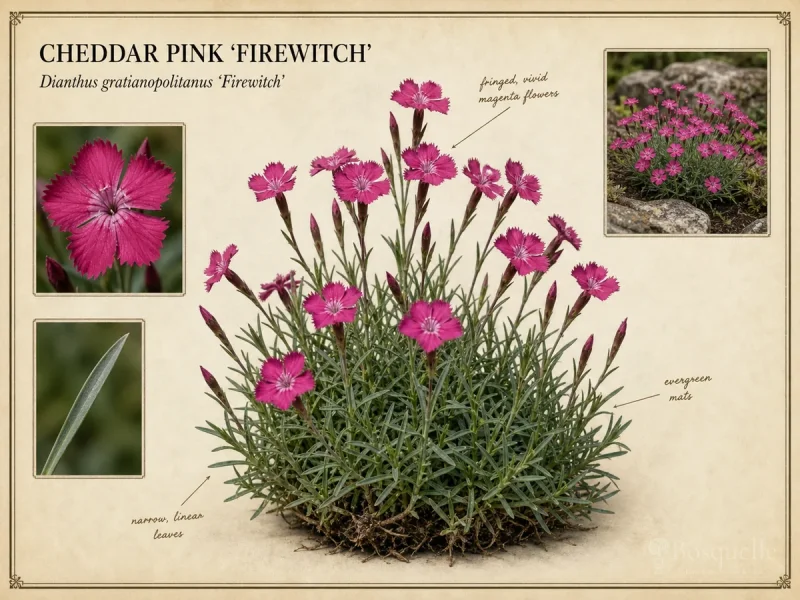
- Water: settle new plants; then water during prolonged drought — established mats such as Firewitch and Bath's Pink prefer dryish feet over constant moisture.
- Shear: after the main flush, cut spent stems to tidy foliage and often encourage a lighter second show.
- Divide: refresh woody centres on cheddar and garden pinks — see Dividing Dianthus.
- Know the kinds: cheddar / garden pinks ≠ carnations ≠ sweet william (often biennial) ≠ maiden pinks — shared sun and drainage, different lifespan expectations.
Site and soil for Firewitch, Bath's Pink, and Tiny Rubies
Choose an open bed with at least six hours of sun and sharp drainage at the crown — this one rule covers every dianthus type on this page, and the plants that fail are almost always sitting in a wet or rich patch, not a lean gritty one. Do not bury evergreen mats in ice-water clay.
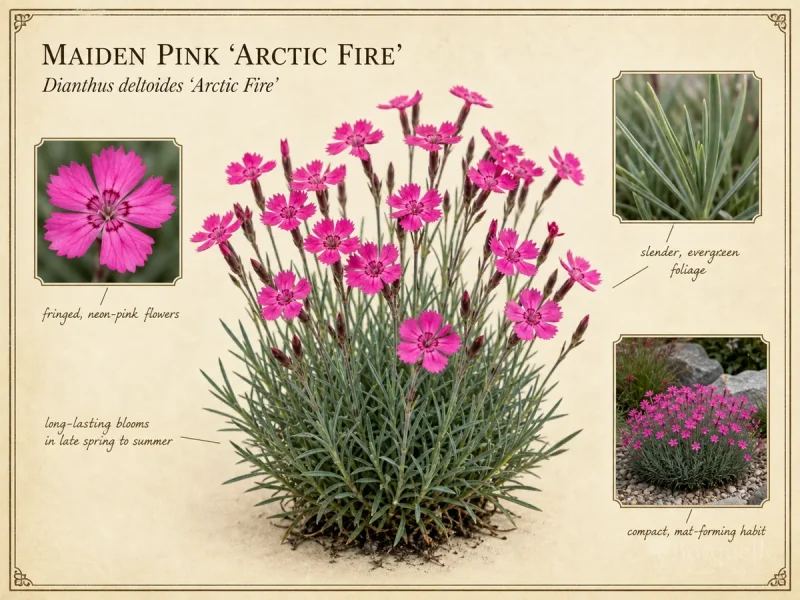
Example: cheddar and garden pinks such as Firewitch and Tiny Rubies are the classic low evergreen mat form. Maiden pinks such as Arctic Fire follow the same drainage rule but tolerate slightly wetter cold. (Full classification lives on the FAQ below and on the child guides — this page keeps naming light.)
Improve heavy clay with grit or a raised bed so crowns never sit in winter wet. In sandy ground, a light grit mulch helps without turning the bed into a rich vegetable patch — dianthus bloom better when not overfed or over-acidified.
Hardiness by climate (method only): colder gardens favour hardy cheddar and garden pinks with light winter mulch after frost; mid-temperate gardens suit most catalog dianthus with sharp drainage; warmer gardens need drainage and heat tolerance — carnations and Chinese pink often want a touch more summer moisture than lean cheddar mats (named types in the next section). Confirm each cultivar on its plant profile — do not invent one USDA story for every Dianthus.
Carnations, sweet william, and the shear routine
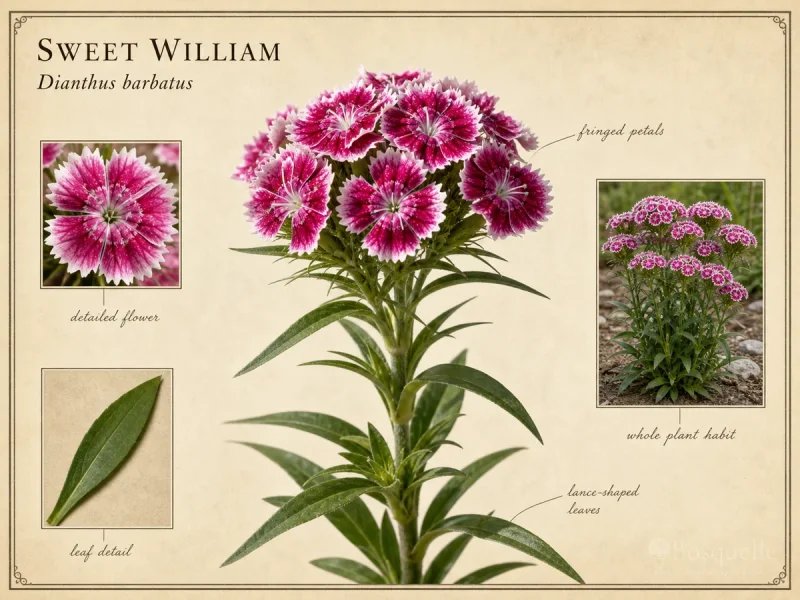
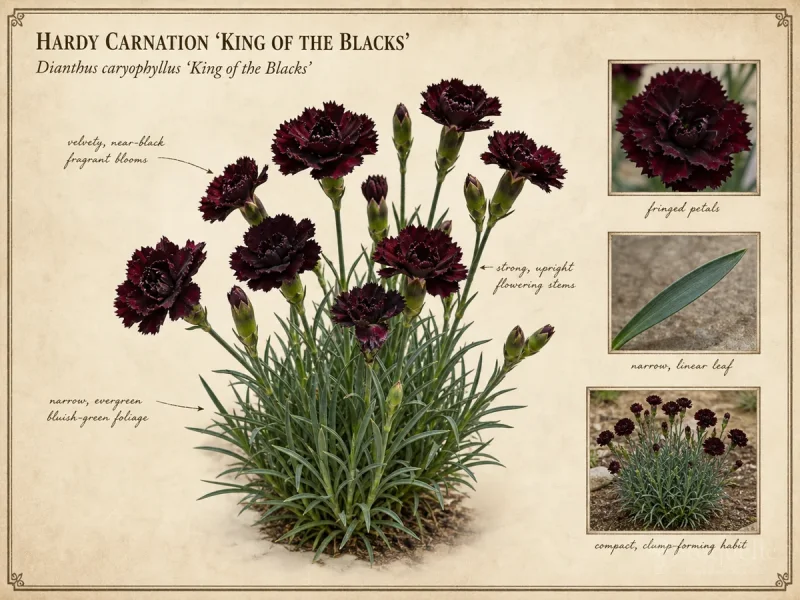
Hardy carnations such as SuperTrouper Red & White and King of the Blacks share sun and drainage but are taller border plants — stake if stems flop; do not expect the flat evergreen mat of cheddar pinks. Sweet william such as Sweet William and fragrant Sweet William Albus is often biennial or short-lived — enjoy the flush, allow self-sow where wanted, and do not plan a decade of woody-centre division the way you would for Firewitch. Chinese pink Chinese Pink is often treated as annual or short-lived bedding in temperate gardens.
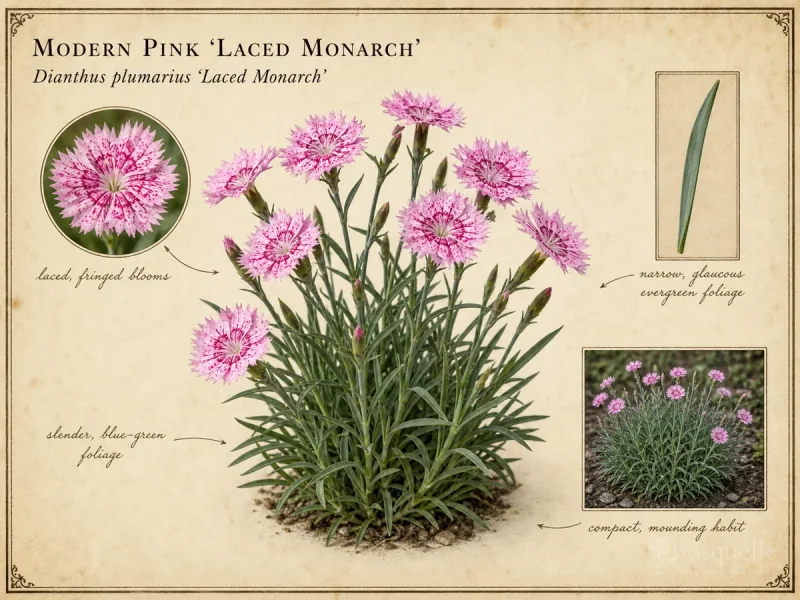
After the main flush, shear spent stems on cheddar and garden pinks such as Neon Star and Laced Monarch back toward tidy foliage — leave enough green leaf. Water newly planted dianthus until established, then soak during long dry spells without daily misting that keeps crowns wet.
Seasonal rhythm
- Spring: tidy winter stems; optional divide as growth starts; water new plants in.
- Summer: enjoy bloom; shear after the main flush; water only in prolonged drought.
- Early fall: second divide window for mats; ease water as growth slows.
- Winter: do not hard-cut evergreen cheddar/garden pink mats for winter — tidy damaged stems in spring; light mulch in cold gardens after frost; keep ice-water saucers off crowns.
Growing dianthus in containers?
Pots change watering and drainage risk. Compact cheddar and garden pinks such as Tiny Rubies and Neon Star suit patio containers, but this pillar stays focused on in-ground care. For pot size, sharp mix, and patio drainage details, use Dianthus in Containers.
Common mistakes: winter-wet clay; deep shade; daily shallow watering; treating sweet william as a permanent cheddar mat; waiting years too long to refresh woody centres; inventing Types buckets instead of shared care.
Partners live on Dianthus Companion Plants. Divide steps live on Dividing Dianthus. Scent shortlists live on Fragrant Garden Dianthus.
Give dianthus full sun and sharp drainage, shear after bloom, keep cheddar, carnation, and sweet william straight, then return here for shared growing rules.
FAQ
Are cheddar pinks the same as carnations?
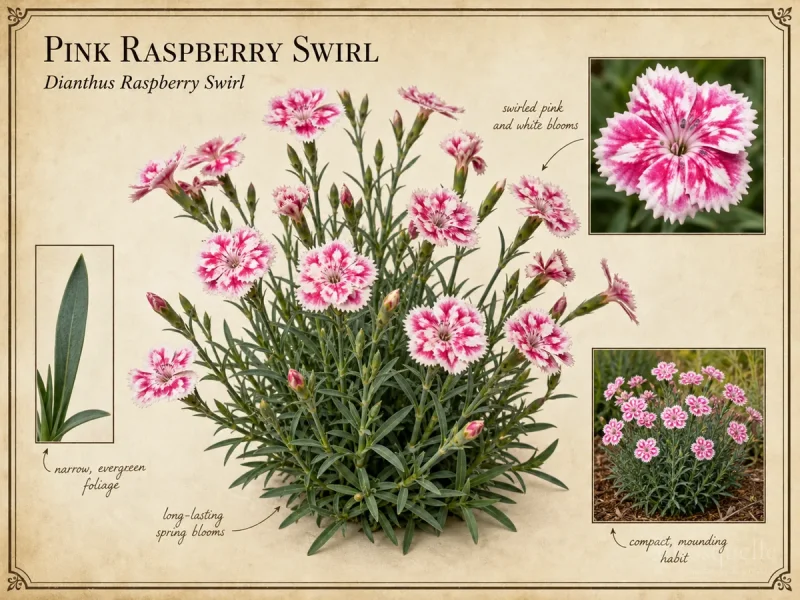
No. Cheddar and garden pinks (species Cheddar Pink, and garden-pink hybrids such as Raspberry Swirl and Passion) are low mats; carnations (caryophyllus) are taller border plants. Sweet william is often biennial. They share sun and drainage, not the same lifespan plan.
Do dianthus like sun or shade?
Full sun is the default — at least six hours. Light afternoon shade helps in hot summers, but deep shade softens mats and cuts bloom. Sharp drainage matters as much as light.
Are dianthus perennials?
Some are, some aren't — it depends on the type. Cheddar and garden pinks are usually long-lived perennials; sweet william and Chinese pink often behave as biennials or annuals. See "Is dianthus a perennial or annual?" below for the full breakdown by species.
Should I cut back dianthus in winter?
No hard winter cutback on evergreen cheddar and garden pink mats — leave foliage for winter and tidy damaged stems in spring. After the main summer flush, a light shear (about one-third) is the cleanup that matters — not a dormant chop.
Where is the divide checklist?
Dividing Dianthus for mat refresh and woody centres. This pillar covers year-round growing rules.
Is dianthus a perennial or annual?
Both. Hardy perennial pinks (Dianthus plumarius, D. deltoides) return each year. Sweet William (D. barbatus) is biennial or short-lived perennial. D. chinensis (Chinese pink) is commonly grown as an annual or biennial. Modern hybrids vary — check the label and each plant profile rather than one zone story.
Are dianthus (carnations/pinks) fragrant?
Many dianthus are strongly fragrant with a characteristic spicy-clove scent — this is one of their most valued qualities. The scent is most pronounced in old-fashioned pinks (D. plumarius cultivars) and carnations (D. caryophyllus). Modern bedding types are often bred for colour and less for scent. Check cultivar descriptions if fragrance is a priority.
Why are my dianthus dying back from the centre?
Centre die-back in dianthus is most commonly caused by overwatering or waterlogging — the crown rots. Ensure excellent drainage. A second cause is natural ageing: border pinks become woody and open-centred after 3–4 years. Take cuttings from the outer healthy growth each summer and propagate replacements annually to maintain young compact plants.
When and how do I take dianthus cuttings?
Take 'pipings' (non-flowering stem cuttings) in June–July. Pull a shoot of 4–6 cm from the plant by tugging at a node — it comes away cleanly. Remove lower leaves, insert in gritty compost, and keep in a sheltered bright spot. Roots in 3–5 weeks. Propagating annually from cuttings keeps plants compact and free-flowering.
What is the difference between carnation and dianthus?
Carnations (Dianthus caryophyllus) are a specific species within the Dianthus genus, primarily the large-flowered florist carnation bred for cut flowers. Garden pinks (D. plumarius and hybrids) and other dianthus species are generally smaller-flowered border or rockery plants. All are in the same genus with the same basic care requirements.
Should I deadhead dianthus?
Yes — deadheading spent blooms encourages further flowering in repeat-blooming types. A post-bloom shear over the whole plant (cutting stems back by about one-third) in late June–July after the first flowering flush promotes compact growth and often stimulates a second flush in late summer.
Related guides


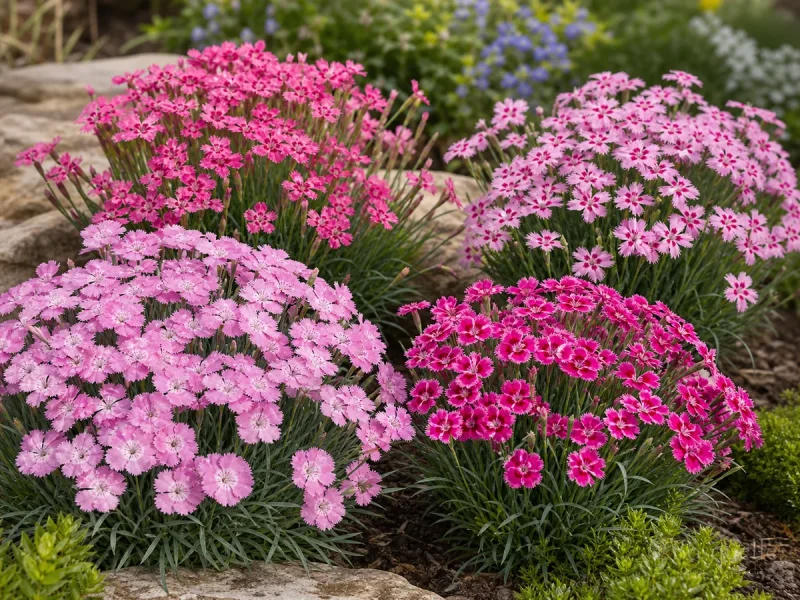
Recommended plants







This note is part of Dianthus Guides.
More first-season notes by plant are gathered in How to Grow Guides.
Updated: Reviewed by Bosquelle Editors