
Grow Dendrobium in bright light with a bark mix that dries between waterings. Many cane types need a cool, dry rest after the canes finish, or they make plantlets instead of flowers. Shops also say dendrobium orchid.

Give it bright light, bark that dries, and a cool dry rest on nobile types
| Factor | Recommended | Avoid |
|---|---|---|
| Light | Bright light — an east window, or a south window with a sheer. Aim for firm, olive-green canes | A dim corner (dark soft growth, few flowers) or hot midday scorch |
| Water | Soak the bark, then wait until it is almost dry. Water more while new canes grow | A year-round weekly rinse, ice cubes, or a pot sitting in a saucer |
| Mix and pot | Coarse bark orchid mix in the smallest pot that holds the roots | Peat houseplant soil or an oversized pot that stays wet |
| Rest (nobile and other deciduous cane types) | After new canes finish, cool nights, bright light, and water only enough to stop severe shrivel. Stop nitrogen feed | Warm, wet winters — nodes then make plantlets instead of flower buds |
| Humidity and air | About 50 to 60 percent, with moving air. A pebble tray works only if the pot sits above the water | Wet leaves overnight in still air |
Light is stronger than a moth orchid needs. A west or lightly shaded south window is the usual home target; deep shade makes handsome dark leaves and almost no flowers. Use a bark mix and the smallest pot that fits, so roots can dry between waterings. [1]
When new canes finish — a small nub at the tip, no new leaves — nobile and other deciduous types want cool nights and a dry rest. Water only enough to keep canes from collapsing. If you keep them warm and wet, or keep feeding nitrogen, the nodes make plantlets (keikis) instead of flowers. [2]
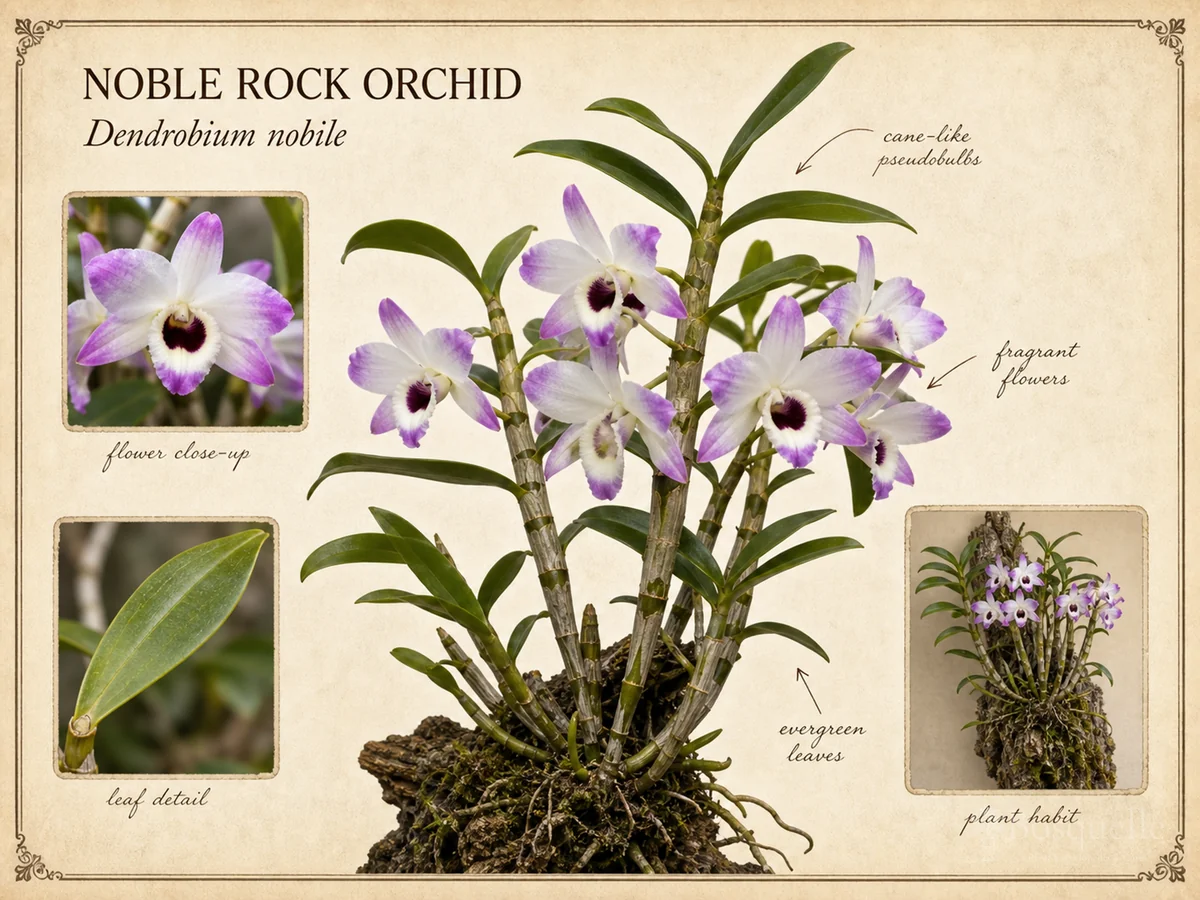
D. nobile and D. anosmum are the classic cool-dry rest cane types. D. kingianum is a cooler Australian face that still wants bright light and a drier autumn. Warm hard-cane tags live in the last heading.
Hang it outdoors in summer shade
Dendrobium is an epiphyte in a pot, not a bed plant. After frost risk passes, hang it in bright shade so midday sun does not burn the leaves, then bring nobile types in before a freeze if you cannot keep the cool rest indoors on purpose.
- Choose bright shade — under a tree or a shade cloth, never full midday sun on a hot wall.
- Water thoroughly when the bark is almost dry, then let it drain. Do not leave the pot in a saucer of water.
- Keep air moving around the canes. Space hanging pots so they do not sit wet against each other.
- Bring the pot indoors before a freeze. Resume the cool dry rest on nobile types once the new canes have finished.
Can I put my Dendrobium orchid outside?
Yes, in bright shade after frost risk passes. Bring it in before a freeze, and keep nobile types on their cool dry rest once the canes have finished.
Leave old canes; cut only the spent flower stems
Old leafless canes still hold energy and can flower from the nodes. Cut only the thin flower stems after bloom, back to the cane. Remove a cane only when it is soft, hollow, or pale brown all the way down. [3]
- When the last flower drops, follow the thin stem to where it meets the cane and cut there.
- Leave firm old canes in the pot, even if they have dropped their leaves.
- Cut a cane at the base only if it is mushy, hollow, or fully shrivelled and brown.
What to do with a Dendrobium orchid after flowering?
Cut the thin flower stem back to the cane. Leave the cane in place. Then grow new canes in summer, and rest nobile types cool and dry once those canes finish.
Are Dendrobium orchids easy to grow?
The hard part is matching rest to the plant you bought. Bright light and bark that dries are the shared rule. Nobile types fail first if you water them like a moth orchid all winter.
How do I care for a Dendrobium orchid as a beginner?
Give bright light, water when the bark is almost dry, and learn whether your plant wants a cool dry rest after the canes finish. Do not copy a grocery moth-orchid calendar.
How many times a year do dendrobiums bloom?
Many nobile types flower once in late winter or spring along the cane. Warm hard-cane types can flower more than once if light stays high. Count new canes, not a fixed calendar.
What are common problems with Dendrobium orchids?
No flowers usually means too little light or a skipped rest on nobile types. Mushy roots mean bark that never dries. Plantlets along the cane after a warm wet winter mean the rest was too soft.
How long do Dendrobium orchid blooms last?
Hard-cane flowers often last weeks to a couple of months. Soft-cane nobile flowers are shorter. Cut the thin stem when the last bloom drops; leave the cane.
Not a moth orchid — more light, and a winter rest on types that drop leaves
A grocery moth orchid stores water in thick leaves and likes a steadier rinse in lower light. Dendrobium stores water in canes, wants more light, and — on nobile and other deciduous types — needs that cool dry rest. Do not copy a moth orchid’s calendar onto this plant. Cattleya, Oncidium, and Vanda are other orchids with their own light and water; they are not a Dendrobium substitute on the tag.
Is Dendrobium care the same as Phalaenopsis?
No. Dendrobium wants brighter light and, on nobile types, a cool dry rest. A moth orchid likes less light and a gentler wet-dry swing. A tag that says Dendrobium phalaenopsis is a Cooktown-type Dendrobium, not the moth orchid genus.
Nobile and anosmum rest cool and dry; Cooktown stays warmer
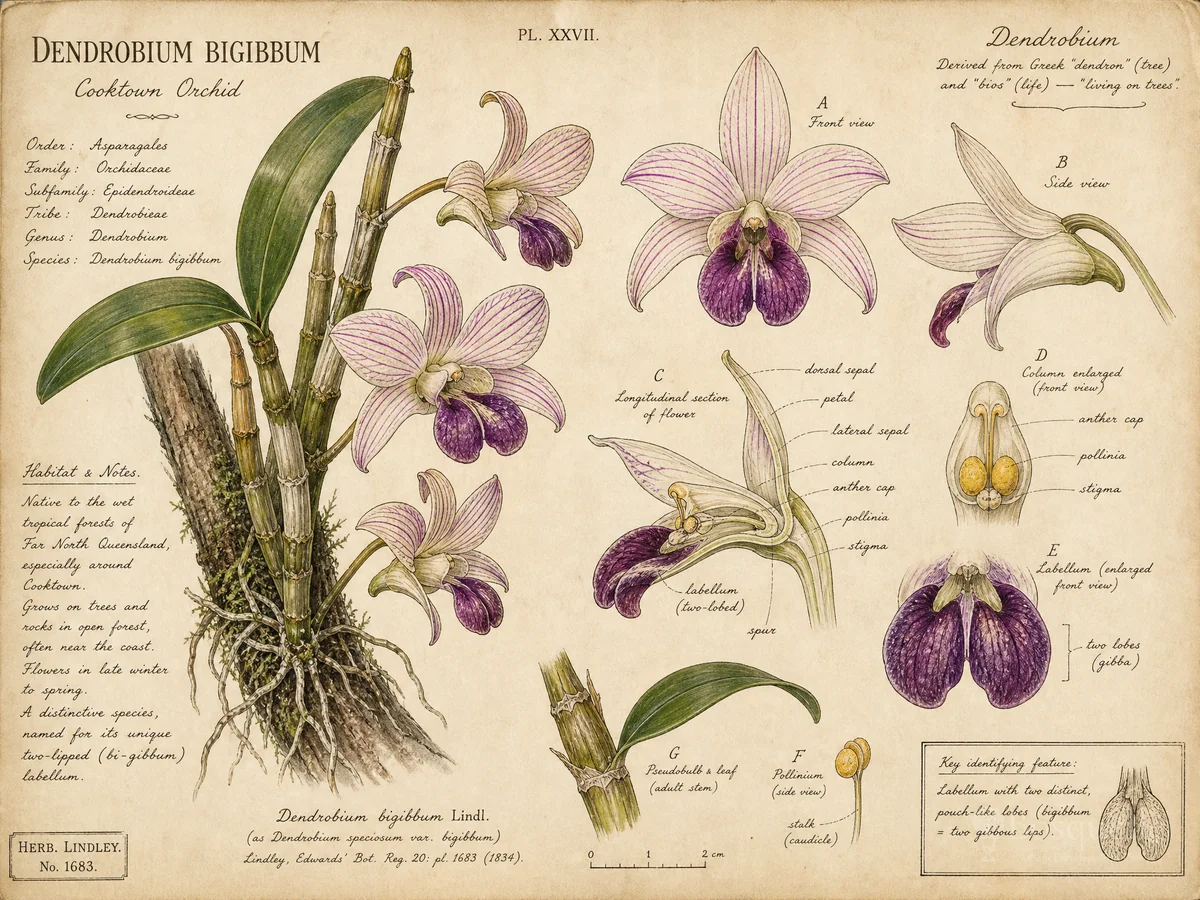
Garden-center Dendrobium splits into two useful groups. Soft-cane types such as D. nobile and D. anosmum drop leaves and need the cool dry rest. Hard-cane Cooktown types such as D. bigibbum stay mostly evergreen, like warmer rooms, and get a milder dry-down after the canes mature — not a moth-orchid calendar, and not a nobile freeze. [4]
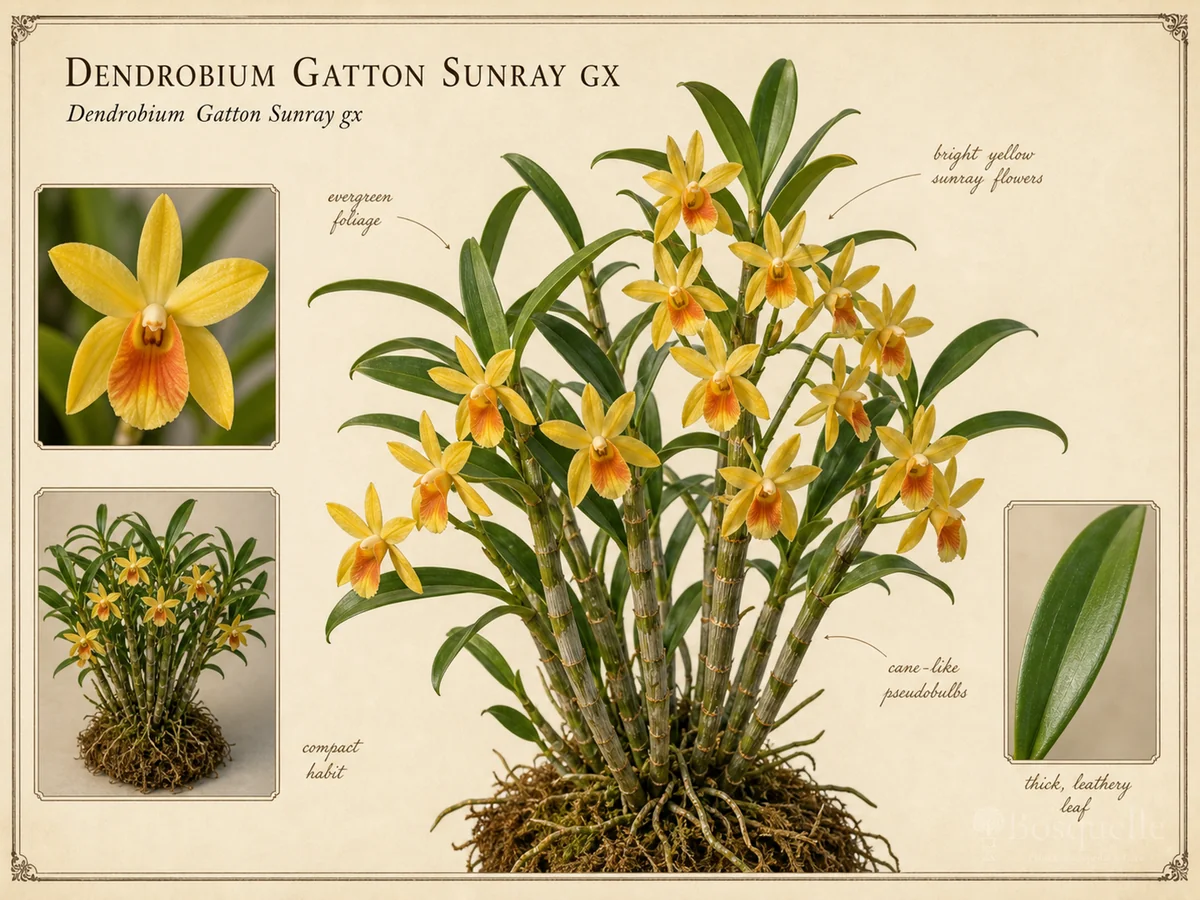
D. kingianum sits with the cooler Australian group: bright light and a drier autumn, closer to nobile than to a heated living room. D. lindleyi is a collector species on the same bright bark program. Dendrobium Gatton Sunray gx is a hybrid grex — read whether the plant in front of you is nobile-type or warm hard-cane, then match rest to that, not to the grex name alone.
What is the most common type of Dendrobium orchid?
Stores often sell evergreen Phalaenopsis-type, or Cooktown, hybrids. Nobile types are the other common cane. Check whether your plant drops leaves and needs a cool dry rest.
How do I get dendrobium nobile to bloom?
Grow the canes hard in bright light through summer, then give cool nights and a dry rest after they finish. Keep nitrogen off during that rest. Warm wet winters make plantlets instead of buds.
If you get plantlets along the cane instead of buds, cool the nights and dry the bark after the next canes finish — before you change fertilizer.
FAQ
How long does a Dendrobium live?
A well-grown plant can last for many years if you refresh the bark and keep light high enough to make new canes. Old canes stay in the pot until they are actually dead.
Can Dendrobium grow in garden soil?
No. It is an epiphyte. Use a coarse bark orchid mix in a draining pot, not garden soil or peat houseplant mix.
Can Dendrobium orchids be grown in water?
No. Roots need air as well as water. A bark mix that dries between soakings is the usual home setup, not a vase of standing water.
Can I grow Dendrobium from seed?
Home seed is a flask job, not a windowsill sow. Buy a nursery plant. Plantlets on a cane are a rest problem on nobile types, not a seed packet.
Related guides

Recommended plants



References
- [1] NC State Extension Gardener -
https://plants.ces.ncsu.edu/plants/dendrobium/ - [2] American Orchid Society -
https://www.aos.org/explore/dendrobium - [3] Smithsonian Gardens -
https://gardens.si.edu/collections/plants/orchids/orchid-care-sheets/dendrobium/ - [4] Royal Horticultural Society -
https://www.rhs.org.uk/plants/dendrobium/how-to-grow-dendrobium
This note is part of Dendrobium Guides.
More first-season notes by plant are gathered in How to Grow Guides.
Updated: Reviewed by Bosquelle Editors