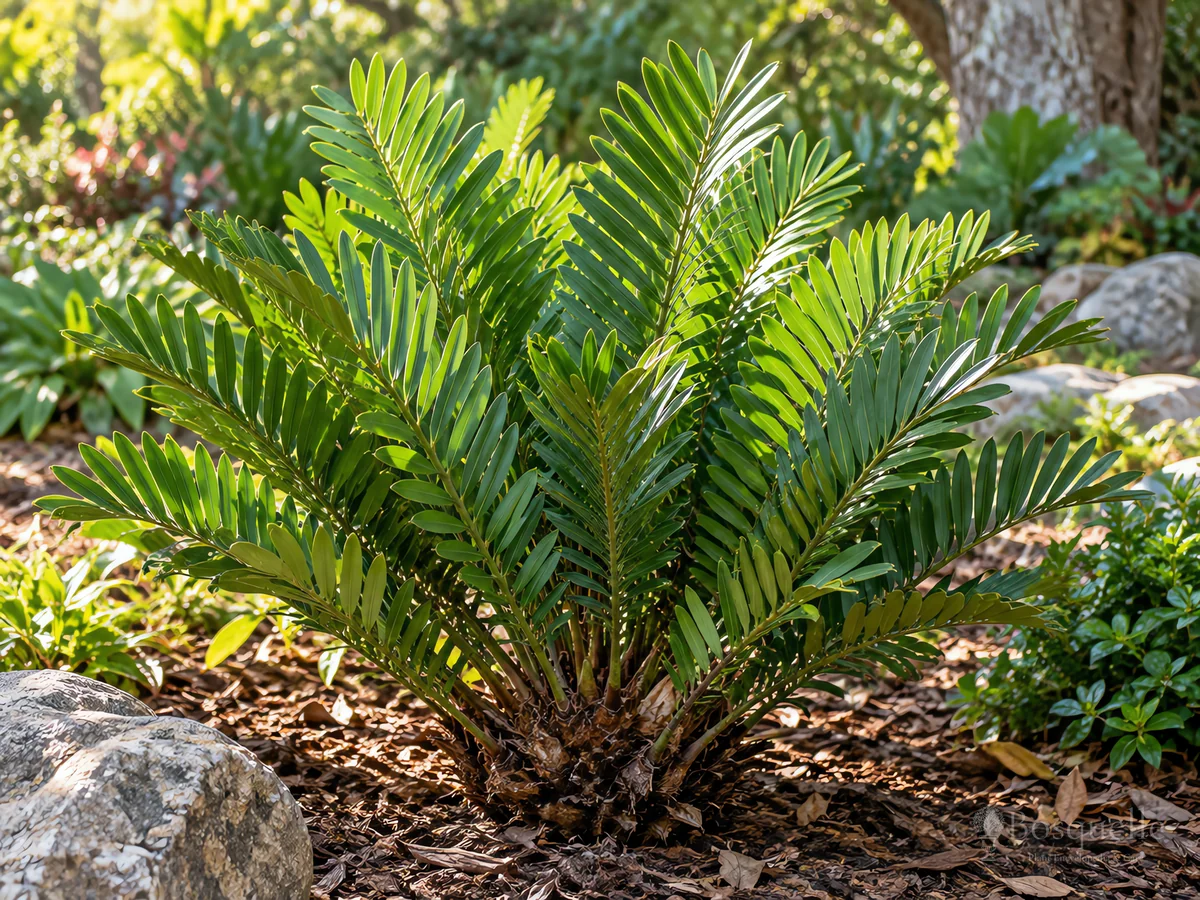
Grow coontie in sandy soil that drains, and water when the top has dried. Coontie is Florida's native cycad, not a palm. It is also sold as Florida arrowroot.

Give coontie part sun, sandy soil that drains, and water when the top has dried
| Factor | Recommended | Avoid |
|---|---|---|
| Light | Part sun is best; full sun once the plant is established | Do not park a new plant in harsh all-day sun if the new leaves bleach |
| Soil | Sandy ground that drains; a little compost is fine | Do not sit the caudex in a soggy well |
| Water | Water when the top of the soil has dried, then ease off once the plant is in | Do not keep the crown wet between waterings |
| Feed | A light fertilizer with micronutrients in the growing months | Do not force weak growth with a heavy weekly feed |
| Cold | A freeze in the 20s can brown the leaves; move a pot in before a hard freeze | Do not leave a potted plant out through a hard freeze if you garden north of its range |
coontie is Zamia pumila, a low cycad with a mostly underground caudex and a mound of glossy, fern-like leaves about 2 to 3 feet tall. Florida gardeners often list the same native plant as Zamia integrifolia. [1] Give it part sun and sandy ground that drains. It can take full sun once it is established, and it can take shade, but the plant looks deepest green with some sun and some cover. [2] Once the plant is in, it takes a dry spell better than a wet crown, so water when the top has dried, then let it dry again. A new planting needs regular water until the roots take, then you can ease off. [3] In the growing months, a light fertilizer that includes micronutrients is enough. Skip a heavy weekly dose that pushes soft leaves.
- Match the light. Part sun is the usual home. Full sun is fine once the plant is established, if the new leaves do not bleach.
- Plant in sandy ground that drains. Water should not stand around the caudex.
- Water when the top of the soil has dried, then let it dry again. Ease off once the plant is established.
- Feed lightly in the growing months. Skip a heavy weekly dose.
Does coontie need full sun?
Part sun is best. It can take full sun once it is established, and it can take shade, but harsh all-day sun can bleach a new flush.
How often do I water coontie?
Water when the top of the soil has dried. Do not keep the crown wet between waterings, and ease off once the plant is established.
Not cardboard palm — and not sago palm or a ZZ plant
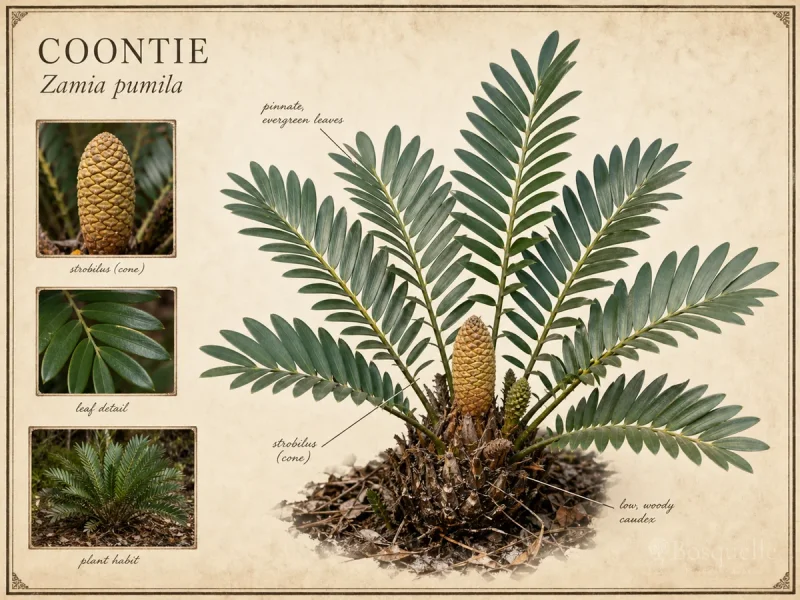
A true palm is a flowering plant. Coontie is a cycad. It makes a cone, not a palm inflorescence. Cardboard palm is Zamia furfuracea, a Mexican cycad with stiff, felted, wider leaflets. That is a different plant, not an extra card here. Sago palm is Cycas revoluta; see How to Grow Sago Palm. Dioon is another cycad with a stiffer crown; see How to Grow Dioon. A ZZ plant is Zamioculcas, an indoor aroid, not a cycad; see How to Grow ZZ Plant. A tag that says Raven is that ZZ plant, not this genus. If the tag says coontie or Zamia pumila or Zamia integrifolia, you have the Florida native. All parts poison a dog, a cat, or a person if they chew them. The seeds are the worst. [4]
Is coontie a true palm?
No. It is a cycad. It makes a cone, not a palm flower. Cardboard palm is a different Zamia with felted leaflets.
Cut only leaves that are fully brown
Coontie needs almost no pruning. Wear gloves, and cut a leaf only when it is fully brown, close to the crown. Leave green leaves on so the slow mound keeps feeding the caudex. Do not cut the crown back for shape. If Atala caterpillars strip the leaves for a couple of weeks, leave those insects; the plant grows a new flush.
- Wear gloves. The leaflet tips can catch bare skin.
- Cut only a leaf that is fully brown, close to the crown. Do not pull it off.
- Leave green leaves on. Do not cut the mound back for shape.
- If leaves yellow while the soil is still wet, let it dry before you water again, rather than cutting a green flush.
Do I prune landscape coontie?
Almost never. Cut a leaf only when it is fully brown. Leave green leaves on.
If new leaves yellow while the mix is still wet, let it dry before you water again. Keep pets from chewing the plant.
FAQ
Are coontie and Florida arrowroot different plants?
No. Florida arrowroot is a shop name for coontie. Florida lists often use Zamia integrifolia for the same native cycad.
Does coontie flower?
No. Mature plants make cones, male or female on separate plants. That is not a bloom you deadhead. Indoor plants rarely cone.
Will Atala caterpillars kill coontie?
No. They eat the leaves for a couple of weeks, then the plant grows new ones. Do not spray those caterpillars.
Can I eat the root or the orange seeds?
No. Do not treat the caudex as a kitchen starch, and do not eat the seeds. Keep pets from chewing the plant. If a dog or a cat chews it, call a veterinarian. Do not dig wild plants.
Related guides


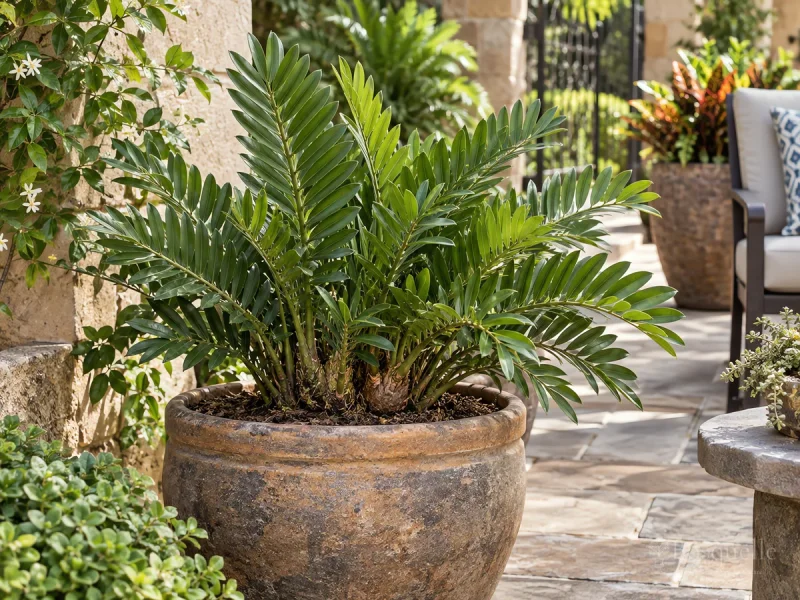
Recommended plants
References
- [1] North Carolina Extension Gardener Plant Toolbox -
https://plants.ces.ncsu.edu/plants/zamia-integrifolia/ - [2] UF/IFAS Extension -
https://ask.ifas.ufl.edu/publication/FP617 - [3] UF/IFAS Extension Pasco County -
https://blogs.ifas.ufl.edu/pascoco/2024/07/16/floridas-native-gems-the-coontie/ - [4] ASPCA -
https://www.aspca.org/pet-care/aspca-poison-control/toxic-and-non-toxic-plants/coontie-palm
This note is part of Zamia Guides.
More first-season notes by plant are gathered in How to Grow Guides.
Updated: Reviewed by Bosquelle Editors