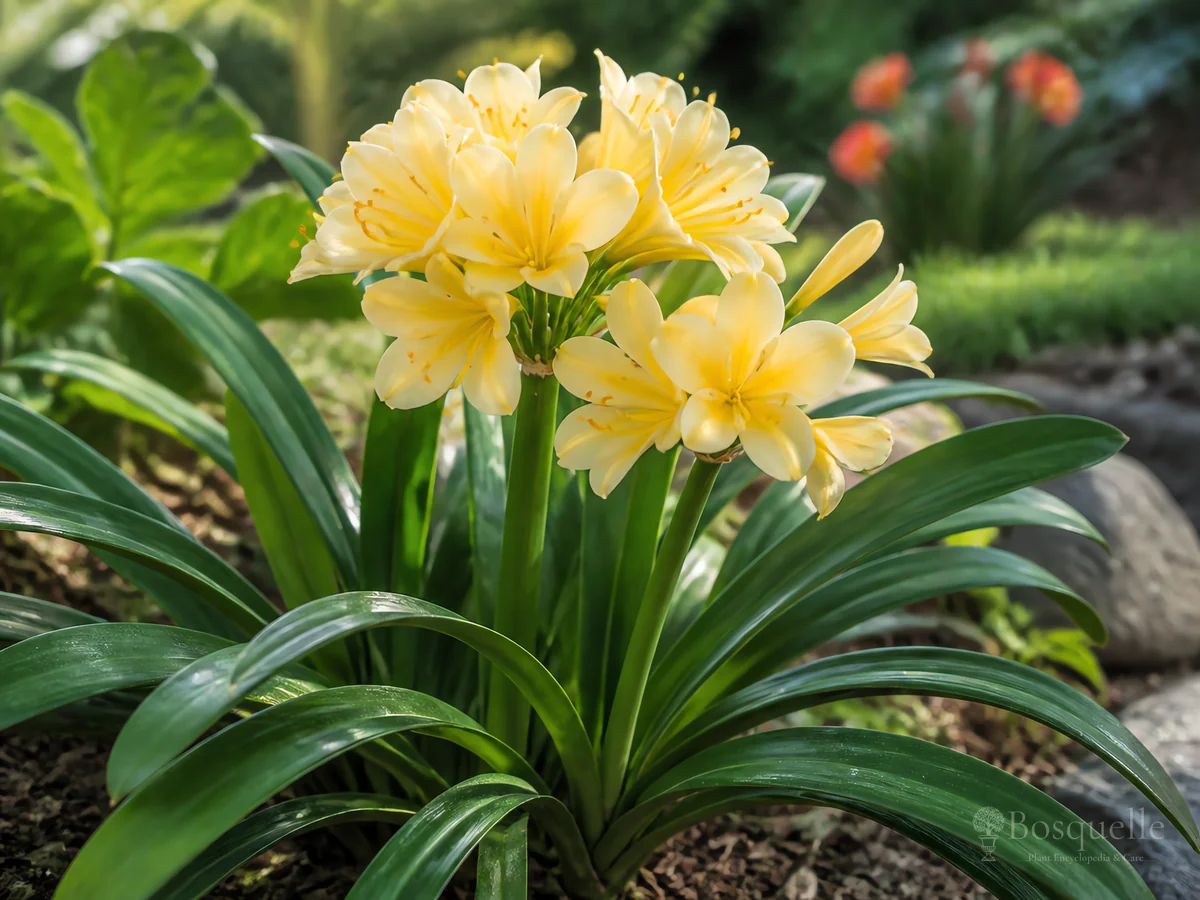
Grow Clivia in bright indirect light and water when the top of the mix is dry. Natal lily is the usual U.S. shop name. It is not the holiday amaryllis sold as a large bulb.

Give it bright indirect light, and water when the top of the mix is dry
| Factor | Recommended | Avoid |
|---|---|---|
| Light | Bright indirect; a north or east window, or a west window with midday shade | Do not set the leaves in unfiltered midday sun |
| Water | When the top 1 to 2 inches of mix feel dry; soak, then empty the saucer | Do not water on a weekly calendar while the pot stays wet |
| Mix | Coarse, well-drained houseplant or orchid mix | Do not pack the roots in heavy garden soil |
| Feed | Half-strength liquid feed once a month in spring and summer | Do not feed during the cool rest, and do not use full-strength fertilizer |
| Pot | A slightly snug pot; wait four to five years to size up | Do not move it into a much larger pot that stays wet |
A north or east window gives the bright, filtered light this plant needs. Direct midday sun bleaches and browns the leaves. Water only when the top of the mix is dry, then let the extra water leave the pot, because the thick fleshy roots rot in a soggy mix. [1] Keep the pot slightly snug. A crowded root mass blooms more reliably than a wide, wet pot. [2]
- Set the pot in bright indirect light. A north or east window is the usual home spot. A west window works if you keep midday sun off the leaves.
- Check the mix with a fingertip. Water when the top inch or two feels dry. Pour until water runs out of the drainage holes, then empty the saucer.
- Feed once a month from spring through summer with a half-strength soluble fertilizer. Stop feeding in late summer so the plant can enter its rest.
- Leave a healthy plant in the same pot for four to five years. Size up only one pot size when the roots lift the mix or crack the container.
How much light does clivia need?
Bright indirect light, such as a north or east window. Too little light leaves you with healthy leaves and no flowers. Direct midday sun scorches the leaves.
How often should I water clivia?
When the top 1 to 2 inches of mix feel dry. Soak the pot, then empty the saucer. Water less during the cool rest. A wet pot is the usual cause of root rot.
Give a cool, dry rest so it blooms
A leafy plant that never flowers usually skipped the cool, almost-dry rest, or it sat in too little light. The rest is the bloom cue, not a second watering calendar. [3]
- In early fall, stop feeding. Let the mix dry further than it did in summer.
- Move the pot to a bright, cool spot for six to eight weeks. Night temperatures should drop below 50°F and stay above freezing. A cool porch or an unheated bright room works if the plant does not freeze.
- Water only when the leaves begin to droop. Keep the mix nearly dry. Do not leave the pot in a full saucer.
- After the rest, move the plant back to a warmer room around 60°F and water a little more often. A flower stalk usually appears a couple of months later, often in late winter.
- When the flowers fade, cut the stalk at its base unless you want seed. Resume monthly half-strength feeding in spring.
Why isn't my clivia blooming?
Most plants skip bloom because they missed the cool rest, sat in a dim room, or were recently divided. Give a mature plant six to eight weeks below 50°F with almost no water.
How long is the cool rest?
Six to eight weeks, sometime from October through January. A shorter cool spell can delay the stalk or keep it short.
Why are the flower stalks short?
If the plant stays warm through fall, the cluster can open down in the leaves instead of rising above them. Run the full cool rest next season.
Divide the fans only when the pot is packed
Clivia blooms better when the roots are crowded, so do not divide on a schedule. Wait until the roots lift the mix or you cannot water through the pot. Then pull the fans apart. Natal lily is the common orange form; yellow clivia wants the same snug pot.
- Wait until after bloom, and until an offset has several of its own leaves, before you split the clump.
- Ease the plant out of the pot. If the roots have locked a ceramic pot, cut a plastic pot or work a knife around the inside wall rather than tearing the roots.
- Wash or brush mix off the fleshy roots. Pull the fans apart by hand when you can. Cut with a clean knife only where they will not separate, and keep a share of roots on each piece. [4]
- Pot each piece in a container that just fits the roots, using a coarse, well-drained mix. Do not drop a small offset into a wide pot.
- Water lightly until new leaves show. A division may skip a bloom season while it settles.
How often should I repot clivia?
Every four to five years, or when the roots lift the plant. Choose a pot only one size larger. A wide, wet pot cuts bloom.
How do I divide clivia?
After bloom, pull or cut fans so each piece has its own roots. Pot them snug in a mix that drains, and water lightly until new growth starts.
Not holiday amaryllis — evergreen fans and fleshy roots
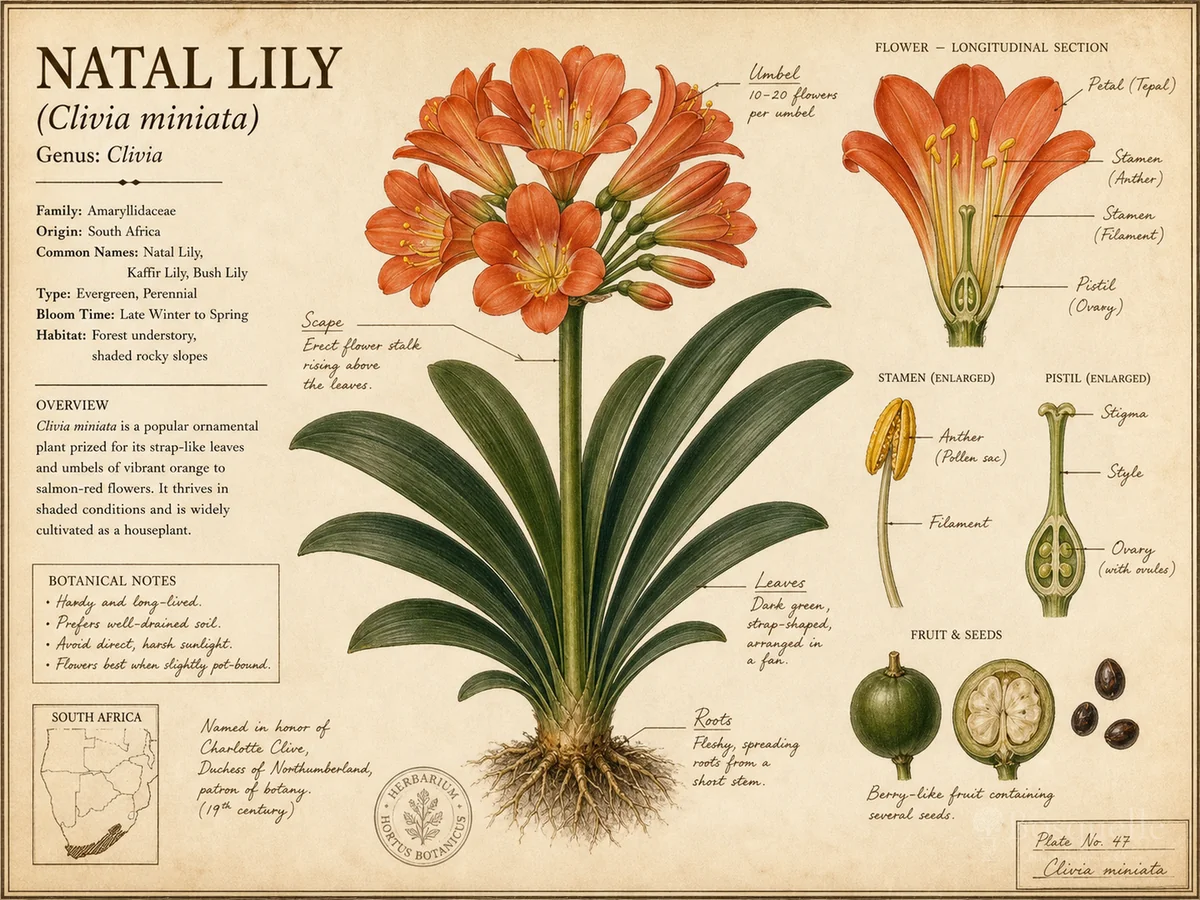
Shop amaryllis is usually Hippeastrum, a large holiday bulb. Clivia keeps evergreen strap leaves all year and grows from thick fleshy roots, not that bulb. The flowers are smaller and open in a cluster from the center of the fan. For the holiday bulb, see How to Grow Amaryllis.
Orange “African lily” on a search is often this plant, not lily of the Nile. Lily of the Nile is the summer-blue umbel on How to Grow Agapanthus.
Is clivia the same as amaryllis?
No. Shop amaryllis is Hippeastrum, grown from a large bulb. Clivia is an evergreen fan with fleshy roots and a winter cluster of smaller flowers.
Keep the mix dry at the top, and give a cool rest in fall. Leave a snug pot alone until the roots lift the plant.
FAQ
Is clivia toxic to cats and dogs?
Yes. All parts can make a pet sick if chewed, because the plant contains lycorine and related alkaloids. Keep the pot out of reach and call your veterinarian if a pet eats any of it.
Can I grow clivia from seed?
You can, but seed is slow. Berries take many months to ripen, and a seedling often needs three to five years before it blooms. Buy a mature plant if you want flowers sooner.
Does yellow clivia need different care?
No. The yellow form wants the same bright indirect light, the same watering when the top is dry, and the same cool rest as the orange plant.
Can I put clivia outdoors in summer?
Yes, in shade. Move it out after nights stay warm, keep midday sun off the leaves, and bring it in before frost. Year-round ground planting only works where winter stays above freezing.
What are the white cottony bits in the leaf bases?
Those are often mealybugs hiding where the leaves meet. Wipe them off as soon as you see them, and keep the crown drier so they do not spread.
Can I cut a clivia stalk for a vase?
Yes. Cut the stalk at the base when several flowers in the cluster are open, then put it in clean water.
Recommended plants

References
- [1] Iowa State University Extension -
https://yardandgarden.extension.iastate.edu/how-to/growing-clivia-indoors - [2] NC State Extension Gardener -
https://plants.ces.ncsu.edu/plants/clivia-miniata/ - [3] New York Botanical Garden -
https://libanswers.nybg.org/faq/222595 - [4] Wisconsin Horticulture -
https://hort.extension.wisc.edu/articles/clivia/
More first-season notes by plant are gathered in How to Grow Guides.
Updated: Reviewed by Bosquelle Editors