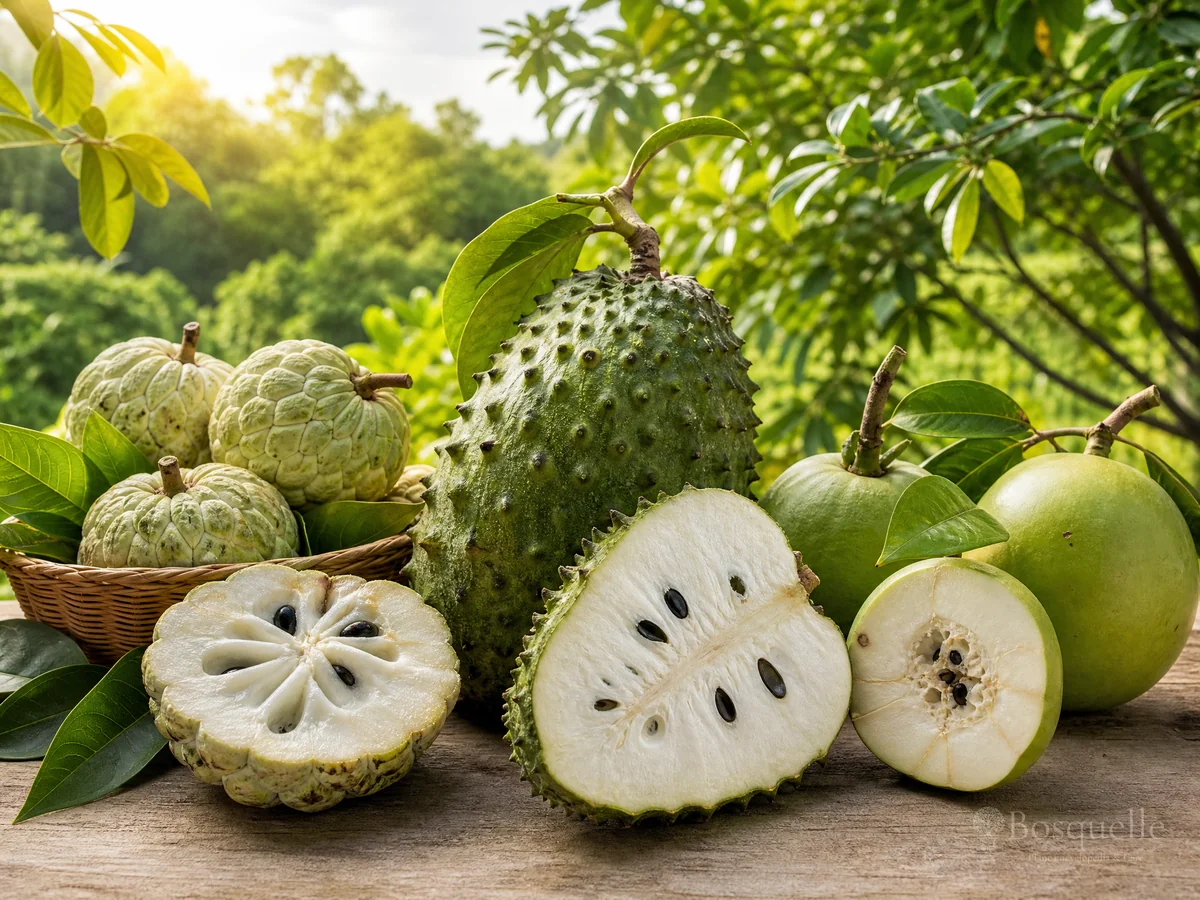
Grow cherimoya in full sun with cool nights and soil that drains. Cherimoya is Annona cherimola — not a temperate pawpaw.

Give it full sun, cool nights, and soil that drains
| Factor | Recommended | Avoid |
|---|---|---|
| Sun | Full sun with cool nights | Do not bake the canopy against a hot inland wall |
| Soil | Sandy loam or granite that drains; pH about 6.5 to 7.6 | Do not sit the crown in a wet pocket |
| Room | Space for 15 to 30 ft if you never prune | Do not crowd it under a power line |
| Frost | Wrap a young tree before a hard freeze | Do not leave a first-year tree uncovered on a 25 F night |
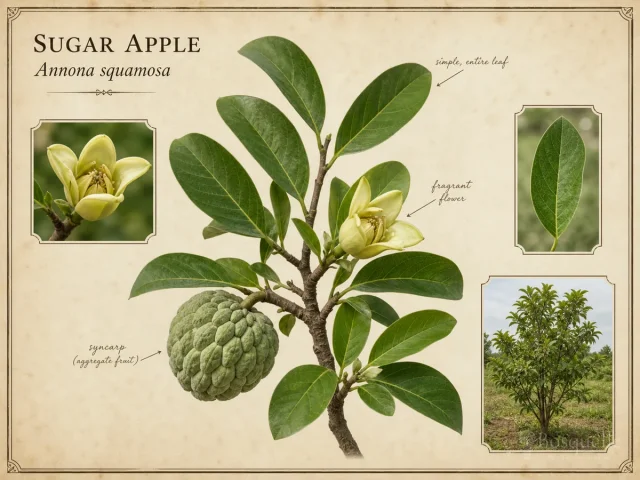
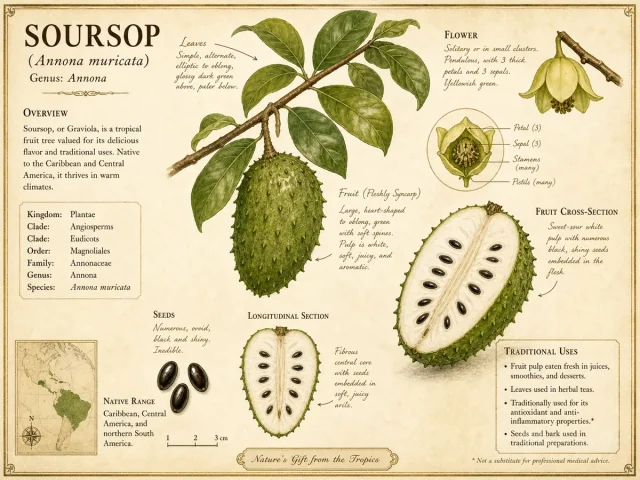
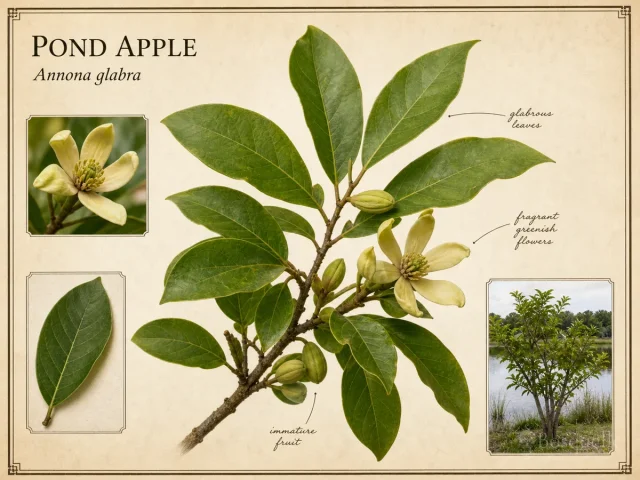
cherimoya fails first in soggy soil around the crown and in still, humid heat. [1] sugar apple and soursop want more tropical heat; pond apple wants wet ground. Match the kind on Types of Cherimoya.
Wrap a young tree before a freeze
Young growing tips burn near 29 F, and a mature tree is hurt near 25 F. A brief leaf drop in late winter is rest, not death. [2]
- Before a freeze, wrap the trunk and scaffold branches of a young tree, or cover the whole canopy with a frost cloth that reaches the ground.
- In a colder pocket, plant on the south side of a wall or under an eave so the house holds a little heat.
- Do not water a leafless tree the night of the freeze. Wet soil around a dormant crown invites rot.
How much sun does a cherimoya tree need?
Full sun most of the day, with cool nights. Deep shade makes a tall tree with little fruit.
Stake a young tree, and keep the nursery line at the soil
Young cherimoya roots are shallow and slow, so the trunk needs a stake from the first day. Set the nursery soil line level with the finished grade so the crown stays dry.
- Plant after frost risk, in spring, on a site that already drains.
- Drive a stake beside the hole before you set the tree, then tie the trunk loosely so wind does not rock the roots.
- Keep the nursery line at the soil surface. Do not bury the trunk in a basin that holds water.
- Give a standard tree about 20 to 25 feet from the next cherimoya if you will not prune hard.
Should I stake a young cherimoya?
Yes. The root system is shallow at first, so a stake keeps the trunk from rocking.
How far apart should I plant cherimoya trees?
About 20 to 25 feet for a tree you will not prune hard. Closer spacing works only if you keep the canopy small.
Water while it is in leaf, and stop when the tree is leafless
Cherimoya needs even moisture through the growing flush. When the tree drops its leaves, extra water around the crown invites root rot.
- Start deep watering when new growth begins, about every two weeks in well-drained ground, or use drip so the crown stays dry. [3]
- Keep a mulch ring a few inches back from the bark.
- Stop watering while the tree is leafless. Resume when the new flush starts.
- A drought-stressed tree drops leaves and sunburns fruit. That is a water swing, not a cue to flood a dormant crown.
Fruit set takes a brush, not bees. Those steps are on Hand-Pollinating Cherimoya.
When do I water a cherimoya?
Water while it is in leaf. Stop when the tree is leafless, then start again with the new flush.
Not a pawpaw, and pond apple is not a dessert cherimoya
Temperate pawpaw is Asimina triloba, a different genus that wants winter chill. Brazilian pawpaw on a soursop tag is still this genus, not the eastern U.S. tree. pond apple is a wetland native that takes salt; it is not a second grocery cherimoya. Which fruit you bought is on Types of Cherimoya.
Is a pawpaw the same as a cherimoya?
No. Pawpaw is Asimina, a hardy temperate fruit. Cherimoya is Annona cherimola.
Pick the fruit firm and pale, then ripen it indoors
Cherimoya is climacteric. Color turns from deep green toward a paler green or greenish tan when it is mature. Pick it firm, then let it soften at room temperature until it yields like a ripe avocado. [4] Clip the stem close so it does not puncture the next fruit. Fruit left on the tree too long splits.
- Wait until the skin looks a shade paler, then clip the fruit while it is still firm.
- Ripen at room temperature. A ripe fruit gives to gentle pressure.
- Do not store mature fruit colder than about 55 F, or the skin darkens and the flesh stays mealy.
- Spoon the white flesh. Do not eat the seeds or chew the leaves.
When do I pick cherimoyas?
When the skin is paler and the fruit is still firm. Ripen it indoors until it yields to a gentle squeeze.
How to grow cherimoya from seed
Seed makes a seedling, not a named dessert fruit. Grafted trees fruit sooner and match the parent.
- Rinse black seeds from ripe fruit and keep them dry. They stay viable about two to three years if weevils and mold stay off them.
- Sow about an inch deep in a deep pot. At about 70 F bottom heat, seedlings often show in three weeks; at room temperature, wait closer to forty days.
- Move a three-inch seedling into an 18-inch-deep pot so the taproot can run. Keep the mix moist, not soggy.
- If you wanted a known kind, buy a grafted nursery tree. A seedling can take four to seven years, and the fruit will not match the parent.
Can I grow cherimoya from seed?
Yes, for a seedling. Keep the pot deep and warm. Buy a grafted tree if you want named fruit in two or three years.
Start deep watering when the new flush starts — that is what carries a young tree through the first crop.
FAQ
Can I grow a cherimoya in a pot?
Only as a short start in a deep draining pot. Long-term, the tree wants open ground because of the taproot.
How long until a cherimoya tree fruits?
A grafted tree often starts in two to three years. A seedling takes longer and may not match the parent fruit.
Are cherimoya seeds poisonous?
Do not eat the seeds or chew the leaves. Spoon the white flesh and discard the black seeds. Keep pets from chewing seeds.
What about graviola supplements?
Graviola is another name for soursop fruit. Grow the tree for fruit. Ask a doctor before you take a supplement.
Related guides

Recommended plants
References
- [1] UC Cooperative Extension Ventura County -
https://ucanr.edu/county/cooperative-extension-ventura-county/cherimoya - [2] California Rare Fruit Growers -
https://crfg.org/homepage/library/fruitfacts/cherimoya/ - [3] UC Agriculture and Natural Resources -
https://ucanr.edu/sites/default/files/2015-07/216533.pdf - [4] UC Agriculture and Natural Resources -
https://ucanr.edu/sites/default/files/2024-06/398855.pdf
This note is part of Annona Guides.
More first-season notes by plant are gathered in How to Grow Guides.
Updated: Reviewed by Bosquelle Editors