
Grow California fuchsia in full sun with soil that drains. Older tags still say Zauschneria.

Give it full sun and soil that drains — afternoon shade inland in heat
| Factor | Recommended | Avoid |
|---|---|---|
| Light | Full sun on the coast. Light afternoon shade inland in heat | Deep shade that cuts bloom |
| Soil | Gritty or sandy ground that sheds water. Clay-ish soil if the hole does not pond | A winter puddle on the crown |
| Water | Irrigate the first year, then little extra water. An occasional late-summer soak inland | Weekly lawn drip after the plant is set |
Full sun keeps the tubular scarlet flowers coming from late summer into fall. Near the coast that is all-day light. Inland, a little afternoon shade keeps the foliage from scorching without turning the bed into a cool, wet fuchsia house. [1] [2]
Drainage decides whether the crown lasts. Gritty or sandy ground is the usual fit. Many garden forms also take clay-ish soil if winter water moves away from the stems. Raise sticky clay if puddles sit. [3]
Do California fuchsias prefer sun or shade?
Full sun for the most bloom. Give light afternoon shade only in brutal inland heat.
Is California fuchsia easy to grow?
Yes on sun and drain, once you water it through the first year and cut it back after bloom. Wet shade is the usual fail.
Where does California fuchsia grow best?
A sunny bank or gravel bed that dries between rains. It is a dry-slope plant, not a hanging-basket fuchsia.
How do I care for a Zauschneria californica?
The same way. Zauschneria is the older name for this plant. Give it sun, drain, first-year water, and a hard cut after bloom.
Pair it with other dry-sun natives
Partners should want the same lean sun: native grasses, sedges, milkweed, and drought-tolerant sages. Leave room to cut California fuchsia to the ground without trampling neighbors. Do not mix it with a hose-fed rose strip that keeps the bank wet.
Plant with the crown a little high, then water the first year
Plant in fall or early spring, when the soil is workable. Set the crown a little high so winter water runs off.
- Dig a hole twice as wide as the pot, and about one inch shallower.
- Set the root ball so the crown sits slightly above the surrounding soil. Backfill with the native soil. Do not bury the crown in compost.
- Build a small basin, water to settle, and keep new roots from baking through the first year.
- After that, ease off. Cool coastal plantings often need little summer water. Hot inland sites look better with an occasional deep soak in late summer, not weekly lawn water.
- Pull extra shoots and seedlings if you want a fixed footprint. Rhizomes and seed can widen the patch.
Does California fuchsia spread?
Yes. It runs on rhizomes and can self-seed. Pull unwanted shoots. Leave seed only where you want a colony.
Is California fuchsia invasive?
It is not a listed weed in most U.S. gardens, but it will widen a bed if you let every shoot stand. Edit the patch.
Grow it in a pot that drains
A gritty mix in a pot with drainage holes works when open ground stays wet, or when you want the plant on a sunny patio. Water when the mix is dry, then empty the saucer. Do not grow it like a hanging-basket fuchsia in rich, constantly moist mix.
Can I grow California fuchsia in a pot?
Yes in a fast-draining mix in full sun. Empty the saucer after rain so the crown is not left wet.
Divide a crowded clump
If the mat is woody in the middle or you want more plants, divide in fall or winter after bloom.
- Lift a section that has several stems with roots and rhizomes attached.
- Replant at the same shallow crown depth, and water in.
- Keep first-year water on the new piece the same way you would on a nursery plant.
Cut it nearly to the ground after bloom
Established plants look straggly once the orange fade is done. A hard cut in late fall or winter brings a denser mat the next year. Do not shear off peak bloom in August just to neaten stems.
- Wait until flowers finish, usually late fall. Skip a hard cut in the plant's first year so roots can set.
- Cut established plants nearly to the ground — about one to two inches of stub is enough. A winter mow works on a large patch. [4]
- Rake out the cut stems if you want a tidy bed, or leave them as a light mulch off the crown.
- A light tip prune in spring is optional on taller kinds if you want bushier growth. Do not skin a live green mat into a shape.
Do you cut back California fuchsia?
Yes after bloom, on plants that have been in the ground at least a year. Cut nearly to the ground. Leaving last year's woody stems makes next year look thin.
What does California fuchsia look like in winter?
It goes drab and may look nearly leafless. That is rest, not death. Cut the old stems after bloom so spring growth is clean.
Calistoga, Dublin, and Humboldt County fuchsia
Match the tag to height and leaf color before you copy a neighbor's watering. All of them want the same sun and drain.
Species canum
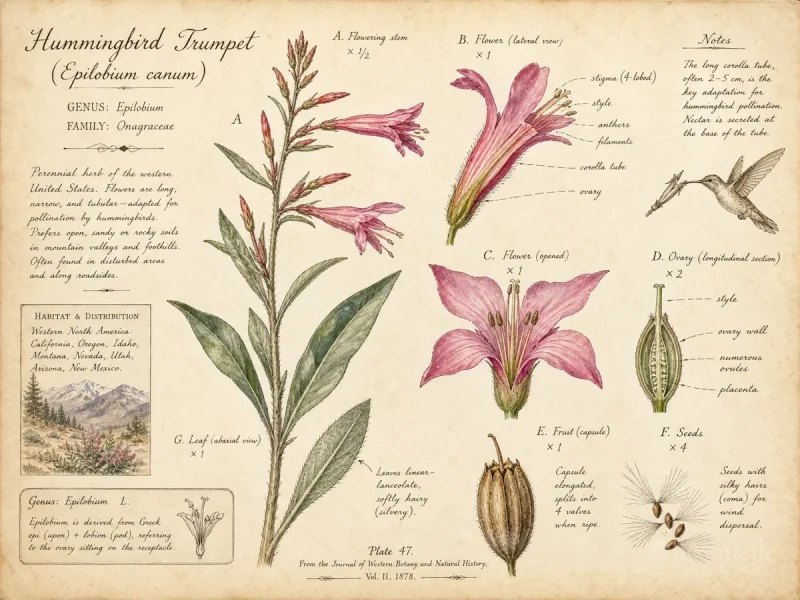
E. canum is the usual California fuchsia: gray-green leaves and scarlet to orange tubular flowers from late summer into fall. Height varies with the selection, often from under a foot to about three feet in bloom.
Calistoga and Dublin
E. canum ‘Calistoga’ is a gray-leaf garden selection used on dry banks. E. canum ‘Dublin’ — some older tags say Glasnevin — is a named canum for comparing habit and flower intensity. Same sun and drain as the species; do not treat a denser leaf as a cue for lawn water.
Humboldt County fuchsia
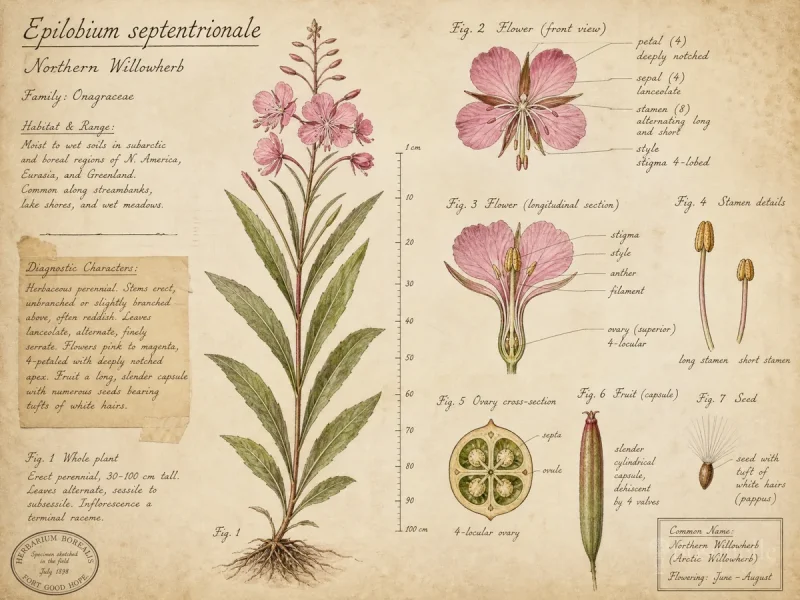
E. septentrionale is the northern coastal kin, also sold as Humboldt County fuchsia or northern willowherb. It still wants sun and fast drain, not a wet ditch.
How long do California fuchsias typically bloom?
From late summer into fall, often August through October, later in a mild autumn. That late nectar is the hummingbird job.
Not a hanging-basket fuchsia — and not trumpet vine
California fuchsia is Epilobium canum. Tender hybrid fuchsia sold for hanging baskets wants cooler moisture and richer mix. The word fuchsia on this tag is a flower shape, not that culture.
Hummingbird trumpet on a shop search often means this plant, an Orange Carpet selection, or trumpet vine (Campsis). Trumpet vine is a woody climber that can cover a fence. This plant is a low dry-sun perennial. Scarlet gilia (Ipomopsis) is another hummingbird-trumpet look — not this genus.
Orange Carpet and Everett's Choice are other shop names
Orange Carpet and Everett’s Choice are other Zauschneria looks in shops and search. If the tag names those, match that plant. Do not invent a fifth California fuchsia from a catalog photo.
Is California fuchsia the same as fuchsia?
No. Hybrid hanging-basket fuchsia wants cooler, richer care. California fuchsia is a dry-sun perennial with late tubular flowers.
Are fuchsias better in pots or in the ground?
That question is about tender hybrid fuchsia. California fuchsia can live in a gritty pot, but it is built for a draining bank in the ground.
Is hummingbird trumpet vine invasive?
Trumpet vine (Campsis) can run hard on a fence. California fuchsia spreads as a low patch, not as a woody vine. Read the scientific name.
What are some common pests that affect fuchsias?
Fuchsia gall mite is a hanging-basket fuchsia pest. California fuchsia fails from wet crowns and slugs in a soggy bed, not from that mite.
Pick a sunny bank that drains, water it through the first year, and cut established plants nearly to the ground after bloom.
FAQ
How do you start California fuchsia from seed?
It can be grown from seed, but most gardeners buy a nursery plant or divide a clump. Seed is slow compared with a rooted piece.
Is Orange Carpet the same as California fuchsia?
Orange Carpet is another Zauschneria look sold as hummingbird trumpet. Read the tag. The plants in this guide are Epilobium canum and Epilobium septentrionale.
Recommended plants


References
- [1] UC Master Gardeners of San Luis Obispo County -
https://ucanr.edu/blog/uc-master-gardeners-diggin-it-slo/article/california-fuchsia - [2] UC Master Gardeners of Solano County -
https://ucanr.edu/blog/under-solano-sun/article/california-fuchsia - [3] UC Master Gardeners of Contra Costa County -
https://ucanr.edu/site/uc-master-gardener-program-contra-costa-county/article/plant-california-fuchsias-now-hummers - [4] Lockeford Plant Materials Center -
https://plants.sc.egov.usda.gov/DocumentLibrary/plantguide/pdf/pg_epca3.pdf
More first-season notes by plant are gathered in How to Grow Guides.
Updated: Reviewed by Bosquelle Editors