
Grow Calanthe in part shade with moist, well-drained soil. The tag may also say hardy orchid. It is not a houseplant prayer plant.
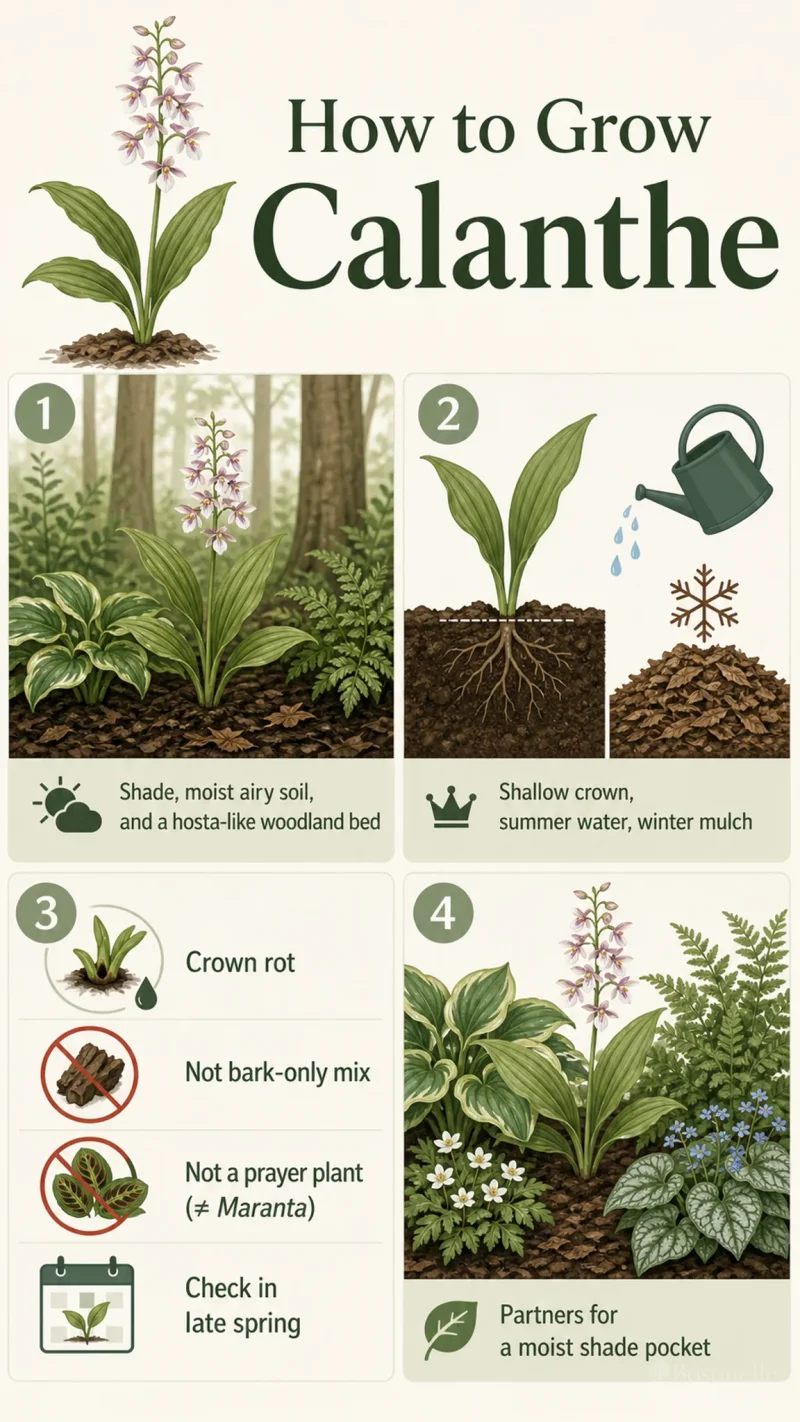
Give it part shade, moist soil, and a woodland bed
| Factor | Recommended | Avoid |
|---|---|---|
| Light | Part shade to shade; dappled canopy is the usual woodland site | Hot afternoon sun that bleaches or burns the pleated leaves |
| Soil | Rich, evenly moist, well-drained organic ground | Standing water around the roots |
| Mix | Compost worked into garden soil, with sand if you need more air | A bark-only epiphyte mix as the bed |
| Water | Keep the mix moist while the plant is in leaf; evergreen types do not want a baked-dry summer | A sealed saucer or a winter puddle at the crown |
| Winter | Mulch after the first freeze, and wait if a clump is late to wake | Cutting tattered leaves off early, or digging a late clump as dead |
Hardy calanthe is a terrestrial orchid for a moist shade pocket. Part shade is the default; most types also take full shade, though flower count can drop in the darkest corners. [1] Work compost into the bed so the soil stays moist and still drains. Do not use a hanging-basket bark mix as the outdoor recipe — these roots want loam and air, not an epiphyte basket. [2]
- Choose a woodland edge, a shade border, or a moist pocket under a canopy. Morning light is fine; a hot afternoon blast is not.
- Improve native soil with compost. Add sand where the ground packs tight, so water moves and the crown stays open to air.
- Keep the mix moist through the growing season. Empty any saucer. If water stands after rain, raise the bed or open the mix.
Are Calanthe orchids easy to grow?
The hardy Japanese types are woodland plants, not fussy bark-basket orchids. Give them shade, moist soil that still drains, and a crown at the surface.
Does calanthe need sun or shade?
Part shade to shade. Hot direct sun can fade or burn the leaves.
Can calanthe grow in full shade?
Yes. Flower count may be lighter in the darkest beds.
Can I use orchid bark mix outdoors?
Not as the main recipe. These are terrestrial orchids. Use compost-rich garden soil that drains, not epiphyte bark alone.
Plant the crown at soil level, then mulch after the first freeze
Spread the thick roots wide. Set the crown even with the soil, or only slightly below. Planting too deep invites crown rot. Water through spring and summer. After the first hard freeze, add about 2 to 4 inches of mulch. Leave tattered winter leaves to die on their own — cutting them early is a virus risk. [3]
- Confirm hardy Calanthe, not a Calathea prayer plant and not a tropical Christmas orchid in a bark pot.
- Water the nursery pot, then slide the root ball out.
- Dig a hole no deeper than the pot. Spread the roots. Set the crown at the soil surface.
- Backfill with the improved soil, and water to settle. Add mix if the crown sinks.
- Keep the bed moist from spring through early fall.
- After the first hard freeze, mulch 2 to 4 inches. In a colder pocket, a deeper leaf blanket helps even out freeze and thaw.
- In spring, leave ragged winter leaves until they die naturally. Deadhead spent spikes after bloom if you do not want seed.
How deep should I plant calanthe?
Keep the crown even with the soil, or only slightly below. Planting too deep invites crown rot.
Should I mulch hardy orchids in winter?
Yes — about 2 to 4 inches after the first hard freeze. Colder sites may need a deeper leaf blanket.
Why are there no shoots after a hard winter?
Hardy calanthes, especially sieboldii, can emerge very late after a severe winter. Wait before you replace the plant.
Pair it with hostas, ferns, and trilliums
Quiet woodland plants that share moist, well-drained shade work beside calanthe: hosta, ferns, trillium, epimedium, and hellebore. Keep aggressive spreaders off the shallow roots, and weed by hand rather than hoe.
Use a pot only if you need to move it in from a freeze
Open ground is the default for these hardy Japanese types. If you grow one in a container, use a draining pot and a terrestrial mix — compost, peat, and sand, not bark alone. Bring the pot into a cool room that will not freeze. Indoors, give indirect light; bright direct sun can fade or burn the leaves. Water when the mix is still slightly moist for evergreen types. Deciduous types dry more when they are leafless.
Can I grow calanthe in a pot?
Yes, if you need to move it frost-free. Use a draining pot and a terrestrial mix, not bark-only orchid mix. Indirect light indoors.
Divide a crowded clump, and separate the back-bulbs
Only the current season's pseudobulb pushes foliage. Older back-bulbs stay dormant unless you separate and replant them so those buds wake. Lift a clump about a foot across from winter into early spring. [4]
- Wait until the clump is about a foot across, then lift it in winter or early spring.
- Tease the pseudobulbs apart. Replant each back-bulb on its own, with the crown at the soil surface.
- Water to settle, then keep the mix moist as new growth starts.
Can you divide calanthe?
Yes. Lift a crowded clump in winter or early spring, separate the back-bulbs, and replant each at the soil surface.
Not a prayer plant, and not a nun's orchid
Some sheets list Prayer Plants as a common name for Calanthe. The houseplant trade's prayer plant is usually Maranta, and patterned Calathea (often sold as Goeppertia) is the other indoor plant people mean when they type calanthea. Those are humidity houseplants, not this woodland orchid. Nun's orchid is Phaius — a different genus on this site, even when some lists file it under Calanthe. Tropical C. vestita in a greenhouse, with a dry winter rest in bark, is not the hardy Japanese clump in this catalog.
Is calanthe a prayer plant?
No. Calanthe is a hardy woodland orchid. The usual houseplant prayer plant is Maranta, and Calathea is the indoor plant behind many calanthea searches.
Why are Calatheas hard to take care of?
That search is about indoor Calathea, which wants humidity and careful water. Hardy calanthe is a shade-garden orchid in moist, draining soil.
How do I care for a nun's orchid?
Nun's orchid is Phaius, not the hardy Japanese calanthe in this catalog. Do not copy a tropical bark recipe onto this woodland plant.
Are Calanthe and Phaius the same?
No for garden shopping. This page is hardy Calanthe. Nun's orchid stays Phaius here.
Mahogany discolor, yellow sieboldii, or a Takane hybrid
Sun, moisture, and crown depth are shared. Flower color and timing are the choice. Do not treat extra shop names as a different plant.
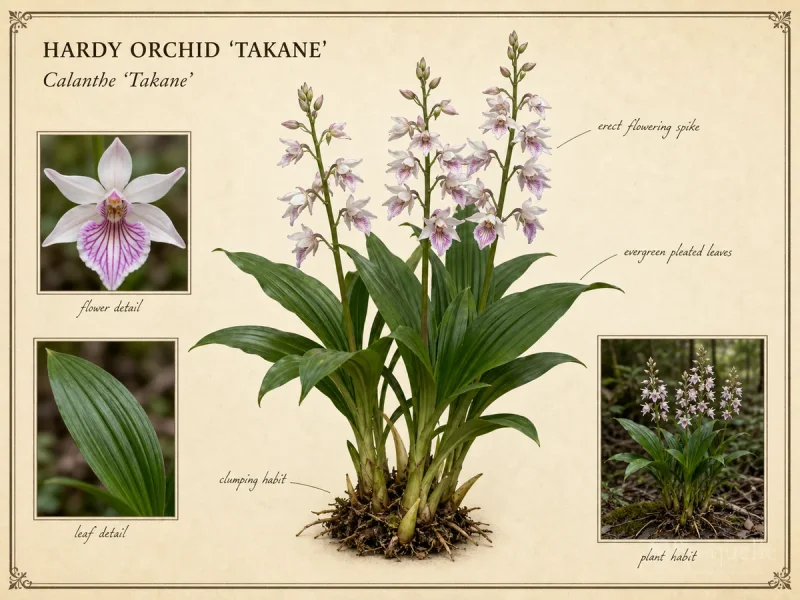
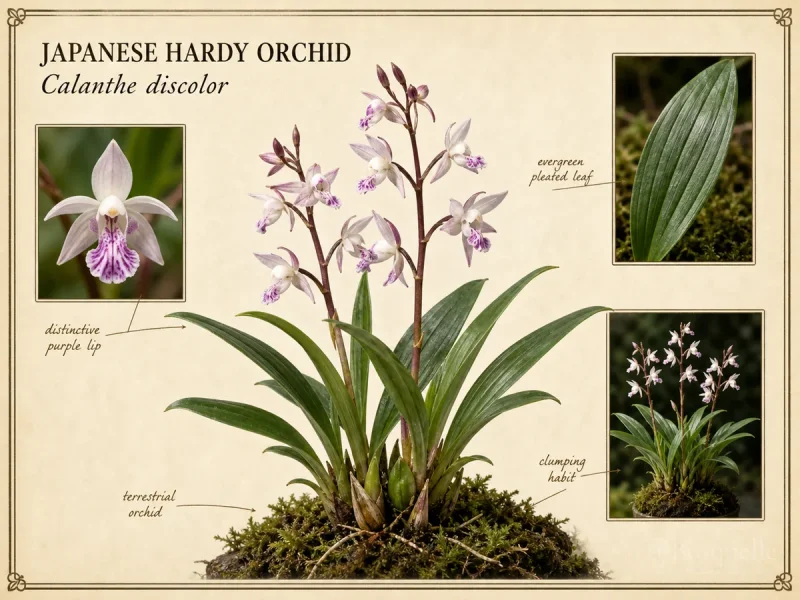
C. discolor is the classic Japanese woodland species: two or three heavily pleated leaves and mid-spring spikes of small mahogany flowers with white lips. C. sieboldii is the bright yellow show on taller scapes. It may emerge very late after a brutal winter — wait before you dig. ‘Takane’ is a discolor × sieboldii hybrid with yellow, cream, or apricot spikes in the same moist shade.
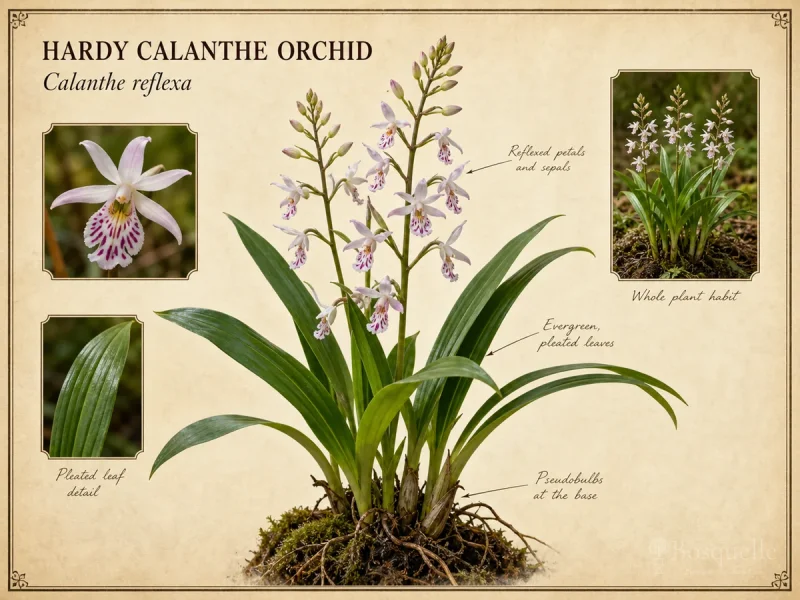
C. reflexa flowers later than the spring types, still in the same part-shade bed. C. tricarinata is another Japanese hardy orchid for that woodland pocket, with a more marked lip on a yellow-green flower.
What is the difference between discolor and sieboldii?
Discolor carries mahogany flowers with white lips on shorter spikes. Sieboldii is the bright yellow show on taller scapes, and it may wake late after a hard winter.
Give it part shade and moist soil, set the crown at the surface, mulch after the first freeze, and leave tattered leaves until they die.
FAQ
Are extra shop names extra plants?
No. Names such as Kozu Spice or Kojima use the same shade and moisture. This page covers the five catalog plants.
Is this a Christmas orchid that blooms indoors in winter?
Christmas orchid is a common name on some sheets. Tropical types that bloom in winter indoors are not the hardy Japanese woodland clumps in this catalog.
Can I eat calanthe?
Garden culture is the job here, not a food essay. Do not treat the rhizomes as a crop.
How do you pronounce Calanthe?
Extension sheets say kal-AN-thee. Grow it the same way whatever the shop pronunciation.
Recommended plants


References
- [1] NC State Extension -
https://plants.ces.ncsu.edu/plants/calanthe/ - [2] Gardener's Path -
https://gardenerspath.com/plants/flowers/grow-calanthe-orchids/ - [3] NC State Extension -
https://plants.ces.ncsu.edu/plants/calanthe-kozu-spice/ - [4] Plant Delights Nursery -
https://www.plantdelights.com/products/calanthe-discolor
More first-season notes by plant are gathered in How to Grow Guides.
Updated: Reviewed by Bosquelle Editors