
Grow boxwood in well-drained soil, with morning sun and afternoon shade. Boxwood is Buxus — a small-leaf evergreen shrub, not Japanese holly.

Give it well-drained soil and morning sun with afternoon shade
| Factor | Recommended | Avoid |
|---|---|---|
| Sun | Morning sun with afternoon shade | A south or southwest wall that bakes in winter |
| Soil | Neutral, well-drained ground | A low spot or a bed that stays wet |
| Water | Even moisture the first year; then soak in dry spells | Standing water around the crown |
| Deer and rabbits | Usually left alone | Treating that as a fence in a hungry winter |
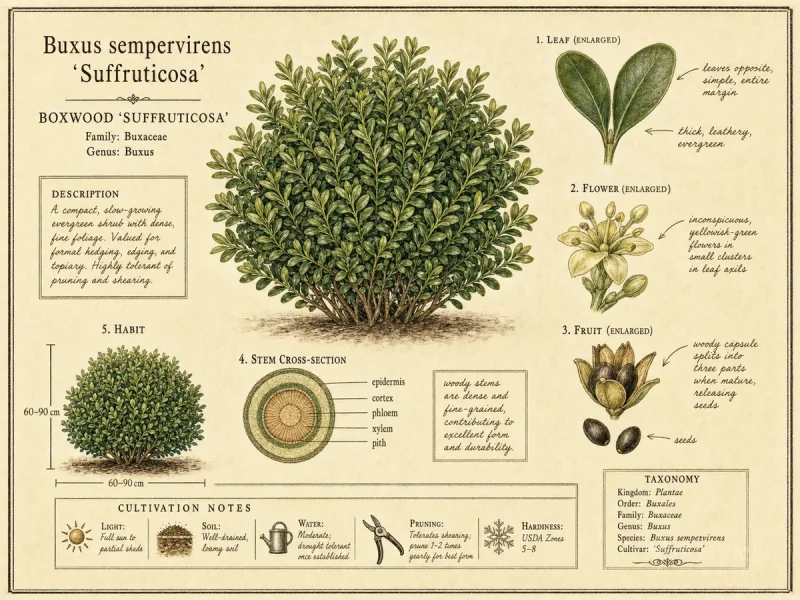
Boxwood fails in soggy ground. Give it a bed that drains, with morning sun and afternoon shade. Full winter sun on a south wall bronzes the leaves. [1] [2] A mound such as Green Velvet or a dwarf English plant such as Suffruticosa wants that same drain. Match kind on Types of Boxwood.
Does boxwood need full sun?
Morning sun with afternoon shade is the usual site. Full shade makes it thin. A south or southwest wall in winter bronzes the leaves.
Will deer eat boxwood?
Deer and rabbits usually leave it. That is not a fence if browse is heavy in a hard winter.
Water the first year, then soak in dry spells
A new plant needs water so roots leave the nursery ball. An established shrub takes missed rain better than a puddle.
- Water thoroughly after planting. Keep the root ball moist — not soggy — through the first growing season.
- Water at the soil, not over the leaves, so the foliage dries.
- Once roots have taken, soak during dry spells and before a hard freeze. Skip extra water when the soil is already wet.
How often do I water boxwood?
Keep a new plant moist for the first year. After that, soak during dry spells. Soggy soil around the roots is the primary cause of root rot.
Shelter it from winter sun and wind
Dry wind and bright winter sun pull water from the leaves faster than frozen ground can replace it. The foliage turns bronze or orange, especially on a south or southwest side.
- Site it where a building or evergreen breaks the wind, with afternoon shade.
- Water well before a hard freeze if the soil is dry.
- Mulch the root zone lightly, kept off the stems. Do not cultivate around the shallow roots. [4]
Grow a dwarf in a draining pot
Open ground that drains is the usual home. A compact kind can sit on a patio if the pot drains and you water it through summer heat. Roots in a pot freeze harder than roots in the ground, so move it out of drying winter wind.
- Choose a pot with drain holes, at least as wide as the plant is tall. Boxwood roots run wide and shallow.
- Use potting mix, not garden soil. Do not leave a saucer of standing water under the pot.
- Water when the top of the mix is dry. In winter, shelter the pot from wind and keep the mix from staying soggy.
Not Japanese holly — and not creeping wintergreen
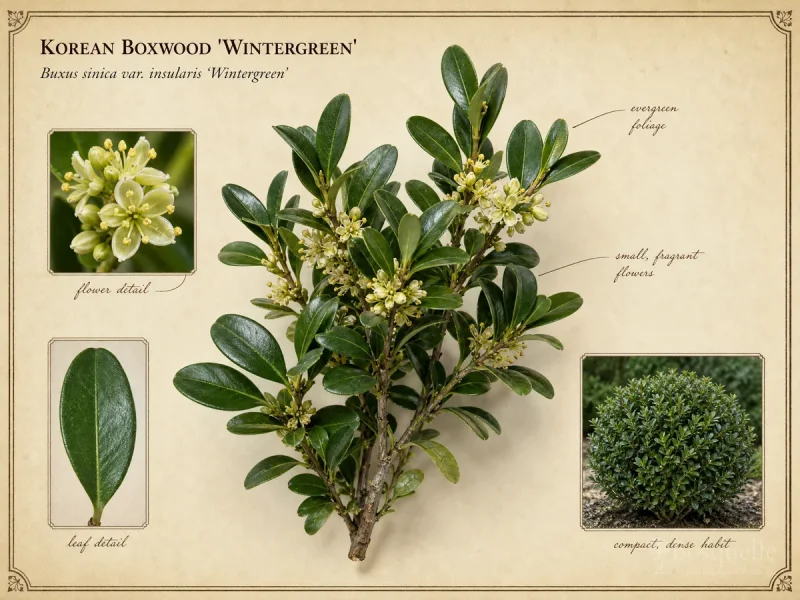
Japanese holly is Ilex crenata — small evergreen leaves that can look like boxwood, but it is holly. See How to Grow Holly. Creeping wintergreen is How to Grow Wintergreen (Gaultheria). Wintergreen boxwood is this shrub. Sweet box is How to Grow Sweet Box.
Is Japanese holly the same as boxwood?
No. Japanese holly is Ilex crenata. Boxwood is Buxus. Wintergreen boxwood is a Korean boxwood cultivar, not creeping wintergreen.
If the bed stays wet, move the plant — shade and drain come first.
FAQ
Can I use it as a hedge?
Yes, if you pick a kind that matches the finished height. Space the row on Planting Boxwood, and keep the hedge open on Pruning Boxwood.
What is boxwood blight?
A fungus that spots leaves, streaks green stems black, and drops foliage fast. There is no cure on a plant. Bag infected material; do not compost it. Ask your extension clinic if you need a spray.
Are boxwood leaves poisonous?
The leaves have low toxicity if people or pets chew them. Keep chewing pets off the shrub.
Related guides


Recommended plants


References
- [1] Clemson HGIC -
https://hgic.clemson.edu/factsheet/boxwood/ - [2] The Old Farmer's Almanac -
https://www.almanac.com/plant/boxwoods - [3] University of Maryland Extension -
https://extension.umd.edu/resource/boxwood-identify-and-manage-common-problems - [4] NC State Extension Gardener -
https://plants.ces.ncsu.edu/plants/buxus-sempervirens/
This note is part of Buxus Guides.
More first-season notes by plant are gathered in How to Grow Guides.
Updated: Reviewed by Bosquelle Editors