
Grow bluestar in full sun and average soil, and skip a heavy feed that opens the clump. The tag may also say Amsonia. It is not blue star creeper.
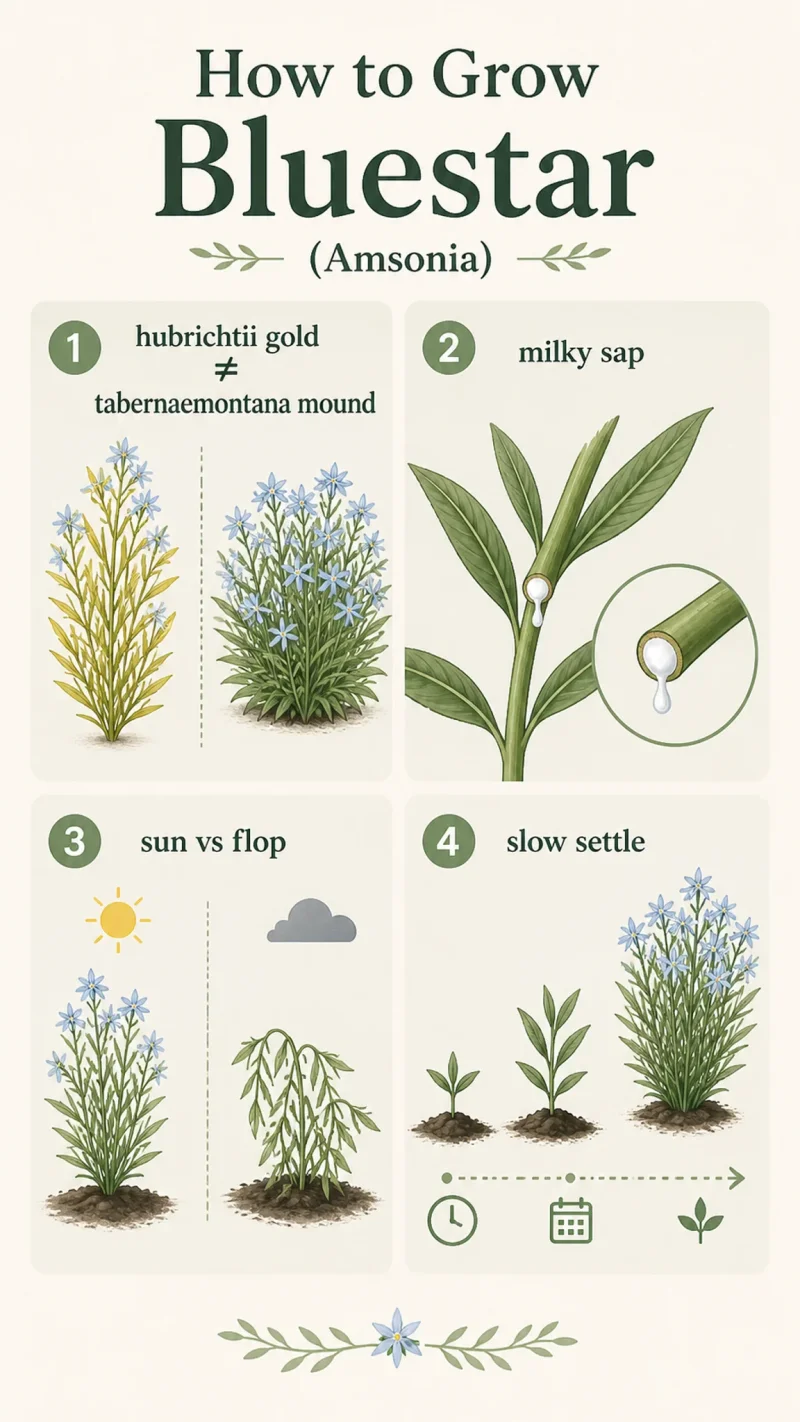
Give it full sun, average soil, and skip heavy fertilizer
| Factor | Recommended | Avoid |
|---|---|---|
| Light | Full sun to light part sun. Stems stand and fall color is stronger in sun | Deep shade that opens and flops the clump |
| Soil | Average garden soil that drains. Clay is fine if it is not a bog | Rich, heavily fed ground that makes weak stems |
| Water | Steady moisture the first season. Established plants take short dry spells | A crown that sits wet all summer, or a first-year drought |
| Feed | Little or no fertilizer. A light compost mulch is enough | A spring nitrogen dump |
| Pests | Usually few. Space clumps so leaves dry after rain | Spraying first for a rust spot |
Bluestar is a sun perennial. Average soil that drains is the site. Shade, or a heavy feed, opens the stems so they splay after bloom. [1] Give a new plant water through the first growing season. After that, the taproot carries short dry spells. [2]
Does Amsonia like sun or shade?
Full sun to light part sun. Deep shade flops the stems and weakens fall color.
Does Blue Star Amsonia spread?
It makes a clump from a taproot. It does not run as a lawn mat. Deadhead if you want fewer seedlings.
Does Amsonia spread quickly?
No. The mound fills over a season or two. It is not a fast groundcover.
Is Amsonia invasive?
No. It clumps. Seedlings are easy to move when small. It is not a turf takeover.
Pair it with other sun perennials
Partners should want the same sun and average moisture: coneflowers, black-eyed Susan, ornamental grasses, and other prairie-edge perennials. Keep thirsty annuals out of a small shared pot so the bluestar still gets water.
Plant the crown at soil level, and give it a season to settle
Plant in spring or early fall from a nursery pot. Set the crown at soil level. Space clumps about 2 to 3 feet apart so the mound can fill. Year one often looks like a polite nursery plant, not the billowing clump in a photo. [3]
- Confirm Amsonia, not blue star creeper and not a lily.
- Pick full sun and average soil that drains.
- Plant in spring or early fall. Water the pot, then slide the root ball out intact.
- Dig a hole no deeper than the pot and a little wider. Set the crown at the same depth as the nursery mix.
- Backfill with the soil you dug, and water to settle.
- Space plants about 2 to 3 feet. Mulch the root zone, keeping mulch off the crown.
- Keep moisture even through the first growing season. Do not judge the mound until the second or third year.
Where is the best place to plant Amsonia?
Full sun and average soil that drains. A shady, rich bed flops the stems.
How many Amsonia to plant together?
Space clumps about 2 to 3 feet apart. A drift of three reads as one mound once they fill.
Start from seed only if you can wait
A nursery start is the usual home job. Seed germinates, but plants often wait two or three years to bloom. Named compact forms rarely come true from seed — buy those, or divide a mature clump.
- Buy a nursery start unless you want extras from seed.
- Sow as pods split, or after a cold stretch. Keep the surface moist until it sprouts.
- Expect a wait before a plantable, flowering clump.
Can I grow Amsonia from seed?
Yes, but it is slow. Seedlings are easy when small. Bloom often waits until year two or three.
Skip a patio pot except as a nursery hold
Open ground wins. The taproot wants depth. If you hold a plant in a pot, use a deep container that drains, keep moisture even, and move it into the ground the first season you can. A compact cultivar is the only size that looks credible in a pot for a summer.
Divide only a mature clump
Mature clumps can be divided in spring or fall, but the taproot is hard to dig and a young plant does not need it. Add another plant if you want more coverage fast. [4]
- Skip division on a young, tight clump.
- If you divide, lift in spring or fall. Take a piece with an eye, taproot, and fibrous roots.
- Replant at the same crown depth, water in, and keep even moisture while it takes.
Can I split Amsonia?
Yes, on a mature clump in spring or fall. The taproot makes it hard work. Extra plants are often kinder than chopping a young mound.
Can Amsonia plants be divided?
Yes, when dormant in spring or fall, if each piece has an eye and roots. It is optional, not annual.
Cut back after bloom, and leave hollow stems for bees
After the blue clusters fade, you can cut stems by about one-third to one-half so the mound stays upright. Wear gloves — the milky sap can irritate skin. In late winter or early spring, cut dead stems but leave about 12 to 18 inches of hollow stem for native bees.
- After bloom, cut stems by about one-third to one-half if they splay under seed pods. Keep enough foliage for the summer and fall show.
- Wear gloves. Rinse tools if sap sticks.
- Leave the foliage through fall color. Do not shear it off in August.
- In late winter or early spring, cut dead stems. Leave about 12 to 18 inches of hollow stem standing for bees, or cut closer if you cannot.
- Do not hard-shear live stems in early spring just to tidy. That can cost the flower display.
Should Amsonia be cut back in the fall?
Leave the foliage for fall color. Cut dead stems in late winter or early spring. After bloom, a lighter cut is for shape, not a fall cleanup.
Do you cut down Amsonia in the fall?
You can leave stems standing through winter. The useful cut is late winter, with some hollow stem left for bees, or a lighter cut after bloom.
Not blue star creeper — and not a stargazer lily
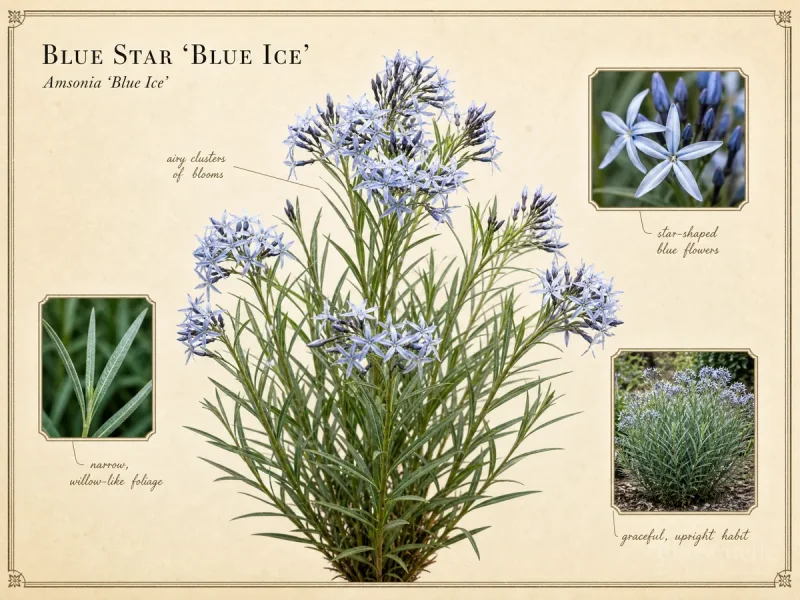
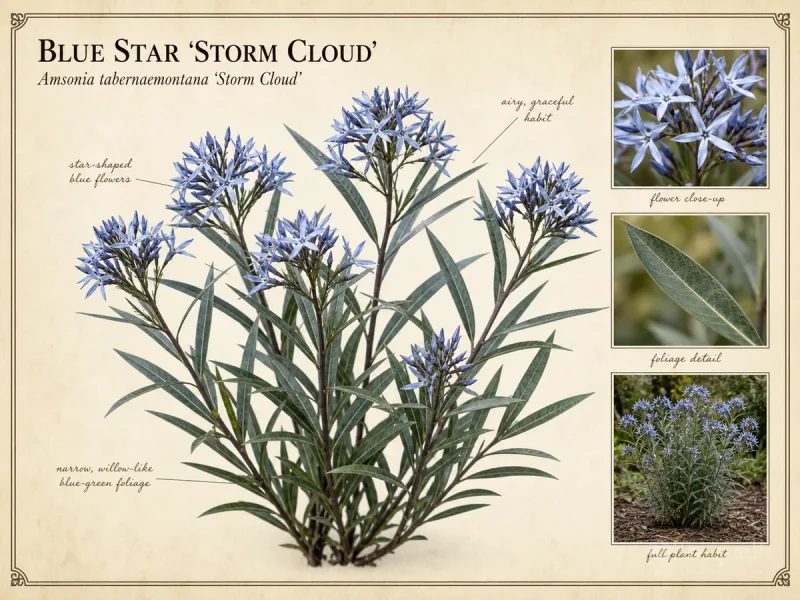
Blue star creeper is Isotoma fluviatilis — a low mat sold as a lawn substitute. Garden bluestar here is Amsonia, an upright clump two to three feet tall. Confirm Amsonia on the tag.
A blue stargazer lily is a true lily, not this perennial. Lithodora ‘Blue Star’ is a groundcover with a similar shop name. Read the Latin.
Is blue star creeper hard to grow?
That question is about Isotoma, a low mat, not Amsonia. Garden bluestar is an upright clump. Buy by the Latin name.
Set it in full sun, plant the crown at soil level, cut back after bloom if stems splay, and read the tag so you did not buy blue star creeper.
FAQ
What is Amsonia?
Amsonia is the Latin genus for bluestar — an upright clump perennial with star-blue spring flowers.
Is the sap a reason not to grow it near a path?
Wear gloves when you cut stems, and keep pets from chewing foliage. That is handling, not a reason to skip the plant.
Related guides
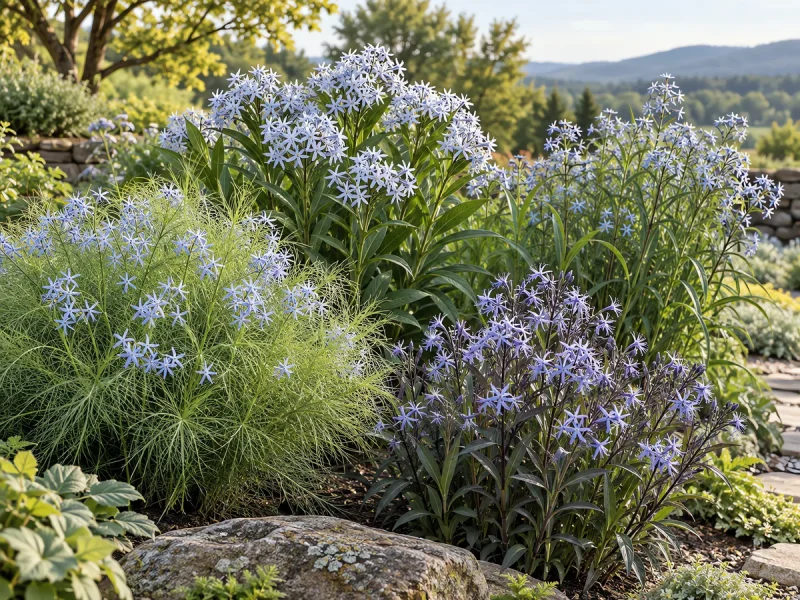
Recommended plants

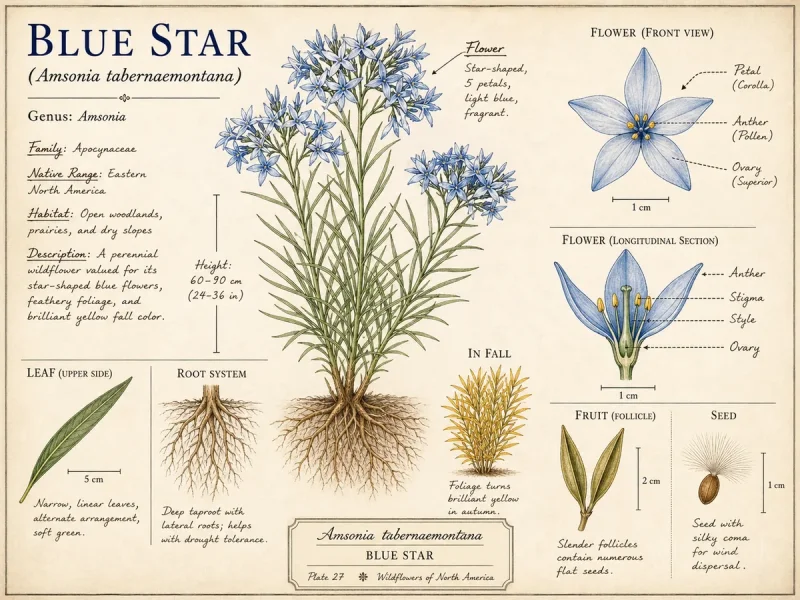
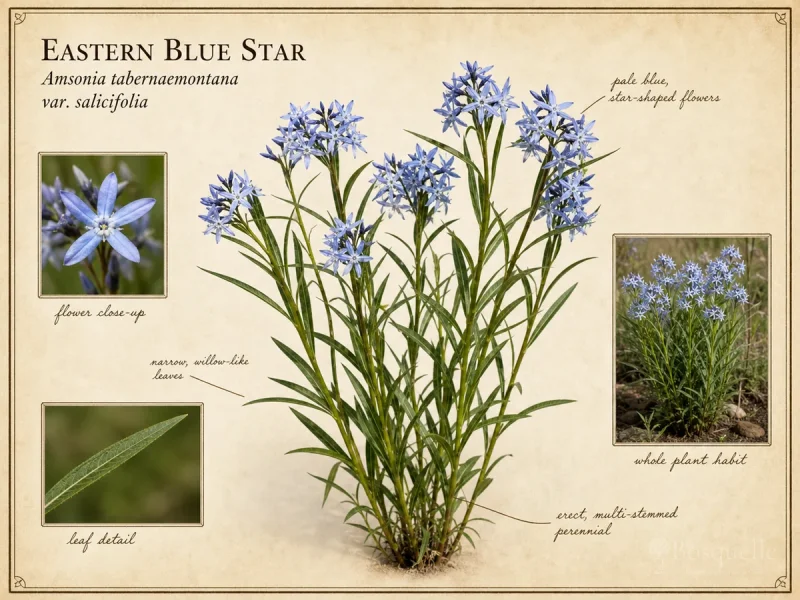

References
- [1] NC State Extension -
https://plants.ces.ncsu.edu/plants/amsonia-hubrichtii/ - [2] Penn State Extension -
https://extension.psu.edu/native-amsonia-for-the-home-garden - [3] University of Wisconsin–Madison Division of Extension -
https://hort.extension.wisc.edu/articles/willowleaf-bluestar-amsonia-tabernaemontana/ - [4] Mt. Cuba Center -
https://mtcubacenter.org/trials/amsonia-for-the-mid-atlantic-region/
This note is part of Amsonia Guides.
More first-season notes by plant are gathered in How to Grow Guides.
Updated: Reviewed by Bosquelle Editors