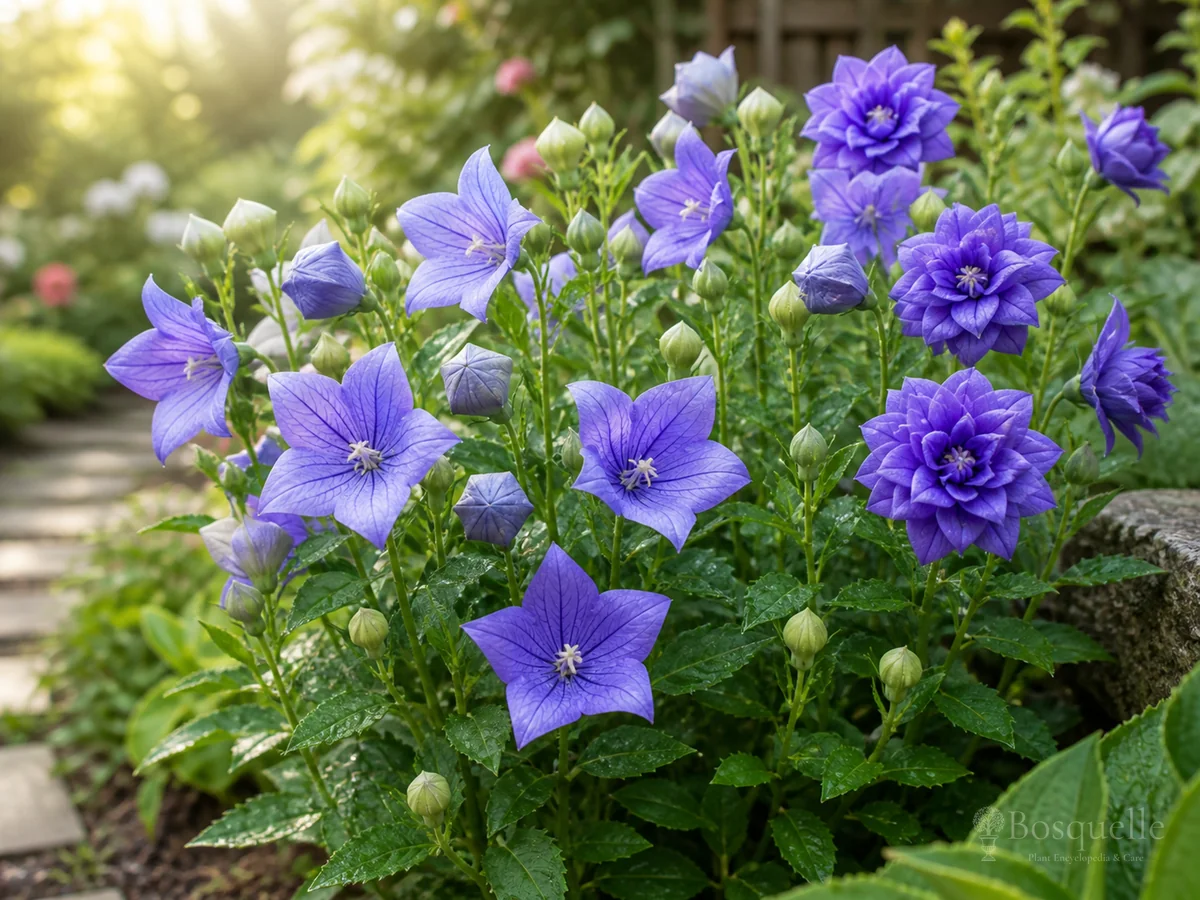
Grow balloon flower in full sun to light shade and soil that drains. Mark the crown — shoots come up late in spring. It is also called Chinese bellflower.
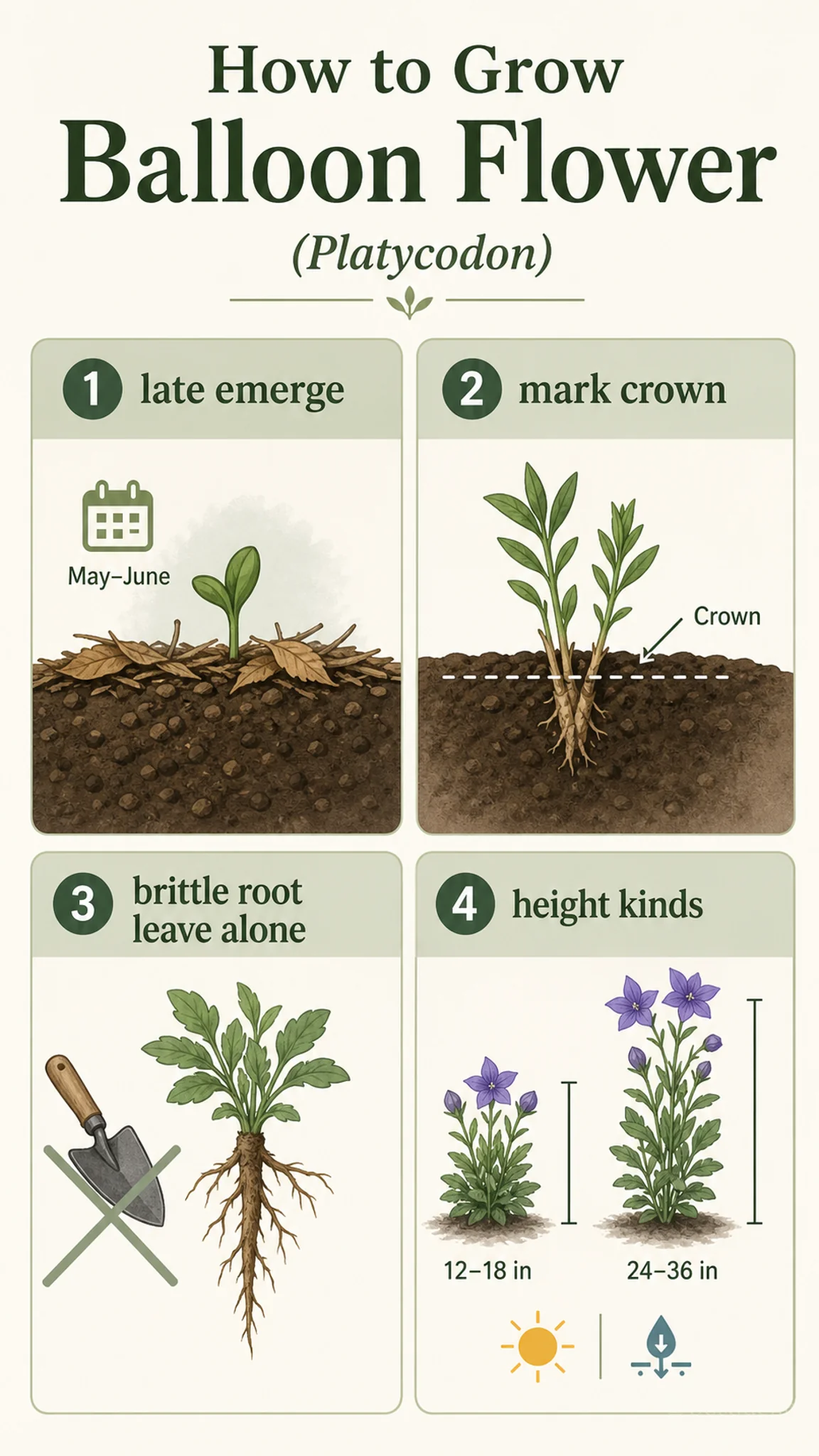
Full sun, drainage, and a marked crown
| Factor | Recommended | Avoid |
|---|---|---|
| Light | Full sun to light shade; more sun means more bells | Deep shade (thin bloom) |
| Soil | Average, well-drained loam; slightly acid is fine | Wet winter clay around the crown |
| Moisture | Water to establish, then when the soil is dry | Standing water at the crown |
| Habit | Mark the crown; leave old stems until new shoots show | Forking the bare patch in early spring; casual division |
Illinois Extension: shoots are very slow to emerge in spring, and the clump rarely needs division. Leave last year’s stems until new growth shows, or set a stake while the stems are still visible.
Does balloon flower need full sun?
Full sun gives the most flowers. Light part sun is fine, and afternoon shade helps in a hot summer.
What soil does balloon flower want?
Average, well-drained soil. Wet winter clay around the crown is the usual winter loss.
Why is my balloon flower missing in spring?
It often emerges mid to late spring — later than many border neighbors. Mark the crown in fall so you do not dig a bare patch.
Will balloon flower return every year?
Yes, as a hardy perennial when drainage is good and spring clean-up does not hit the crown.
How to plant balloon flower
Cornell University Home Gardening: mark the position so you do not damage the crown before it emerges. Set the plant once and leave the fleshy root in place.
- Confirm Platycodon grandiflorus — balloon flower / Chinese bellflower, not creeping bellflower (Campanula rapunculoides) and not balloon-plant milkweed.
- Choose full sun to light shade with soil that drains after rain.
- Plant in spring after frost, or in early fall where winters are mild. Set the crown at soil level — do not bury it deep.
- Space about 12 inches for compact kinds, 12–18 inches for taller stems.
- Water to settle. Keep the root zone evenly moist the first weeks without leaving the crown in a puddle.
- Mark the crown before winter so spring work never hits the storage root.
Sow seed on the surface in spring — it needs light to germinate. Expect little or no first-year bloom from a direct sowing. A nursery plant skips that wait.
When should I plant balloon flower?
Spring after frost is the usual window. Early fall works where winters are mild. Set the crown at soil level.
How do I grow balloon flower from seed?
Sow on top of the mix in spring with light. Expect little first-year bloom. A container plant skips the wait.
Deadhead, pinch, and what fails
Missouri Botanical Garden: deadhead to extend bloom. In May, cut tall stems back by about half to keep height in check. The fleshy roots are fragile — leave the clump undisturbed.
Deadhead and pinch
- Deadhead spent flowers through summer to keep bells coming.
- On tall stems, pinch or cut back by about half in late spring if you want a shorter clump and less flop.
- After frost, cut dead stems and refresh the crown marker. Do not yank stems in a way that lifts the root.
What fails
- Casual division every few years, as you would a daylily. The fleshy root snaps. If you must move it, wait for short spring shoots, dig wide, and expect a slow year.
- Rich feeding that pushes soft growth. Tall kinds then flop in rain; a discreet stake helps more than more fertilizer.
Can I divide balloon flower?
Only if you must move it. The fleshy root is brittle. Most gardeners do better leaving plants in place and adding a new nursery plant.
When do balloon flowers bloom?
Summer, after late-spring emergence. Inflated buds open into star-shaped bells.
Why are my balloon flower stems floppy?
Often rich soil, extra water, or wind on a tall kind. Lean toward average fertility and a light stake, not more feed.
Do I need to deadhead balloon flower?
Deadheading keeps the plant tidy and can extend bloom. Cut spent stems after frost and remake the crown marker.
Should I stake balloon flower?
Taller kinds may need a light stake when buds swell. Compact kinds usually stand on their own.
Kinds, pots, partners, and names
Kinds
- Species — P. grandiflorus: classic balloon buds and open star bells.
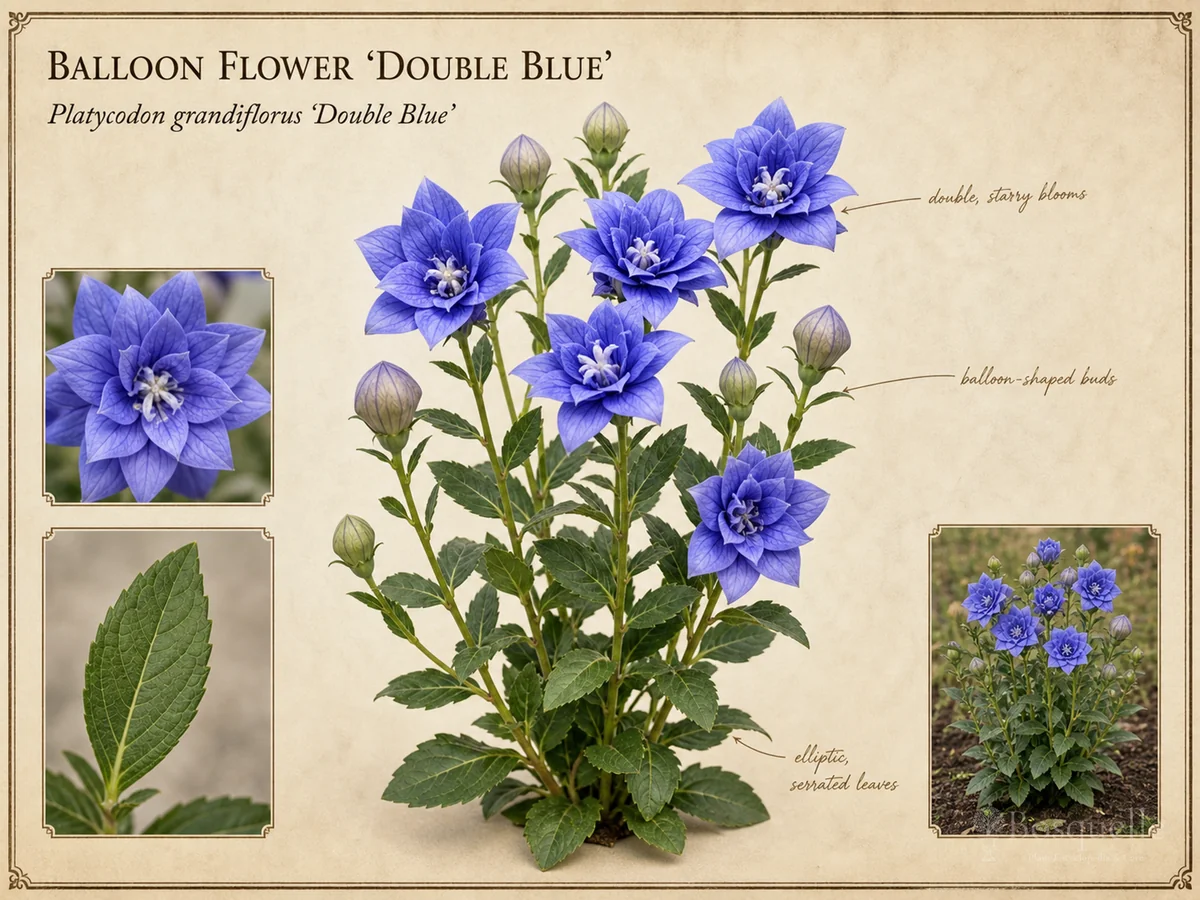
- Tall blue — ‘Fuji Blue’ and ‘Double Blue’: mid-border height; stake in wind if stems lean.
- Compact — ‘Astra Double Blue’, ‘Astra Pink’, and ‘Sentimental Blue’: front edges and pots on the same sun and drain.
Are Astra cultivars different plants from Fuji Blue?
No. They are shorter Platycodon grandiflorus selections on the same sun and drainage, with the fleshy root left in place.
Pots
- Use a deep pot (about 10–12 inches) with drainage holes so the fleshy root has room.
- Compact kinds fit a 10–12 inch pot. Taller kinds need a larger tub and may still need a stake.
- Empty the saucer. Overwinter where the mix drains and the crown does not sit in ice.
Can I grow balloon flower in a pot?
Yes. Compact kinds suit a deep, free-draining tub. Keep winter wet off the crown.
Partners
Pair with other sun-and-drainage perennials: yellow daylily, coreopsis, or yarrow. Keep front fillers shallow-rooted so spring weeding does not hit the marked crown. Skip bog-edge partners.
What companions work with balloon flower?
Sun-and-drainage partners such as yellow daylily or coreopsis, plus a front filler that does not dig into the marked crown.
Names
Balloon flower is Platycodon. Chinese bellflower is the same plant. Creeping bellflower is Campanula rapunculoides — a different genus with a spreading root. Balloon plant is a milkweed, not this perennial. Buds swell like balloons, then open to five-point star bells.
Is balloon flower the same as campanula?
Related look in the bellflower family, but Platycodon is its own genus. It is not creeping bellflower culture.
Mark the crown before winter. Leave the fleshy root in place, and deadhead spent bells through summer.
FAQ
Are balloon flowers good as cut flowers?
Yes. The star bells hold in a vase. Cut stems when the balloon buds are just starting to color.
Can I grow balloon flower from stem cuttings?
Seed is the usual path. Division and stem cuttings are less reliable because the fleshy root is brittle.
Do slugs bother balloon flower?
They can chew new shoots in a wet spring. Check the crown as it emerges and pick slugs off if you see them.
Recommended plants




More first-season notes by plant are gathered in How to Grow Guides.
Updated: Reviewed by Bosquelle Editors