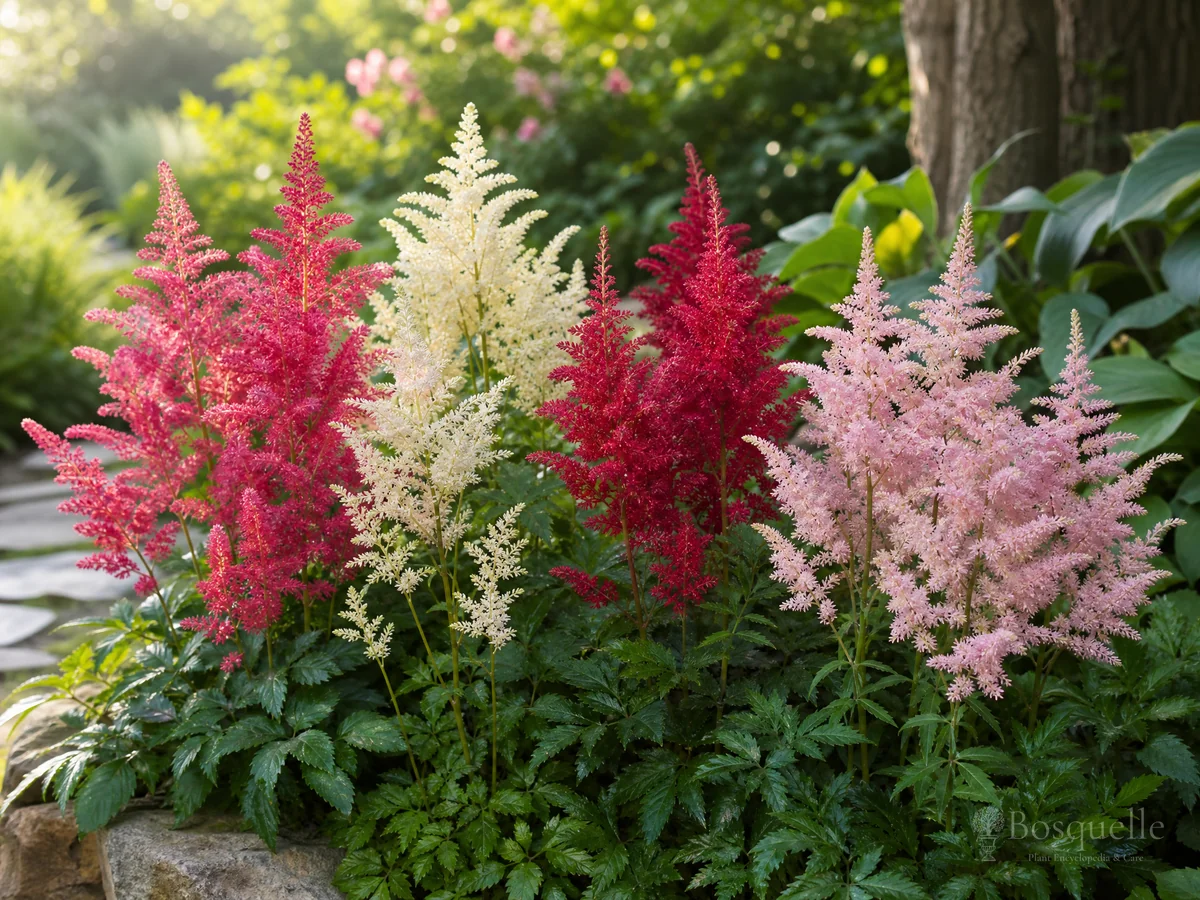
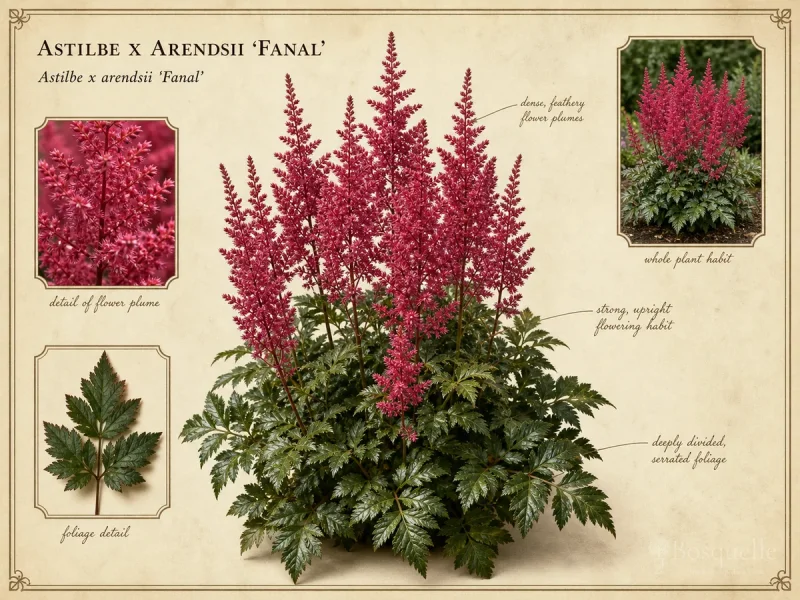
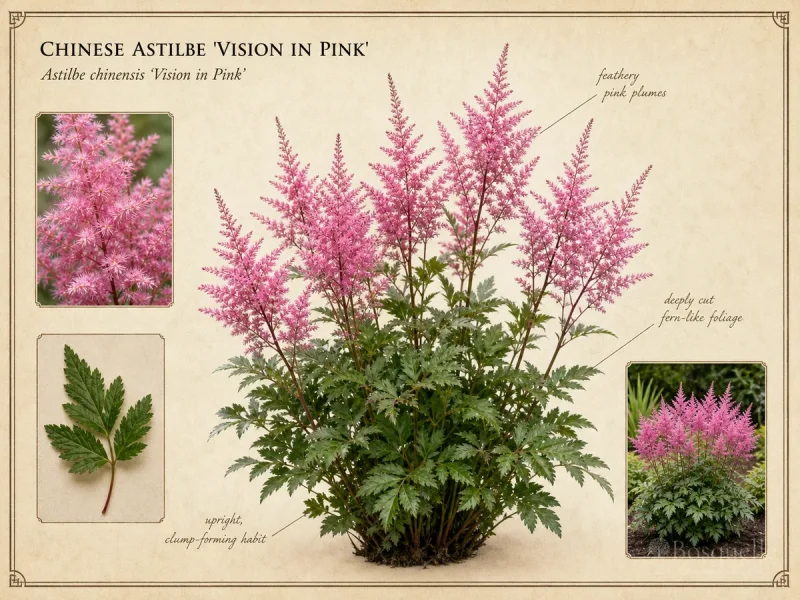
Astilbe wants part shade and even moisture. Dry soil browns the leaf edges fast. Fanal is a classic red border plume. Vision in Pink is a chinensis type that handles a slightly drier edge — still not drought-proof. Rich, humus soil that drains. Not a maple root desert.

Part shade, even moisture, and rich soil
| Factor | Recommended | Avoid |
|---|---|---|
| Light | Part shade; morning sun; dappled woodland edge | Hot afternoon sun without extra water, or deep dry shade under a maple |
| Soil | Rich, moist, humus; compost worked in | Bone-dry clay, or a stagnant puddle with no air |
| Water | Even moisture through the growing season; mulch 2 inches | Waiting until the foliage crisps |
| Sun extra | Full sun only if you can keep the soil wet | Full sun on a dry berm |
Astilbe is a moisture plant first. Iowa State University Extension: part shade is the usual site; full shade is possible with fewer flowers; full sun works only with abundant moisture. Fertile, moist, humus-rich soil is required. Leaves brown quickly in dry ground. Clay that stands wet needs organic matter before you plant.
- Pick a bed that stays moist: east light, a damp border, or light woods. Not the drip line of a thirsty tree unless you can water.
- Dig in compost so the soil holds water and still has air. Plant at the nursery depth. Firm. Water in.
- Mulch about 2 inches. Keep mulch off the crown. Replenish as it rots.
- Sort compact kinds from tall plumes on Types of Astilbe before you put a 4-foot chinensis in a 12-inch pot.
- When the clump opens in the center, divide. Steps live on Dividing Astilbe.
- Space 12–18 inches for most border kinds. Dwarfs can sit closer.
Morning sun is useful. Afternoon glass or a west wall cooks foliage unless the hose is already a habit. A pot you can water beats a dry shade bed you will forget.
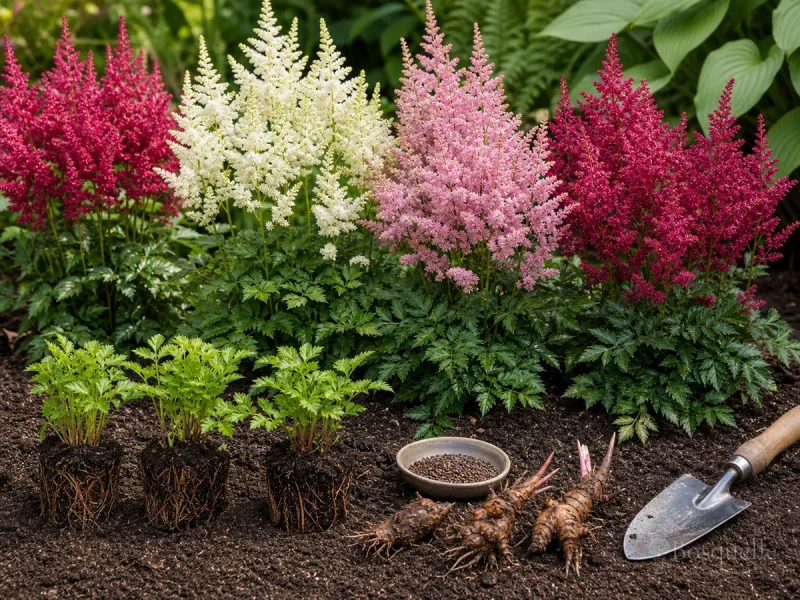
Plant in spring or fall while the soil is workable and you can water the first month. A July install in a heat wave is a hard start. Finger the soil two inches down: it should feel cool and damp, not dusty and not soup. Keep the crown at the nursery line, not buried under compost.
How to water, mulch, and keep leaves from browning
Brown edges mean the plant went dry. Clemson Cooperative Extension: water regularly to establish, then deeply in summer heat. Leaf edges brown if the plant dries out. Foliage can go dormant in drought. That is a watering miss, not a fertilizer cue.
- Water deeply when the top inch is dry. Soak the root zone. A light splash on the leaves does not replace a soak.
- In heat, check twice a week. Drip or a soaker at the base beats a daily splash on the plumes.
- Keep mulch in place so the soil does not bake. Pull it back if it smothers the crown.
- Feed in spring with compost or a balanced slow-release. Do not pour extra nitrogen on a dry plant hoping it greens.
- Leave spent plumes if you like the winter structure. Cut them when they flop. New foliage still comes from the crown.
- In winter, a light mulch after the ground freezes helps. Do not bury a wet crown in a puddle of ice.
Pests are few. Slugs may chew new shoots. Hand-pick. Do not flood the crown to “help” a slug problem. If the clump never blooms, check light first — deep shade cuts flowers — then age. Old centers need dividing, not more shade.
Foliage that collapses after a dry spell may return if the crown is still firm. Crisp, papery leaves do not un-brown. Cut the worst stems if they look messy; new growth still comes from the crown next spring if you restore water. Do not add extra fertilizer to a dry plant hoping the edges green. Soak first, then feed in spring with compost or a balanced slow-release once the soil is already moist.
Chinensis vs arendsii, winter, and what fails
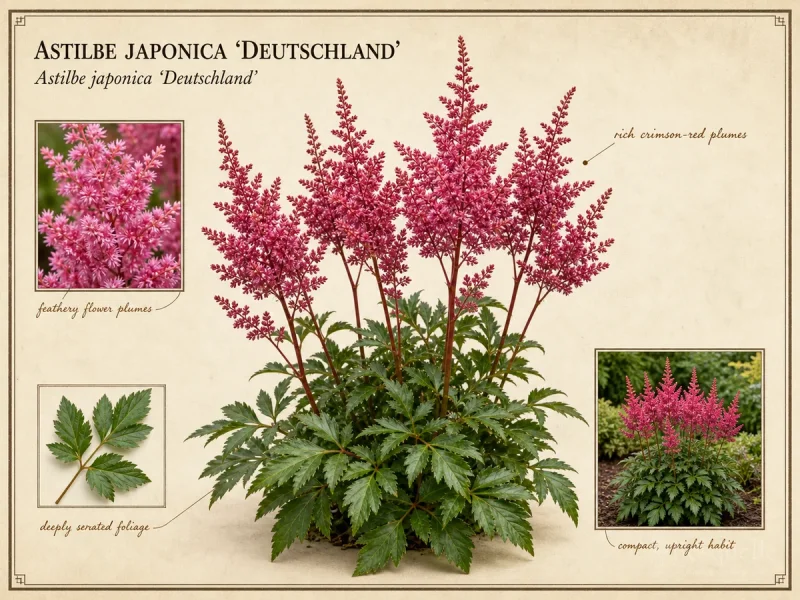
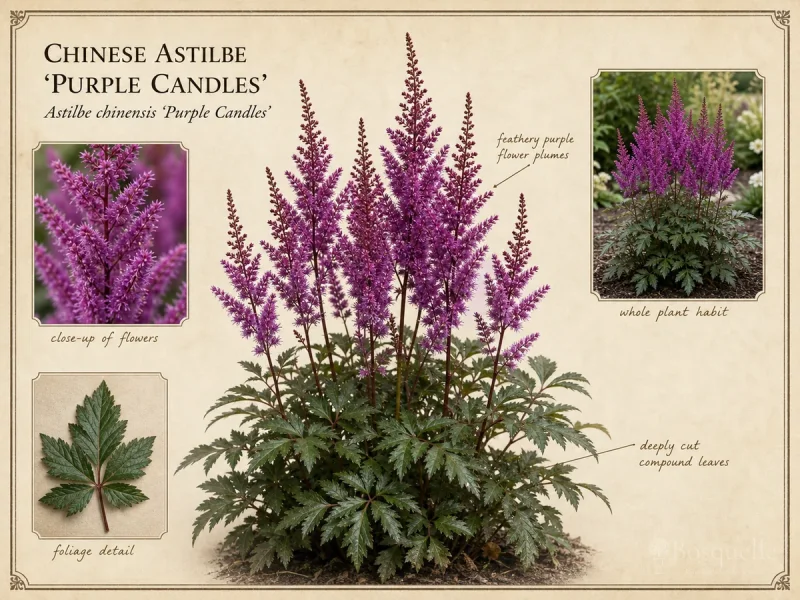
Chinensis types such as Vision in Pink and Purple Candles often hold up a little better on a drier edge than soft arendsii such as Fanal. That is a margin, not a license to skip water. Japonica kinds such as Deutschland bloom earlier. Compact Sprite and Little Vision fit the front. None of them like drought.
- Dry tree-root shade — the usual fail. Move to a pot or a damper bed.
- Hot afternoon sun with no extra water — crisp foliage.
- Waterlogged heavy clay with no organic matter — sour roots.
- Ignoring a hollow center for years — fewer plumes. Divide.
- Planting kitchen false-spirea expectations — this is Astilbe, a shade perennial, not a drought shrub.
Tops die in fall. That is normal. Mark the crown so a spring hoe does not take the eyes. Mulch after freeze. Wet ice sitting on the crown is worse than a dry cold snap with a mulch blanket.
A hollow center with plumes only on the rim is age, not a shade problem. Lift and split then. Chinensis still wants the same mulch and soak as arendsii; the extra drought talk on a tag is a small margin on a damp edge, not a dry maple bed. Japonica that blooms in late spring still dies back in fall like the rest. Cut flopped stems when they bother you. Leave them if you want winter structure.
Kinds, pots, partners, and next jobs
Fanal and Bridal Veil are classic arendsii border plumes. Deutschland and Montgomery are earlier japonica. Vision in Pink and Purple Candles are chinensis. Sprite, Delft Lace, and Little Vision sit toward compact. Chocolate Shogun is foliage-forward. Do not water them as one dry-shade plant.
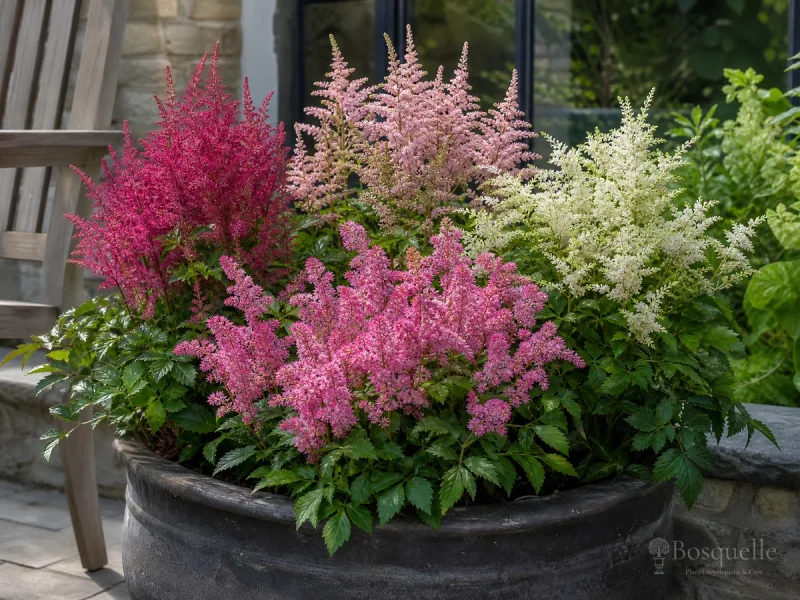
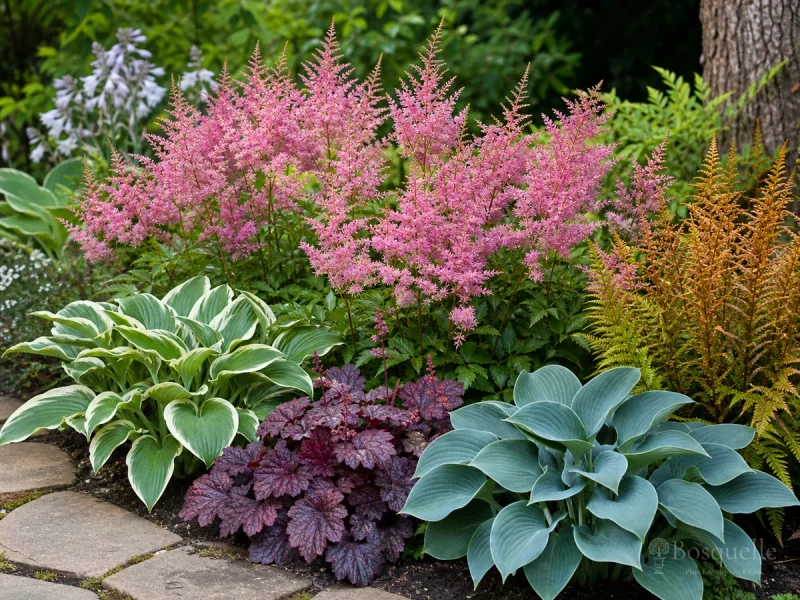
Compact kinds in a deep pot with holes let you control moisture on a patio. Empty the saucer. Same part shade. Partners that like the same damp shade — hosta, fern, heuchera, hakone grass — sit beside the clump, not in the same hole. Sequential foliage covers the bed after plumes fade. A rosemary strip in dry sun is the wrong neighbor. Deadhead only if you want a tidy bed; spent plumes can stay into fall. If last year’s plant browned in July, fix water before you buy a new color.
Plant astilbe where mornings are bright and the soil stays moist. Part shade is the default. Full sun only with extra water. Work in compost. Mulch about 2 inches, kept off the crown. Water deeply in heat when the top inch is dry. Brown edges mean it went dry — soak the root zone, do not mist the plumes. Chinensis holds a drier edge a little better than arendsii; neither belongs in a dry-shade tree-root bed. Japonica blooms earlier. Compact kinds fit the front and a patio pot with holes. Names live on Types of Astilbe. When the center opens, divide on Dividing Astilbe. Partners that like the same damp shade sit beside the clump, not in the same hole. Do not park it under a thirsty maple and hope. Do not bury the crown in mulch. Mark the clump in fall so a spring hoe misses the eyes. Empty a patio saucer. Feed in spring once the soil is already moist. Leave plumes if you like winter structure; cut them when they flop. A pot you can water beats a dry woodland you will not hose. Fanal still wants moisture. Sprite still wants moisture. Vision in Pink still wants moisture. Plant in spring or fall, not in a July heat wave unless you can water daily. Finger two inches down: cool and damp, not dust, not soup. Space 12–18 inches for most border kinds. Dwarfs can sit closer. Clay that stands wet needs organic matter before you plant. Afternoon west walls cook foliage unless extra water is already a habit. Deep shade cuts flowers; move toward morning light before you blame fertilizer. Slugs chew new shoots — pick them; do not flood the crown. If last year’s plant browned in July, fix water before you buy a new color. Tops die in fall. That is normal. Mulch after freeze. Wet ice on the crown is worse than a dry cold snap with a mulch blanket. A hollow center is a divide cue, not a cue to add more shade. Keep even moisture through the growing season. That is the whole grow job. Replenish mulch as it rots.
FAQ
Does astilbe need sun or shade?
Part shade is the usual site. Full shade means fewer flowers. Full sun only if the soil stays wet.
Is astilbe a perennial?
Yes. It dies back in fall and returns from the crown in spring.
When do astilbe bloom?
Early japonica in late spring to early summer. Arendsii through midsummer. Chinensis often later. Mix kinds for a longer show.
When should you plant astilbe?
Spring or fall, in moist soil. Water the first season. Do not plant into a dry tree-root bed.
Does astilbe spread?
It clumps and slowly widens. Chinensis pumila types creep more. It is not a runner like mint.
Why are my astilbe leaves brown?
The soil went dry, or afternoon sun cooked it. Water deeply and mulch. Brown edges do not green up.
Can I grow astilbe in a pot?
Yes with a compact kind, a deep pot with holes, and even moisture. Empty the saucer.
When should I divide astilbe?
When the center thins, about every 3–4 years. Early spring or fall. Steps live on Dividing Astilbe.
How do I overwinter astilbe?
Let tops die back. Mulch after freeze. Keep the crown from sitting in wet ice. Pots need extra protection.
Is chinensis drought-proof?
No. It is often a little tougher on a drier edge than arendsii. It still wants even moisture.
Related guides
Recommended plants



This note is part of Astilbe Guides.
More first-season notes by plant are gathered in How to Grow Guides.
Updated: Reviewed by Bosquelle Editors