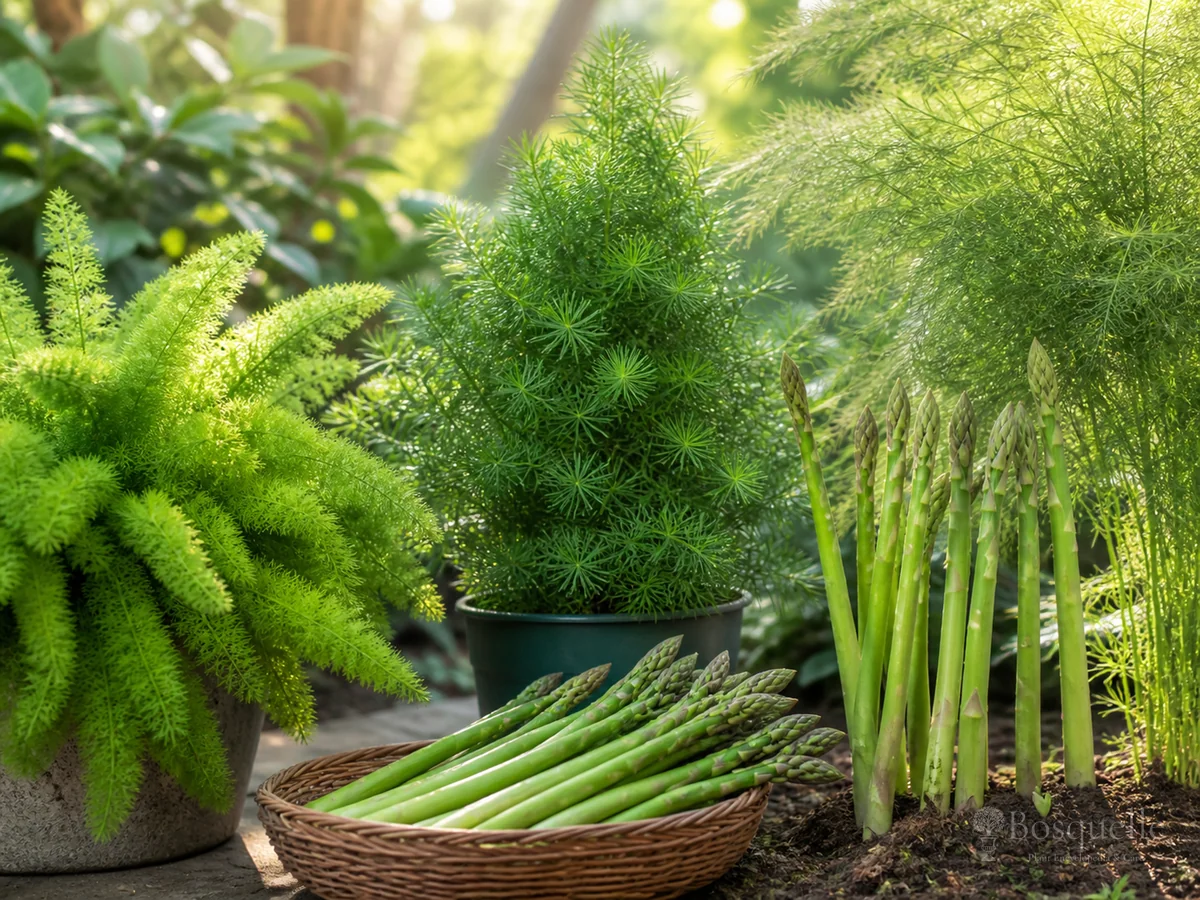
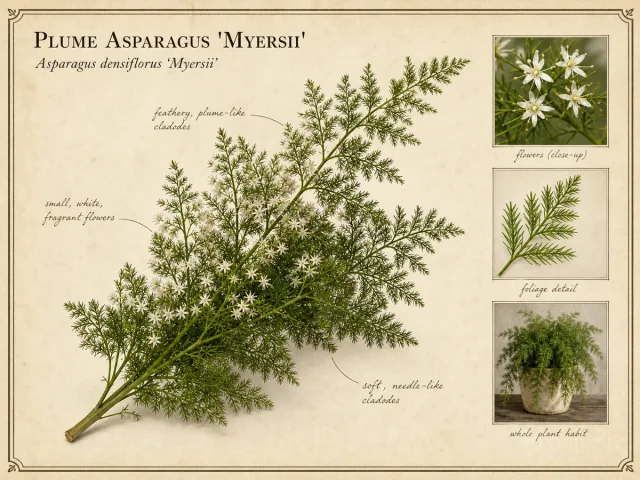
Asparagus fern is an ornamental Asparagus, not a true fern and not kitchen spears. Give it bright light and even moisture that still drains. Fleshy tubers store water, so a missed watering is kinder than a week in a full saucer. A. densiflorus ‘Myersii’ is the upright foxtail form. Yellow sprays do not turn green again — cut those stems to the crown.
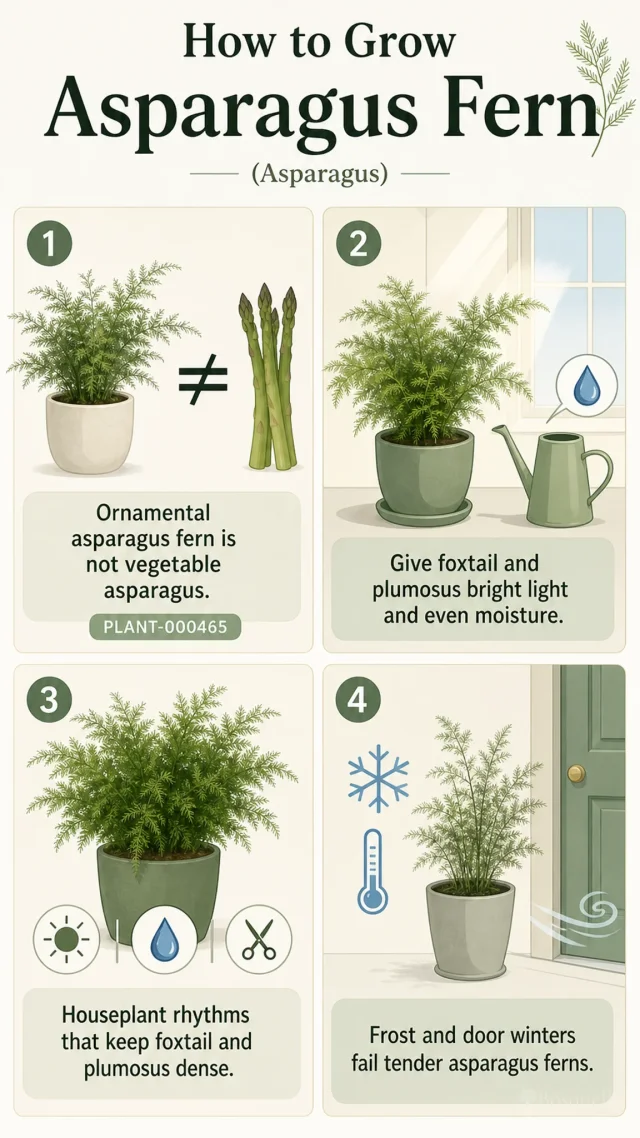
Bright light, even moisture, and tubers that store water
| Factor | Recommended | Avoid |
|---|---|---|
| Light | Bright indirect; some morning sun; brighter = denser | A dark shelf, or hot afternoon glass that scorches cladodes |
| Water | Evenly moist mix that still drains; empty the saucer | A swamp tray, or bone-dry mix until the needles drop |
| Mix | Peaty houseplant mix with holes in the pot | A pot with no drain holes |
| Heat | About 55–75°F indoors; move pots in before frost | A hard freeze on an outdoor plant left in the ground |
Asparagus fern wants bright light and consistent moisture, not a Boston-fern mist hobby. University of Wisconsin Extension: it grows in direct or bright indirect light; brighter light makes faster, denser growth. Tuberous roots store water, so the plant can miss a watering, but it still does best with even moisture. Keep it drier in winter. Stop fertilizer then.
- Set the pot in bright light. An east window works. Keep it a few feet back from hot south or west glass so the sprays do not bleach.
- Water when the top of the mix is just going dry. Soak until it runs out the holes. Empty the saucer. Do not leave the pot in a puddle.
- Use a houseplant mix that holds moisture and still drains. Holes in the pot matter more than a daily spray bottle.
- Keep indoor plants about 55–75°F. Move outdoor pots inside before frost. Foliage collapses in a hard freeze.
- Sort foxtail, arching, and lace kinds on Types of Asparagus Fern before you copy a hanging-basket water onto a humidity-hungry lace plant.
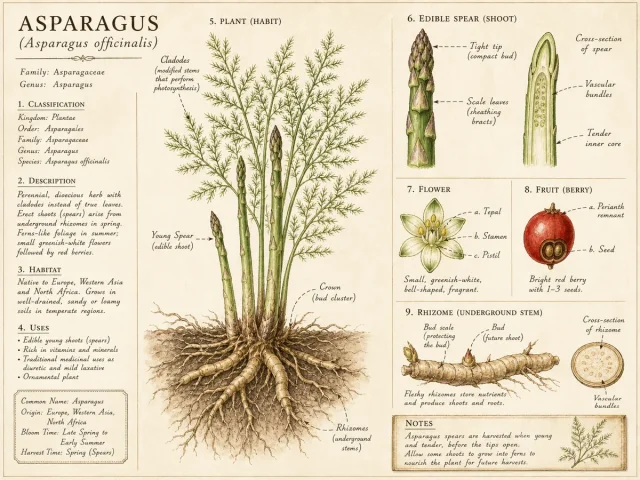
- This is not A. officinalis. Kitchen spears are a different plant and a different bed. Do not plant a foxtail in a vegetable trench and wait for dinner.
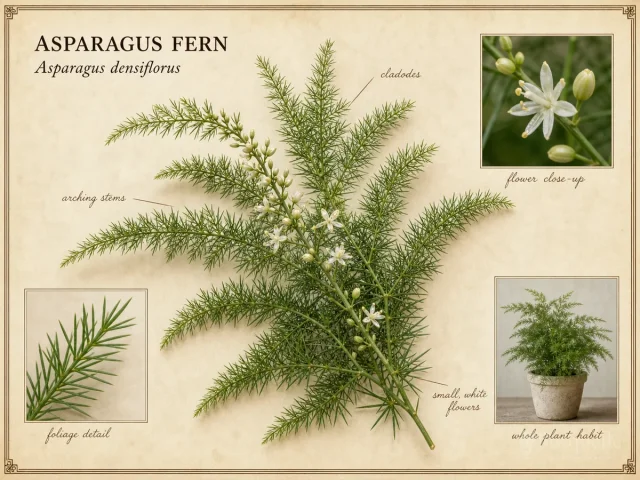
The “needles” are cladodes — flattened stems that do the leaf job. True ferns make spores. This plant can flower and set berries in enough light. Daily mist does not replace a soak. A bathroom helps humidity if the light is still bright. Do not sit the pot in pebble-tray water.
How to water, feed, and cut yellow stems
Yellow sprays stay yellow. North Carolina Extension: too little light or too little water turns needles yellow, and those needles will not green up again. New growth comes from the soil line. Cut old stems all the way back to the crown rather than shortening them halfway. Water regularly in growth. Water less in winter.
- From spring through early fall, water when the surface is just dry. Keep the mix even, not a swamp. Use room-temperature water.
- Feed a balanced liquid about once a month in growth. Stop fertilizer when growth slows for winter.
- Cut yellow or brown stems to the crown with clean snips. Wear gloves. Older stems hide sharp spines.
- Pinch stem tips if you want a tighter shape. Do not shear the plant like a hedge and leave stubs of yellow tissue.
- In winter, water less. The plant is not dormant like a bulb, but it uses less. Do not flood a cool, dark pot.
- If the whole plant yellows, check light and whether the saucer was full. Fix those, then wait for new shoots from the crown.
Spider mites show up in dry rooms as stipple and webbing. Rinse the foliage and raise humidity. Mealybugs hide in the crown. Wipe them. Do not use a systemic as the first move on a houseplant you keep indoors with pets. Aphids are less common but possible on new growth.
Spines, berries, frost, and outdoor spread
Gloves when you groom. University of Florida Extension: berries and sap can upset pets and children if chewed. Spines on older woody stems scratch. Outdoors in warm states the plant can spread from berries and tubers — keep it in a pot if you garden where it has escaped. Bring pots in before frost.
- Wear gloves and long sleeves when you cut. Young plants can feel soft. Older densiflorus stems are sharp.
- Pick berries if a toddler or a dog can reach the pot. They are for looking, not for eating.
- Keep outdoor plants in containers where the species has escaped in Florida, Texas, or Hawaii. Do not toss extra plants into a wild edge.
- Acclimate indoor plants to outdoor summer light over a week. Start in shade. Morning sun is enough. Hot afternoon sun cooks the sprays.
- Move pots inside before frost. Light frost can kill the top. The crown may live in a mild winter, but do not count on it in a hard freeze.
- Do not splice the berry warning onto a drainage fix. Toxicity is placement. A full saucer is a watering mistake.
A hanging basket of arching densiflorus is still this moisture job. Lace setaceus wants the same drain and more humidity. Foxtail Myersii wants the same bright light so the plumes stay dense. Names live on Types of Asparagus Fern.
Kinds, divide, and next jobs
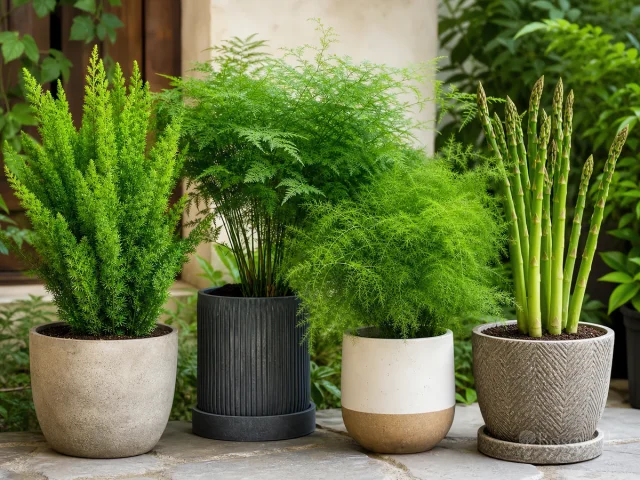
Myersii is the upright foxtail. Arching densiflorus (often sold as Sprengeri) trails. Setaceus is the fine plumosa lace. All three share bright light and even moisture. Officinalis is the vegetable — skip it if you wanted a houseplant.
When the clump is crowded, divide the tubers in spring with several stems on each piece. A stem in a jar of water will not root. Steps live on How to Propagate Asparagus Fern. Tubers are strong enough to crack a thin pot. Use a sturdy container with holes, one to two inches wider when you size up, crown at the old line. Water the day before you slide the root ball. Empty the saucer after. Same-pot mix refresh is allowed if the pot is still sound. Do not yank by the stems. Cut yellow stems to the crown after you pot. After the move, a bright window and a pebble tray beat a shade fern jammed in the same saucer. If last year’s plant never thickened, check light before you buy a bigger pot.
Keep asparagus fern in bright light and even moisture that still drains. Tubers store water, so a missed watering beats a full saucer. Cut yellow stems to the crown; they will not green up. Wear gloves. Pick berries if pets can reach them. Bring pots in before frost. In warm states, keep the plant in a container so it does not spread. This is not a true fern and not kitchen spears. Foxtail, arching, and lace kinds share the same soak-and-drain. Names live on Types of Asparagus Fern. Division lives on How to Propagate Asparagus Fern. Use a sturdy pot with holes when the clump cracks thin plastic. Do not yank by stems. Do not sit the pot in pebble water. Feed monthly in growth and stop in winter. A dark shelf yellows the sprays. Hot afternoon glass bleaches them. Myersii wants that bright light so the plumes stay dense. Setaceus wants the same drain and a bit more humidity. Officinalis is the vegetable — buy crowns for spears, not this houseplant. Mark a late-waking crown in spring so you do not toss a firm tuber mass. Empty the saucer every time you water. Spider mites like dry rooms; rinse the sprays and raise humidity rather than flooding the mix. Mealybugs hide in the crown — wipe them. Acclimate summer outdoor time in shade first, then morning sun. Bring the pot in before frost. A hanging basket still needs holes and an empty saucer. Cut yellow stems all the way back. New growth starts at the soil line. Bright light is the density rule. Even moisture is the tuber rule. Gloves are the spine rule. Pick berries if a dog can reach the rim. Winter water is less, not zero. Stop fertilizer when growth stalls. A firm tuber mass in April is still alive. Plant it in bright light. Do not toss it because the old sprays look thin. Empty every saucer. Cut every yellow stem to the crown. Bright light, even moisture, gloves, and a pot that drains. Move outdoor pots in before the first frost.
FAQ
Is asparagus fern a real fern?
No. It is Asparagus. The needles are cladodes. True ferns make spores. This plant can flower and set berries.
Is asparagus fern the same as vegetable asparagus?
No. Ornamental densiflorus, Myersii, and setaceus are foliage plants. A. officinalis is the spear crop.
Why is my asparagus fern turning yellow?
Too little light, too little water, or a wet saucer. Yellow sprays do not green up. Cut them to the crown and fix the site.
How often should I water asparagus fern?
Keep the mix evenly moist in growth. Water less in winter. Empty the saucer. Tubers store water, so a miss is better than a swamp.
Does asparagus fern need humidity?
It likes moderate humidity. A pebble tray or humidifier helps, especially for lace setaceus. Mist is not a substitute for watering the mix.
Can I grow asparagus fern outdoors?
In a pot, yes, in frost-free weather. Bring it in before frost. In some warm states it can spread — keep it contained.
Are asparagus fern berries toxic?
They can upset pets and children if chewed. Pick fruit that mouths can reach. Wear gloves around sap and spines.
How do I propagate asparagus fern?
Divide the tuber clump in spring. Stem cuttings fail. Steps live on How to Propagate Asparagus Fern.
When should I repot asparagus fern?
When tubers crest, the pot cracks, or water races through. Spring. Use a sturdy pot one to two inches wider.
How much light does asparagus fern need?
Bright indirect, or gentle morning sun. Brighter light makes denser growth. A dark corner yellows the sprays.
Related guides
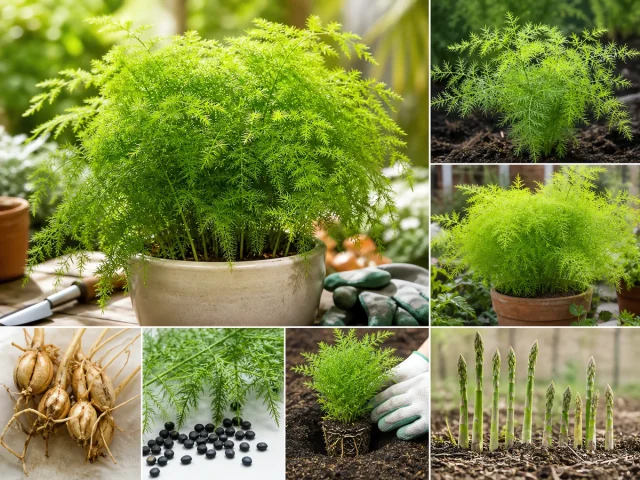
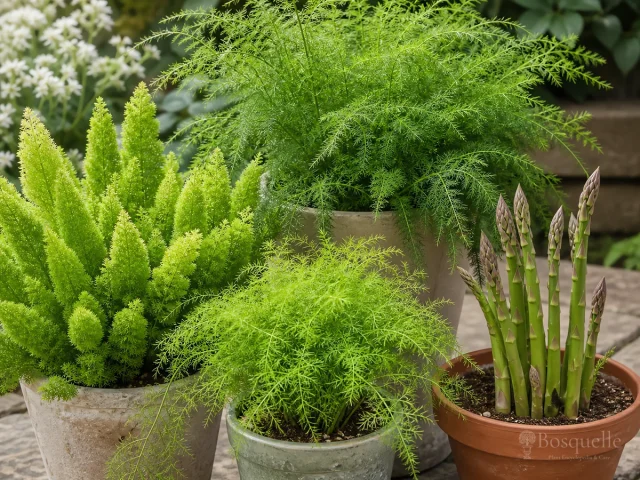
Recommended plants

This note is part of Asparagus Guides.
More first-season notes by plant are gathered in How to Grow Guides.
Updated: Reviewed by Bosquelle Editors