
Grow artemisia in full sun and lean, well-drained soil. Artemisia is wormwood — a silver foliage plant, not garden sage. Kitchen tarragon is a cooking leaf on How to Grow Tarragon.

Give it full sun and lean, well-drained soil
| Factor | Recommended | Avoid |
|---|---|---|
| Sun | Full sun, at least six hours | Do not site it in deep shade that stretches stems and opens the mound |
| Soil | Lean ground that drains after rain; add grit in clay | Do not plant into rich, wet soil around the crown |
| Water | Let the top dry, then water; little water once established | Do not leave a puddle at the crown, especially in winter |
| Feed | Little or none | Do not use a heavy fertilizer that makes the clump flop |
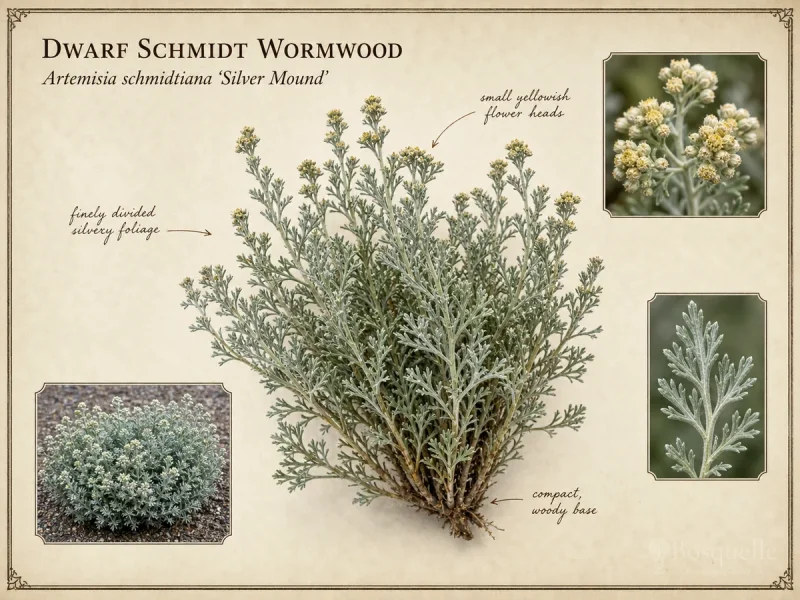
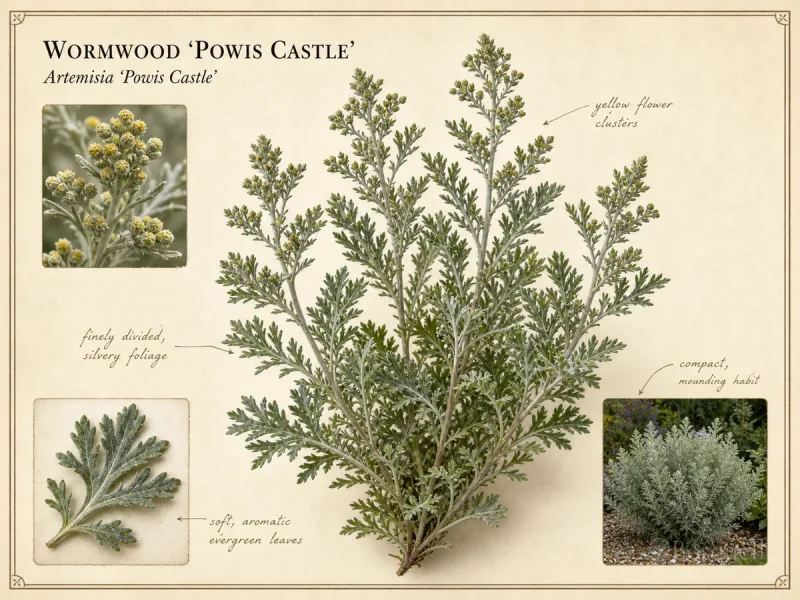
Most artemisia wants a hot, dry site. Full sun and poor, well-drained soil keep the foliage dense. Wet ground, especially in winter, rots the crown. [1] [2] Do not enrich the bed. Silver Mound opens in the middle when the soil is too fertile and moist. Powis Castle wants that same lean drain. [3] White mugwort is the moist exception — pick it on Types of Artemisia.
Does artemisia need full sun?
Yes. Give it at least six hours. Shade makes thin stems and a mound that falls open.
How often should I water artemisia?
Water a new plant until it roots. After that, water only when the top is dry. Do not leave the crown in standing water.
Trim the mound before it opens in the middle
Silver mound splits from the center in heat if the soil is rich or wet, or if you never cut it. Trim before it flowers so new growth stays tight. If the center already opened, cut the foliage back to fresh shoots and it will fill in.
- In late spring, shear or pinch the mound by about a third, before the small flower heads open.
- If the center opens in summer, cut the foliage back by about half, down to new growth.
- On woody kinds, cut to live buds in spring. Do not cut into leafless old wood — those stems may not resprout.
- Snip flower heads if you want foliage only.
Why did my silver mound open in the middle?
The soil was too rich or too wet, or the plant was never sheared. Grow it lean and dry, and trim before it flowers.
When should I cut artemisia back?
Late spring, before it flowers. If the mound opens in summer, cut it back by about half to new growth.
Set the crown at soil level, and leave room for air
Plant after frost in spring, once the soil can be worked. Set the top of the root ball even with the surrounding soil. Burying the crown holds water against the stems. In clay, mix grit, perlite, or crushed rock into the backfill so water does not sit. [4]
- Plant in spring after frost, or in early fall while the soil is still warm.
- Dig a hole as deep as the root ball and about twice as wide. Tease circling roots if the plant is pot-bound.
- Set the ball so the crown sits at soil level, not buried.
- Space mound kinds 12 to 18 inches apart so air moves around the foliage. Backfill, firm, and water in once. Then let the top dry before the next watering.
How far apart should I plant artemisia?
Leave 12 to 18 inches between silver-mound plants. Measure to the mature clump, not the nursery pot. Sagebrush shrubs need more room — pick that kind on Types of Artemisia.
Not common mugwort — and not garden sage
Common mugwort is Artemisia vulgaris, a roadside spreader we do not list. Garden western mugwort is Artemisia ludoviciana. Confirm the Latin on the tag.
Garden sage is Salvia — see How to Grow Sage. Sagebrush in this genus is a woody arid shrub, not a kitchen sage leaf.
Is mugwort the same as artemisia?
Mugwort is a common name inside this genus. Common mugwort is a weedy roadside plant we do not sell. Western mugwort is the garden silver spreader.
If the mound opened, cut it back to new growth and stop watering so much — do not move it into richer soil.
FAQ
Is wormwood poisonous?
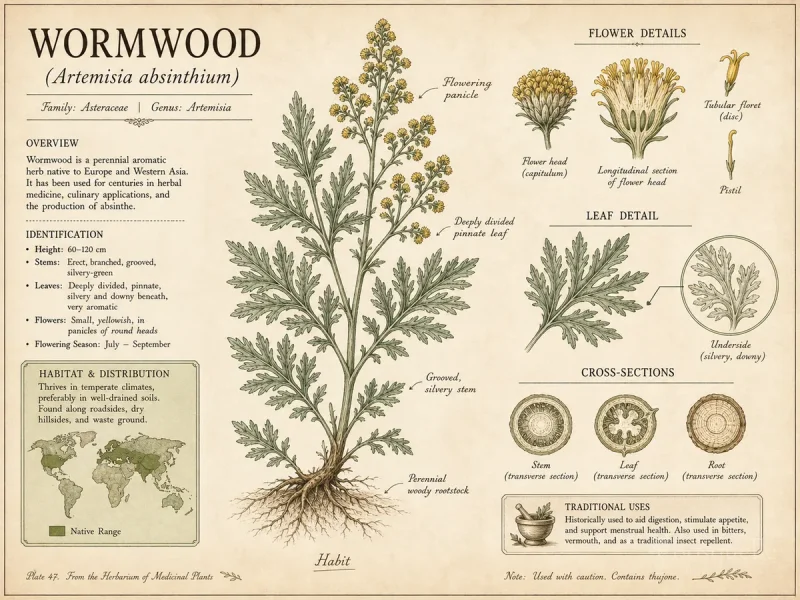
Leaves and stems can make people and pets sick if eaten in quantity. Keep chewing pets off the plant. Do not brew the foliage as a home liqueur.
Does artemisia get rust?
Leaf rust shows up in wet, humid air. Give full sun, lean drain, and space. Pull badly marked leaves and throw them away. Do not start a spray program for a drainage problem.
Related guides


Recommended plants


References
- [1] Iowa State University Extension -
https://yardandgarden.extension.iastate.edu/article/1994/8-12-1994/art.html - [2] NC State Extension Gardener -
https://plants.ces.ncsu.edu/plants/artemisia/ - [3] UC Master Gardener Program of Sonoma County -
https://ucanr.edu/site/mg-sonoma/artemisia-california-sagebrush - [4] Garden Design -
https://www.gardendesign.com/plants/artemisia.html
This note is part of Artemisia Guides.
More first-season notes by plant are gathered in How to Grow Guides.
Updated: Reviewed by Bosquelle Editors