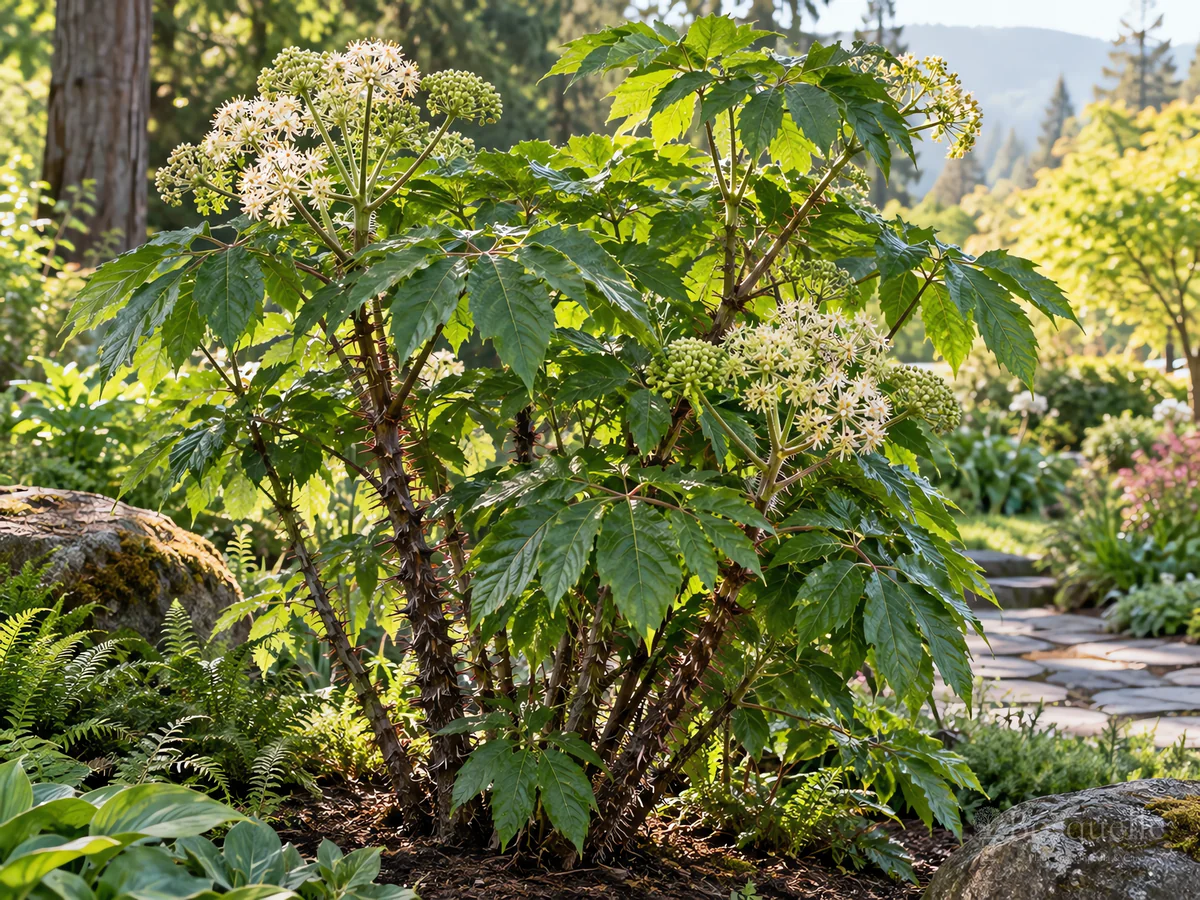
Grow aralia as devil's walking stick in sun that drains. A Ming aralia is a houseplant sold under the same shop name.
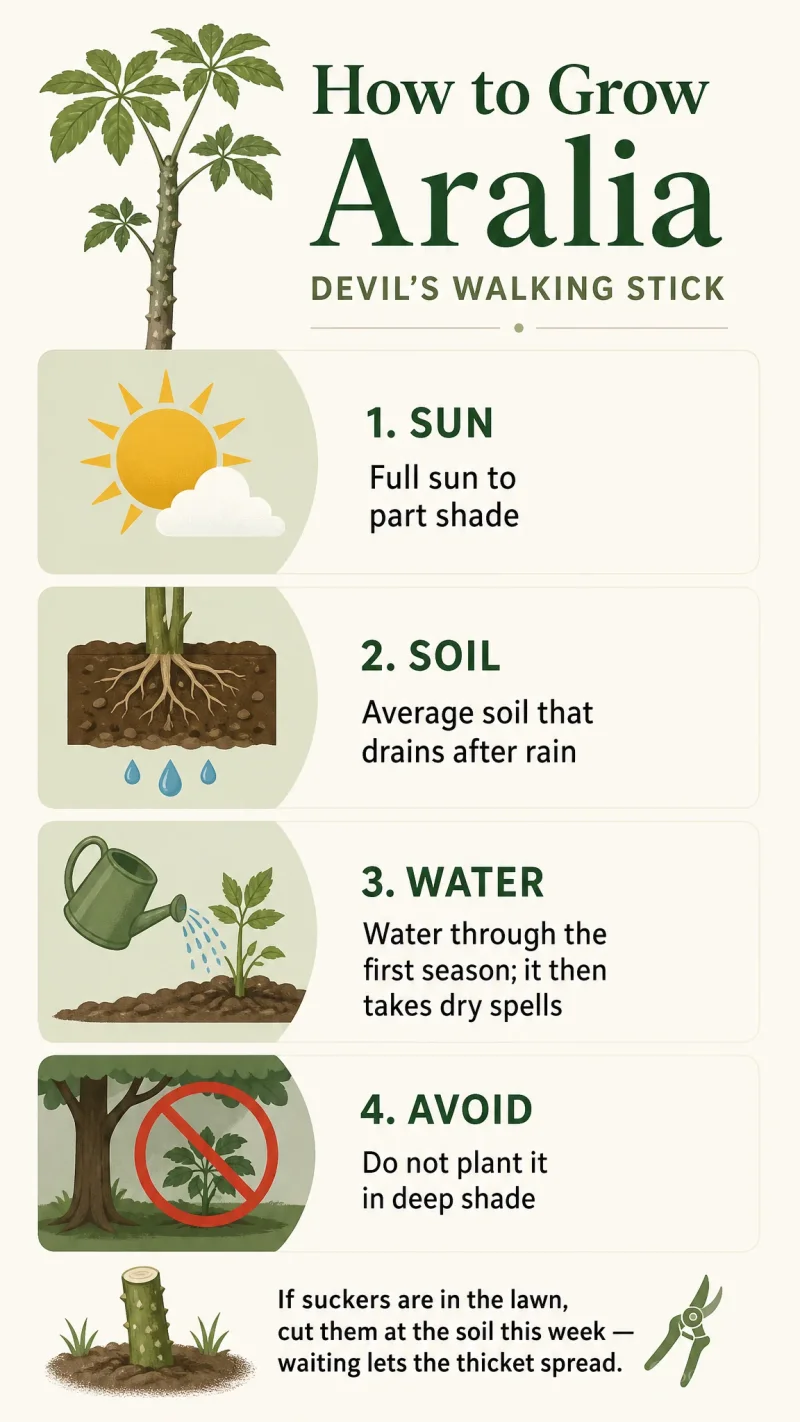
Give devil's walking stick sun and soil that drains
| Factor | Recommended | Avoid |
|---|---|---|
| Sun | Full sun to part shade | Do not plant it in deep shade |
| Soil | Average soil that drains after rain | Do not plant it in a low, wet hole |
| Water | Water through the first season; it then takes dry spells | Do not keep the roots soggy after it is established |
| Wind | Shelter the large compound leaves from strong wind | Do not site it on an open, windy corner |
| Spines | Wear gloves when you handle the stems | Do not plant it beside a walk |
devil's walking stick wants full sun to part shade and soil that drains. Water it through the first season. After that it takes dry spells. [1] California spikenard is the moist-shade woodland herb in this catalog — see How to Grow California Spikenard.
Does devil's walking stick need full sun?
Full sun to part shade is fine. Light shade under tall trees also works. Keep it off a walk, because the stems are spiny.
How often should I water devil's walking stick?
Water through the first season. After that it takes dry spells. Do not keep the roots soggy in a low hole.
Plant in fall or early spring, with room for a thicket, and wear gloves
Set a nursery plant when the ground is workable, usually in fall or early spring. Devil's walking stick spreads by root suckers, so give a colony room or plant it where you can cut new shoots. Wear puncture-resistant gloves and long sleeves before you handle the stems. Keep it off a walk and away from a play area. [2]
- Wear puncture-resistant gloves and long sleeves before you handle the plant. The spines on the stems and leaf stalks puncture skin.
- Plant in fall, or in early spring before new growth starts, when the soil is workable.
- Dig a hole no deeper than the nursery pot. Set the plant at the same depth, backfill, and water in once.
- Give a colony about twelve to twenty-four feet, or plant it where you can mow or cut suckers at the soil. Keep it off a walk.
When do I plant devil's walking stick?
Plant in fall or early spring, at the same depth as the pot. Give it room to sucker, and wear gloves.
Cut suckers at the soil if you want a tight clump
Devil's walking stick can spread indefinitely if you leave every shoot. Cut new suckers at the soil when they appear if you want a tight clump. Leaving them lets the thicket spread. Do not rototill around the roots, because that makes more shoots. [3]
- Wear puncture-resistant gloves before you cut.
- Cut new suckers at the soil as soon as you see them, if you want to hold the spread.
- Leave the suckers if you want a woodland-edge thicket. Mow the edge if the colony meets a lawn.
- In late winter, cut dead or damaged canes at the soil. Leave the dried flower stalks if you want winter structure for birds.
How far will devil's walking stick spread?
It can form a thicket ten to twenty feet across, and farther if you leave every sucker. Cut new shoots at the soil to hold the spread.
Not Ming aralia — and not Japanese aralia
Ming aralia is Polyscias fruticosa, a tropical houseplant with fine, ferny leaves. Japanese aralia is Fatsia japonica, an evergreen with large palmate leaves, sometimes still tagged as Aralia japonica. [4] False aralia is Plerandra elegantissima, another houseplant with narrow leaflets. A Japanese angelica tree is Aralia elata, a woody, spiny plant that looks like devil's walking stick but is a different species. Garden angelica is the herb on How to Grow Angelica. Prickly ash is Zanthoxylum. False spikenard is false lily of the valley, not California spikenard.
Is Ming aralia the same plant?
No. Ming aralia is a houseplant. Devil's walking stick is a woody, spiny thicket. Japanese aralia is Fatsia, an evergreen with palmate leaves.
If suckers are in the lawn, cut them at the soil this week — waiting lets the thicket spread.
FAQ
Can I grow this aralia in a pot?
A large tub can hold a young plant on a patio if it drains. Devil's walking stick wants room to sucker in the ground, not a small indoor pot.
Will devil's walking stick take salt?
The woody plant tolerates some salt and urban conditions once it is established.
Are the berries safe to eat?
Do not eat unripe berries, bark, or roots. Ripe fruit feeds birds. The sap and bark can irritate skin, so wear gloves when you cut stems.
Related guides
Recommended plants
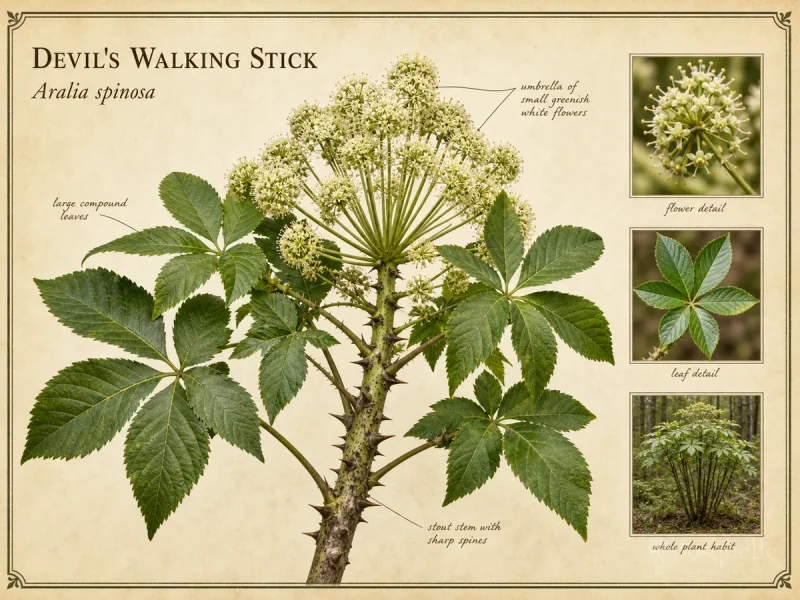

References
- [1] NC State Extension Gardener -
https://plants.ces.ncsu.edu/plants/aralia-spinosa/ - [2] Lady Bird Johnson Wildflower Center -
https://www.wildflower.org/plants/result.php?id_plant=ARSP2 - [3] The Morton Arboretum -
https://mortonarb.org/plant-and-protect/trees-and-plants/devils-walking-stick/ - [4] NC State Extension Gardener -
https://plants.ces.ncsu.edu/plants/fatsia-japonica/
This note is part of Aralia Guides.
More first-season notes by plant are gathered in How to Grow Guides.
Updated: Reviewed by Bosquelle Editors