
Angel’s fishing rod is Dierama — a South African perennial grown for arching stems of dangling summer bells. Dierama pulcherrimum is the usual nursery plant, also sold as wandflower or fairy wand. Plant it once in full sun, in soil that stays moist in summer and drains in winter. Established clumps resent a move and may take a year or two to bloom well again.
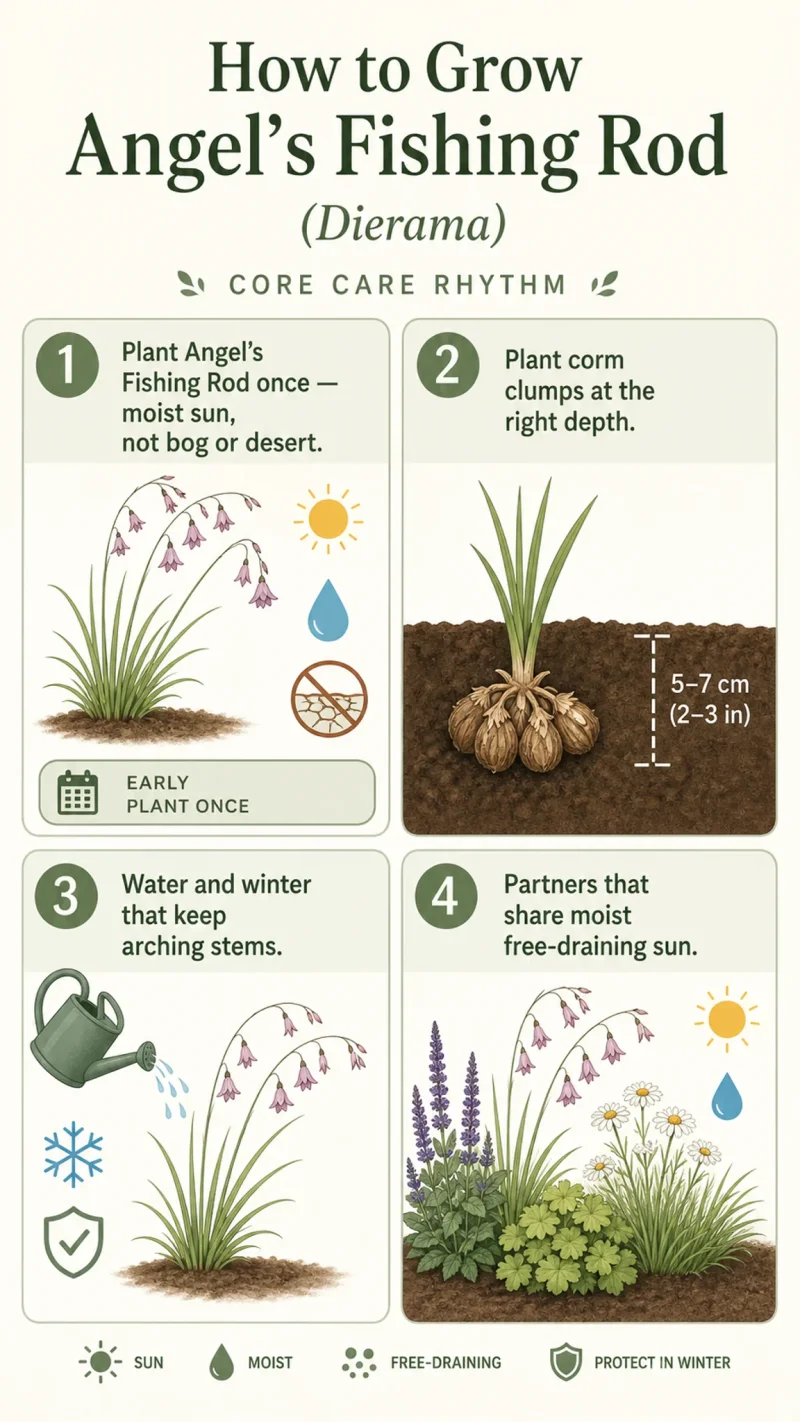
Full sun, moist drain, plant once
| Factor | Recommended | Avoid |
|---|---|---|
| Light | Full sun; a warm, open spot | Cold shade; a wind tunnel that snaps stems |
| Soil | Moist in summer, free-draining in winter | A winter bog; bone-dry sand with no summer water |
| Seat | A permanent home — do not plan to relocate | A temporary hole you will dig again next year |
| Water | Even moisture while establishing and in dry summers | Standing water on dormant corms |
| Winter | Drain, mulch after the ground cools, shelter from wet freeze | Heavy clay that sits wet and frozen |
North Carolina Extension: moist, well-drained soil; plants dislike being moved. University of Washington Botanic Gardens: moisture-retentive soil that still drains; clumps sulk after a move. RHS: warm sun, fertile ground that does not dry out in summer or waterlog in winter. That is one brief: moisture with air around the corms, not a swamp and not a desert.
It grows from a corm (a swollen underground stem). Corms multiply into chains, a little like Crocosmia, but slower to settle after digging. Grassy leaves are often evergreen in a mild winter. Summer stems can reach several feet on a good clump. Deep shade flops the arcs and cuts bloom.
- Fix drainage before you plant if clay ponds in winter. Raise the bed or add grit and organic matter (RHS / BBC Gardeners’ World).
- Give stems room to arc over a path or lawn edge. Do not crowd them under a hedge.
- Mark the clump so you do not slice it when you add annuals nearby.
Wandflower on a tag can wander across genera. Confirm Dierama. Named color selections still want this same moist-drain sun. There is no separate Types URL — the catalog here is this one species.
Plant corms at the right depth
Treat the hole as the permanent home. RHS: plant corms in spring, 2–3 inches (5–7.5 cm) deep. Farmer Gracy: shoots up, 5–7 cm. Match nursery pot depth when you plant a potted clump.
- Choose full sun and draining soil that you can keep moist in summer. Not a winter ice pond.
- Plant in spring, or in early fall in a mild climate, when the soil is workable. Do not plant into frozen or waterlogged ground.
- Set corms 2–3 inches deep, growing points up. Space so the grassy clump can thicken — about a foot or more between starts.
- Water to settle. Keep even moisture through the first dry spells. Never leave the hole as a puddle.
- Mulch lightly after the ground cools in a colder garden. Keep thick wet mats off the crown.
Too shallow and drought plus frost heave stress the corms. Too deep in wet clay and they rot. Plant promptly when stock arrives — do not leave corms on a hot driveway or in a wet bucket for days.
Divide only when a clump congests and bloom thins. University of Washington horticulture library: lift in spring, tease corm chains apart, expect one to two years before divisions flower freely. Skip fall digs. Cold wet soil plus disturbance is a poor bargain. Cut tired foliage back by about half after you lift, and replant at the same depth the same day.
First-year bloom can be shy. Give sun, moisture, and a winter before you declare failure — especially after a move.
Water, winter wet, and foliage
Water through active growth if rain fails, especially the first two years. Established clumps on draining ground handle a short dry spell. Chronic drought thins the stem curtain. SMGrowers (California): summer water matters; winter wet on dormant corms is the rot risk.
- Feed lightly. A thin compost top-dress in spring is enough. Heavy nitrogen makes soft leaf and weak stems.
- Cut spent flower stems after bloom if you want a tidy clump. Do not shear all the green foliage in midsummer — those leaves feed the corms.
- In late winter, tidy damaged leaves once you can see live growth. Do not cut everything green to the ground in fall.
- Slugs may nick soft spring growth. Corm rot tracks wet freeze and stagnant clay — fix the site before you spray.
In a milder winter-rainfall climate, ease irrigation once growth slows so dormant corms are not sitting in a cold bath. In a marginal cold garden, a warm wall, a raised bed, or a pot you can protect beats a frost hollow of wet clay. Wet freeze–thaw on heavy soil is worse than a dry cold snap on grit.
Mushy collapse after a wet freeze is drainage and cold together. Lank pale arcs are too little sun. Sparse bells after years of drought mean moisture never matched the brief. A clump that looks dead after a move may still be sulking — wait a season before you dig again.
Growing angel's fishing rod in containers?
Tip only. BBC Gardeners’ World: deep roots, not a natural pot plant. If you try, use a tall, draining pot (a long tom) and a fertile mix that still drains. Empty saucers. One clump per generous pot. Protect from hard wet freeze, or move the pot to a cold but dry shelter. Do not leave it jammed in a small bowl for years.
- Pick a deep pot with a drainage hole.
- Set the crown at the same depth as it grew. Water until it runs out. Empty standing water.
- Keep the mix moist in summer. Ease water when growth slows in winter.
Partners that share moist draining sun
Pair angel’s fishing rod with plants that take full sun, summer moisture, and winter drain — not a bog iris and not a cactus strip on the same hose.
- Ornamental grasses that like average moisture — movement beside the arching stems without desert drought.
- Daylilies and other sun perennials on even moisture — summer color beside the bells without flooding the corms.
- Early bulbs elsewhere in the bed — spring interest before Dierama peaks. Do not let winter bulb watering pond on the corm zone.
- A path edge or sunny bank — room for stems to arc over gravel or lawn without a wind tunnel.
Avoid partners that demand standing water or bone-dry neglect. Those mixes force a compromise that usually costs the corms. Give a young clump space; close greedy neighbors starve it. Partners do not replace the stay-put rule. Site the Dierama first, then fill gaps that remain.
FAQ
Can I transplant angel's fishing rod?
Prefer not. Established clumps resent a move and may take one to two seasons to flower well again. If you must move a young plant, lift a generous root ball in spring and expect a quiet year.
Does wandflower need moist soil?
Yes — moist but free-draining. Drought thins bloom. Stagnant wet rots corms.
How deep do I plant Dierama corms?
About 2–3 inches in draining soil, growing points up. Match pot depth when transplanting. Avoid deep burial in wet clay.
When should I divide Dierama?
Only when the clump congests and bloom thins. Lift in spring, separate firm corm chains, replant the same day, and wait a year or two for bloom.
Why did my Dierama rot over winter?
Usually wet freeze, stagnant clay, or dormant corms left in cold waterlogged soil. Fix drainage before you replant.
Is wandflower the same as Dierama?
Wandflower and fairy wand are common names for Dierama. Nicknames wander across labels — confirm Latin Dierama on the tag.
Does Dierama need full sun?
Yes for sturdy arcs and dense bells. Deep shade flops stems and cuts flowering.
When does angel's fishing rod bloom?
Summer. New or recently moved clumps may bloom shyly the first season.
Can I grow Dierama in a pot?
A deep draining pot can work. Empty saucers. Protect from hard wet freeze. It is not a natural container plant.
Is Dierama frost hardy everywhere?
It suits milder winters best. Hard wet freezes on heavy clay kill corms. Use a raised bed, a warm wall, or a pot you can protect.
Recommended plants
More first-season notes by plant are gathered in How to Grow Guides.
Updated: Reviewed by Bosquelle Editors