
Grow angelonia in full sun and summer heat. It is sold as summer snapdragon because the spikes look like Antirrhinum, but it is a different plant that blooms after snapdragons fade.

Give it full sun, soil that drains, and summer heat
| Factor | Recommended | Avoid |
|---|---|---|
| Sun | Full sun, at least six hours a day. More sun means stronger stems and more bloom | Do not plant it in shade — stems stretch and flowers thin |
| Soil | Moist loam, sand, or amended clay that drains after rain | Do not leave roots in standing water — that is how they rot |
| Heat | Wait until nights and soil are warm before you expect strong growth | Do not treat it like a cool-season snapdragon and set it out in cold spring soil |
| Water | Keep new plants evenly moist until they root in, then water when the top inch of soil is dry | Do not let a new transplant wilt, and do not keep established roots soggy |
| Feed | A light balanced feed at planting. In a bed, that is often enough | Do not use a heavy nitrogen feed — you get leaves instead of flowers |
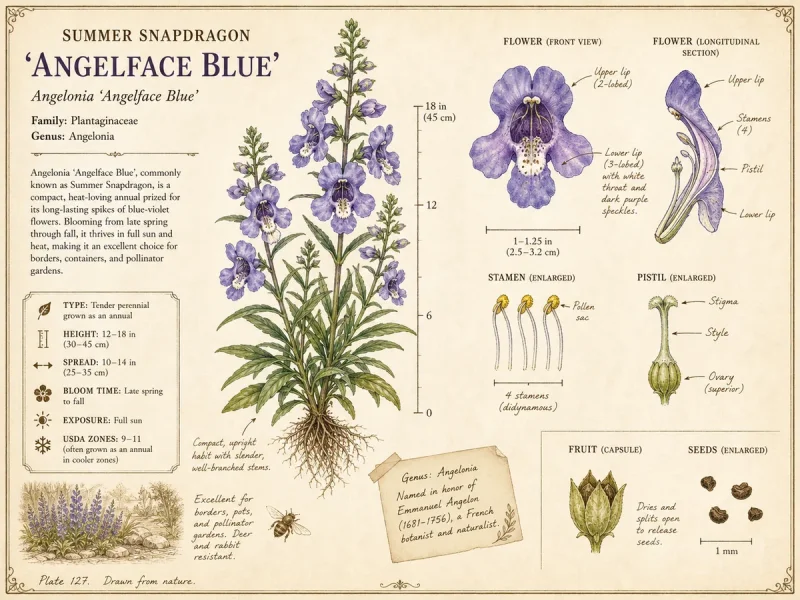
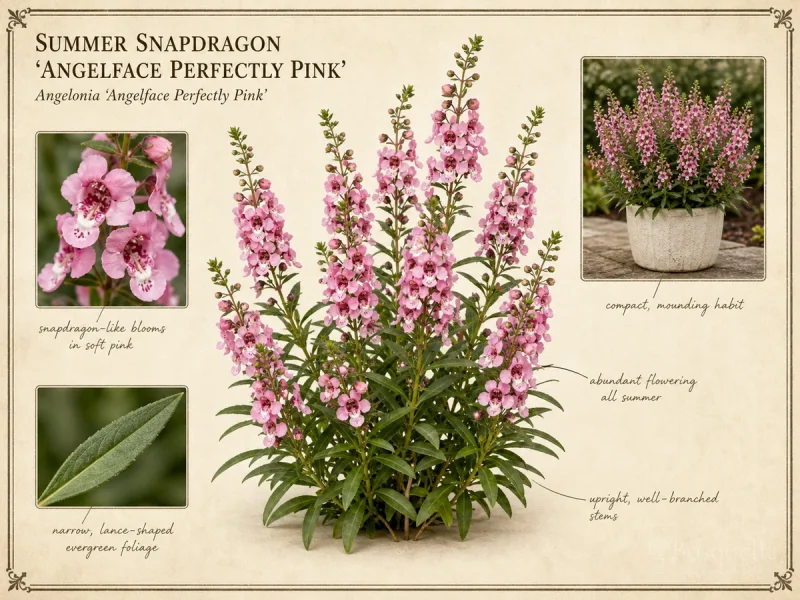
Angelonia wants a full day of sun and soil that stays moist enough to grow but still drains. [1] It is a heat plant. Growth stays slow until nights and soil warm up, then the spikes fill once summer arrives. [2] [3] Water a new plant regularly for the first couple of weeks. After that, let the top inch dry before you water again. Established plants take a short dry spell, but a wilt that yellows the lower leaves costs weeks of bloom. Angelface Blue and Perfectly Pink use that same sun and drain. When you are ready to set a transplant, see Planting Angelonia. A patio pot is on Angelonia in Pots.
Does angelonia need full sun?
Yes. Give it at least six hours of direct sun. Shade stretches the stems and cuts the bloom.
How often should I water angelonia?
Water new plants often enough that they do not wilt for the first two to three weeks. After that, water when the top inch of soil is dry. Do not leave the roots in standing water.
Cut it back by half at midsummer
By midsummer, plants that looked full in June can stretch and open even while they still flower. Cut the stems back by about half their height. The plant reblooms in two to three weeks, denser than before. [4] Spent blooms drop on their own, so you do not deadhead spike by spike. The midseason cut is the cut that matters.
- Wait until midsummer, or until the plant looks stretched and open at the base.
- Cut every stem back by about half. Use clean scissors or shears.
- Water after the cut, and give a light feed if the plant has been in the same soil all summer.
- New shoots show within a week. Full bloom returns in two to three weeks. Do not shear again within about six weeks of the first expected frost.
Does angelonia need deadheading?
No. Spent blooms drop on their own and new spikes keep coming. The cut that helps is a midsummer shear if the plant looks tired.
When should I cut back angelonia?
Cut it back by about half in midsummer, often mid-July. It reblooms in two to three weeks. Morning is easier on the plant than the hottest hour of the day.
Sow seed on the surface — do not cover it
Most shop plants, including the Angelface series we list, are sold as transplants grown from cuttings. Seed is the Serena and Serenita path, not those named cuttings. If you do sow, press the seed onto moist mix and leave it uncovered. Angelonia needs light to germinate. Start indoors about six to eight weeks before the last frost. Seedlings usually appear in seven to fourteen days in a warm room, then they need strong light so they do not stretch.
- Fill a tray with a fine, draining seed mix. Moisten it before you sow.
- Press the seed onto the surface. Do not cover it.
- Keep the mix evenly moist and warm, about 70 to 75 °F, until you see seedlings.
- Move them into strong light as soon as they are up. Harden them off, then plant them out after frost on Planting Angelonia.
Can I grow angelonia from seed?
Yes, if you can find Serena or Serenita seed. Press it on the surface and do not cover it. Named Angelface plants in the shop are cuttings, not seed.
Not a snapdragon — it wants heat, not a cool spring
Angelonia is marketed as summer snapdragon because the two-lipped flowers on upright spikes look like Antirrhinum majus. They are not the same plant. Antirrhinum is a cool-season annual that peaks in spring and fades when heat arrives. Angelonia does the opposite: it sits in cool soil and takes off when temperatures climb. If you plant it in the snapdragon window, it will barely grow until the weather warms. Island bush snapdragon is Galvezia, a woody shrub — see How to Grow Galvezia.
Is angelonia the same as snapdragon?
No. Snapdragon is Antirrhinum, a cool-season annual that fades in summer heat. Angelonia blooms in that heat.
If bloom thins, check sun first, then whether the roots sit wet. A midsummer cut brings the spikes back.
FAQ
Is angelonia a perennial or an annual?
In frost-free gardens it can live as a tender perennial. Where frost hits, grow it as an annual and replant each spring. A pot you can carry inside is on Angelonia in Pots.
Can I take cuttings from a shop plant?
Named Angelface plants are usually patented. Buy a new plant each spring, or sow Serena seed. Non-patented plants can root from tip cuttings in a draining mix.
Does angelonia attract hummingbirds?
The spikes hold nectar in heat, so bees, butterflies, and hummingbirds visit. Grow it for the bloom first, not as a wildlife lure by itself.
What about Serena or Serenita?
Those are seed-grown series, often shorter than Angelface. We list Angelface cuttings. Care is the same sun, drain, and heat.
Related guides


Recommended plants


References
- [1] Clemson Home & Garden Information Center -
https://hgic.clemson.edu/factsheet/angelonias-summer-snapdragons/ - [2] NC State Extension Gardener -
https://plants.ces.ncsu.edu/plants/angelonia-angustifolia/ - [3] Proven Winners -
https://www.provenwinners.com/succeeding-with-angelonia - [4] Gardening Know How -
https://www.gardeningknowhow.com/ornamental/flowers/angelonia/growing-angelonia-plants.htm
This note is part of Angelonia Guides.
More first-season notes by plant are gathered in How to Grow Guides.
Updated: Reviewed by Bosquelle Editors