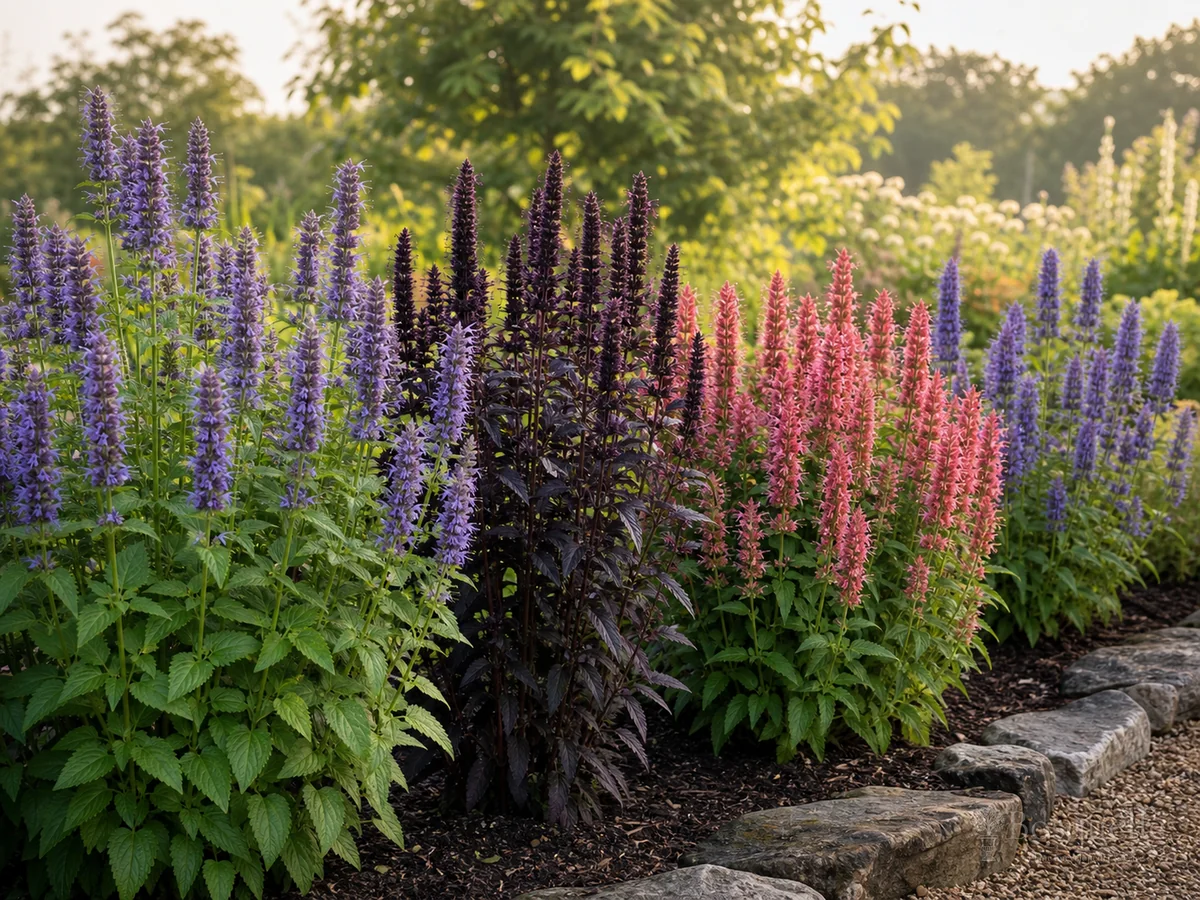
Grow agastache (anise hyssop) in full sun in soil that drains. It is a perennial. It is not water hyssop, and it is not garden hyssop.
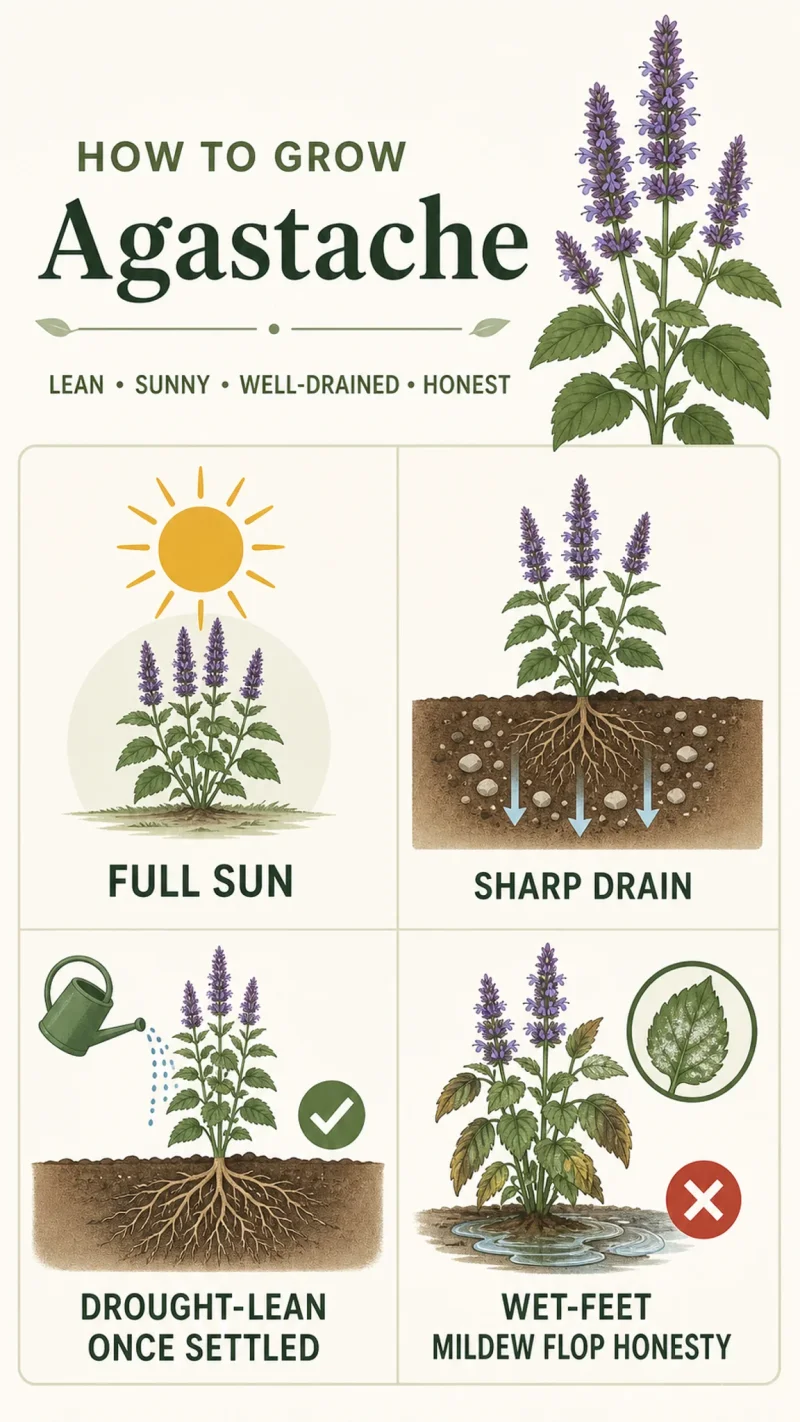
Full sun, sharp drain, and perennial first
| Factor | Recommended | Avoid |
|---|---|---|
| Sun | Full sun, about 6 hours | Shade that makes lanky stems and few spikes |
| Soil | Lean, free-draining; raised if clay stays wet | A winter-soggy crown |
| Winter | Herbaceous perennial where frost hits | Treating it as an annual unless wet clay kills it |
| Plant | Spring after soil warms, or fall where winters are dry | A low spot that ponds |
Six hours of sun makes the spikes. Shade stretches the plant. [1] Drainage is the winter test: wet feet rot the crown. [2] If the bed is heavy clay, raise it or use a pot before you buy a row. A plant that looks fine in June can be gone by March if water sits on the crown.
Does agastache need full sun?
Yes — about six hours. Light shade is tolerated; the plant gets lanky and bloom drops.
Is agastache a perennial?
Yes. It dies back in frost climates and returns from the crown if the soil drains. Wet winter clay is the usual reason a clump does not come back.
Is anise hyssop invasive?
It can self-seed. That is not mint running underground. Pull seedlings you do not want. Named hybrids are usually less seedy than the species.
Water once settled, air, and winter stems
- Settle first — even moisture the first season. Once roots are in, water in drought, not on a weekly calendar. [3]
- Air — space so leaves dry. Crowding invites powdery mildew. [4]
- Leave stems through winter — do not cut to the ground in fall. A heavy wet mulch on the crown is the usual kill.
- Cut in spring — shorten dead stems when new growth shows. Deadhead spent spikes in summer if you want a second flush.
Is agastache drought tolerant?
Once established, yes. Ignore it on day one and the plant stalls. Water to settle, then back off.
In humid summers, wet leaves overnight start mildew. Water the soil, not the spikes, and do it in the morning. The first season is the only time you treat this plant like a thirsty annual. After that, extra water still does more harm than good.
What fails agastache
- Wet winter soil — crown and root rot.
- Shade — lanky stems, few spikes.
- Rich, wet beds — flop and mildew.
- A fall haircut plus wet mulch — water into the crown.
If the bed stays wet all winter, move the job to a raised bed or a pot — that method lives on Agastache in Containers. Do not keep pouring water on a flopping clump in August; that is usually shade or a wet crown, not hunger. Space plants so air can move along the stems. A fall cut that leaves a wet stub invites rot into the crown.
Kinds, pots, partners, and scent
- Compact Kudos Coral versus tall Blue Fortune versus species Anise Hyssop — Types of Agastache.
- Patio pots — Agastache in Containers.
- Dry-sun partners — Agastache Companion Plants.
- Path-side fragrance — Fragrant Garden Agastache.
Full sun, sharp drain, perennial. Settle, then drought water. Leave winter stems. Size the pot on Agastache in Containers.
FAQ
Can I grow agastache from seed?
Species such as anise hyssop, yes. Named hybrids are copied by division in spring or fall. Seedlings will not match Blue Fortune.
When should I plant agastache?
Spring after the soil warms, in a spot that drains. Fall planting works where winters stay relatively dry.
Is agastache deer resistant?
Deer and rabbits often leave it. That is not a fence if pressure is high.
Should I divide agastache?
When the clump thins in the middle — spring or early fall. Replant divisions in draining soil.
How tall does anise hyssop get?
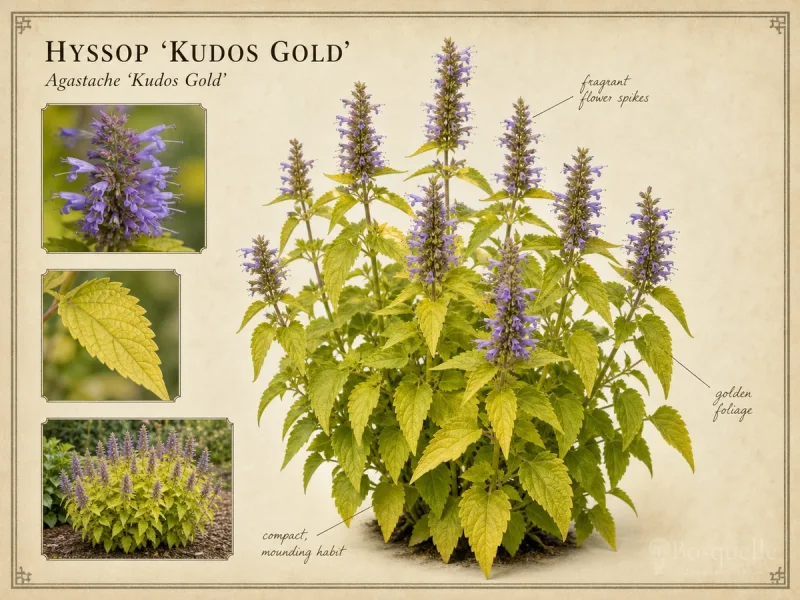
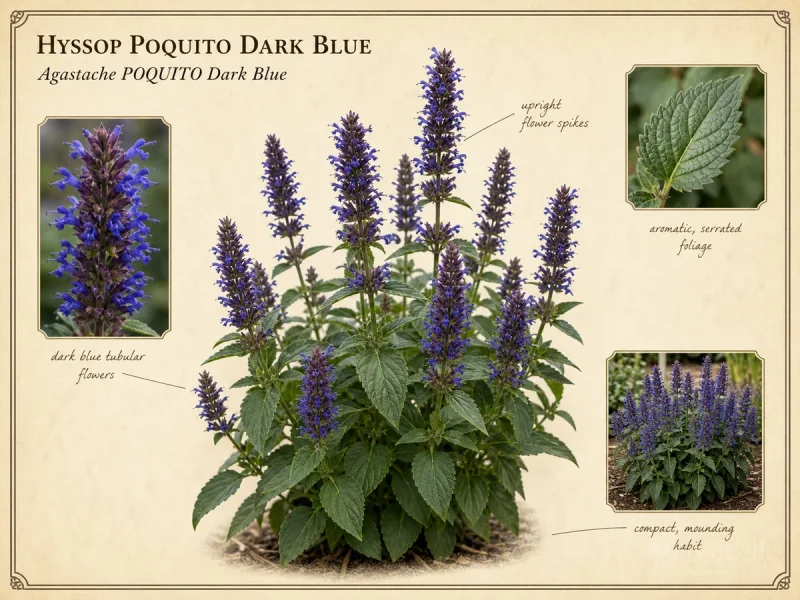
About 2 to 4 feet for the species. Compact Kudos and POQUITO stay much shorter. Check Types of Agastache.
Related guides

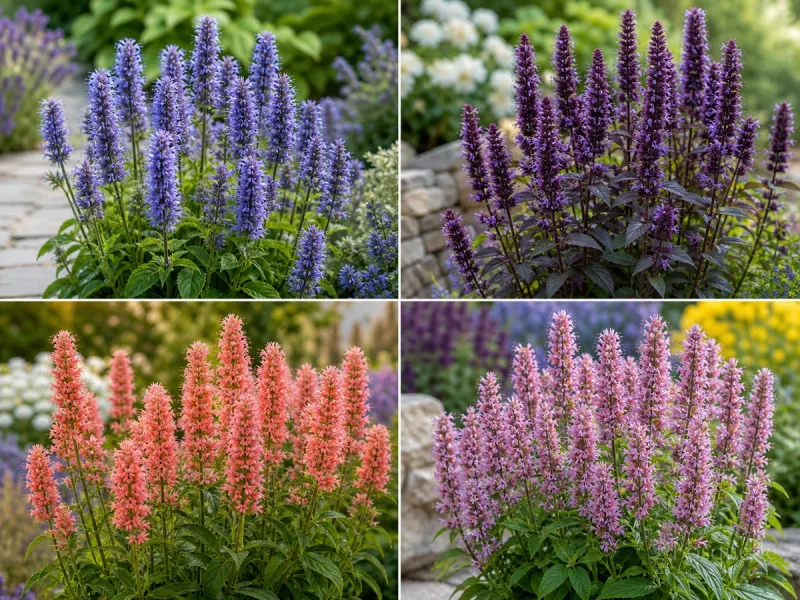
Recommended plants


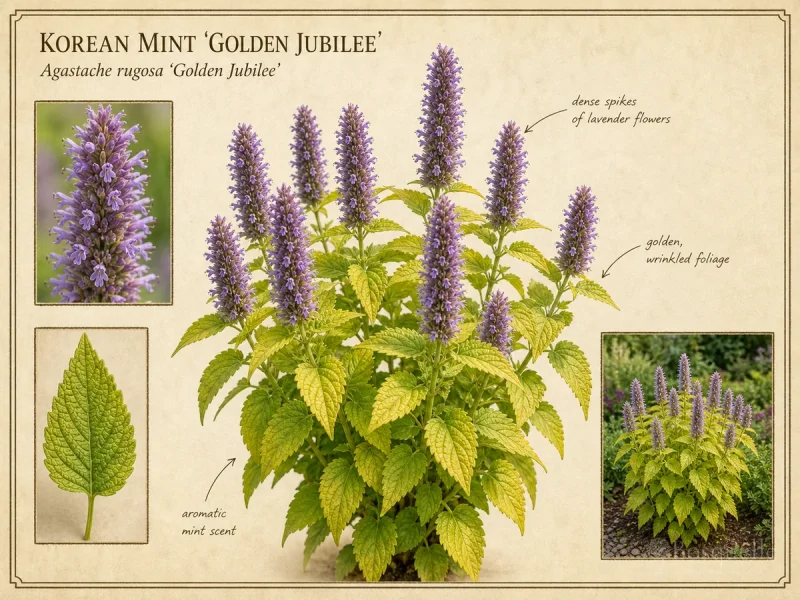


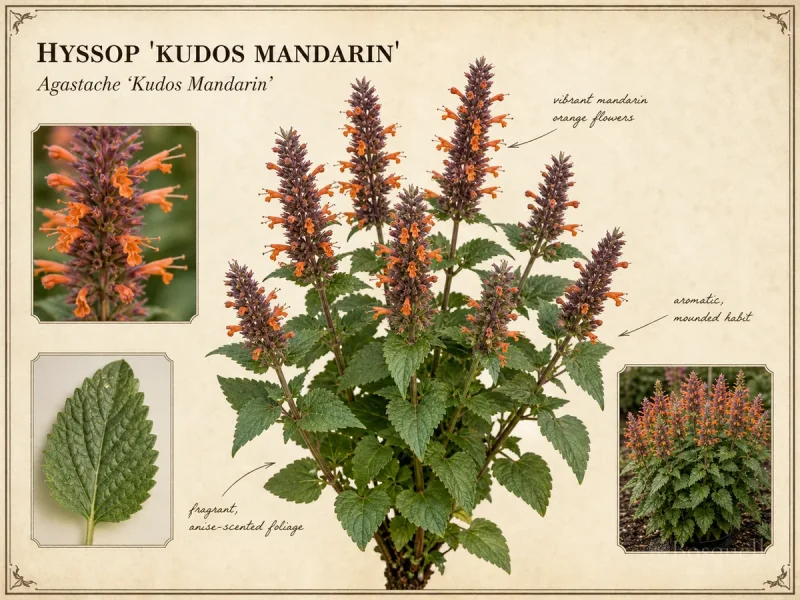
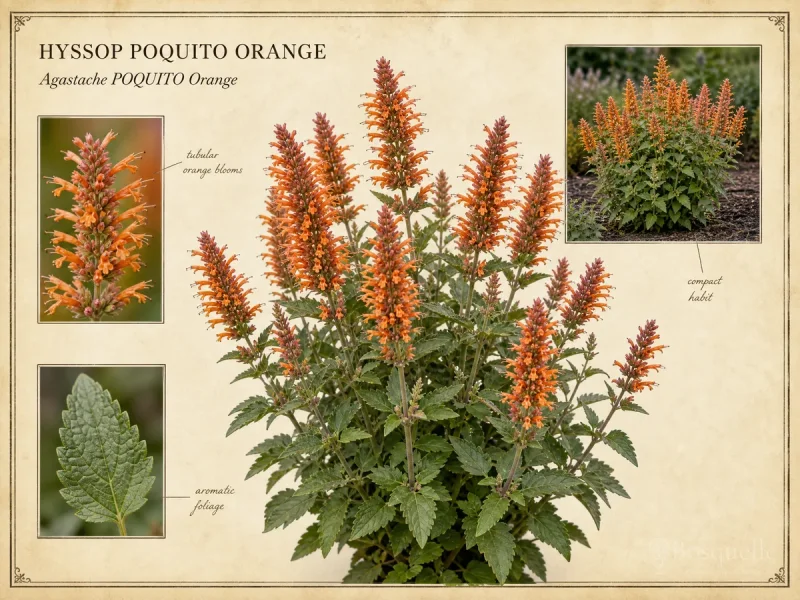
References
- [1] NC State Extension -
https://plants.ces.ncsu.edu/plants/agastache-foeniculum/ - [2] NC State Extension -
https://plants.ces.ncsu.edu/plants/agastache/ - [3] UF/IFAS Extension -
https://blogs.ifas.ufl.edu/nassauco/2017/05/29/fact-sheet-anise-hyssop/ - [4] Clemson HGIC -
https://hgic.clemson.edu/anise-hyssop/
This note is part of Agastache Guides.
More first-season notes by plant are gathered in How to Grow Guides.
Updated: Reviewed by Bosquelle Editors