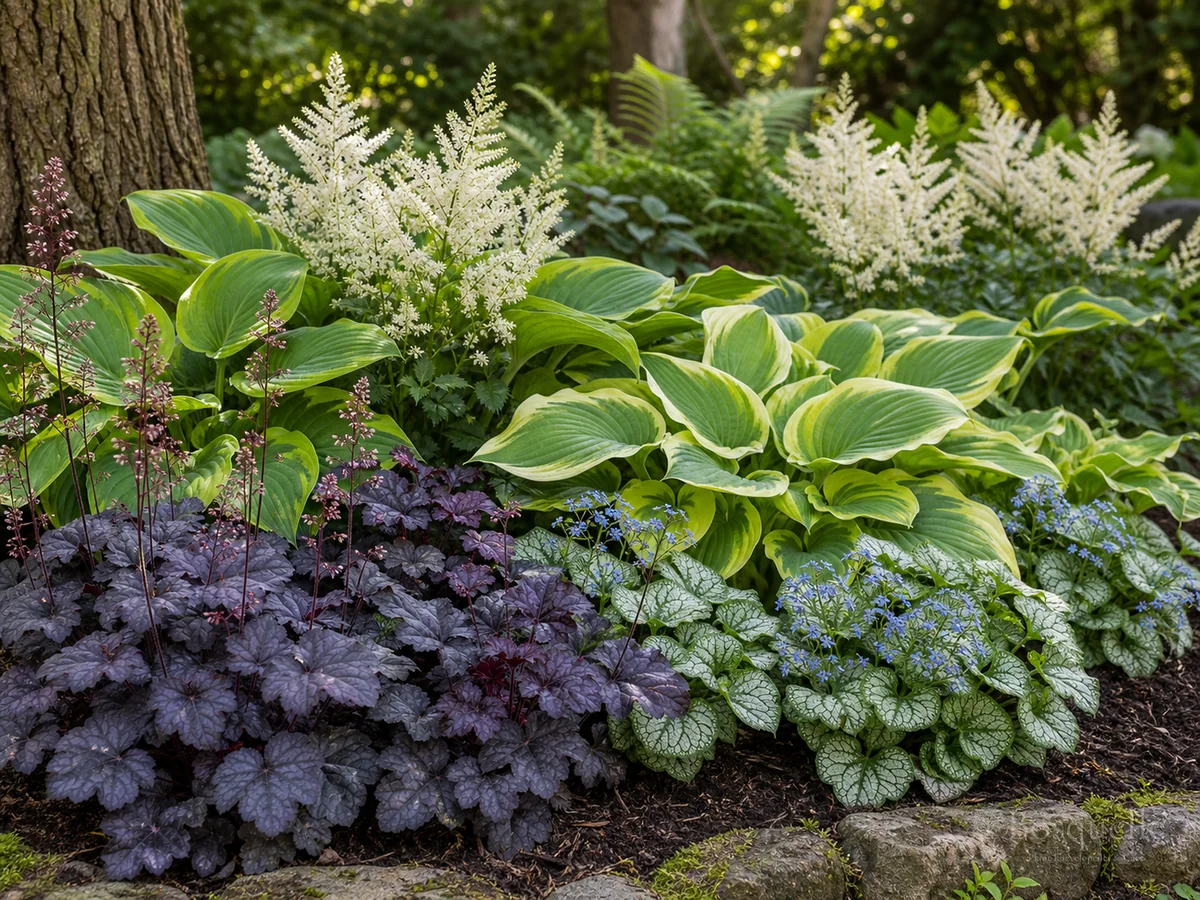
Treat the hosta bed as prose: Francee and Halcyon are the paragraphs. Companions are the vocabulary — silver words, dark ink, filigree clauses, plume punctuation — not a second plant list with no grammar.

Choose words that share moist shade and leave the crown open. Care on How to Grow Hostas.
Leaf lexicon — what each word does
- Silver word
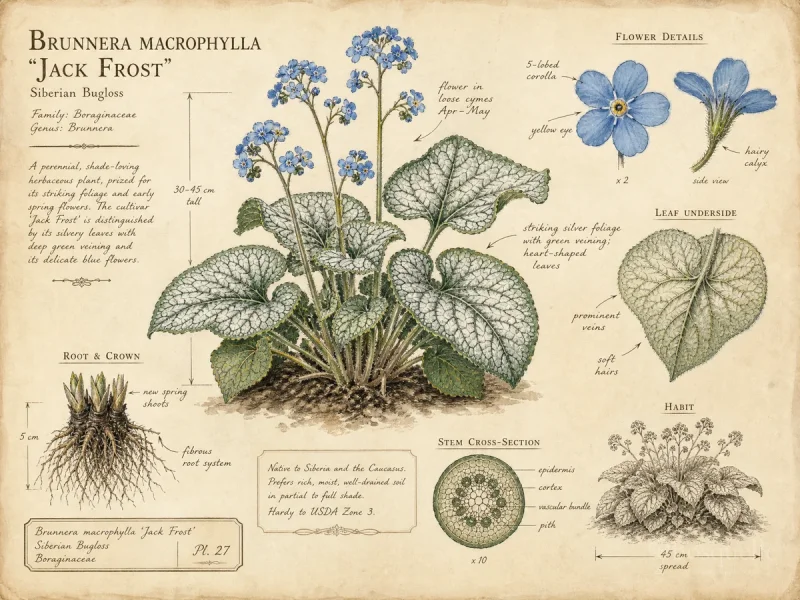
- Jack Frost brightens the front edge under broad leaves without sealing the crown. Seat it forward of the plates so early spring silver shows before hosta leaf-out, then keep the collar clear once the paragraph expands.
- Dark ink
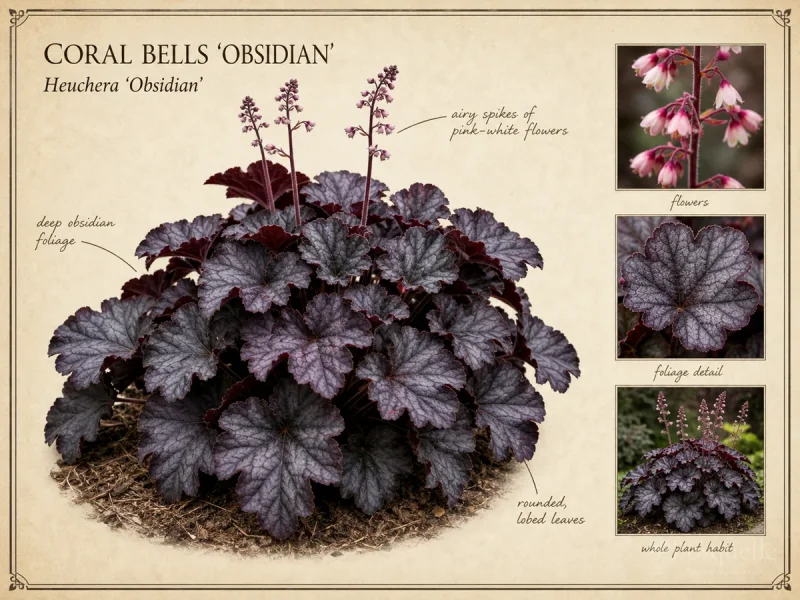
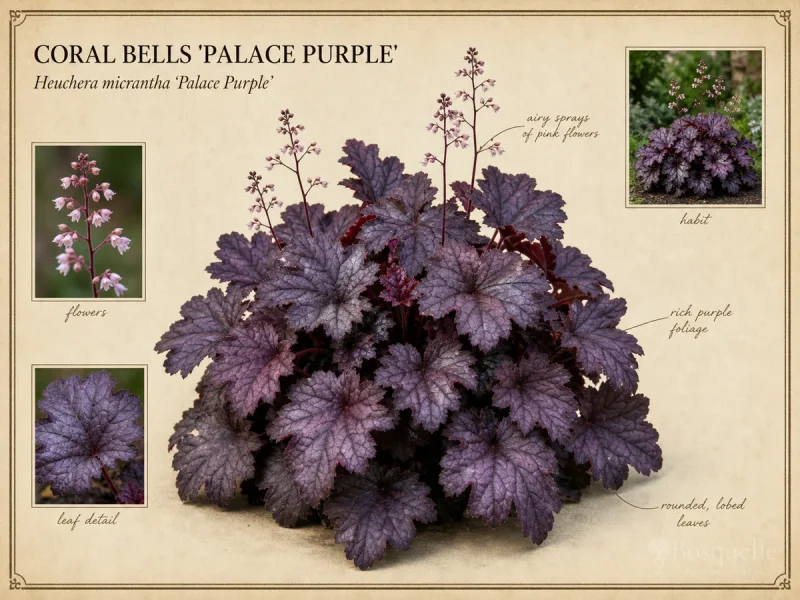
- Heuchera such as Obsidian and Palace Purple deepen contrast beside blue or green hosta plates. Use them as ink strokes at the skirt — not as a solid block that climbs onto crowns and traps slug cover.
- Filigree clause
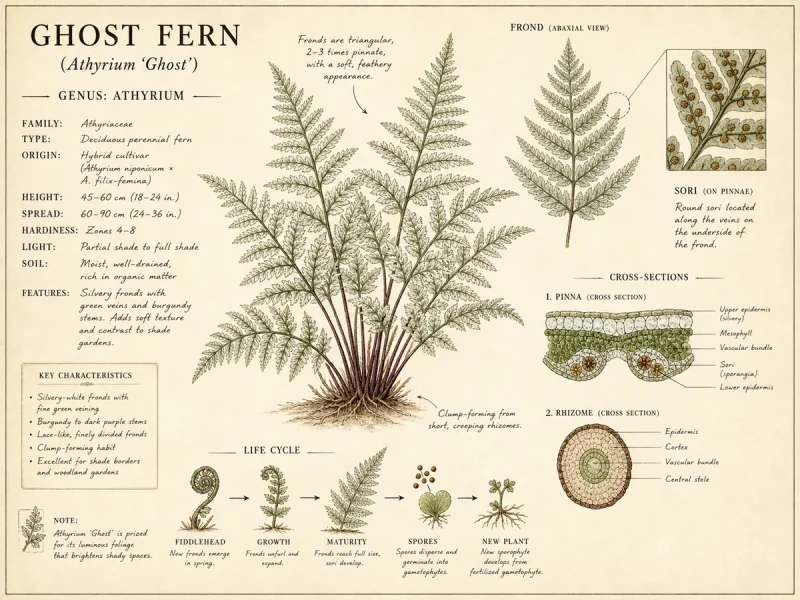
- Ferns such as Ghost and Brilliance thin the visual weight between clumps — texture, not a mat on the crown. Thread them in the pauses between plates so air still moves; do not pack fronds into every gap.
- Gold ripple
- Aureola and sedges such as Ice Dance move light across the floor of the bed while crowns stay airy. They read as motion at the front edge, not as a lawn substitute under giant leaves.
- Plume punctuation
- Bridal Veil lifts summer plumes through the same moist-shade sentence — same hydrozone, not a dry-sun exclamation. Place plumes where they can share even moisture with the hostas, never as a drought accent beside thirsty plates.
Each word earns a reason: silver for early light, dark ink for contrast, filigree for air between clumps, gold ripple for floor movement, plumes for midsummer finish. Nameless “shade mix” trays skip the lexicon and usually seal the crown.
Writing a Francee / Halcyon paragraph
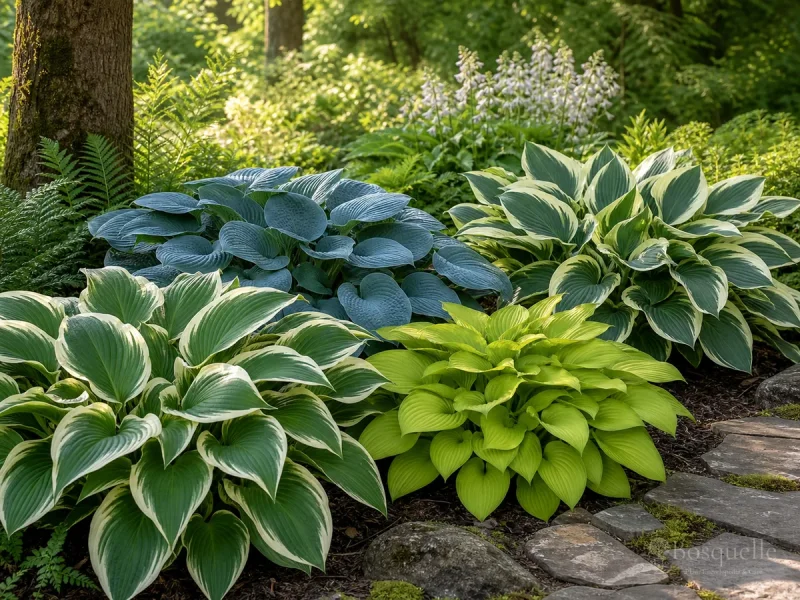
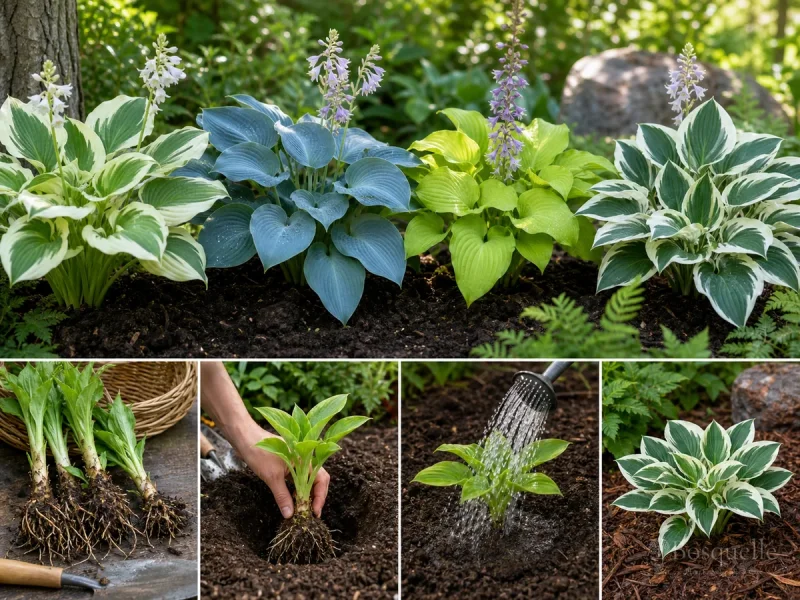
Start with the hosta plates. Francee and Halcyon set the sentence — variegated rim or blue plate first, companions second. Add one silver word and one dark ink at the skirt so the eye has brightness and shadow without erasing the hosta’s own leaf story.
Thread a filigree clause between clumps so air still reaches crowns — dense groundcover “sentences” invite slugs and soft rot. Finish with gold ripple at the front edge; save plume punctuation for midsummer when foliage alone feels unfinished.
Do not write every word on day one. Establish the hosta paragraph, leave visible white space, then add vocabulary once you can still see the crowns. If a word needs a different watering story than moist shade, delete it — do not invent a second dialect in the same bed.
Pair each word with a job you can point to at the collar: silver at the front, ink at the skirt, filigree in the pause, ripple on the floor, plume for midsummer finish. A plant without that job is clutter beside Francee or Halcyon, even in perfect shade.
Keep the grammar open
A hosta paragraph fails when every gap is filled. Leave white space — bare mulch or a thin collar — so slugs cannot hide in a continuous soft thatch and so morning air dries leaf surfaces.
Miniatures at the front take short words; giant plates mid-border need longer pauses between filigree clauses. Space partners so mature hosta width still has a hand’s width of open collar — tray spacing is not mature spacing.
If the bed reads as one green blur, remove a word before adding another. Open grammar is a pairing rule, not a care essay: companions share the moist shade hydrozone and still leave crowns inspectable. Soft partners share slug pressure; they do not cancel it.
Words that do not belong in this dialect
Dry-sunny Mediterranean herbs speak another language — they ask for lean heat while hostas ask for even moisture. Forcing them under Francee or Halcyon rewrites the paragraph into two failing hydrozones.
Aggressive mats that climb onto crowns erase the collar the care pillar protects. Sun-baked prairie trays and bog-only fillers that cannot share even moist shade are the same mistake in opposite directions.
If a nursery tray cannot state which lexicon role it plays — silver, ink, filigree, ripple, or plume — leave it out. Vocabulary without a job is just clutter next to the plates.
Size browse: Types of Hostas. Evening scent vocabulary: Fragrant Garden Hostas. When clumps crowd, refresh on Dividing Hostas rather than stuffing more words into a congested line.
Write the shade paragraph with a clear lexicon — then return to the care pillar for shared growing rules.
FAQ
What belongs next to Francee?
Silver and dark ink (brunnera, heuchera), filigree ferns, hakone/carex ripple, and moist-shade astilbe — crown open.
Can I mix dry-sunny plants with hostas?
Only if they share moist shade. Dry-sun herbs are the wrong dialect for a hosta paragraph.
Do companions reduce slugs?
Open collars help air and inspection; companions are not a slug cure. Soft partners share the same pest pressure.
How many companion 'words' belong in one hosta bed?
Fewer than the gaps you can fill. Leave white space and a clear collar; remove a word before the paragraph blurs.
Where is full hosta care?
How to Grow Hostas for shared care; Dividing Hostas when clumps crowd.
Related guides


Recommended plants





This note is part of Hosta Guides.
More neighbour shortlists by plant live in Companion Plant Guides.
Updated: Reviewed by Bosquelle Editors