
Villa pots for patio colour — growing hibiscus in pots is a different job from in-ground beds: tropical types are often happiest in containers you can move, while hardy rose mallow and Rose of Sharon need large, stable pots — and frost-tender plants must overwinter indoors outside frost-free bands. Then follow How to Grow Hibiscus for shared seasonal rules.

Why pots change the job
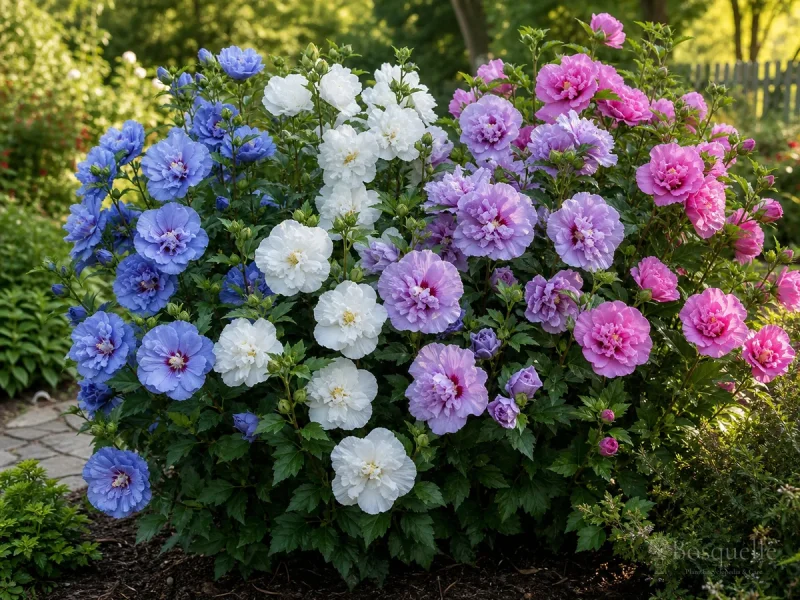
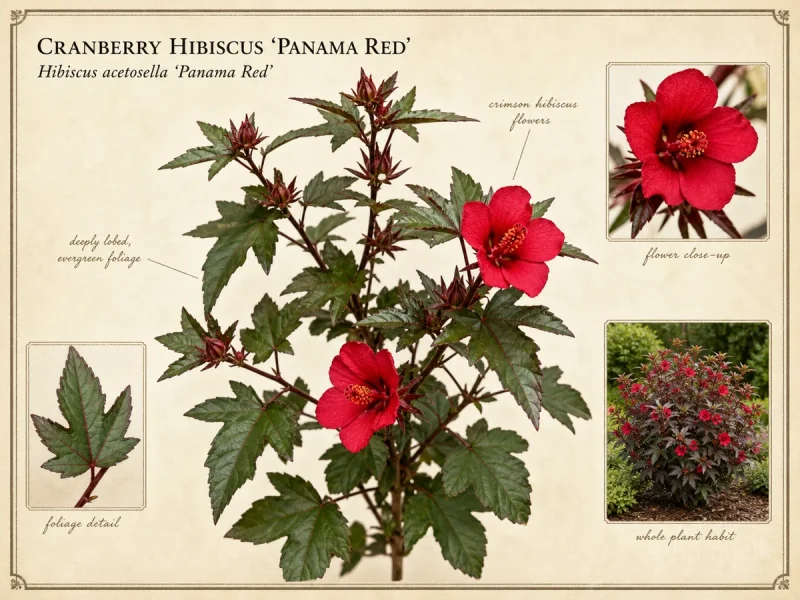
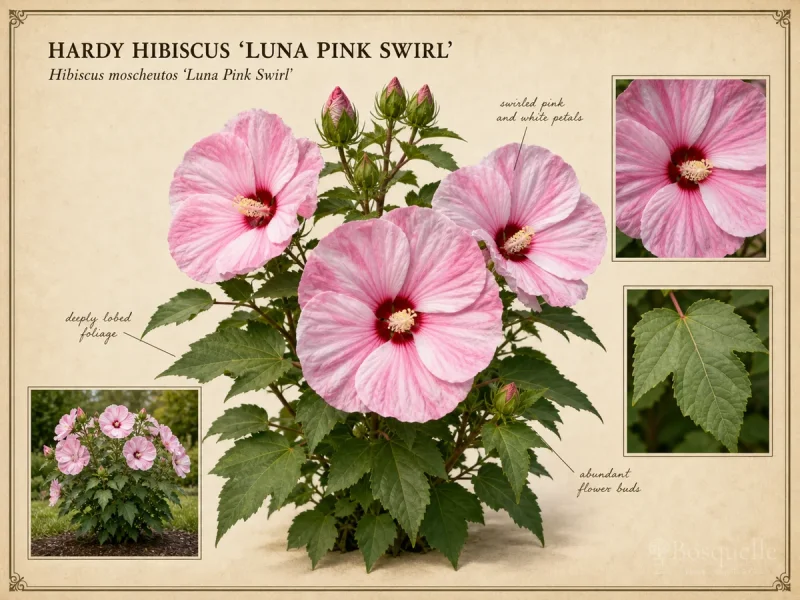
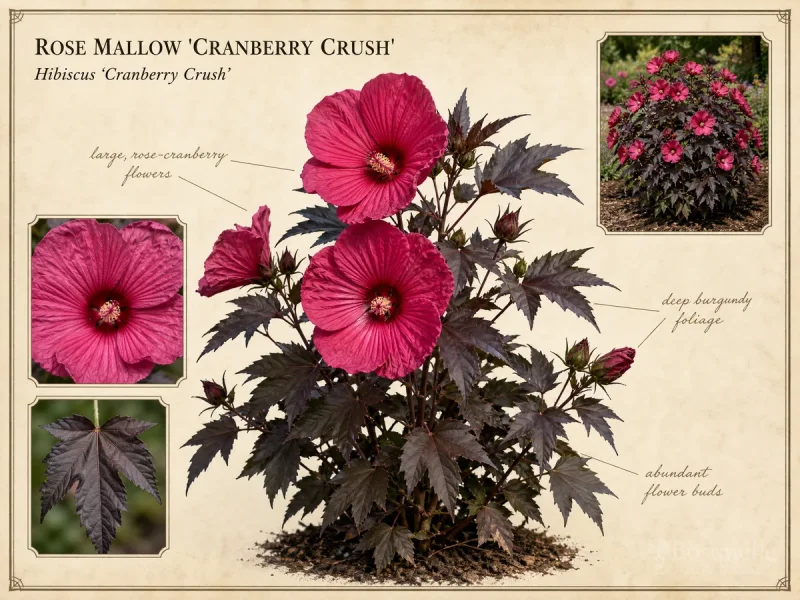
Containers heat, chill, and dry faster than beds. Tropical hibiscus such as Cooperi and foliage types such as Panama Red are classic patio subjects because you can shift them with the seasons. Hardy rose mallow such as Luna Pink Swirl, Disco Belle White, Cranberry Crush, and Kopper King can grow in pots only with enough volume for summer roots. Woody Rose of Sharon such as Blue Chiffon and White Chiffon need very large tubs — treat them as shrubs in a box, not windowsill plants. Harden off and plant after frost when you move a patio plant into the ground — that checklist lives on Planting Hibiscus, not as a second care pillar here.
Pot size for tropical vs hardy types
- Tropical patio pots. Use a drained pot at least 30–40 cm wide for a young plant; step up as roots fill. Position before filling — a wet hibiscus pot is heavy.
- Hardy mallow and syriacus. Prefer large, stable containers (often 45 cm+ wide and deep). Compact hardy cultivars can succeed in quality potting mix; dinner-plate mallows and woody shrubs are not happy in small decorative pots long-term.
- Drainage first. Use a commercial potting mix — not garden soil — with open drainage holes, and no winter saucer of water left under frost-tender or hardy pots.
Overwinter tender types indoors
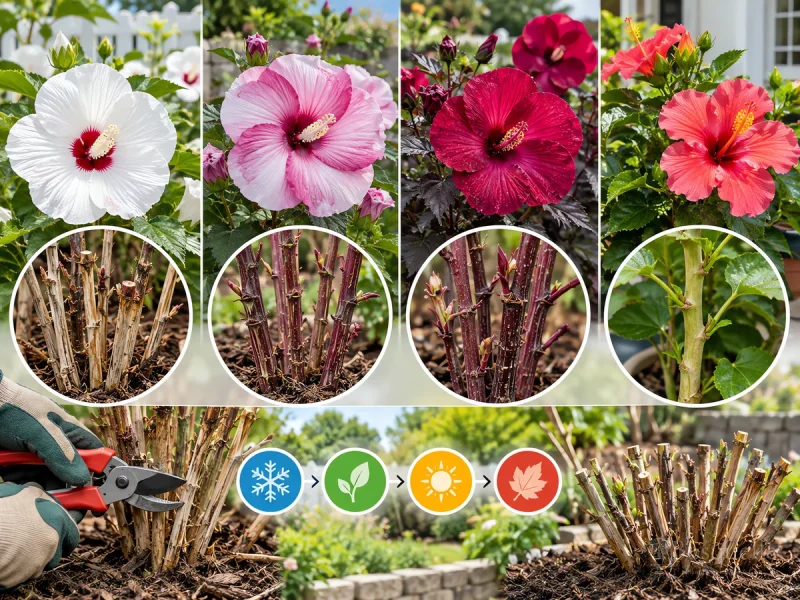
Tropical hibiscus such as Cooperi are frost-tender. Outside frost-free bands, bring pots indoors before hard frost and pick one fork: keep them as a bright houseplant with modest winter water, or rest them cool and dormant with the mix barely moist — never wet feet. Return outdoors after nights stay warm and harden off. Hardy rose mallow crowns in pots still need real winter protection in cold bands — large pots freeze harder than ground. Do not assume a patio tropical is a hardy perennial.
Watering and aftercare in pots
In active growth, water when the drained mix starts to dry — never let pots wilt-dry hard in heat and wind. Water less in winter on either overwinter fork, and tip out excess so roots never sit in a saucer. Feed lightly in the growing season; stop heavy feed before indoor overwintering. Shared light and habit paths live on How to Grow Hibiscus. Browse groups on Types of Hibiscus. Spring timing still follows Planting Hibiscus.
Use drained pots sized to habit, overwinter tender types indoors correctly, then return to the care pillar for year-round rules.
FAQ
Can any hibiscus live in a pot?
Tropicals are often best in pots you can move. Hardy rose mallow and Rose of Sharon need large, stable containers — not tiny pots.
How often to water hibiscus in pots?
In active growth, water when the top of a drained potting mix starts to dry — never wilt-dry the plant in heat. In winter, water much less on the bright-houseplant or cool-dormant fork; never leave wet feet in a saucer.
What is potted hibiscus care in short?
Size the pot to habit, use commercial potting mix (not garden soil), water without wet feet, and overwinter tropicals bright indoors or cool and barely moist. Shared sun and the care split live on How to Grow Hibiscus.
Do tropical hibiscus overwinter outdoors?
Only in frost-free bands. Elsewhere, overwinter tender plants indoors as a bright houseplant or cool dormant rest — that is not the hardy mallow or syriacus method.
Where is full hibiscus care?
How to Grow Hibiscus for shared care; Planting Hibiscus for in-ground establishment.
Related guides



Recommended plants




This note is part of Hibiscus Guides.
More container notes by plant live in Container Growing Guides.
Updated: Reviewed by Bosquelle Editors