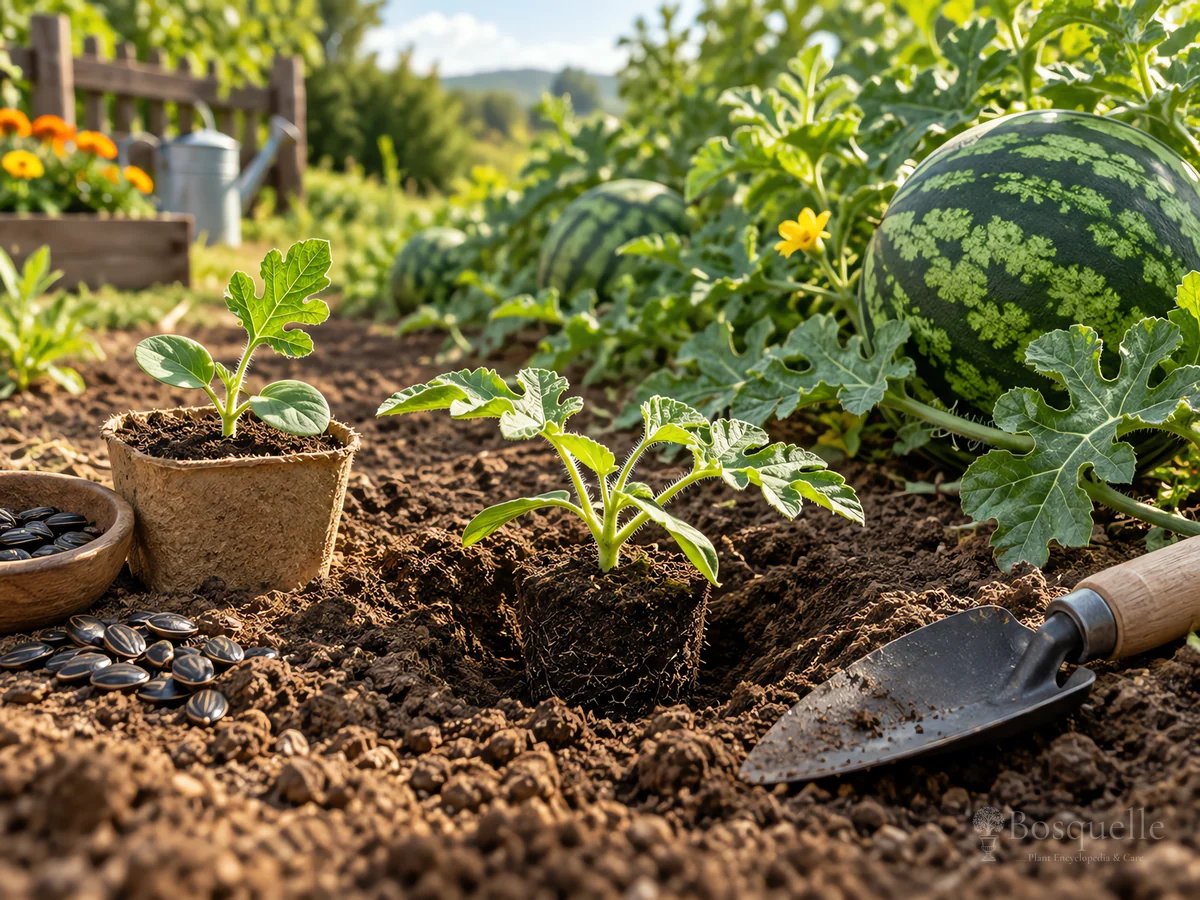
Leave watermelon on the vine until it is ripe. The fruit does not sweeten after you cut it.

Wait until the tendril browns and the ground spot turns creamy yellow
| Factor | Recommended | Avoid |
|---|---|---|
| Ground spot | Wait until the belly turns creamy yellow or butter-cream | Do not pick a melon with a white or pale-green belly |
| Tendril | Use the curly tendril nearest the fruit when it is brown and dry, together with the ground spot | Do not treat a brown tendril as the only cue on every type |
| Rind | Wait until the rind looks dull, not shiny | Do not pick a glossy melon |
| Cut | Cut the stem and leave about two inches on the fruit | Do not yank or twist the fruit off the vine |
watermelon does not sweeten after you cut it. Leave the fruit on the vine until several cues line up. The ground spot should turn from white or pale green to a creamy yellow. The tendril nearest the fruit should be brown and dry; on some types that tendril browns a week early, so use it with the belly color, not alone. [1] [2] The rind should look dull, not shiny. Watermelon does not reach full slip, so do not wait for the stem to pull free the way a cantaloupe does. [3]
How do I know a watermelon is ripe?
Wait for a creamy yellow ground spot, a dull rind, and a brown tendril nearest the fruit. Cut with a short stem. Do not pick a shiny melon with a white belly.
How to harvest watermelon
Check the belly, the nearest tendril, and the rind, then cut the stem. Do not pull the fruit off the vine.
- Turn the melon enough to see the ground spot. Harvest when that patch is creamy yellow, not white.
- Check the tendril nearest the fruit. It should be brown and dry. Use that with the ground spot, because on some types the tendril browns a week early.
- Confirm the rind looks dull, not shiny.
- Cut the stem with about two inches left on the fruit. A knuckle thump is a poor sole cue; most people cannot tell a dull ring from a metallic one. [4]
What fails if you pick too soon
A shiny melon with a white belly stays bland, because sugar does not rise after the cut. Do not store whole fruit next to apples, bananas, or tomatoes; those fruits give off ethylene and shorten the melon. A whole melon keeps about a week at room temperature, or two to three weeks in a cool spot around 40° to 50°F.
Does a watermelon sweeten after I cut it?
No. Leave it on the vine until the ground spot is creamy yellow. After you cut it, sugar does not rise.
If the belly is still white, leave the melon on the vine — sugar will not rise after you cut it.
FAQ
How long does a watermelon take to ripen?
Most garden types take about seventy to ninety days from sowing, and about five to eight weeks from a set fruit. Read the packet, then still wait for the ground spot and the tendril.
How should I store a whole melon?
Keep it whole at room temperature for about a week, or cooler for two to three weeks. Keep it away from apples and bananas. Cover cut pieces and refrigerate them.
Can I save seed?
You can on an open-pollinated type. Leave a ripe fruit, scoop the seed, rinse it, and dry it. Hybrid packets will not come true.
Related guides


Recommended plants
References
- [1] Iowa State Extension -
https://yardandgarden.extension.iastate.edu/how-to/harvesting-and-storing-vine-crops - [2] University of Maryland Extension -
https://extension.umd.edu/resource/ripening-behaviors-and-harvest-indexes-watermelons-cantaloupes-and-honeydew-melons - [3] University of Minnesota Extension -
https://extension.umn.edu/commercial-fruit-production/harvesting-and-storing-melons-squash-and-pumpkins - [4] Illinois Extension -
https://extension.illinois.edu/gardening/watermelon
This note is part of Citrullus Guides.
More harvest timing notes by plant live in Harvesting Guides.
Updated: Reviewed by Bosquelle Editors