Pick tamarind when the pods are brown, brittle, and light. Pull the pod from the stalk or clip the stalk, because knocking the crop with a pole bruises new leaves and flowers.
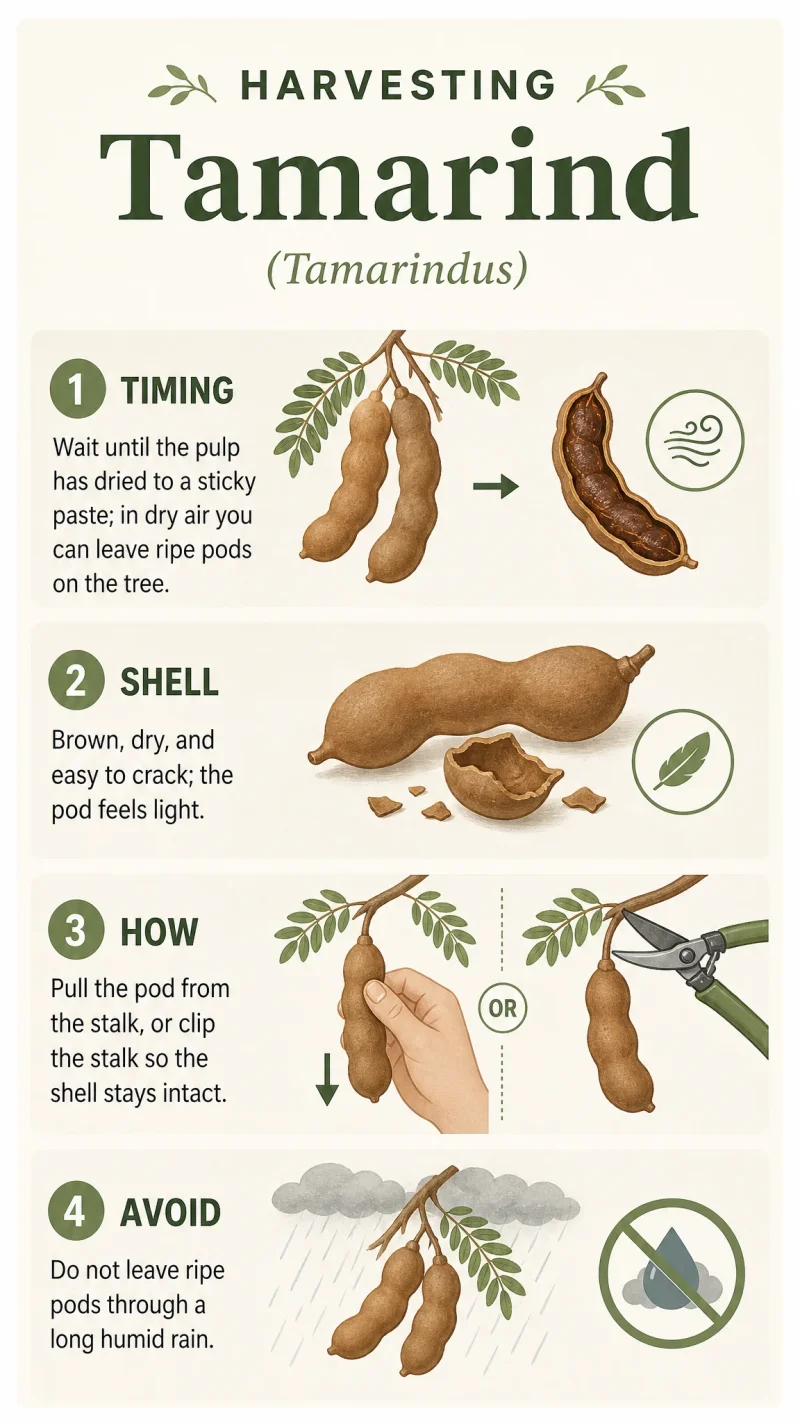
Pick when the pods are brown, brittle, and light
| Factor | Recommended | Avoid |
|---|---|---|
| Shell | Brown, dry, and easy to crack; the pod feels light | Do not pick plump green pods unless you want that sour stage on purpose |
| How | Pull the pod from the stalk, or clip the stalk so the shell stays intact | Do not knock the crop with a pole |
| Timing | Wait until the pulp has dried to a sticky paste; in dry air you can leave ripe pods on the tree | Do not leave ripe pods through a long humid rain |
| Handling | Sort decayed fruit as you pick, and keep the crop dry | Do not pile wet pods in a closed bag |
Ripeness is a brittle shell that cracks under gentle pressure and a hollow sound when you tap the pod. The pulp inside has shrunk to a sticky brown paste around hard seeds. [1] In a humid spring, pick as the pods turn, because rain on ripe fruit brings mold and weevils. Shake the branches onto a sheet only if the crop is fully ripe and the weather is still dry. [2] tamarind pods start green and turn brown as they dry. That color change is the cue, not a calendar. [3] Home trees in a warm coastal pocket crop after several years. Taste one pod before you strip the tree, because seedling flavor varies. [4]
When do I pick tamarind?
When the pods are brown, brittle, and light. Do not knock them off with a pole.
How to harvest tamarind
- Wait until the shell is brown and dry, and the pod feels lighter than a green one.
- Tap or press gently. A ripe pod sounds hollow and cracks without squeezing the pulp out.
- Pull the pod away from the stalk, or clip the stalk if you want an intact shell for storage.
- Use a sheet under the tree only if the fruit is fully ripe and you can sort decay as you go. Do not beat the branches with a pole.
- Spread the pods in a single layer in the sun for several days if they still hold moisture, then store them cool and dry.
Do not knock the pods off with a pole
A pole scars new leaves and flowers that are already set for the next crop. Pull or clip each ripe pod. If rain is coming and the shells are already brown, pick by hand rather than waiting. A green pod will not turn into sticky paste on the counter the way a banana sweetens; it stays a sour cooking fruit unless you dry it on purpose.
Do tamarind pods ripen after I pick them?
Green pods stay sour unless you dry them. Brown, brittle pods are already at the paste stage. Cool and dry those; do not wait for a green one to turn brown indoors.
Wait for a brown brittle shell, pull the pod from the stalk, and keep the crop dry.
FAQ
How long do tamarind pods keep after I pick them?
A year or more if they stay cool and dry. After that the pulp darkens and tastes stronger. Do not store wet pods in a closed bag.
Related guides


Recommended plants

References
- [1] Purdue University (Julia F. Morton) -
https://web.archive.org/web/20140714150951/http://www.hort.purdue.edu/newcrop/morton/tamarind.html - [2] Fairchild Tropical Botanic Garden -
https://fairchildgarden.org/visit/tamarind/ - [3] University of Florida IFAS Extension -
https://edis.ifas.ufl.edu/publication/ST618 - [4] UF/IFAS Extension Charlotte County -
https://blogs.ifas.ufl.edu/charlotteco/2026/07/30/a-little-sweet-a-little-tart-a-taste-for-the-paste-the-tamarind/
This note is part of Tamarindus Guides.
More harvest timing notes by plant live in Harvesting Guides.
Updated: Reviewed by Bosquelle Editors