
Wait until the second year, then pull the stalks. Do not eat the leaves.
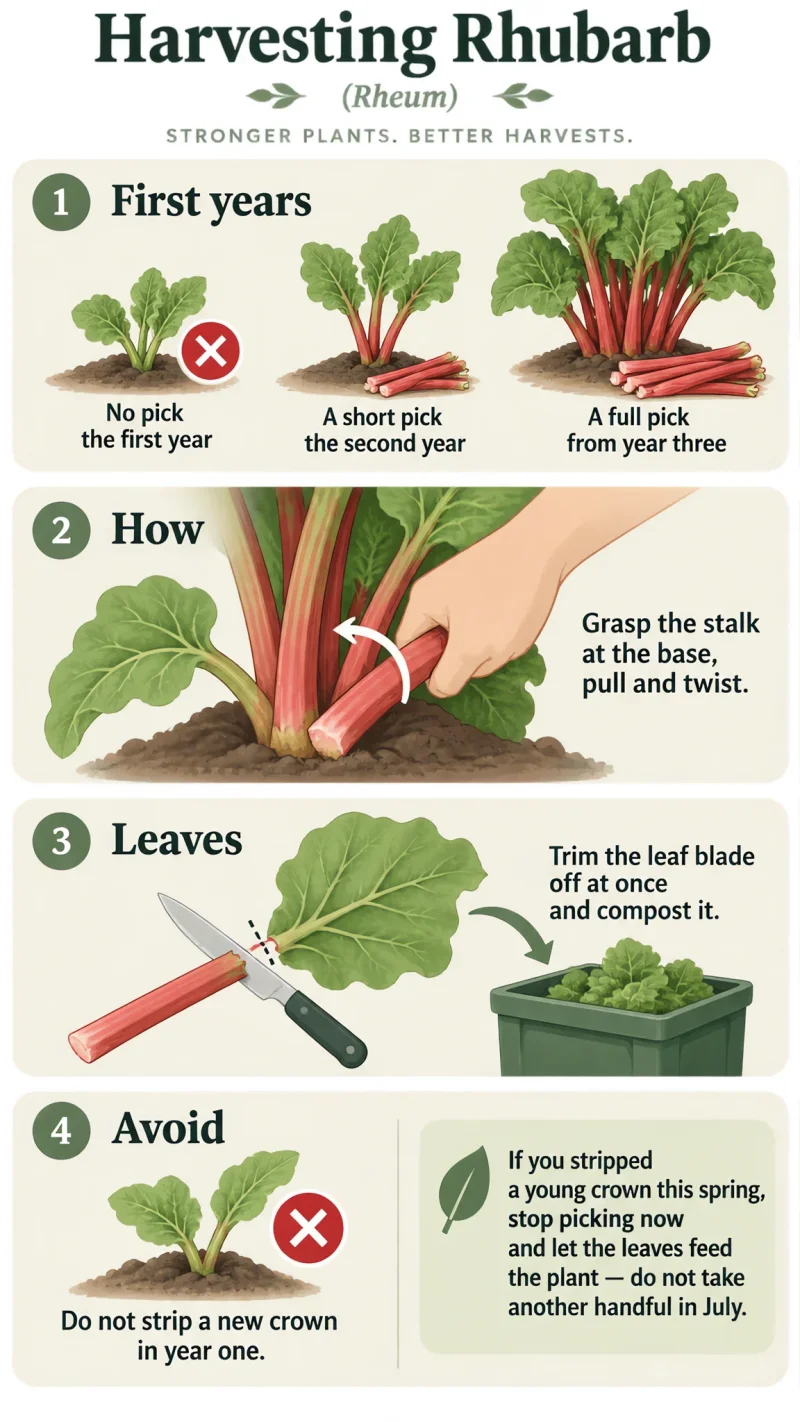
Wait until the second year, then pull the stalks — do not eat the leaves
| Factor | Recommended | Avoid |
|---|---|---|
| First years | No pick the first year; a short pick the second year; a full pick from year three | Do not strip a new crown in year one |
| How | Grasp the stalk at the base, pull, and twist | Do not cut the stalk off and leave a stub on the crown |
| Leaves | Trim the leaf blade off at once and compost it | Do not eat the leaf blades, or cook them as greens |
| Stop | Stop when stalks go slender, or by late June on a young plant | Do not take more than half the stalks at once |
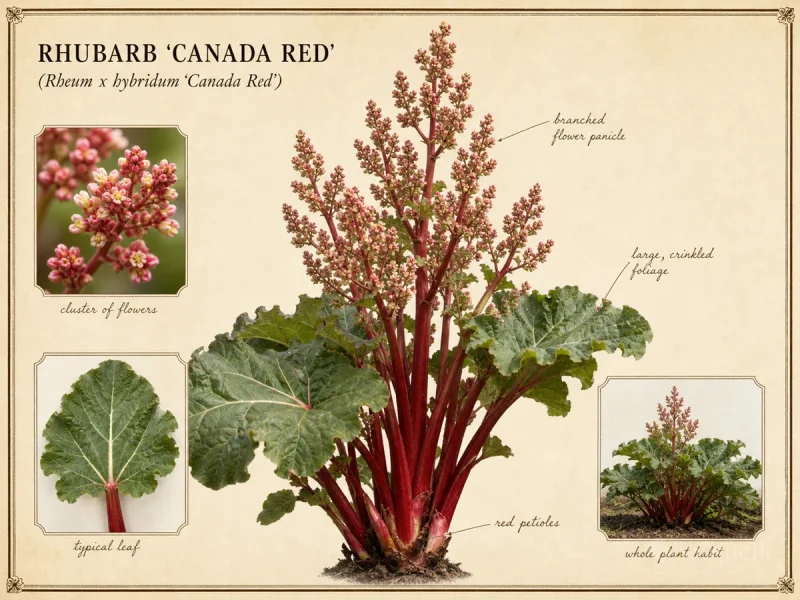
Leave a new plant alone the first season so the crown can bulk out. From the second year, pull full- length stalks, twist them free, and cut the toxic leaf blades off right away. [1] garden rhubarb and Canada Red take that same wait and the same pull. Ornamental kinds are foliage plants — do not treat them as a pie harvest. Site and water stay on How to Grow Rhubarb.
When can I harvest rhubarb?
Wait until the second season, then pick in spring. From the third year you can pick for several weeks. Stop when the stalks go slender, or by late June on a plant that is still filling out.
Are the leaves poisonous?
Yes. The leaf blades have enough oxalic acid to make people and pets sick. Eat only the stalks. Trim the blades off as soon as you pull a stalk, and compost them.
How to harvest rhubarb
Pick one stalk at a time, twist it free, and trim the blade before you bring the bunch inside.
- Wait until the second year on a crown you planted. If you started from seed, wait until the third year.
- Choose firm, upright stalks that have reached full length — often 12 to 18 inches, sometimes longer on a vigorous kind.
- Grasp the stalk near the soil, pull, and twist so the whole stalk comes away. Do not cut it off at the crown. [2]
- Trim the leaf blade off with a clean knife and compost it. Leaving the blade on wilts the stalk faster. [3]
- Take no more than one-third to one-half of the stalks at a time. Stop when new stalks come slender, or by late June on a plant that still needs its leaves. [4]
Do I cut or pull the stalks?
Pull and twist at the base. Cutting leaves a stub that can let rot into the crown. Trim the leaf blade after the stalk is off the plant.
What fails at harvest
Picking a new plant in year one is the main reason crowns stay weak. Always leave enough leaves so the plant can feed the crown for next spring. Eating the leaf blades is unsafe — they are not chard. Soft, mushy stalks after a hard freeze should go on the compost, not in a pie. A late summer pick on a young plant is optional and the stalks may be tougher; it is not a second full harvest.
If you stripped a young crown this spring, stop picking now and let the leaves feed the plant — do not take another handful in July.
FAQ
Does the plant turn toxic after June?
No. The summer-toxic story is a myth. Stalks can get tougher later in the year. You stop picking so the plant can store food, not because the stalks become poison.
What if a late frost hits the stalks?
Firm, upright stalks are still usable. Soft or mushy stalks after a hard freeze should be composted. Let new stalks grow before you pick again.
Related guides

Recommended plants


References
- [1] SDSU Extension -
https://extension.sdstate.edu/rhubarb-harvest-and-storage - [2] University of Minnesota Extension -
https://extension.umn.edu/vegetables/growing-rhubarb - [3] Ohio State University Extension -
https://cfaes.osu.edu/fact-sheet/growing-rhubarb-home-garden - [4] Illinois Extension -
https://extension.illinois.edu/gardening/rhubarb
This note is part of Rheum Guides.
More harvest timing notes by plant live in Harvesting Guides.
Updated: Reviewed by Bosquelle Editors