
Grow wild quinine from seed by sowing in fall so winter can chill it, or by keeping seed cold and moist for about four to six weeks and sowing in spring. Leave the seedlings where they are.
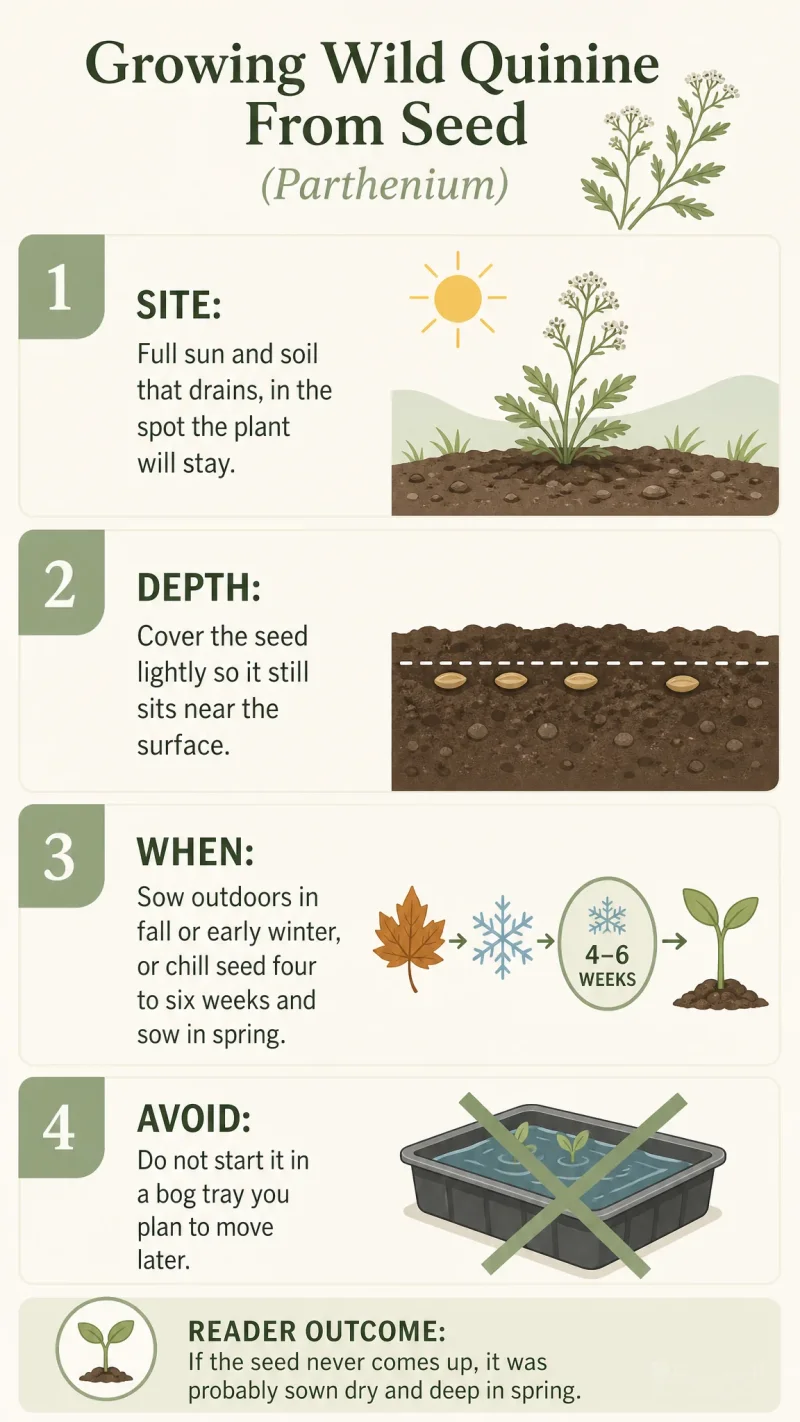
Sow in fall, or chill the seed for a month or two before spring
| Factor | Recommended | Avoid |
|---|---|---|
| When | Sow outdoors in fall or early winter, or chill seed four to six weeks and sow in spring | Do not sow dry spring seed and expect a full stand the same year |
| Chill | Mix seed with moist sand and keep it cold for about four to six weeks | Do not let the mix dry out, and do not freeze a soaked bag solid as the only step |
| Depth | Cover the seed lightly so it still sits near the surface | Do not bury it deep |
| Site | Full sun and soil that drains, in the spot the plant will stay | Do not start it in a bog tray you plan to move later |
Seed is the usual way to make more wild quinine. Sow outdoors after the heads have ripened, in fall or early winter, so cold weather can break dormancy. If you missed that window, mix the seed with moist sand, keep it cold for about four to six weeks, then sow in spring. [1] [2] An autumn sowing in a cold frame is the same job: the seed wants a winter, then a warm, moist start. [3]
- Collect dry heads, or buy seed labeled Parthenium integrifolium, not parthenium weed.
- For a fall sowing, press the seed onto prepared ground in full sun and cover it lightly.
- For a spring sowing, mix seed with moist sand, keep it cold for four to six weeks, then sow the same way.
- Keep the surface moist until the seedlings are up. Do not let a pot sit in a saucer of water.
Do I need to chill the seed?
Yes, unless you sow in fall and let winter do it. Four to six weeks of cold, moist storage is enough for a spring sowing.
Leave the seedlings where they are — they bloom in the second or third year
The first year is mostly taproot. Top growth stays small, and bloom waits until the second or third summer. Moving a seedling once that taproot is down is what stalls it, so sow in the final bed, or prick out only while the plants are still tiny. [4]
- Water seedlings until they are established, then back off the way you would an older plant.
- Do not pot them on into larger tubs as a long-term home. The taproot wants ground.
- Wait through the second summer before you call a sowing a failure. Many lots bloom in year two or three.
- Site and first-season water after the plants are in the bed are on How to Grow Wild Quinine.
When will it flower from seed?
Usually in the second or third year. The first year the plant puts a taproot down and stays small on top.
If the seed never comes up, it was probably sown dry and deep in spring. Next time sow in fall, barely covered, or chill it four to six weeks first.
FAQ
Can I take cuttings instead?
Softwood cuttings in early summer can root, but seed is the usual method. A cutting still wants the same sun and drain once it is potted on.
What if nothing comes up the first spring?
Leave the bed. Some lots wait a second winter. If the seed was sown dry and deep in spring, sow again in fall, barely covered.
Related guides

Recommended plants

References
- [1] USDA NRCS National Plant Data Center -
https://plants.sc.egov.usda.gov/DocumentLibrary/plantguide/pdf/cs_pain3.pdf - [2] Fine Gardening -
https://www.finegardening.com/plant/wild-quinine-parthenium-integrifolium - [3] Royal Horticultural Society -
https://www.rhs.org.uk/plants/84694/parthenium-integrifolium/details - [4] NC State Extension Gardener -
https://plants.ces.ncsu.edu/plants/parthenium-integrifolium/
This note is part of Parthenium Guides.
More notes on making another plant live in Propagating Guides.
Updated: Reviewed by Bosquelle Editors