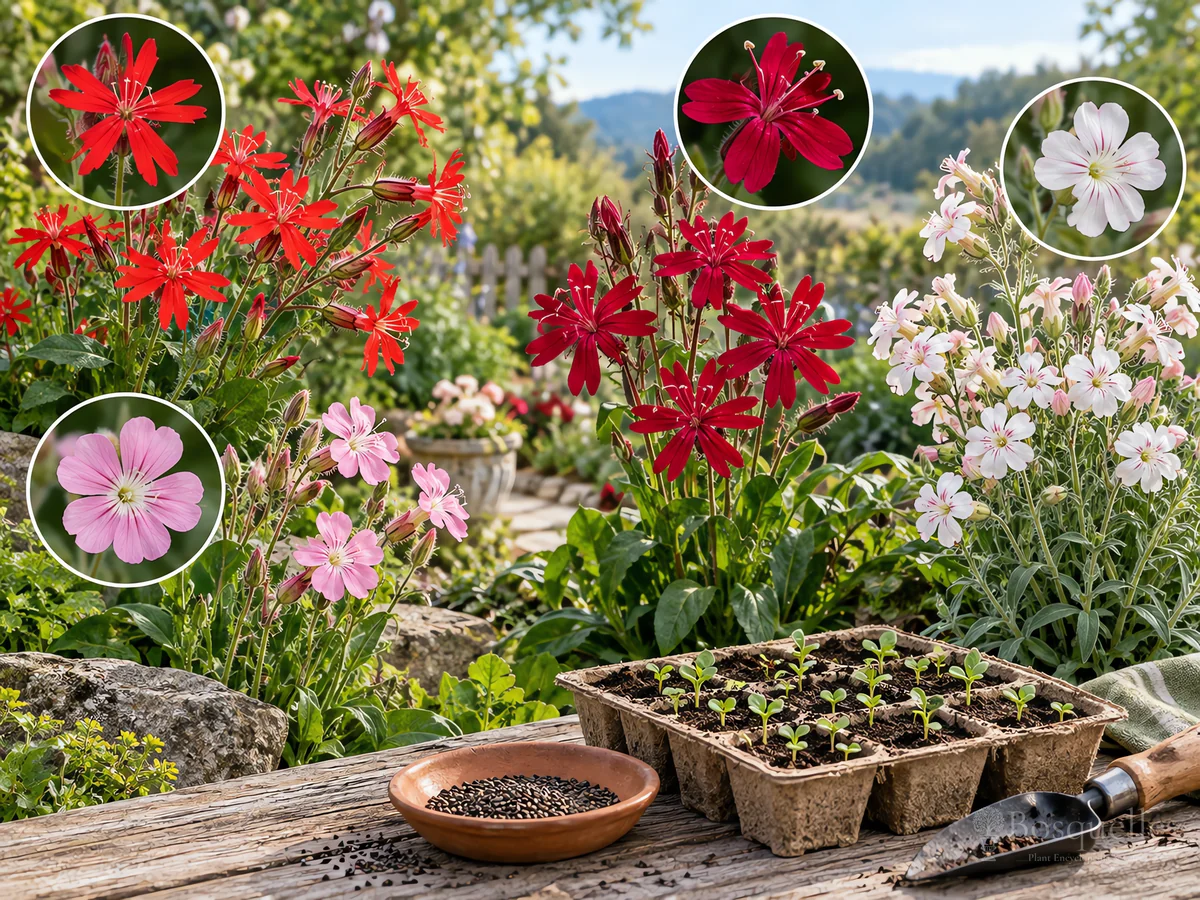
Sow silene on the surface. Native kinds need a cold, moist winter first. Press the seed in and do not bury it — it needs light to germinate.
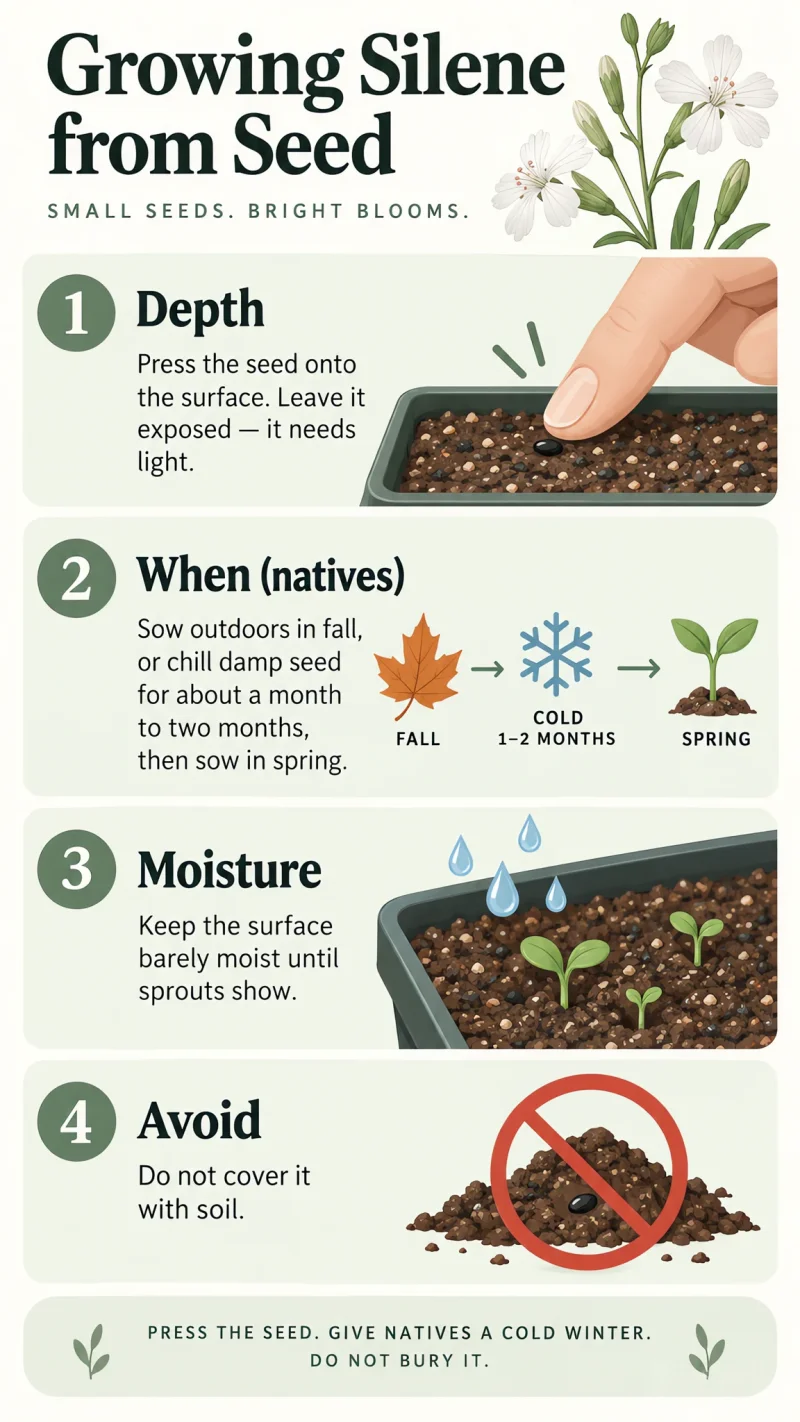
Sow native seed on the surface after a cold winter
| Factor | Recommended | Avoid |
|---|---|---|
| When (natives) | Sow outdoors in fall, or chill damp seed for about a month to two months, then sow in spring | Do not spring-sow native seed with no cold spell and expect a stand |
| Depth | Press the seed onto the surface. Leave it exposed — it needs light | Do not cover it with soil |
| Moisture | Keep the surface barely moist until sprouts show | Do not let the crust dry, then flood it |
| Annual | Garden catchfly sows in spring with no cold winter first | Do not treat the annual like a woodland native that must overwinter as seed |
Native catchfly seed sits through a cold, moist spell before it sprouts. Sow it on draining ground in fall, or mix it with damp sand in a sealed bag in the refrigerator for about a month to two months, then sow in spring. [1] [2] Press the seed onto the surface. Do not bury it. [3] Sun and drain for the planted bed are on How to Grow Silene. fire pink is the usual native packet.
How do I grow silene from seed?
Press native seed on the surface after a cold winter, or sow it in fall. Do not bury it. Keep the surface moist until it sprouts.
Do I cover silene seed?
No. Press it onto the surface and leave it exposed. Buried seed stays dark and does not sprout.
Garden catchfly sows in spring without a cold winter first
garden catchfly is the cool-weather annual. Sow it on the surface in spring, about three weeks before the last frost, or start it indoors eight weeks ahead. It does not need a cold, moist winter first. Which class you bought is on Types of Silene.
Does garden catchfly need a cold winter first?
No. Sow it on the surface in spring. Native catchflies are the ones that need a cold, moist spell.
How to sow silene
Press a pinch of seed onto draining ground that gets sun to part shade, and keep the surface moist until green shows.
- For native kinds, sow in fall on a weed-free surface, or chill damp seed in the refrigerator for about a month to two months, then sow in spring.
- Rake a fine, draining surface. Scatter the seed. Press it in. Do not cover it. [4]
- Keep the surface barely moist until sprouts show. Native germination can be uneven, so sow a little extra.
- Thin so each seedling has room. Do not leave a mat of seedlings on top of one another.
When do I sow silene?
Natives: fall, or after a cold, moist spell in spring. Garden catchfly: spring, with no cold spell.
What fails a buried seed
Burying the seed stops germination because it needs light. Skipping the cold winter on a native packet leaves the seed asleep. Cold, wet mix that never dries rots the start. Named kinds may not come true from seed; buy a plant or divide a clump if you want that exact form.
Press the seed on the surface, give natives a cold winter, and do not bury it.
FAQ
Will a named kind come true from seed?
Often not. Buy a plant, or divide a clump in spring or fall, if you want that exact form.
Will fire pink bloom the first year from seed?
Usually not. Native kinds often flower the second year after they germinate. Garden catchfly blooms the same season.
Related guides

Recommended plants


References
- [1] Lady Bird Johnson Wildflower Center -
https://www.wildflower.org/plants/result.php?id_plant=sivi4 - [2] Prairie Moon Nursery -
https://www.prairiemoon.com/silene-virginica-fire-pink - [3] GrowIt BuildIT -
https://growitbuildit.com/fire-pink-silene-virginica-guide/ - [4] Epic Gardening -
https://www.epicgardening.com/sticky-catchfly/
This note is part of Silene Guides.
More notes on making another plant live in Propagating Guides.
Updated: Reviewed by Bosquelle Editors