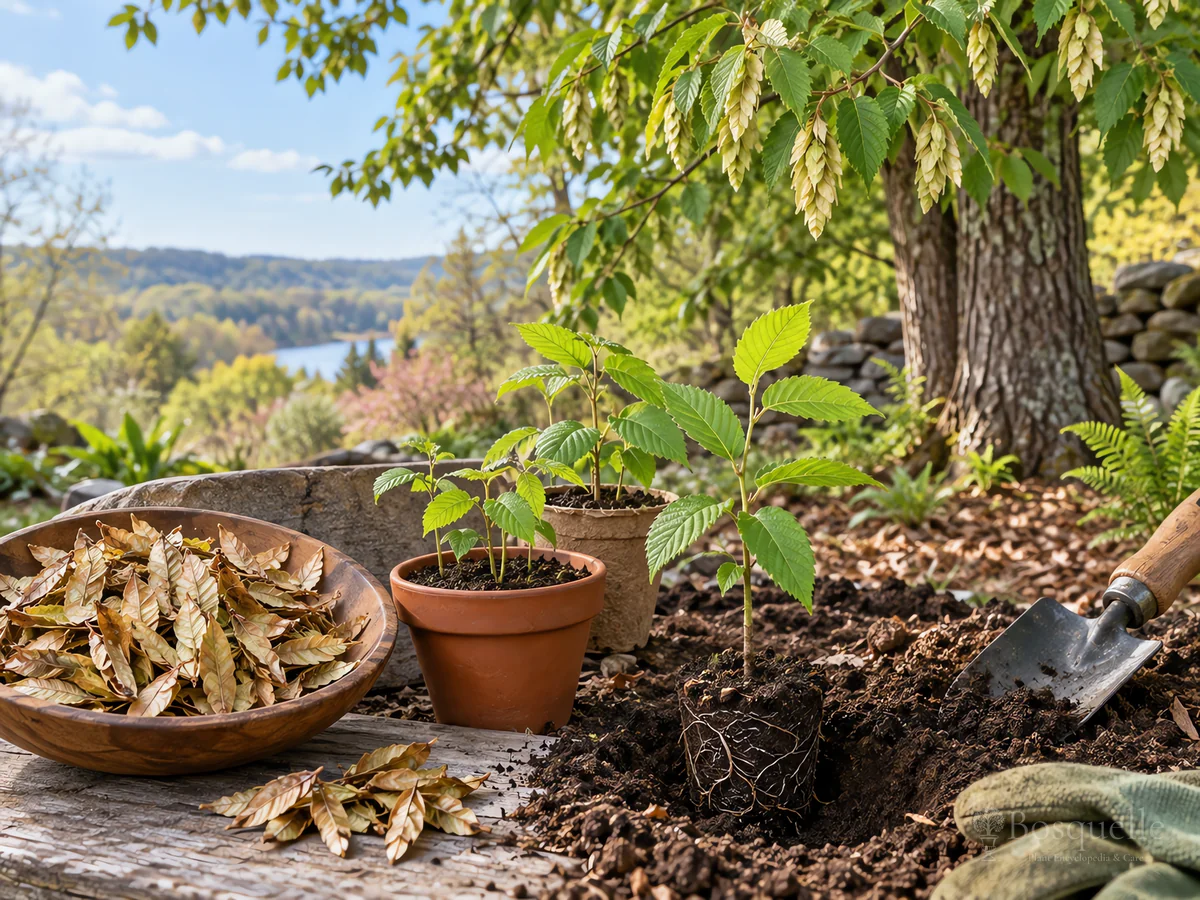
Grow hop-hornbeam from seed by sowing fresh nuts in fall, barely covered, so winter can chill them. Stored seed needs a warm stretch, then a long cold stretch, before a spring sowing.

Sow fresh seed in fall, barely covered
| Factor | Recommended | Avoid |
|---|---|---|
| When | Sow as soon as the clusters turn pale greenish brown, usually late summer into fall | Do not wait until the papery sacs shatter and the nuts blow away |
| Depth | Cover about a quarter inch of firmed soil, then a light mulch | Do not bury the seed deep |
| Moisture | Keep the bed moist until spring germination | Do not let the surface dry out through winter |
| Gloves | Wear gloves when you pick the clusters | Do not strip clusters bare-handed if your skin itches |
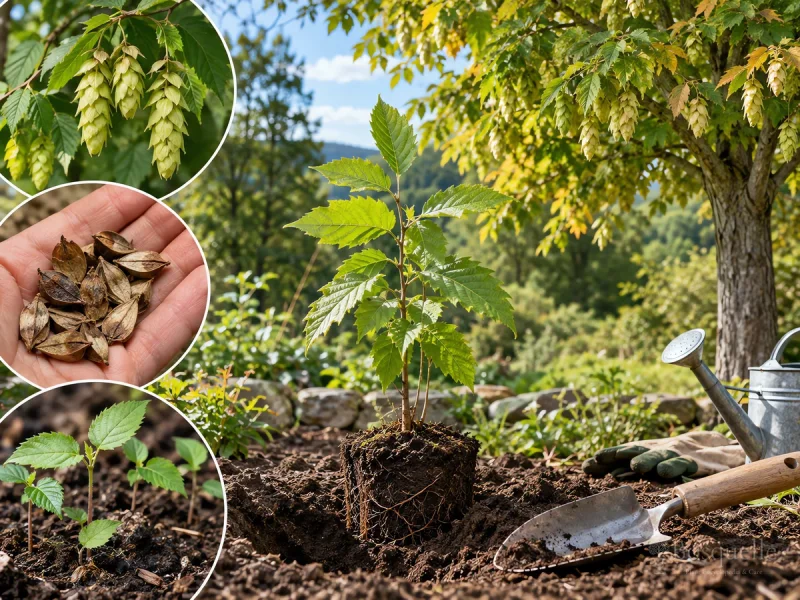
Hop-hornbeam seed sits inside a papery sac. Pick the hanging clusters when they are pale greenish brown, before they dry enough to fall apart. Wear gloves — the clusters can itch. [1] [2] Sow that same week. Fresh, slightly immature seed sown at once is the reliable home start.
- Collect pale greenish-brown clusters before they shatter. Dry them in a shallow layer, then rub the nuts out of the sacs.
- Sow outdoors in fall, about a quarter inch deep, in soil that drains.
- Mulch the bed lightly, and keep it moist until seedlings show in spring.
- Use a deep pot or a bottomless liner if you start in a container, so the taproot does not circle. [3]
When do I collect hop-hornbeam seed?
Late summer into fall, when the clusters are pale greenish brown and have not yet shattered. Wear gloves.
For stored seed, keep it warm, then cold, before a spring sowing
Dry, stored nuts have a hard coat and a deep dormancy. Keep them moist and warm for about three months, then moist and cold for about three to five months, and sow in spring as soon as the ground can be worked. A simpler cold stretch of about 140 days helps some lots, but the warm-then-cold route is the one that opens most seed. [4]
- Mix clean nuts with damp sand or vermiculite in a bag you can close.
- Keep the bag warm and moist for about three months, then in a refrigerator for about three to five months. Do not let it dry.
- Sow in spring, barely covered, and keep the surface moist until germination starts.
- If nothing comes up the first spring, keep the pot moist through the next winter. Some lots wait a second spring.
The grown-tree plan — sun or shade, drain, and water while it is young — is on How to Grow Hop-hornbeam.
Can I skip the warm stretch?
Fresh fall-sown seed can take winter as the chill. Stored dry seed usually needs the warm months first, then cold, or it sits.
If the seed never comes up, it was probably sown dry and deep, or stored without the warm-then-cold stretch. Next time sow it fresh in fall, barely covered, and keep that surface moist.
FAQ
Can I grow hop-hornbeam from a cutting?
Seed is the usual start. Home cuttings are not a reliable method. If you want a tree, sow fresh seed in fall.
Can I collect seed from a young tree?
Trees often wait until they are about 25 years old to seed heavily. If your tree is still small, buy cleaned seed or wait for a heavy crop.
Related guides

Recommended plants

References
- [1] Lady Bird Johnson Wildflower Center -
https://www.wildflower.org/plants/result.php?id_plant=OSVI - [2] USDA Forest Service Woody Plant Seed Manual -
https://www.fs.usda.gov/nsl/Wpsm/Ostrya.pdf - [3] USDA NRCS Appalachian Plant Materials Center -
https://plants.sc.egov.usda.gov/DocumentLibrary/plantguide/pdf/pg_osvi.pdf - [4] Native Plant Network -
https://npn.rngr.net/renderNPNProtocolDetails?selectedProtocolIds=betulaceae-ostrya-2005
This note is part of Ostrya Guides.
More notes on making another plant live in Propagating Guides.
Updated: Reviewed by Bosquelle Editors