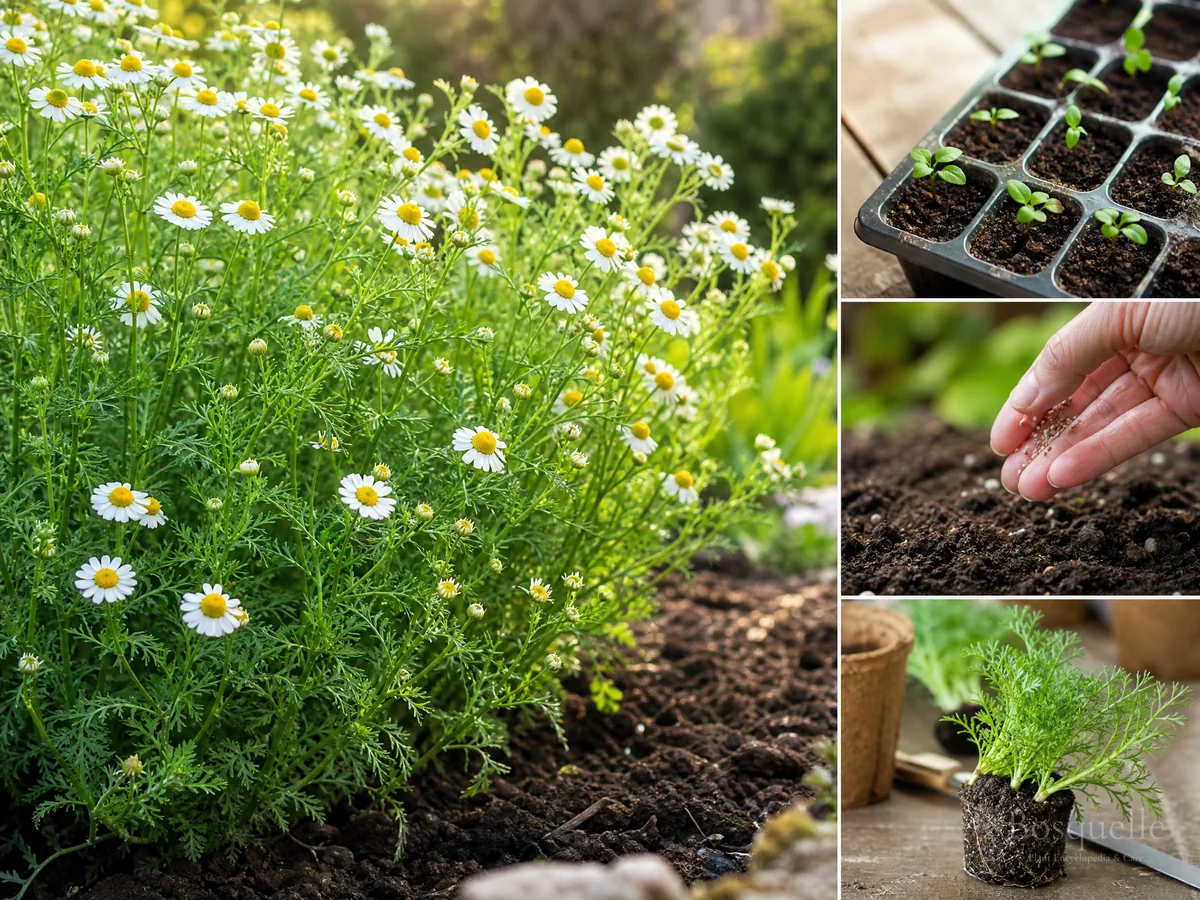
Grow German chamomile from seed by pressing the tiny seed onto the soil surface and keeping that surface moist until the seedlings show. The seed needs light, so do not bury it.
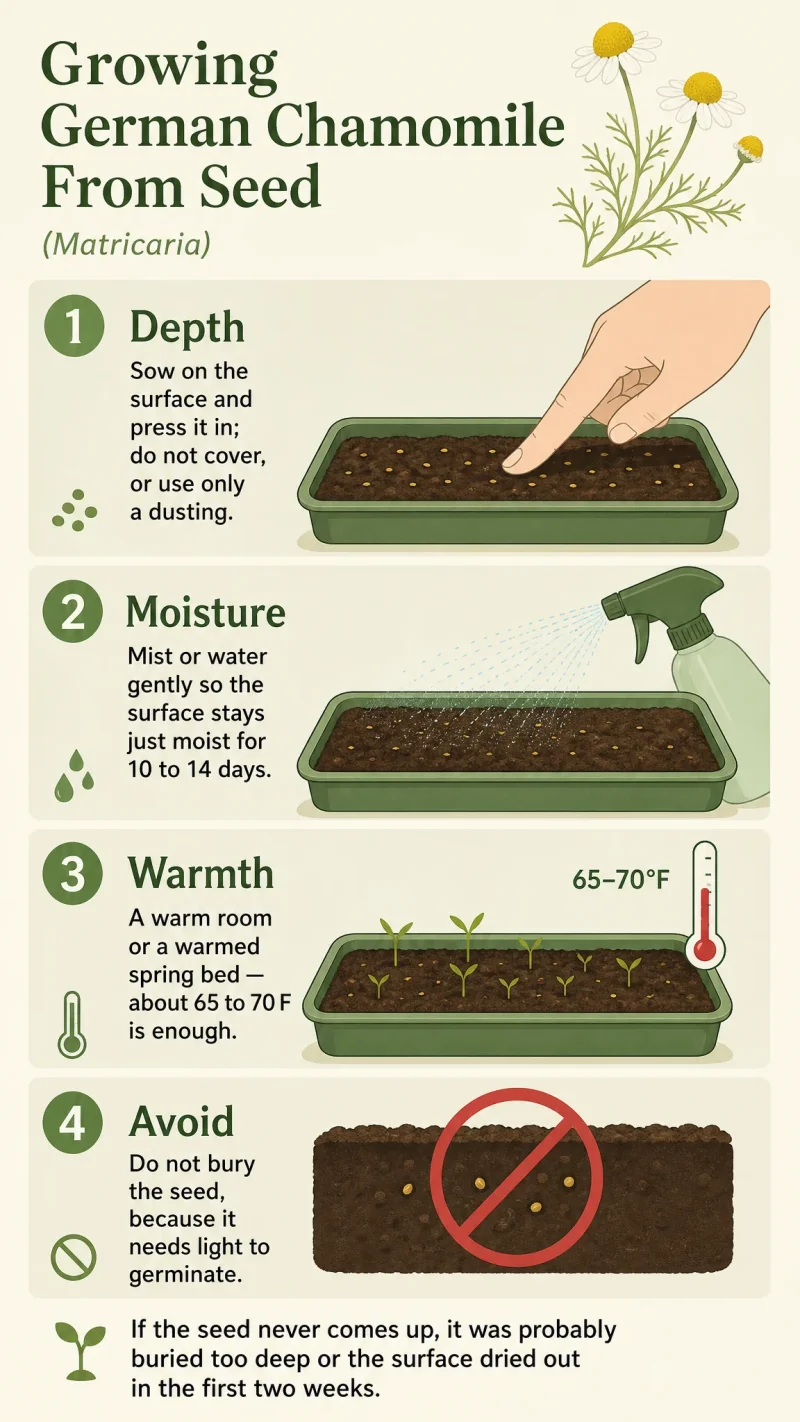
Sow the seed on the surface — it needs light
| Factor | Recommended | Avoid |
|---|---|---|
| Depth | Sow on the surface and press it in; do not cover, or use only a dusting | Do not bury the seed, because it needs light to germinate |
| Moisture | Mist or water gently so the surface stays just moist for 10 to 14 days | Do not let the seedbed dry out, and do not soak it into mud |
| Warmth | A warm room or a warmed spring bed — about 65 to 70 F is enough | Do not wait on a long cold treatment as if this seed would not come up without it |
| Bed | A firm, weed-free, well-drained bed or tray in full sun | Do not sow into heavy, rich, or soggy soil |
German chamomile is the usual seed-grown chamomile. The seed is dust-fine. Scatter it on a firm, well-drained surface, press it into contact, and leave it uncovered so light can reach it. [1] Keep that surface just moist. Seedlings usually show in about 10 to 14 days; in a warm room they can show in about a week. [2] See How to Grow German Chamomile for the grown plant.
- Firm a weed-free, well-drained seedbed in full sun, or fill a tray with a fine mix that drains.
- Scatter the seed on the surface and press it in. Do not cover it with soil.
- Mist to keep the surface just moist until seedlings appear, usually in 10 to 14 days.
- Then ease off the water a little and grow the seedlings on in bright light.
How deep do I sow German chamomile seed?
On the surface. Press the tiny seed into firm soil and leave it uncovered, because it needs light to germinate.
Sow outdoors after frost, or start it indoors while the seedling is still small
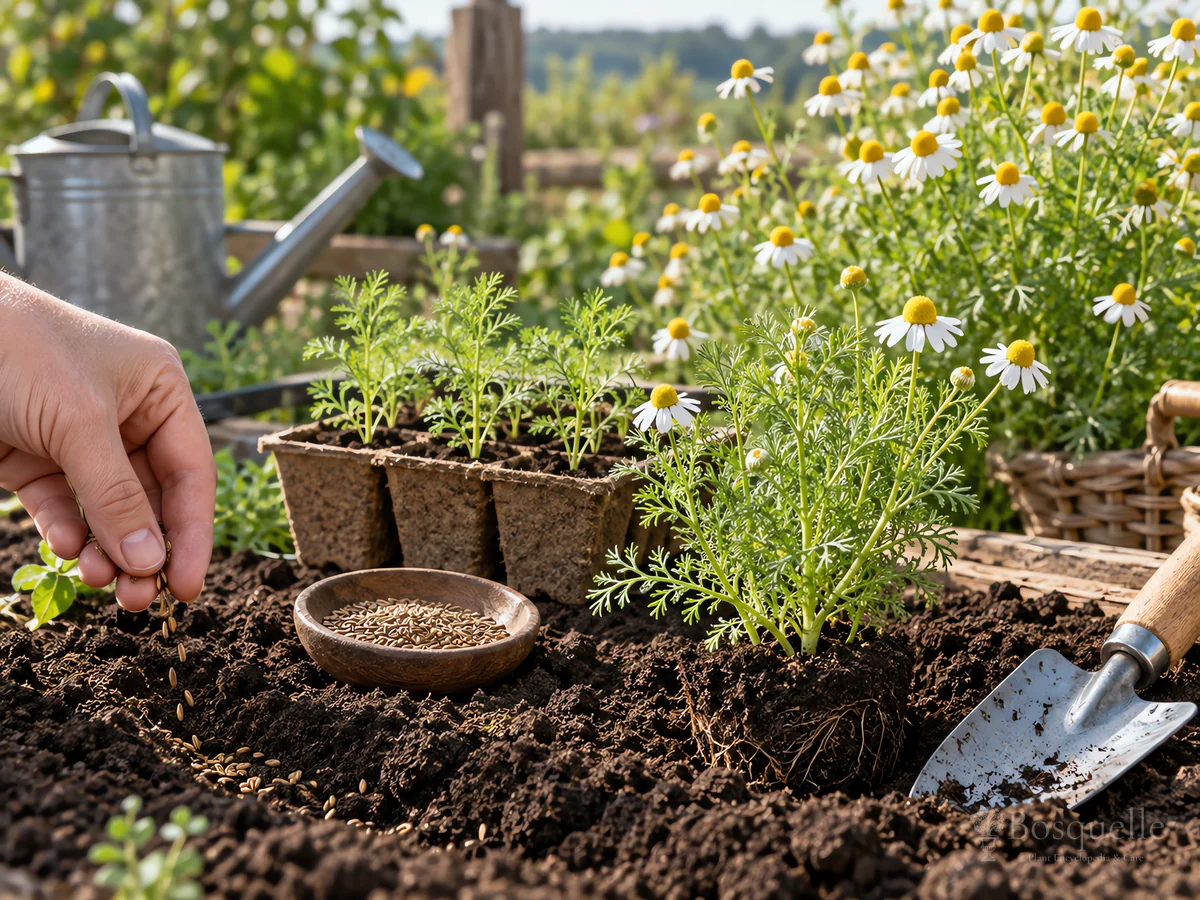
You can sow where the plants will live, or start a tray under cover and set the seedlings out while they are still small. Larger plants do not move well. [3]
- For a direct sowing, wait until around the last frost, then scatter seed on a firm, sunny, well-drained bed and press it in.
- Keep that bed just moist until the seedlings appear, then thin them to about 8 inches. Cut extras at the soil line instead of pulling, so you do not disturb the neighbors.
- To start indoors, sow 4 to 8 weeks before the last frost on the surface of a tray, keep it lightly moist and bright, and transplant when seedlings are 1 to 2 inches tall with a few true leaves. [4]
- Set them at the same soil line they had in the tray, about 8 inches apart, and water them in the same day.
When do I transplant German chamomile?
While it is still small — about 1 to 2 inches tall, after frost. A larger plant does not transplant well, so start each cell as its own plant, or sow in place.
If the seed never comes up, it was probably buried too deep or the surface dried out in the first two weeks. Next time press it in on the surface and keep that surface just moist until seedlings show.
FAQ
Can I collect my own seed?
Yes. Leave some heads to brown, dry them, and rub out the tiny seed. Store it cool and dry. The patch also self-sows if you leave heads standing.
Can I grow it from a cutting or a division?
No. German chamomile is an annual raised from seed. It does not make a clump you can split, and cuttings are not the home method.
Will it self-sow in the garden?
Yes, on open, well-drained ground, if you leave some ripe heads. Thin the seedlings next spring the same way you thin a sowing.
Related guides
Recommended plants

References
- [1] Johnny's Selected Seeds -
https://www.johnnyseeds.com/growers-library/herbs/chamomile/chamomile-key-growing-information.html - [2] Wisconsin Horticulture -
https://hort.extension.wisc.edu/articles/chamomile-matricaria-chamomilla/ - [3] NC State Extension -
https://plants.ces.ncsu.edu/plants/matricaria-chamomilla/ - [4] UIC Heritage Garden -
http://heritagegarden.uic.edu/german-chamomile-matricaria-recutita
This note is part of Matricaria Guides.
More notes on making another plant live in Propagating Guides.
Updated: Reviewed by Bosquelle Editors