
Pair Crinum with plants that share sun to part shade and the same moisture. Garden hybrids take moist-border co-bloomers and bold leaves. Swamp species take wet-edge neighbours. Tender types take pot mates you can move on the same day.
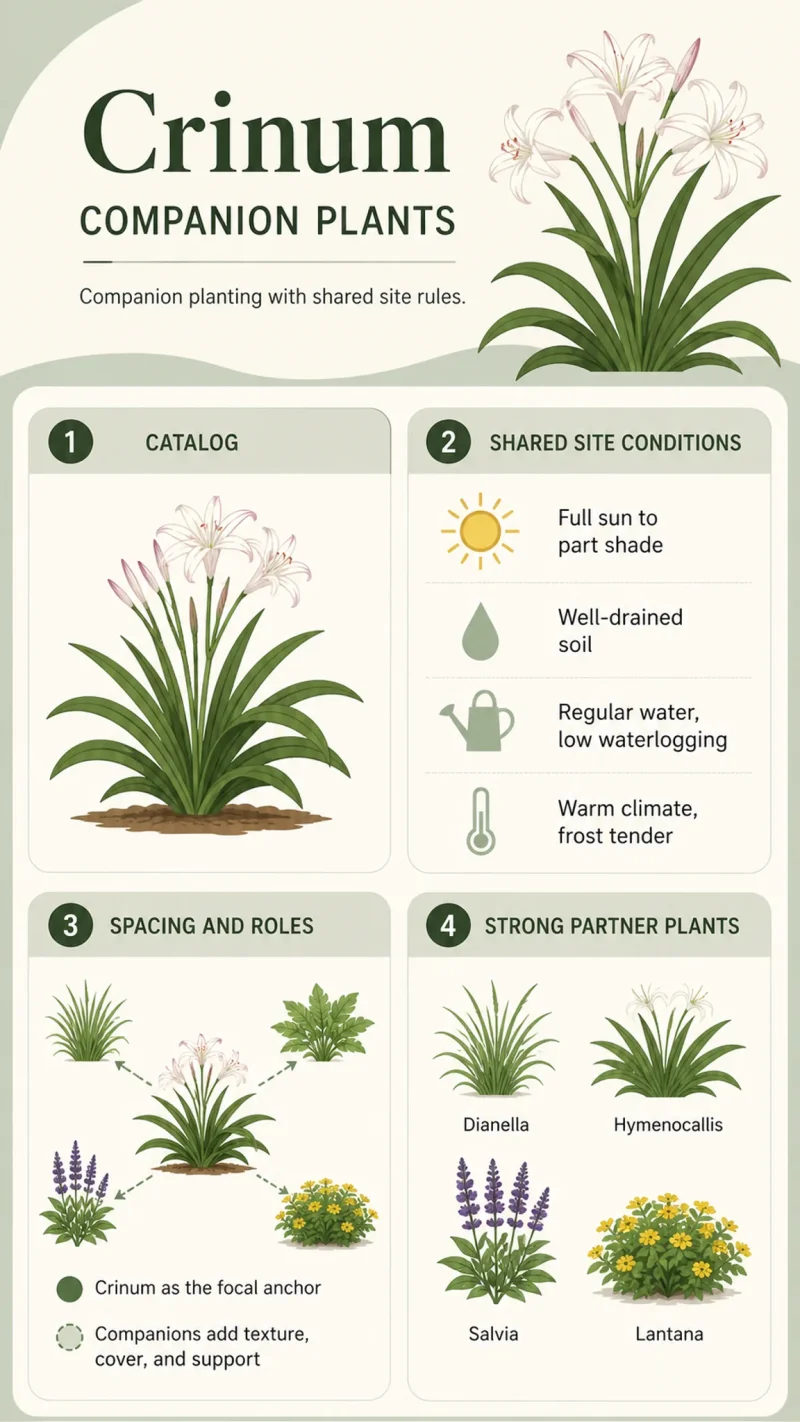
Shared culture stays on How to Grow Crinum; types on Types of Crinum.
Partner roles for bold leaves and moist borders
| Factor | Recommended | Avoid |
|---|---|---|
| Garden hybrid | Daylilies, agapanthus, cannas, elephant ears on even moisture | A year-round bog copied from swamp species |
| Swamp edge | Wet irises, cardinal flower, ferns beside americanum only | Forcing that mix onto a drained powellii neck |
| Scale | Architectural leaves that match a 2–4 ft clump | Tiny alpine cushions that vanish under the foliage |
| Pots | Deep tubs you can move before frost | Sealed saucers on tender necks |
Crinum × powellii is a moist-border plant. Crinum americanum is a wet-edge plant. You may grow both on one property only when their watering stays distinct — wetter soil for swamp types, moist drain for hybrids.
Pass moisture and scale first. Then give each gap one job: bold foliage, summer co-bloom, or a fine texture that leaves the flowers visible. Colour rhyme is optional after that match.
Bold foliage partners beside hybrid trumpets
Seat architectural neighbours beside Crinum so the large leaves have company without fighting for the neck. Cannas and elephant ears match tropical scale. Hostas work in part shade if moisture stays even.
Keep soil evenly moist through summer bloom — do not leave a sealed puddle on a drained hybrid, and do not run a bone-dry tap on thirsty leaves.
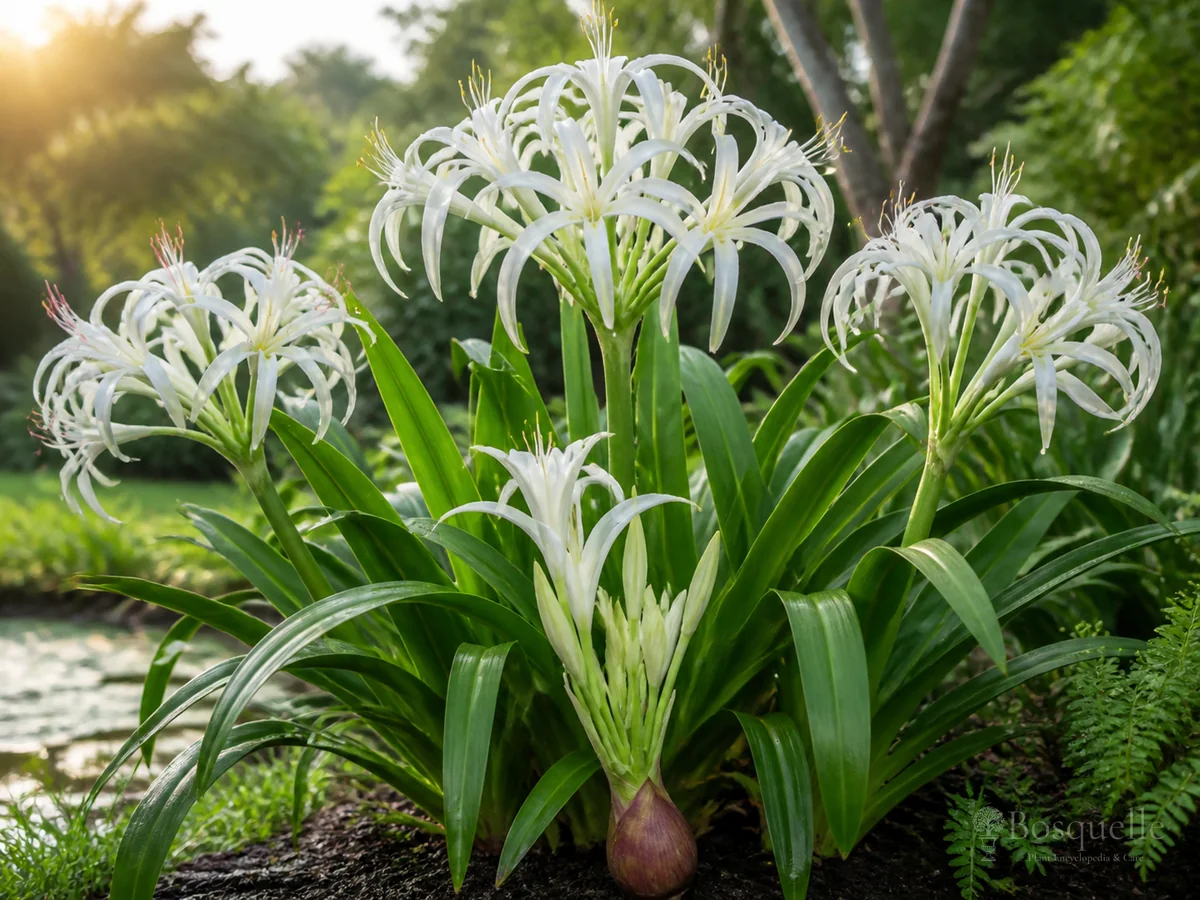
Crinum × powellii ‘Album’ and Crinum ‘Ellen Bosanquet’ read as co-stars when partners share sun and moist-drained soil. Edge tightly if aggressive turf would smother emerging necks.
Three partners with reasons beat twelve nameless tropical-mix tags. If a neighbour needs drought while Crinum is still in leaf, it belongs elsewhere.
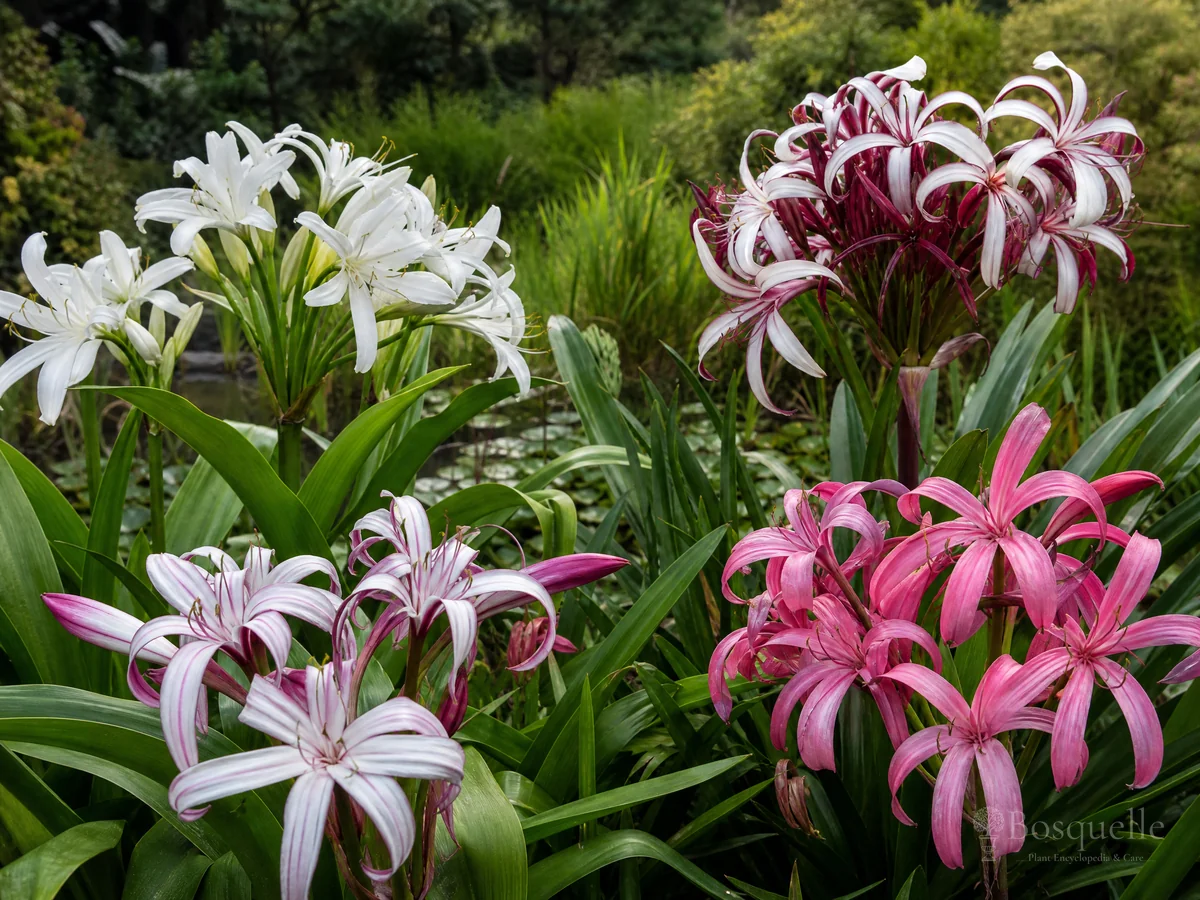
Moist-border co-bloomers for pink and milk-and-wine
- Place summer sun perennials beside Crinum × powellii and Crinum × powellii ‘Album’ so umbels have colour company without a deep shade roof
- Seat fine textures beside Crinum ‘Cintho Alfa’ and Crinum ‘Stars and Stripes’ so striped trumpets stay visible
- Keep heavy wet off drained necks — irrigate swamp partners only beside americanum
- Do not treat livestock forage or a pet-dig lawn as a neighbour beside toxic bulbs
Daylilies, agapanthus, and salvias share sun and even moisture with garden hybrids. Ornamental grasses add fine texture if they do not bury the neck. Mark bulb positions so you do not spear necks when dividing neighbours.
Mid-border whites still want sun on the flowers. Do not hide them behind a summer hedge that closes in July. Leave a viewing gap from the path.
Swamp-edge partners and tender container mates
Beside Crinum americanum, use wet-tolerant neighbours: moisture-loving irises, cardinal flower, and ferns. Do not force that mix onto a Crinum × powellii bed that must drain. Beside Crinum asiaticum and Crinum procerum var. splendens, use container partners you can move under cover on the same day as the bulb.
Empty saucers. Refresh mix when neighbours shade the flowers — that is spacing, not a failed cultivar. In a pot, pair only with plants that share the lift date.
Wrong partners for a Crinum planting
Skip deep cultivation through unmarked neck pockets — spears and lifts resting bulbs. Skip bone-dry gravel annuals on the same tap as moist leaves. Skip bog plants beside drained powellii. Skip a pet-dig zone or a tasting path into the bulb bed.
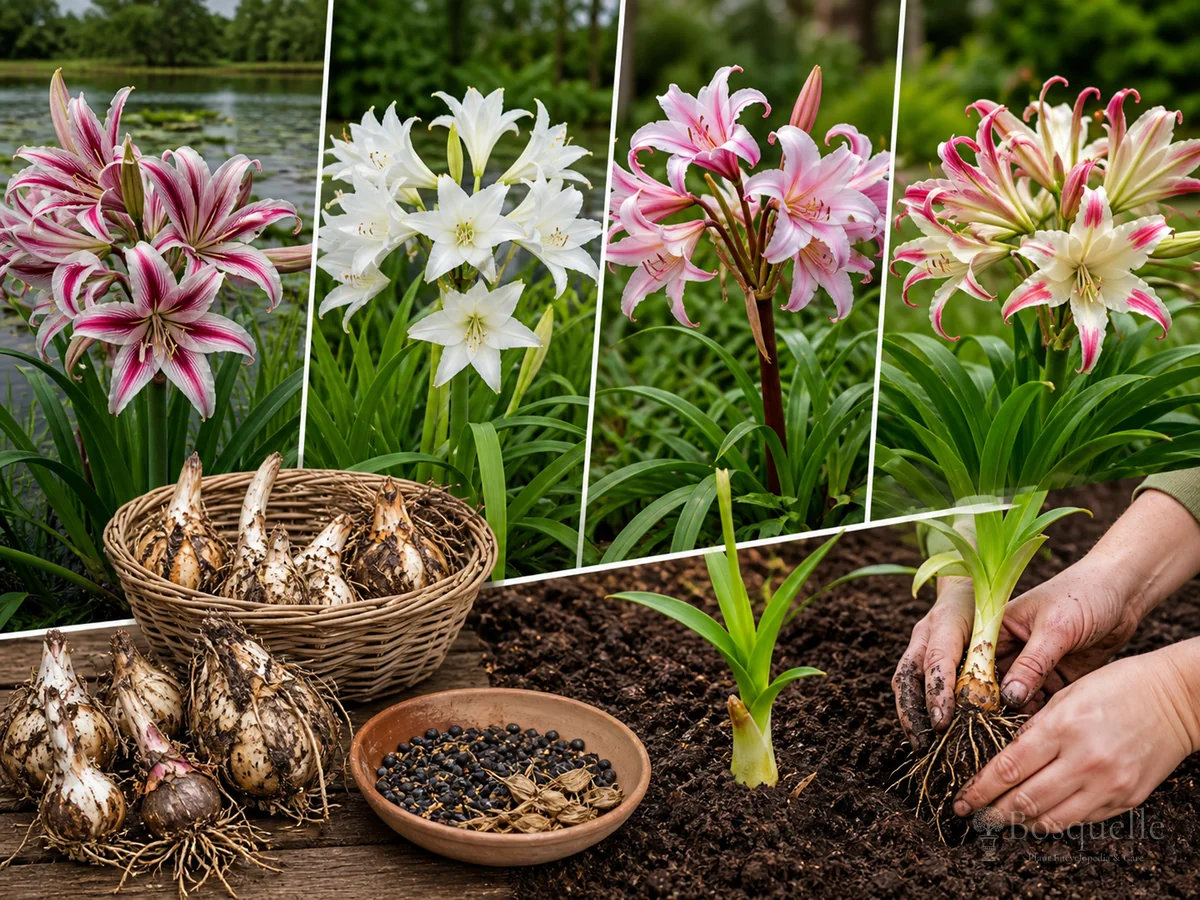
Skip nameless swamp-lily mix trays with no genus plan. If the nursery cannot say Crinum versus other wet lilies, leave it out. Also skip filling every gap with more Crinum. One hybrid clump plus three partners reads cleaner than a mass that lodges into one pillow.
Group browse: Types of Crinum. Planting on Planting Crinum.
Count three partners with a job each: one foliage plant, one summer flower that shares moisture, and one fine texture that leaves the stem visible. A fourth plant should earn a new job, not fill a hole.
Shallow groundcovers can sit about two feet out from the neck so the clump can widen. Thyme and similar low plants work on drained hybrids if you never fork through the bulb. Skip aggressive turf that smothers emerging leaves.
Fragrance does not replace even moisture in growth, and a matching flower colour does not rescue a watering clash.
Match partners to swamp versus drained types, leave necks clear, then return to care and planting.
FAQ
What can I plant with Crinum?
Bold-leaf and moist-border plants that share sun to part shade and the same watering — not bog plants beside drained hybrids, and not a pet-dig bed beside toxic bulbs.
Can Crinum grow with water-garden plants?
Beside americanum, wet-tolerant neighbours can work. Do not treat every Crinum as a pond plant.
What covers the gap under large leaves?
Lower moist-border perennials or fine textures that leave necks unmarked — without sealing wet on drained bulbs.
Can Crinum grow under shrubs?
Yes when light reaches the clump in summer and moisture matches. Avoid a deep dry shade roof.
Do companions change watering?
Partners should match the Crinum type — swamp edge or moist-drained. Shared care stays on How to Grow Crinum.
Where is bulb planting depth?
Planting Crinum — this page only covers partner roles beside planned or established plantings.
Where do I choose colour types?
Types of Crinum sorts white, pink and milk-and-wine, and species before you pick partners.
Why keep pets and children off?
Crinum is toxic if eaten. Companions should not create a dig or taste path into the bulb bed.
Related guides
Recommended plants


This note is part of Crinum Guides.
More neighbour shortlists by plant live in Companion Plant Guides.
Updated: Reviewed by Bosquelle Editors