
Pair coreopsis with plants that share full sun and sharp drainage. Moonbeam is the usual gold threadleaf. Coneflower, salvia, lavender, catmint, and upright grasses are the usual partners. Skip woodland shade plants in the same hole. Plant the tickseed first, then partners. Care stays on How to Grow Coreopsis.
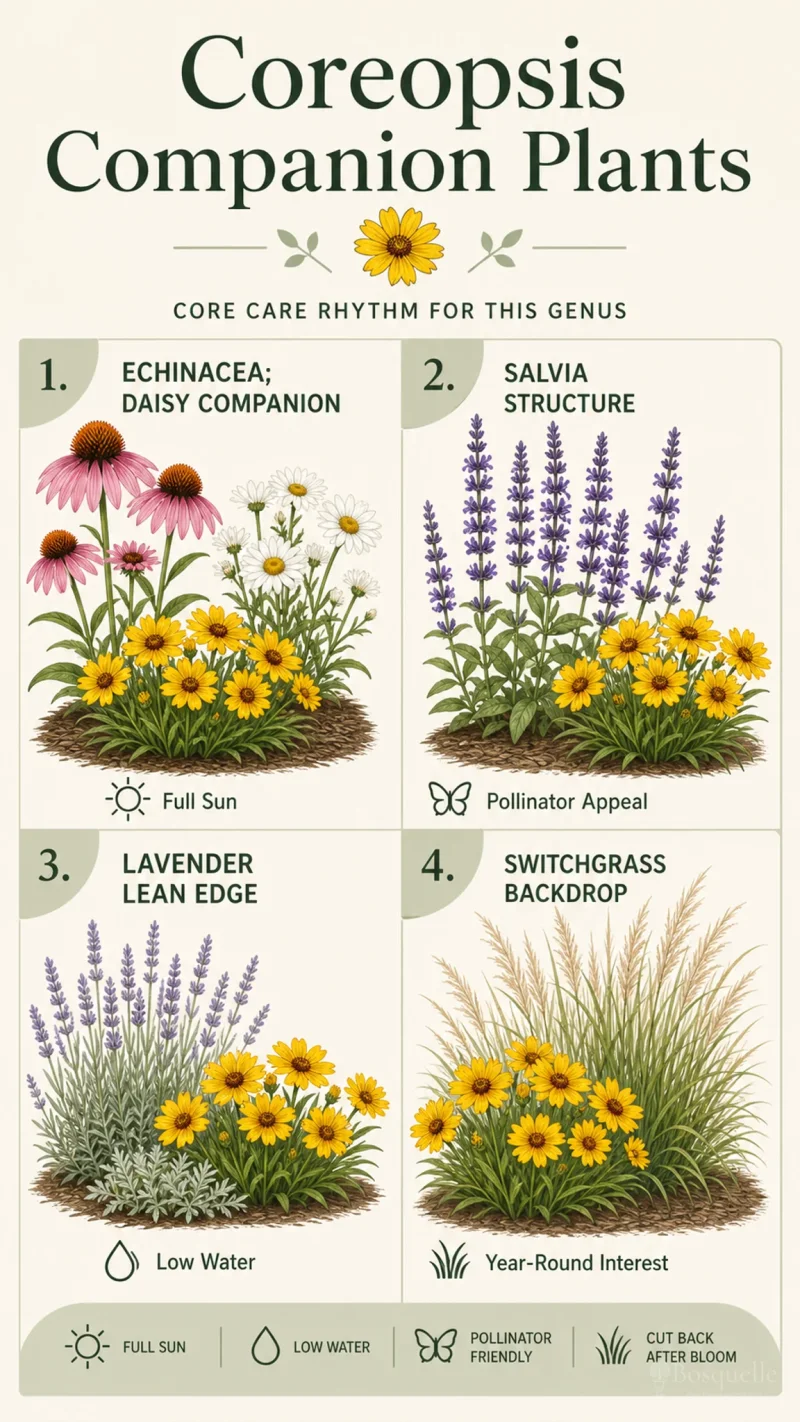
Partners that share sun and drain
| Factor | Recommended | Avoid |
|---|---|---|
| Light | Partners that also want six hours of sun | Woodland shade plants in the same hole |
| Water | The same lean soak-and-dry as the tickseed | A moisture lover you irrigate until the coreopsis flops |
| Height | Grasses and coneflower behind; catmint or lavender in front | A tall grass that shades the buds by July |
| Crown | A clear collar so you can deadhead | A dense skirt packed onto the tickseed crown |
Growing the Home Garden and Holub Greenhouses use the same sun set: echinacea, salvia, rudbeckia, gaillardia, lavender, nepeta, yarrow, and ornamental grasses. That list works because the partners want heat and drain. Plant the tickseed first, then add one spike and one other daisy, then a grass if you want winter stems.
Horticulture.co.uk treats perennial tickseed as a prairie mix with echinacea, yarrow, salvias, and grasses, or a Mediterranean edge with lavender. Both jobs are sun and drain. Do not mix those partners with a bog strip in the same bed.
Mass in threes or fives of the same tickseed so the gold reads from the path. A single plant looks lost beside a four-foot grass. Yarrow and penstemon sit in the same lean strip if they drain; marsh milkweed and Joe-Pye do not. Leave 12–18 inches between crowns so you can deadhead without stepping on the salvia.
Bloom overlap is the other reason for this mix. Threadleaf gold runs from early summer. Coneflower and black-eyed Susan carry the middle. Grasses hold the stems after flowers finish. You do not need eight genera. Three well-spaced partners beat a pile of labels in one four-foot hole.
How to plant the mix
- Site the coreopsis in full sun with grit drainage, 12–18 inches from the next crown.
- Place taller coneflower or grass behind; catmint or lavender in front, still off the tickseed crown.
- Water the new planting as a unit until roots take, then return to lean watering.
- Deadhead tickseed and partners on the same pass so the bed does not go to brown seed all at once unless you want birds.
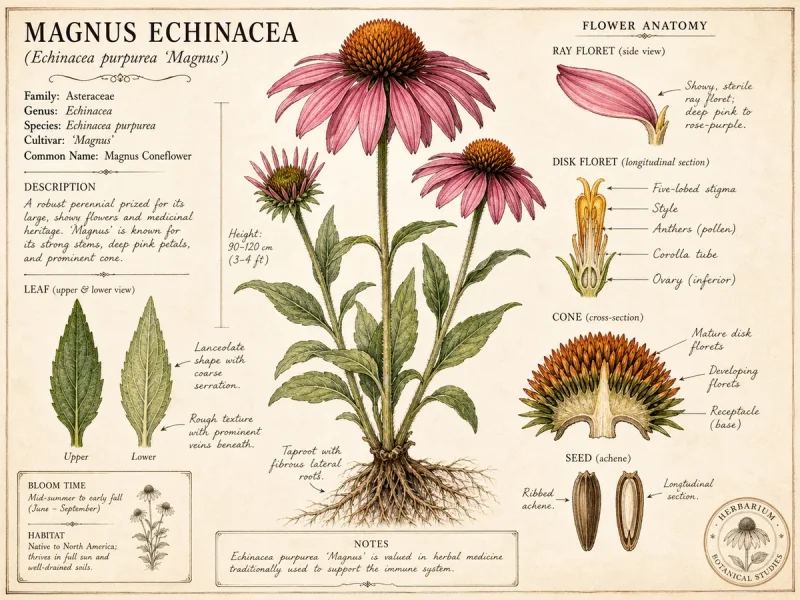
- Coneflower — Magnus takes the same sun and keeps a cone after the first tickseed flush eases.
- Salvia — Caradonna is an upright purple spike beside threadleaf gold. Leave a collar so woody salvia and tickseed crowns do not trap wet mulch.
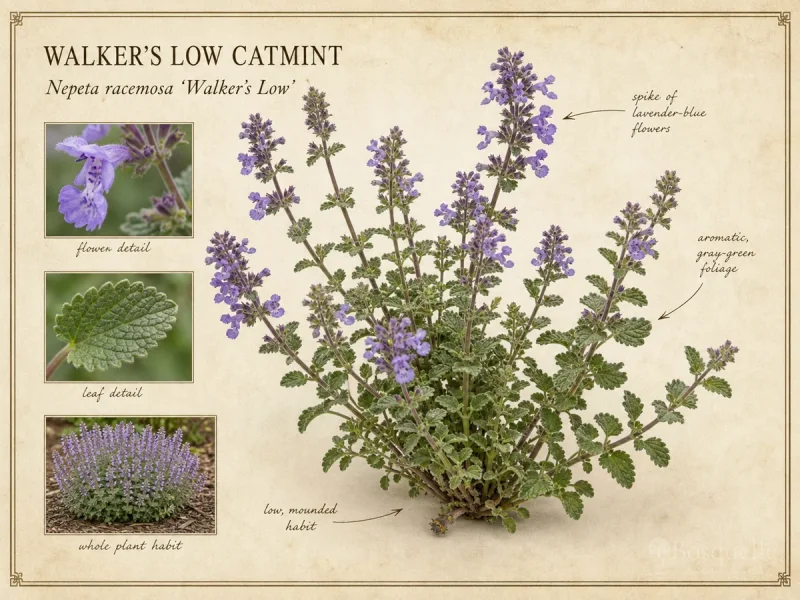
- Lavender and catmint — Hidcote and Walker's Low fill the front without sealing the crown. Skip them if your bed stays wet in winter.
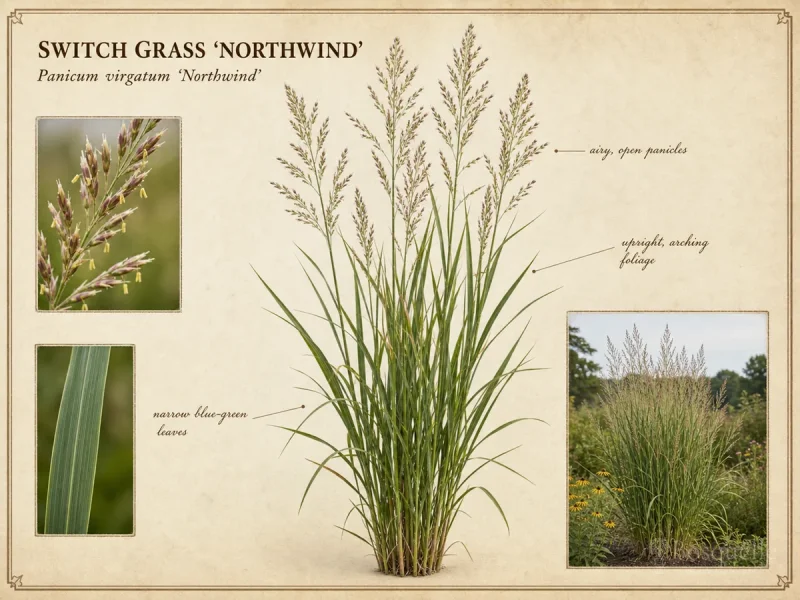
- Grasses — Northwind and Karl Foerster sit behind the daisies and hold shape after bloom. Sit them far enough that you can still shear the coreopsis.
- Black-eyed Susan — Goldsturm overlaps midsummer. Same lean sun; do not add extra water for the rudbeckia alone.
Scale the front plants to the coreopsis you bought. Compact Zagreb wants a thinner skirt than a wide Full Moon clump. Leave a stepping gap for deadheading day. Density looks finished until you cannot reach spent stems without crushing the salvia.
When clumps congest, refresh the tickseed on Dividing Coreopsis. Partners do not replace that job. Dry-sun shortlist plants live on Best Coreopsis for Dry Borders.
Water the new mix as one bed for the first few weeks, then return to lean soaks. If you add a drip line, put it at the soil, not as an overhead mist on the daisies. Mulch grit or a thin compost between plants, still off the coreopsis crown. A thick wet bark ring is how crowns rot in a “finished” prairie.
What fails the pairing
Shade mats, winter-wet groundcovers, and “improve the whole bed for one thirsty plant” programs fail the mix. If catmint starts asking for more summer water than the threadleaf already takes, move the catmint. Do not irrigate the whole bed into soft crowns.
A grass that shades buds by midsummer is a spacing fail. Thin or relocate the grass. Three competing orange daisies beside one threadleaf clump read noisy, not prairie. Repeat one cool spike and one warm daisy.
Hostas, impatiens, and other shade bedding will not share this strip. Neither will a lawn sprinkler set to keep turf green while the tickseed sits in the spray. Move the hose job or move the coreopsis. Patio troughs are a drained-pot job, not a way to mix wet and dry plants in one vessel.
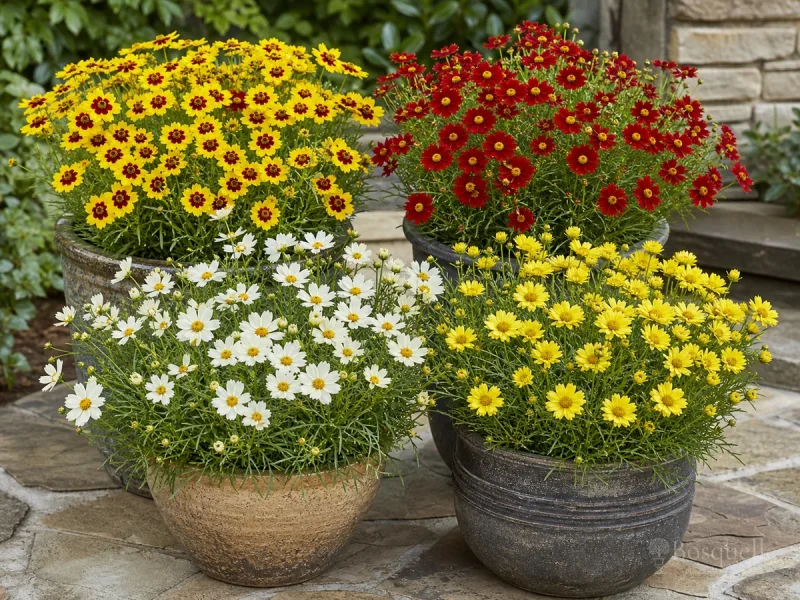
Patio pots are a different job — drainage is a vessel problem. Open Coreopsis in Containers when the tickseed lives in a pot, not when you are laying out a border.
If two plants want the same midsummer skyline, keep the stronger one and move the other. A four-foot switchgrass and a four-foot tripteris in a six-foot bed will shade everything in front. Draw mature height on paper before you buy the third daisy. Leave a path to the tickseed so shearing day does not flatten the front row.
Site tickseed in sun and drain first, then add partners that want the same conditions — one spike, one other daisy, a grass if you want winter stems. Do not irrigate the whole bed for a single thirsty neighbor.
FAQ
What belongs next to Moonbeam?
Lean-sun partners: coneflower, salvia, lavender, catmint, and an upright grass that leaves the crown open.
Can I mix moisture lovers with coreopsis?
Only if they share sharp drainage. Skip partners that need winter-wet ground beside drought-lean tickseed.
Do companions change coreopsis care?
No. Partners share sun and drain. Shared growing rules stay on How to Grow Coreopsis.
Can I plant grasses with coreopsis?
Yes — upright prairie grasses that share sun and drainage, set far enough back that you can shear the tickseed.
Is yarrow a good partner?
Yes in the same full-sun, draining strip. It is another lean perennial, not a reason to water more.
Where is full coreopsis care?
How to Grow Coreopsis. Divide on Dividing Coreopsis when clumps congest.
Related guides



Recommended plants





This note is part of Coreopsis Guides.
More neighbour shortlists by plant live in Companion Plant Guides.
Updated: Reviewed by Bosquelle Editors