
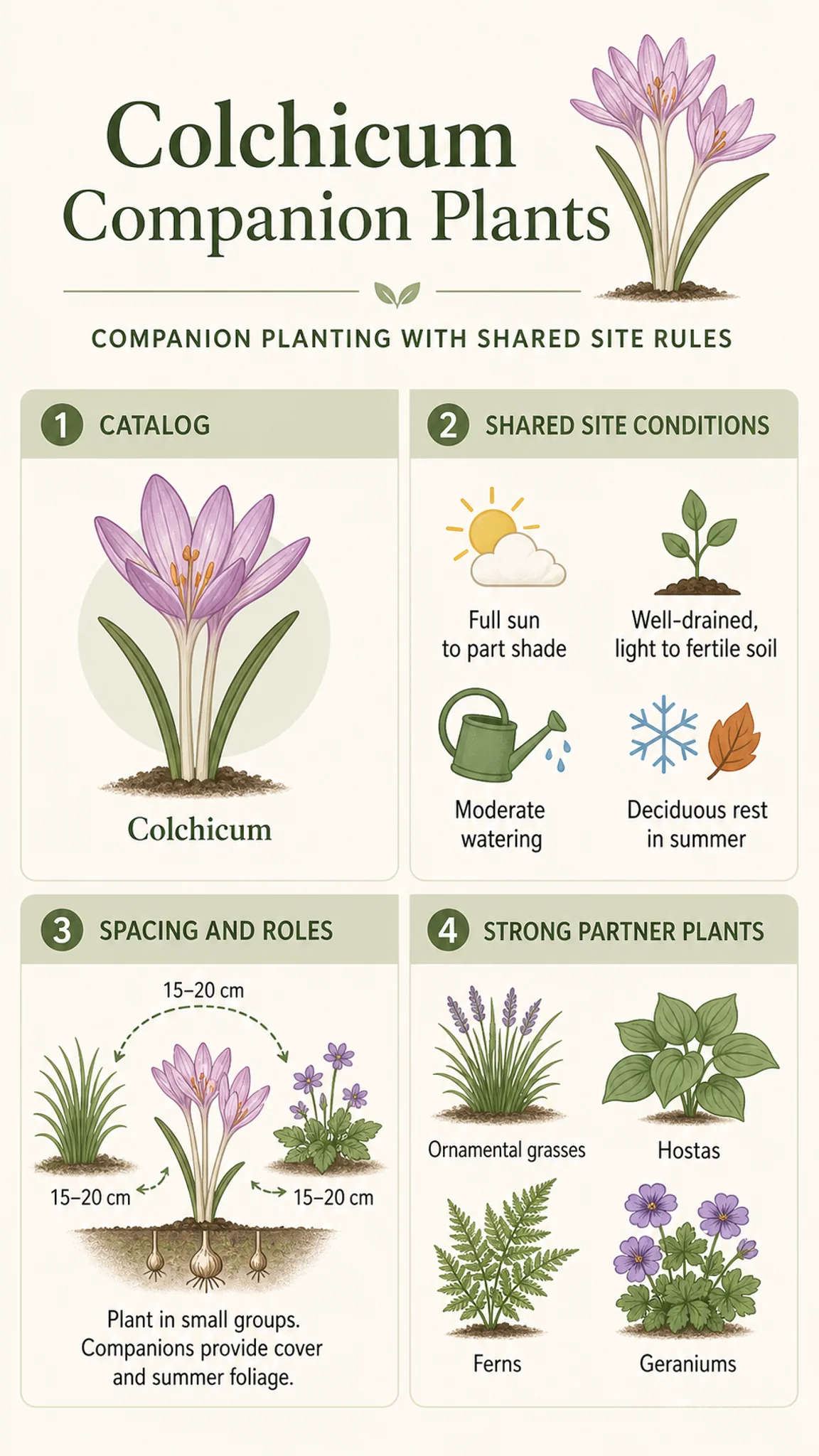
Partner Colchicum by role: autumn co-bloom, a skirt that hides spring leaf flop, a marker over dormant corms, or a light summer gap cover. Guests must share sun and drainage. Do not spear resting corms with deep summer digging.
Care on How to Grow Colchicum; plant-out on Planting Colchicum.
Partner roles for autumn colour and spring leaf cover
| Factor | Recommended | Avoid |
|---|---|---|
| Autumn co-bloom | Sun perennials that flower as goblets rise | Wet-shade woodlanders on the same valve |
| Spring skirt | Low groundcover that holds floppy leaves | Mats that seal wet against the corm neck |
| Dormant marker | A light plant that flags the empty summer pocket | Deep digging through unmarked corms |
| Summer gap | Shallow-rooted fillers that lift after foliage dies | Aggressive roots that crowd the corm |
Pass sun and drainage first. Then cast one role per gap. Colour match is optional after that. Colchicum ‘The Giant’ still fails if a bog iris strip rewrites watering beside it.
Colchicum ‘The Giant’ shows why partners matter: tall autumn goblets and large spring leaves need a skirt and a marker, not a sealed wet mat.
Autumn co-bloomers that share sun and drainage
Pair Colchicum with other late sun plants that like free drainage — asters, hardy chrysanthemums, or sedum plates at the same hydrozone. Keep irrigation off dormant corms once spring foliage has died. Seat co-bloomers beside, not on, the corm pocket.
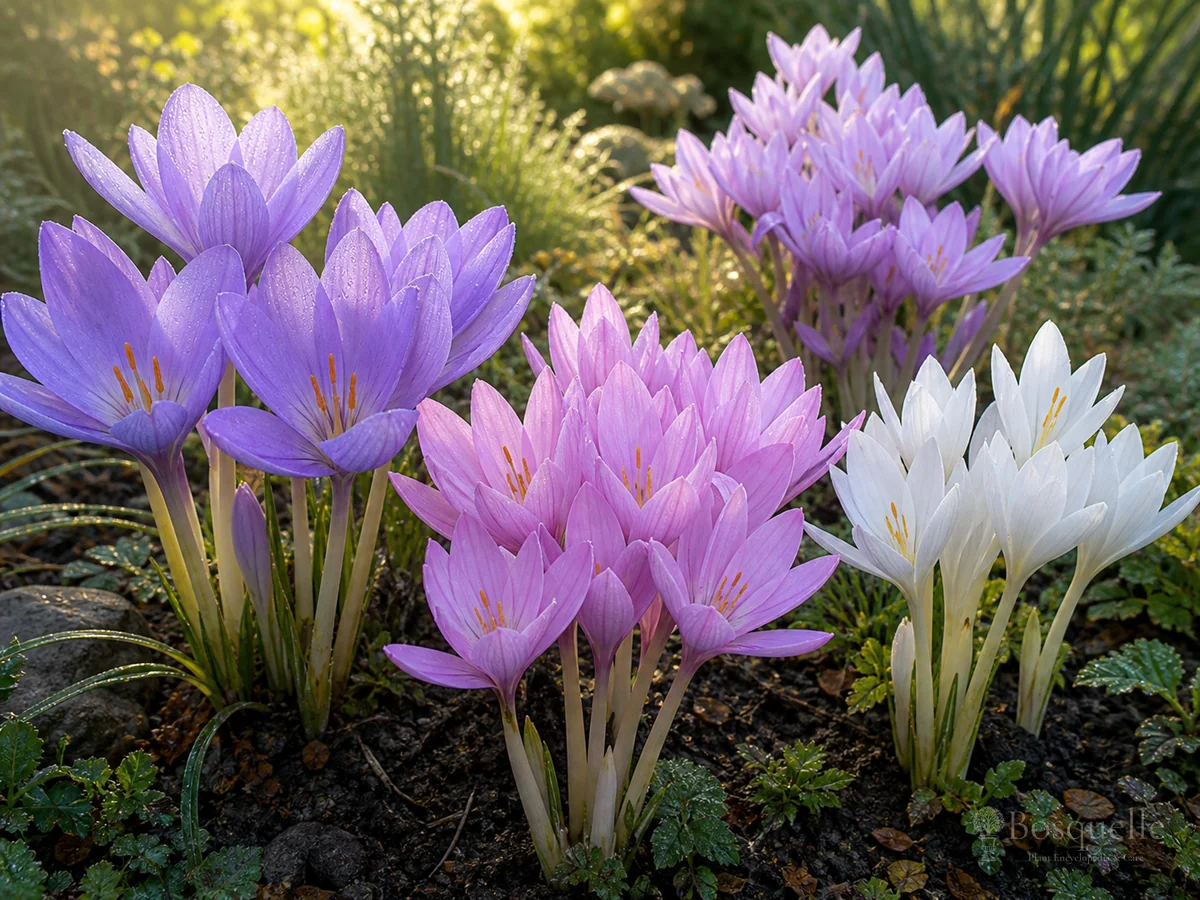
Colchicum ‘Waterlily’ and Colchicum speciosum ‘Album’ still want the same sun strip as their neighbours. A wet woodland tray on that ridge fails both sides.
Skirts that hide spring leaf flop
- Use low groundcover — sedum, hardy geranium, ajuga, or similar — so spring Colchicum leaves have something to rest on
- Keep the skirt off the exact corm collar so air can still move
- Do not pile soil onto the neck when you plant the skirt
- Hold heavy summer watering off the dormant pocket
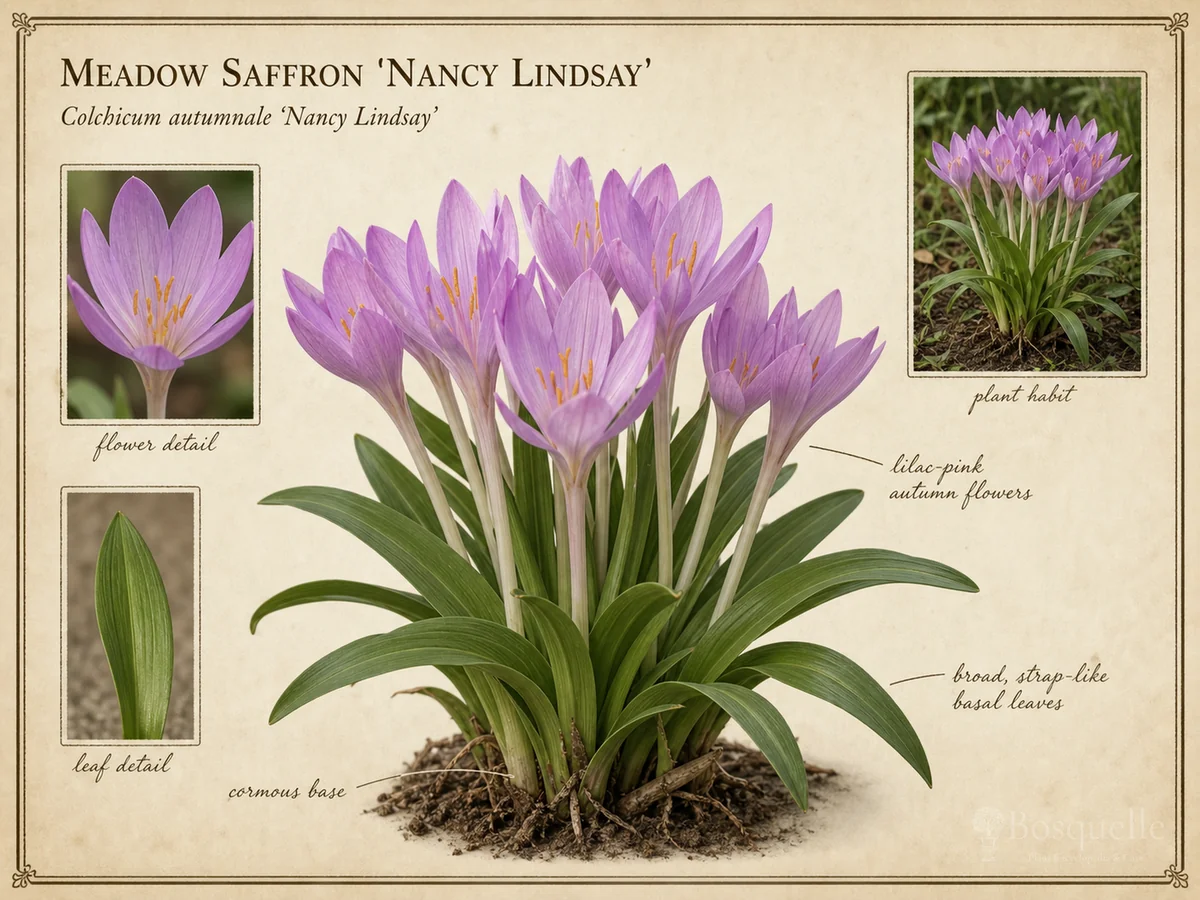
Colchicum speciosum ‘Atrorubens’ and Colchicum autumnale ‘Nancy Lindsay’ gain from a skirt the same way tall show faces do. The skirt hides ripening leaves; it does not cancel toxicity.
Species meadow faces and light summer gap fillers
Lower meadow faces such as Colchicum agrippinum sit well in grass or gravel if you can leave spring foliage to ripen. After leaves die, a light annual or shallow filler can occupy the gap — lift it before you spear corms. Empty and refresh when neighbours shade the autumn goblets.
Mid-border partner cues beside tall and meadow faces
Tall show faces belong where spring leaves will not block a path. Meadow faces can sit closer to the front. Under roses and shrubs works if the canopy is high enough for autumn sun and you will not fork the corms when you feed the shrub.
Shared culture: How to Grow Colchicum. Colour band: Types of Colchicum.
Wrong partners for a Colchicum planting
Wet-shade woodlanders: hostas and ferns that need a moist bowl fight corm drainage.
Deep summer digging: vegetable rows and bulb forks through unmarked pockets smash resting corms.
Livestock or pet forage: colchicine — wrong neighbour class beside Colchicum ‘The Giant’.
True crocus as a synonym: different genus; do not mix planting calendars.
Plant and lift timing: Planting Colchicum.
Cast autumn co-bloom, a spring-leaf skirt, and a dormant marker that share sun — then return to care and planting.
FAQ
What can I plant with Colchicum?
Sun plants that share drainage: autumn co-bloomers, a low skirt for spring leaves, and a light marker over dormant corms.
How do I hide Colchicum spring leaves?
A low groundcover skirt that the leaves can rest on. Do not cut the Colchicum foliage green.
What covers the gap after foliage dies back?
A shallow-rooted summer filler you can lift without spearing corms. Mark the pocket first.
Can Colchicum grow under roses and shrubs?
Yes if autumn sun still reaches the ground and you will not fork the corms when you work the shrub.
Do companions change watering?
Partners should tolerate the same free drainage. Shared care stays on How to Grow Colchicum.
Where is corm planting depth?
Planting Colchicum. This page only covers partner roles.
Where do I choose colour types?
Types of Colchicum sorts tall show, doubles, deep colour, and meadow bands before you cast partners.
Why keep pets and children off?
All parts are toxic if eaten. Companions do not cancel colchicine.
Related guides


Recommended plants




This note is part of Colchicum Guides.
More neighbour shortlists by plant live in Companion Plant Guides.
Updated: Reviewed by Bosquelle Editors