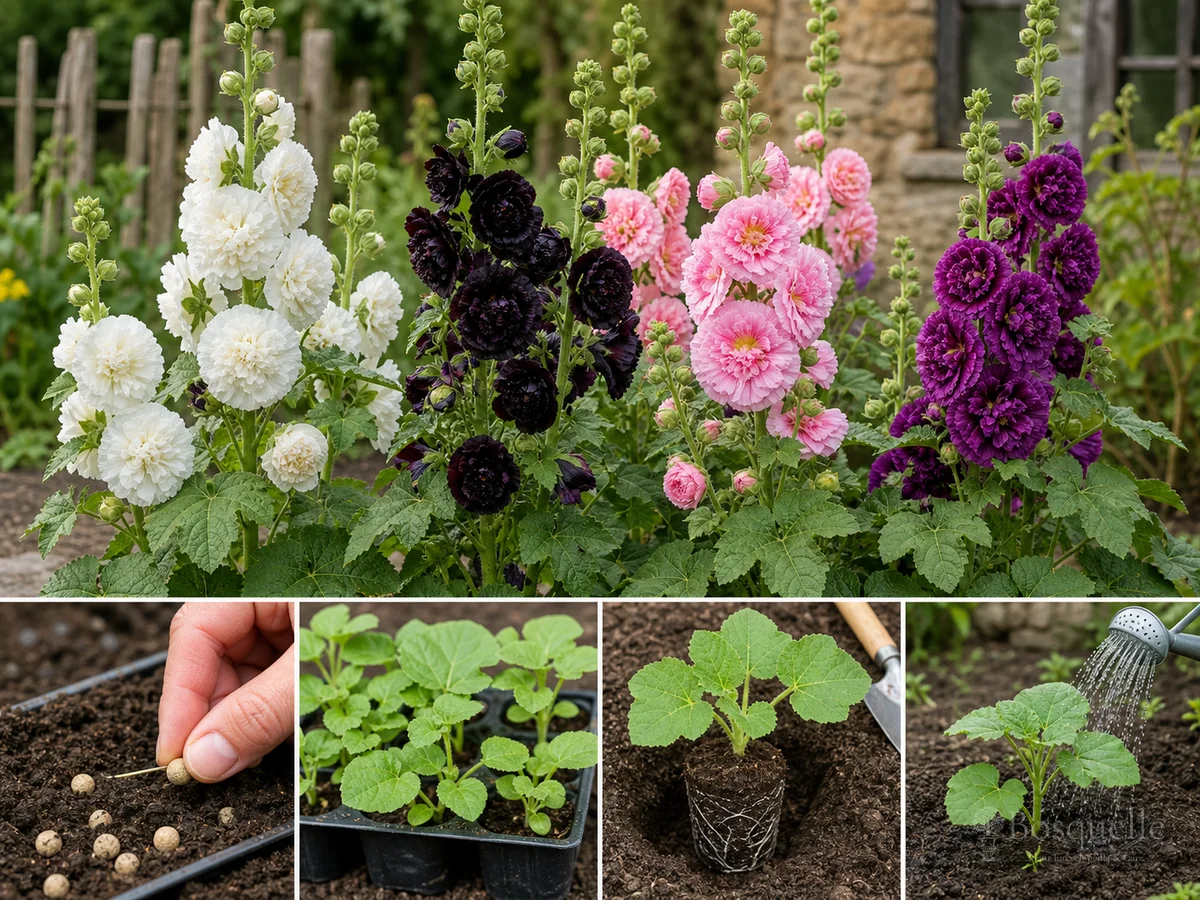
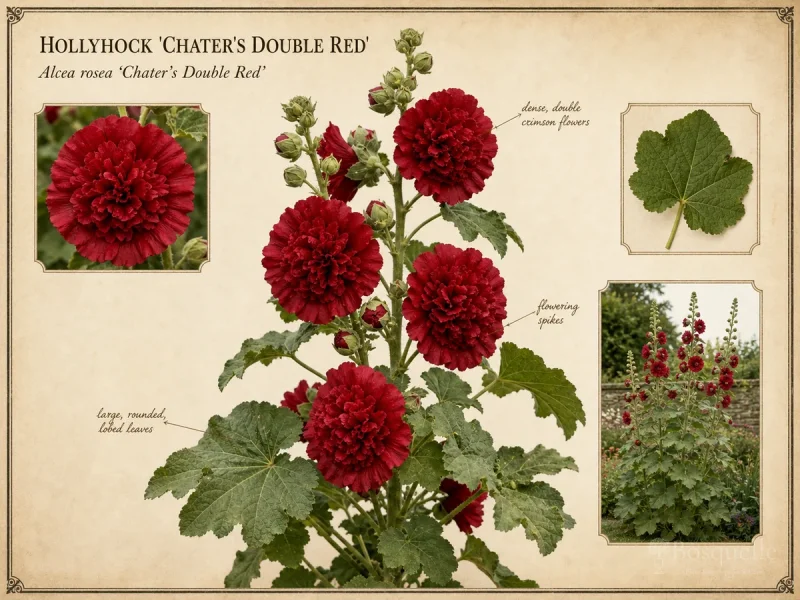
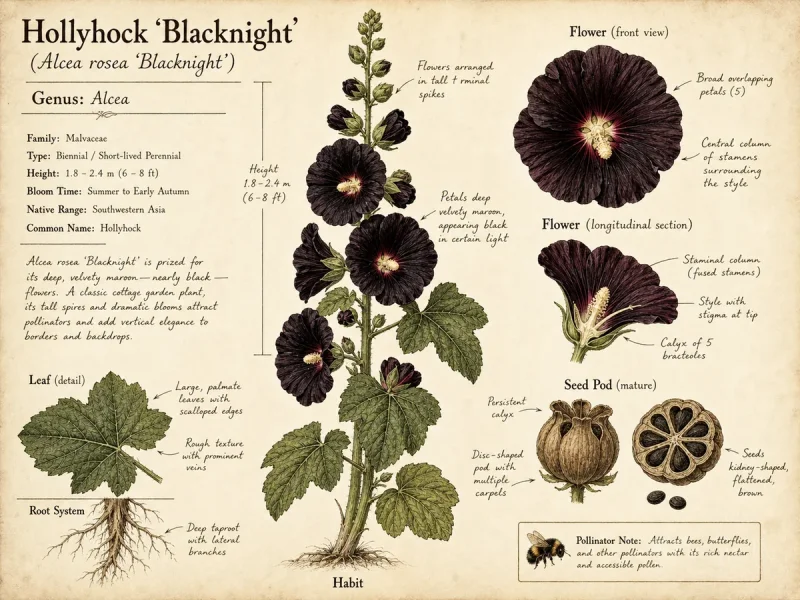
Most hollyhock seed builds a leafy rosette the first year and a spike the second. Chater's Double White and Blacknight are easy from seed. The usual failure is digging up a healthy rosette in August because it did not flower. Rust and staking stay on How to Grow Hollyhocks.
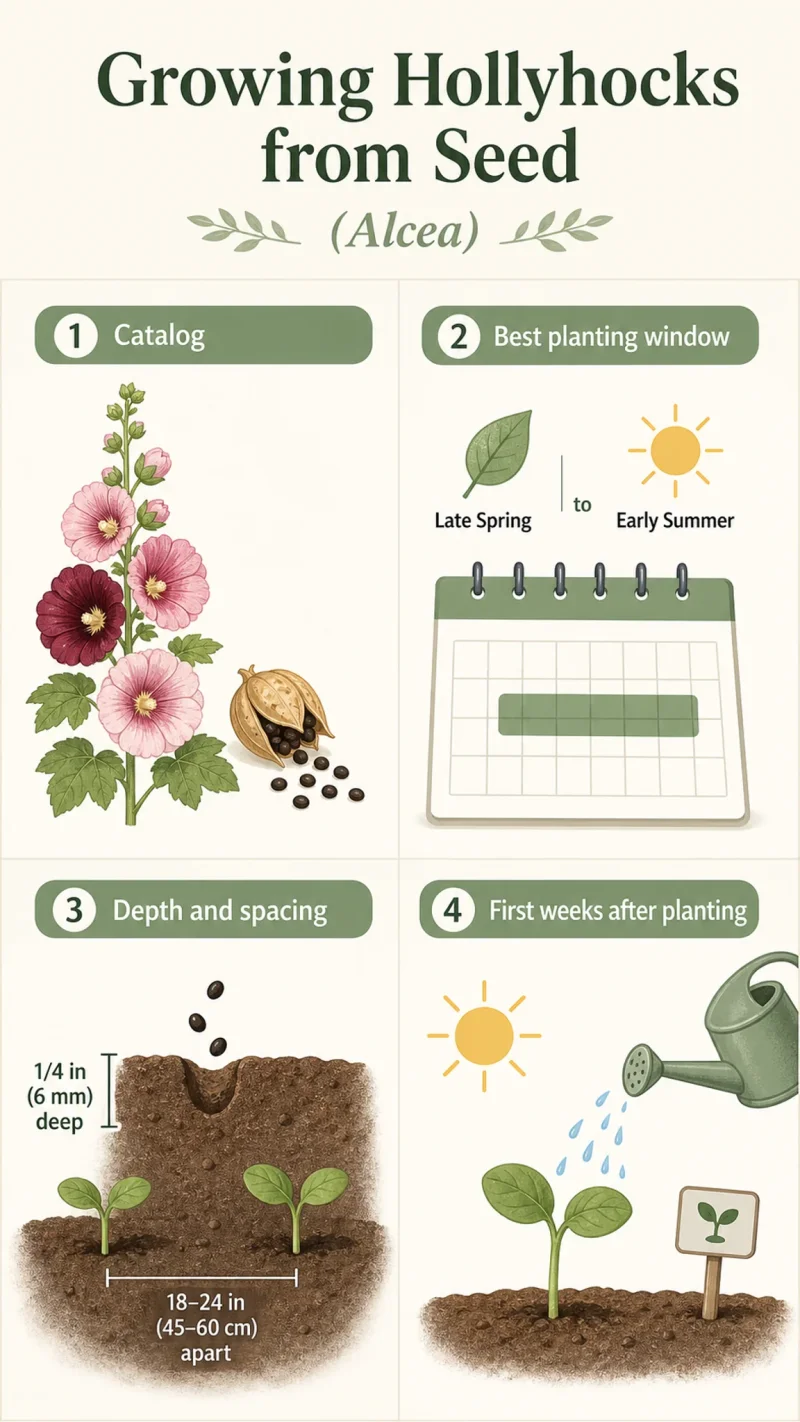
When to sow hollyhock seed
| Factor | Recommended | Avoid |
|---|---|---|
| Timing | Spring, or early fall about two months before hard frost | A midsummer windowsill that cooks seedlings |
| Depth | Press seed on the surface or cover very lightly (light helps) | Deep burial |
| Start | Direct sow, or deep cells (taproot hates a late move) | Bareroot pricking from a crowded flat |
| Site | Full sun, drain, space for air | A damp shade wall |
- Choose full sun and draining soil where the plant can stay. The taproot does not want a later move.
- Sow in spring after frost, or in early fall so a rosette sets before winter. RHS: indoor sow in spring at about 61–70°F; direct sow when the ground is workable.
- Press seed onto the surface or cover a dusting of mix. Keep evenly moist until germination (often 10–14 days).
- Thin to the strongest seedling. Space tall types about 18–24 inches in the bed; compact types can sit a little closer, still with air.
- Protect seedlings from slugs. Water the soil, not the leaves.
Year-one rosette vs first-year bloom
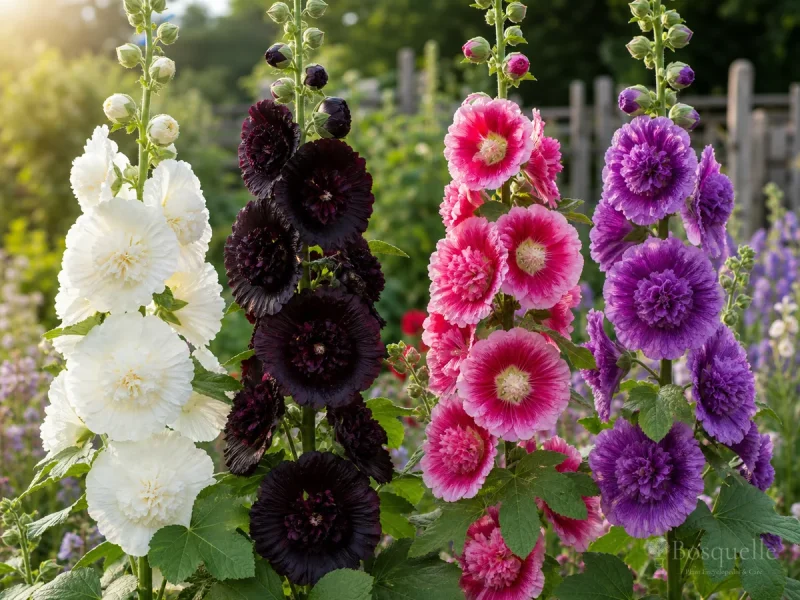
Classic seed often spends year one as leaves. That is the calendar working. Some compact packets such as Spring Celebrities Pink and Queeny Purple are sold for faster bloom. Believe the packet only when it says first-year flowering. Chater's Double White from ordinary seed usually wants the two-year story.
A late spring frost can nick a first spike. Protect new growth if that is your pattern. Bloom the second year is still the default plan.
Direct sow or start in pots
Direct sow where plants will live if you can protect seedlings. Cells work when you need a head start: two or three seeds in a deep 3-inch pot, thin to one, plant out when nights are settled (Fine Gardening often waits until early summer to delay rust on young leaves). Do not bury the crown.
- Do not save seed from a rusted plant if you can buy clean seed.
- Crowded seedlings planted in a tight fence row arrive already primed for rust.
- Stake in the bloom year as the spike rises — that job is on How to Grow Hollyhocks.
Named seed vs volunteers
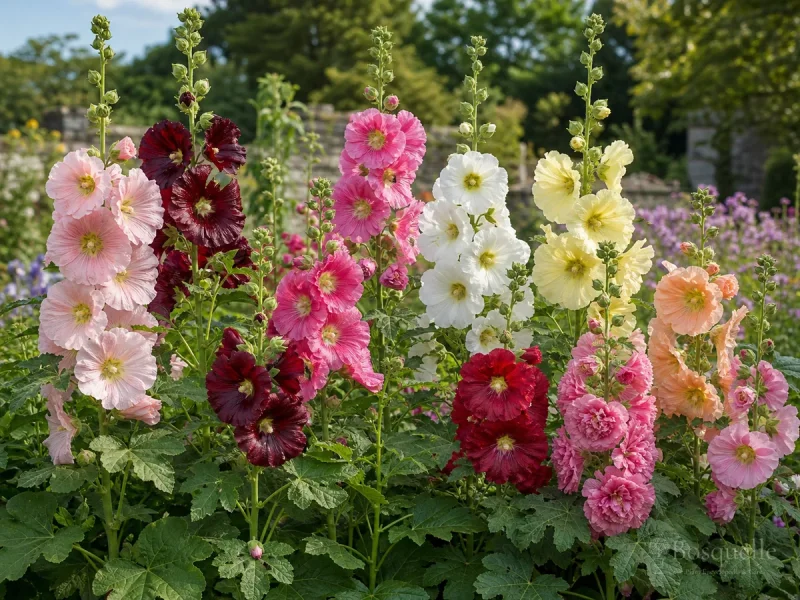
Leave some pods if you want seedlings. Open-pollinated volunteers from a mixed wall will not stay true to Halo Cerise eyes or Chater's Double White doubles. Treat them as cottage lottery. Buy named seed again when form and color matter. Collect pods when they brown; store cool and dry. Fresh seed germinates more evenly than a hot-shed envelope.
FAQ
When should you plant hollyhock seeds?
Spring, or early fall about two months before hard frost for a year-one rosette. Follow the packet if it promises first-year bloom.
Why didn’t my hollyhocks flower the first year?
Most seed builds a rosette year one and spikes year two. That is normal unless the packet promised first-year flowering.
Do hollyhock seeds need light to germinate?
Press them on the surface or cover very lightly. Do not bury them deep.
Can I start hollyhocks indoors?
Yes, in deep cells, in spring. Harden and plant out into warm, draining soil. They dislike a late taproot move.
Will volunteers match the parent?
Usually not on mixed walls. Named doubles and Halo eyes remix. Buy seed when you need the exact form.
Should I save seed from rusty plants?
Prefer clean, professional seed. Rust can travel with saved seed.
How far apart should I sow?
About 18–24 inches for tall types. Compact series a little closer, still with air so rust is slower.
Where is rust care?
On How to Grow Hollyhocks.
Related guides

Recommended plants



This note is part of Alcea Guides.
More notes on making another plant live in Propagating Guides.
Updated: Reviewed by Bosquelle Editors