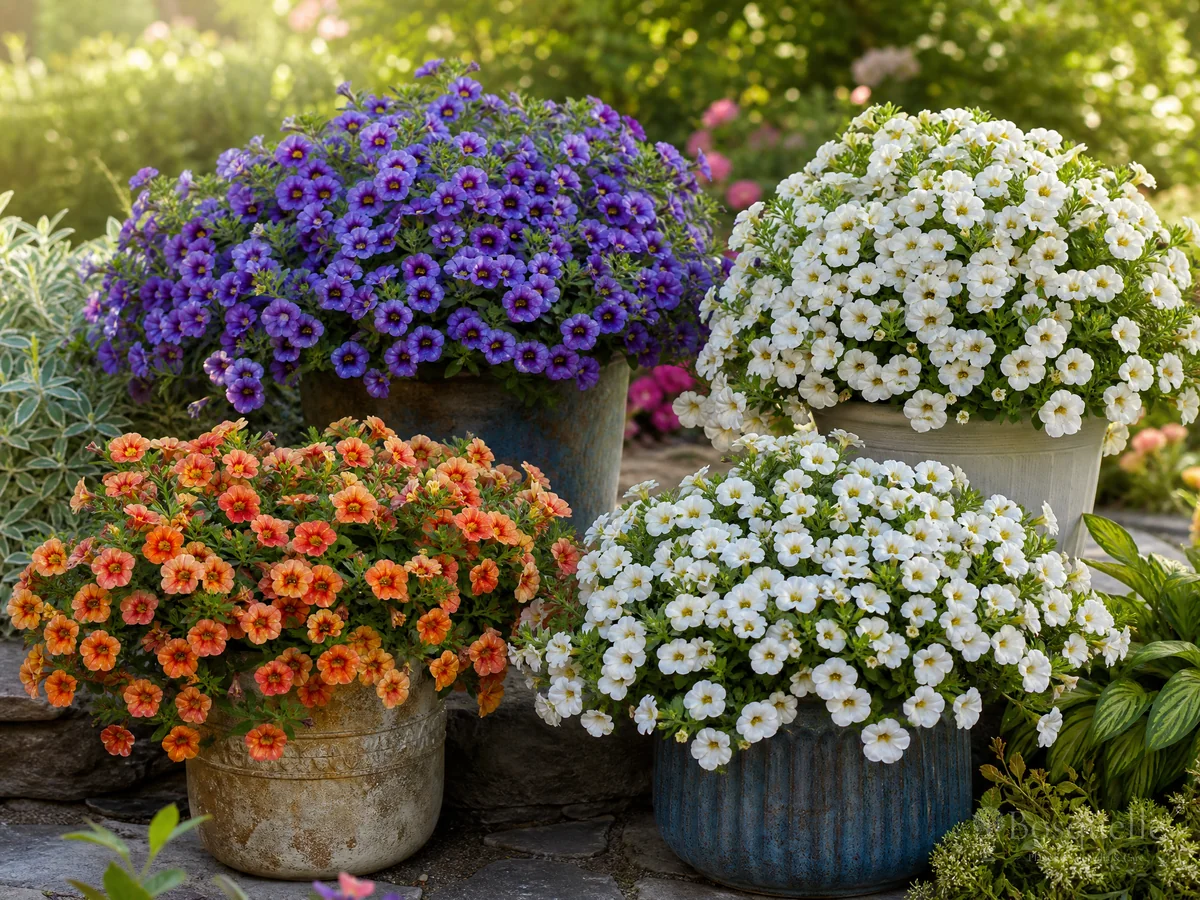

Full sun, draining mix, and acidic pH
| Factor | Recommended | Avoid |
|---|---|---|
| Light | Full sun, 6–8+ hours | A north wall or impatiens-shade swap |
| Mix | Open potting mix; pH about 5.0–6.5 | Heavy garden soil; alkaline mix that locks up iron |
| Water | Evenly moist; empty the saucer | Standing water around the crown |
| Feed | Dilute liquid every 1–2 weeks in peak bloom | Starving a hanging basket that is watered daily |
| Winter | Warm-season annual; compost at frost | Expecting a hardy perennial clump |
Plant after frost, when nights stay mild and soil is above about 55°F. Set plants at nursery depth in a free-draining mix with some organic matter — not packed garden soil. Compact Cabaret such as Cabaret Coral Kiss follows the same sun and drain rules as a Superbells trailer such as Superbells Blue.
If pH climbs much above 6.5, iron stays locked and new leaves yellow while veins stay green. Use a potting mix made for flowering annuals, not lime-heavy garden loam. Yellow tips after you already water and feed often point to pH, not another dose of nitrogen.
Water, feed, pinch — no deadheading
- Water when the top inch of mix is dry. Soak until it runs from the holes, then empty the saucer. Baskets in heat often need a daily check.
- Feed with a dilute liquid every 1–2 weeks in peak growth. Daily watering washes fertilizer out of a small pot. A high-potash bloom feed works; skip heavy nitrogen that makes soft, leafy shoots.
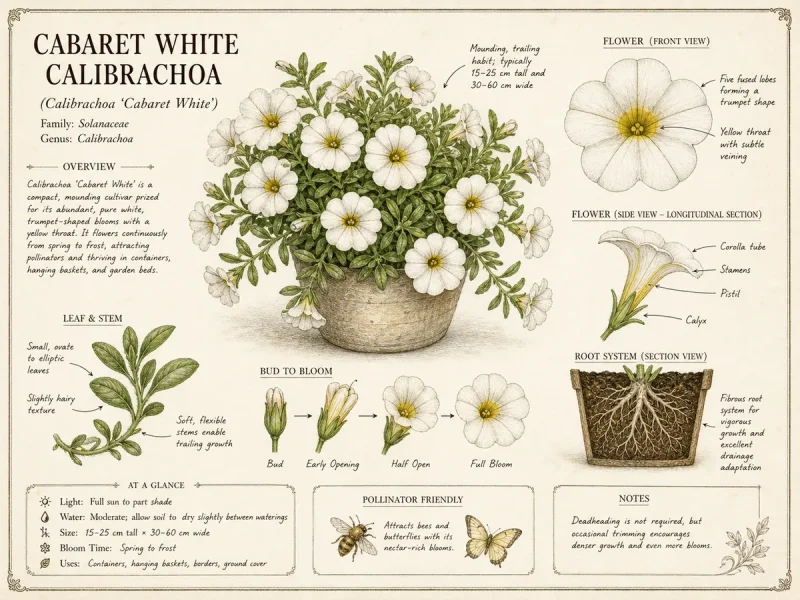
- Do not deadhead. Spent bells drop. Pinch growing tips once at planting, or if the plant looks sparse, so it branches.
- Wilt that recovers after a soak is dry-out. Soft, sour mix and yellow collapse is rot — drain harder, do not add more water.
- Sparse bloom is usually too little sun or a hungry, rootbound pot — not a missing deadhead ritual.
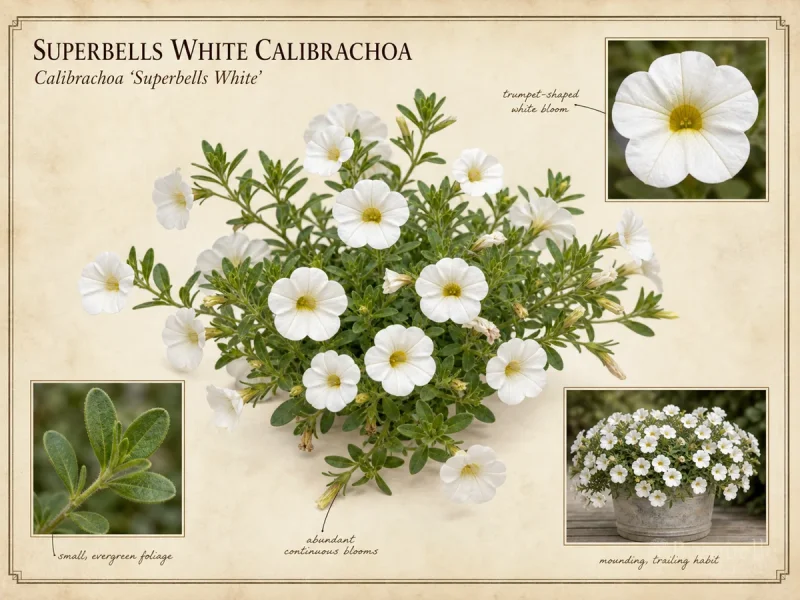
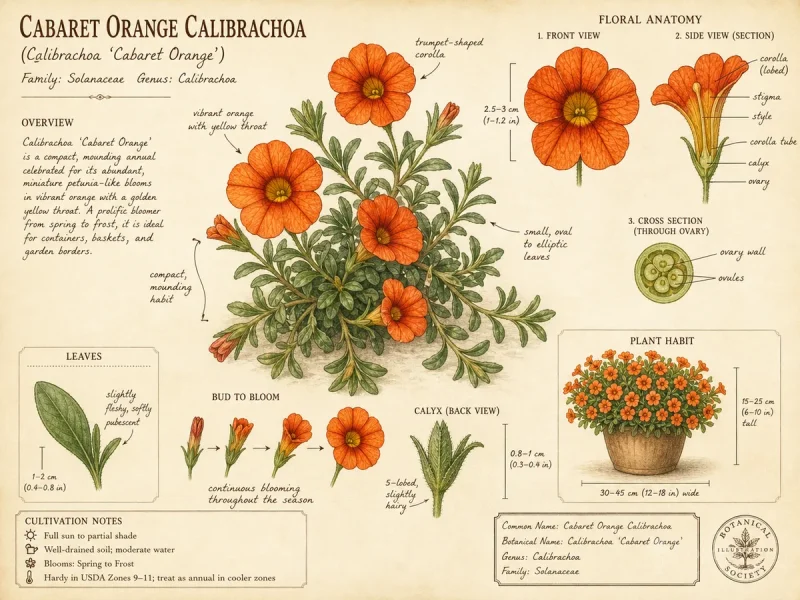
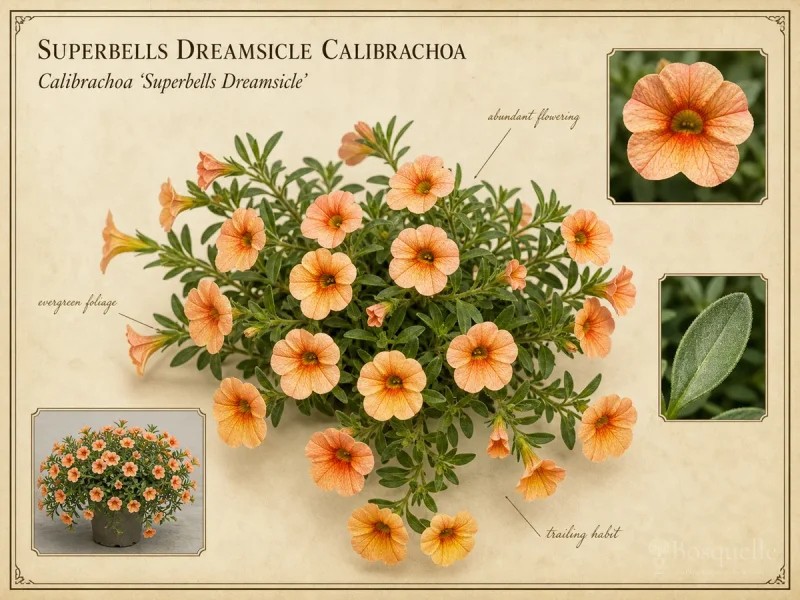
Trailers such as Superbells Dreamsicle dry faster than a quiet patio bowl. A compact Cabaret Orange in mixed company still wants the same empty-saucer rule. Sun tolerance is not drought tolerance.
Seasonal jobs
- Late spring: plant after frost; water to establish; start a light feed once growth is active.
- Summer: full sun, even moisture, steady feed; check hanging baskets on hot, windy days.
- Late summer: enjoy bloom while nights stay mild; pinch a leggy stem if the mat thins in the middle.
- First frost: compost spent plants. This is a tender annual in most U.S. gardens (often perennial only in USDA 9–11). Stem cuttings are on Propagating Calibrachoa — not a hardiness promise.
Patio pots vs in-ground
Pots and hanging baskets are the usual job. You control drainage and pH. In-ground planting can work as a sunny annual edge if the soil drains, but heavy beds stay wet around the crown and bloom thins. Do not treat a north bed like an impatiens swap.
Series habit — compact Cabaret vs long Superbells cascade — lives on Types of Calibrachoa. Partners live on Calibrachoa Companion Plants.
Full sun, draining mix, even water, and regular feed. Grow as annual patio color. Open Types, Containers, or Hanging Baskets for the next job.
FAQ
Is calibrachoa a perennial?
Treat it as a warm-season annual in most temperate gardens. Frost ends the show. It may overwinter only in frost-free belts — not as a hardy clump. Stem cuttings are on Propagating Calibrachoa.
Do calibrachoa need sun or shade?
Full sun — at least six to eight hours. Shade means fewer flowers. Series habit will not fix a north wall.
Do I need to deadhead?
No. Calibrachoa is self-cleaning: spent flowers drop. Pinch tips once if you want a bushier plant.
Why are the leaves turning yellow?
Often a wet mix, missed feed, or pH that is too high for iron uptake. Drain the pot, resume a light feed, and use an acidic potting mix — not lime-heavy garden soil.
Why did bloom stall?
Too little sun, irregular water, a hungry small pot, or roots packed tight. Restore sun and even moisture before you swap cultivars.
How often should I water?
When the top inch of mix is dry. Baskets in heat often need a daily check. Water until it runs from the holes, then empty the saucer.
Can I grow calibrachoa in the ground?
Yes as a sunny annual if the soil drains. Pots and baskets are still the usual job because you can keep pH and drainage under control.
Is million bells the same as petunia?
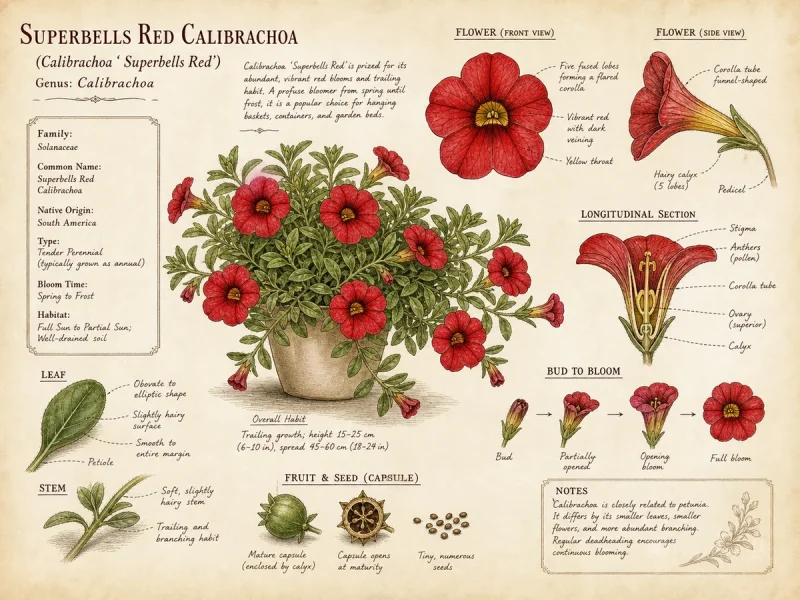
Related, not the same. Calibrachoa has smaller bells, is self-cleaning, and is fussier about pH and drainage. Do not copy a petunia deadhead calendar onto it.
Will they overwinter outdoors?
Not as hardy perennials in frost climates. Compost spent plants and replant next warm season.
Can I propagate calibrachoa from cuttings?
Yes. A flower-free stem with a node roots in water or moist mix. See Propagating Calibrachoa.
Where do pots and hanging baskets live?
Calibrachoa in Containers for mixed pots. Best Calibrachoa for Hanging Baskets for the trailer shortlist.
Related guides


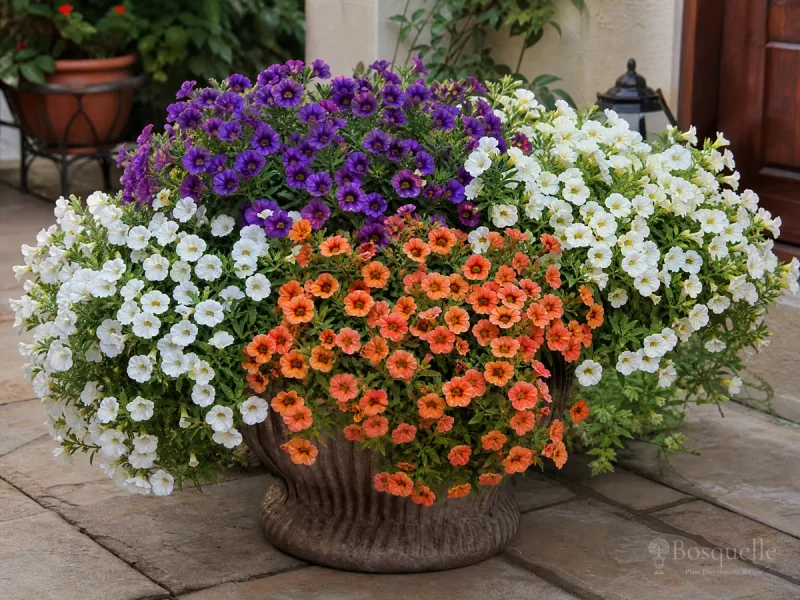


Recommended plants



This note is part of Calibrachoa Guides.
More first-season notes by plant are gathered in How to Grow Guides.
Updated: Reviewed by Bosquelle Editors