
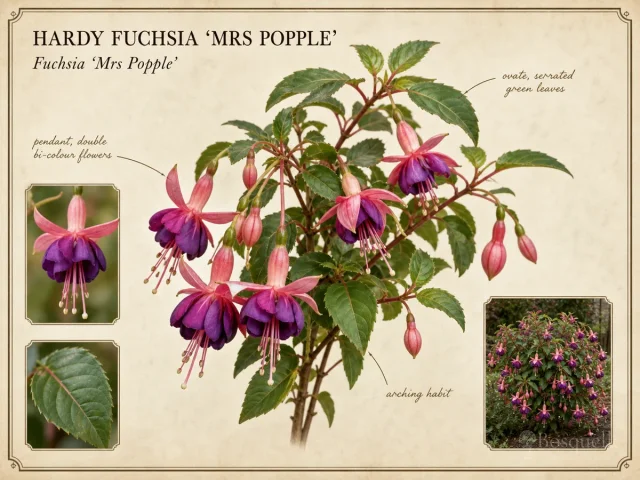
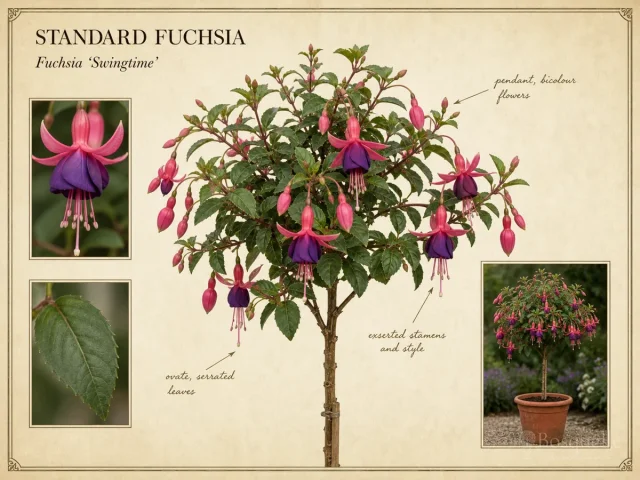
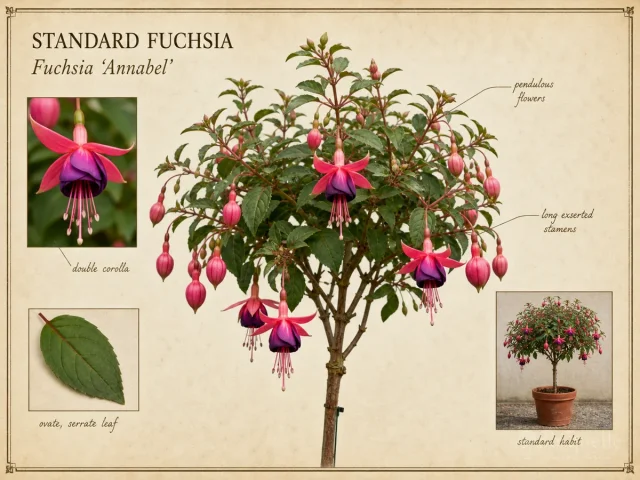
Decide hardy or tender before you plant. Hardy outdoor shrubs such as Mrs Popple can stay in the ground with a winter mulch. Tender bush types such as Annabel and trailing baskets such as Swingtime are summer display plants that need frost-free storage.
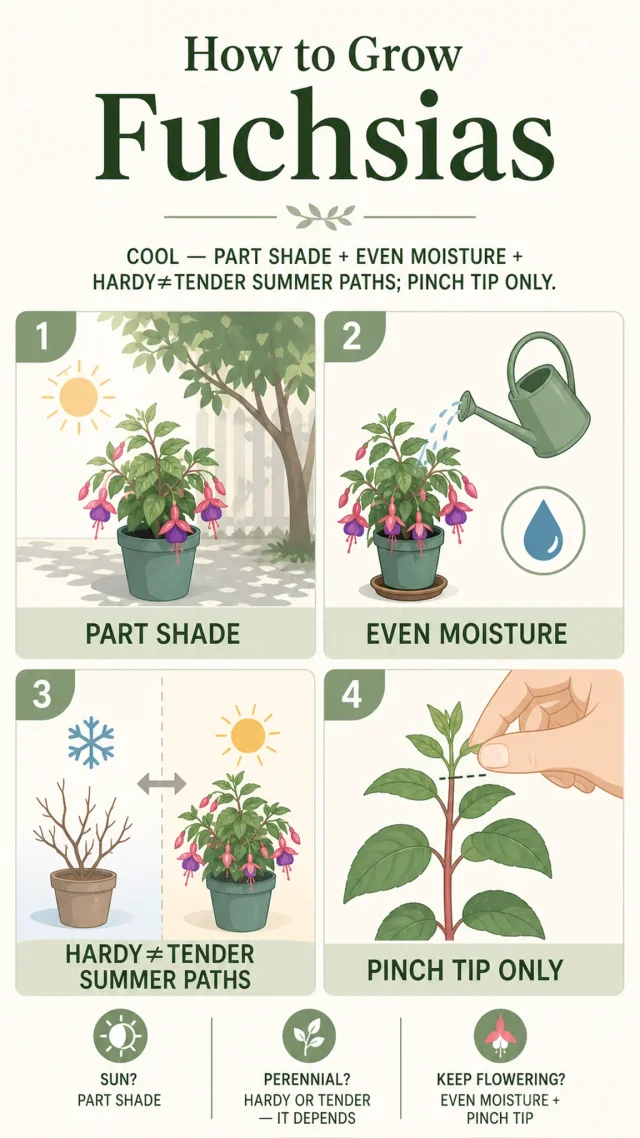
Give fuchsias morning sun or bright part shade, even moisture, and a rich, open mix. Hot afternoon beds crisp flowers in a week. Class browse, pots, and winter storage live on the child guides.
Decide hardy or tender before you plant
| Factor | Recommended | Avoid |
|---|---|---|
| Light | Morning sun or bright part shade | Hot afternoon beds that fade flowers |
| Soil | Fertile mix that stays evenly moist and still drains | Bone-dry hanging baskets; waterlogged bowls |
| Class | Hardy shrub vs tender bush vs trailing basket | One winter rule for every fuchsia |
| Water / feed | Even moisture; light regular feed in peak growth | Calendar watering while the mix is still wet |
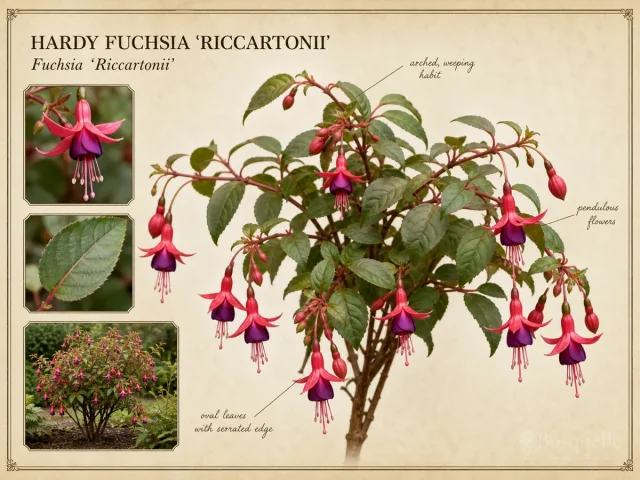
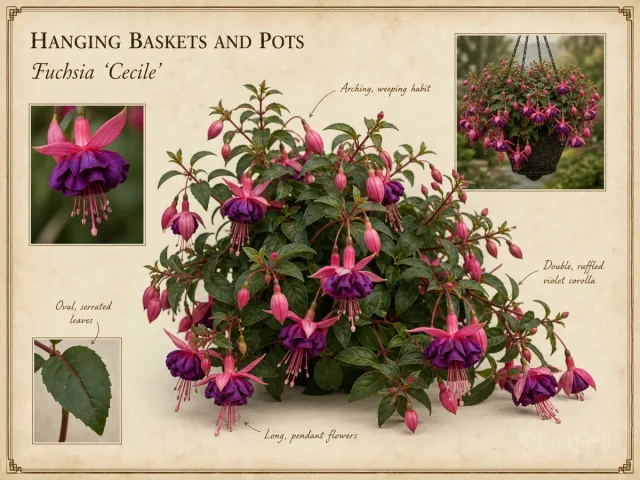
Hardy outdoor types such as Mrs Popple and Riccartonii live as border shrubs. Tender bush types such as Annabel are summer display. Trailing baskets such as Swingtime follow the same cool-moisture rule with more water on windy patios. Sort class on Types of Fuchsias.
Site, soil, and planting
Site fuchsias where mornings are bright and afternoons are filtered — east walls, light understory, or patio corners that miss the worst heat. Use a fertile mix with drainage. Waterlogged bowls rot roots as fast as dry baskets crisp foliage.
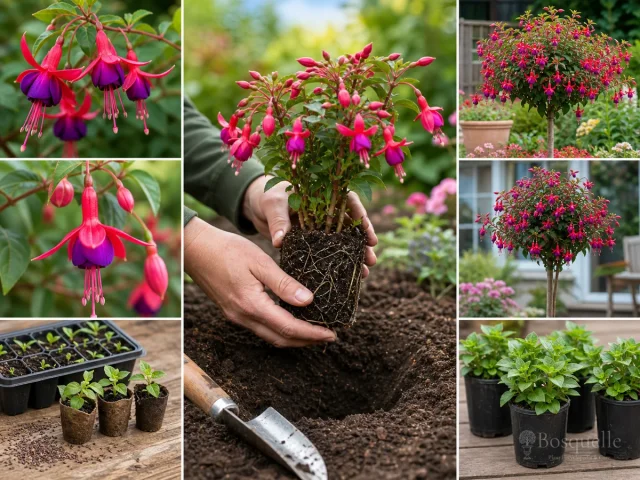
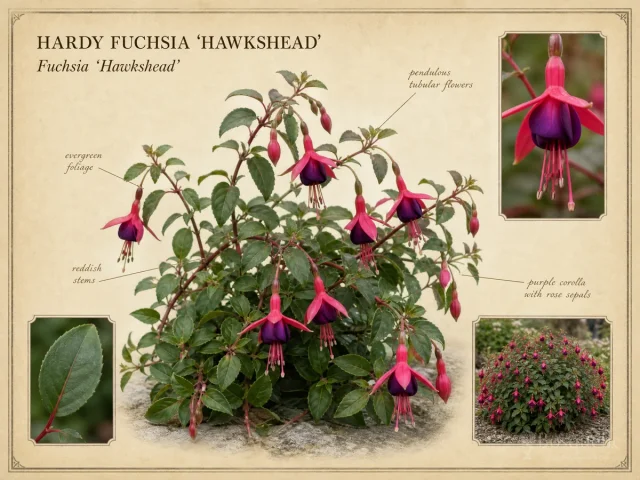
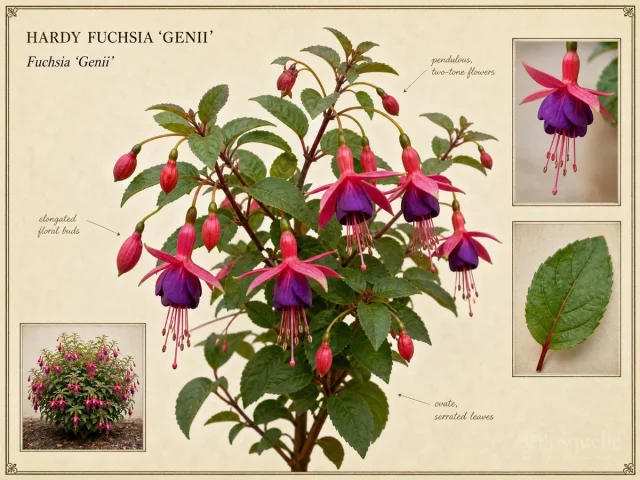
Plant at nursery depth after frost risk has passed for tender types, or in settled spring for hardy Hawkshead and Genii. Firm gently and water in once so the root ball contacts the mix.
If leaves scorch or flowers abort in a heat wave, move the pot into deeper shade and check moisture before blaming the cultivar.
- Choose morning sun or bright part shade; skip hot afternoon beds.
- Use a fertile mix that stays moist and still drains.
- Plant at nursery depth after frost risk (tender) or in spring (hardy).
- Firm gently and water in once so the root ball meets the mix.
Water, feed, pinch, and common failures
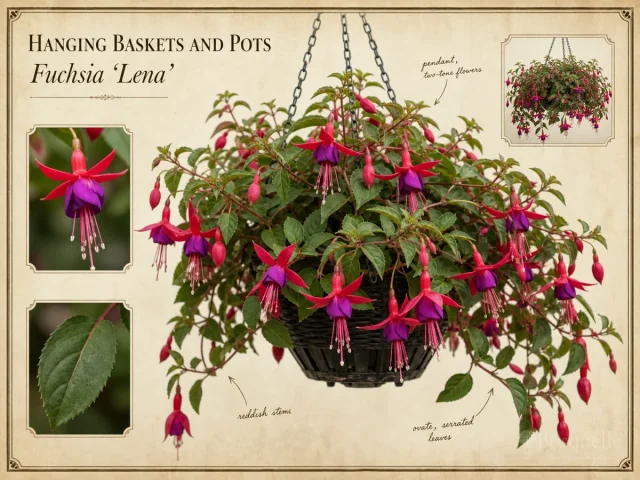
Keep the mix evenly moist. Trailing Lena and Tom Thumb in small baskets dry fast in wind — check daily in heat. Feed a diluted liquid fertilizer every 1–2 weeks in peak season.
Pinch young shoots once or twice for a bushier frame on tender types; go easy on woody hardy shrubs once they are established.
Wilting at midday that recovers overnight is often heat, not thirst alone — add afternoon shade before you overfeed. Yellow leaves usually mean irregular water or a soggy mix. Sparse bloom is too much shade, dry roots, or a plant still recovering from cold nights.
How hardy and tender fuchsias differ in summer
This is not the Types catalog. It is how care differs once you know the class. Hardy outdoor types such as Mrs Popple and compact Tom Thumb stay as shrubs: keep them moist in summer, but do not treat them like disposable bedding.
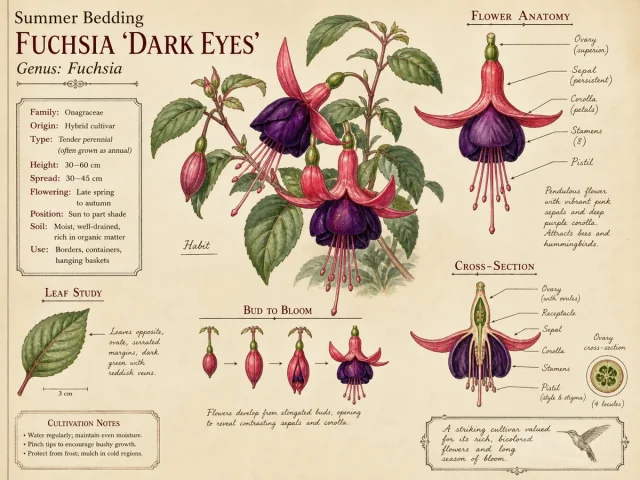
Tender bush types such as Annabel and Dark Eyes use the same cool moisture, then plan frost-free storage. Trailing baskets such as Swingtime and Lena need more frequent water on paving.
If the nursery label is unclear, open Types of Fuchsias before you invent a winter plan. Wrong class is the most expensive fuchsia mistake. Full winter steps live on Overwintering Fuchsias.
Seasonal rhythm
Late spring: plant or set out after frost risk for tender and trailing types. Water to establish. Start light feed once growth is active.
Summer: protect from harsh afternoon sun. Keep moisture even. Pinch lightly if the frame looks sparse. Deadhead spent flowers and the small berry behind them so bloom continues.
Early fall: enjoy late color while nights stay mild. Watch forecasts for tender pots. Hardy shrubs stay in the ground; tender pots move under cover before a hard frost — steps on Overwintering Fuchsias.
Beds, pots, and partners
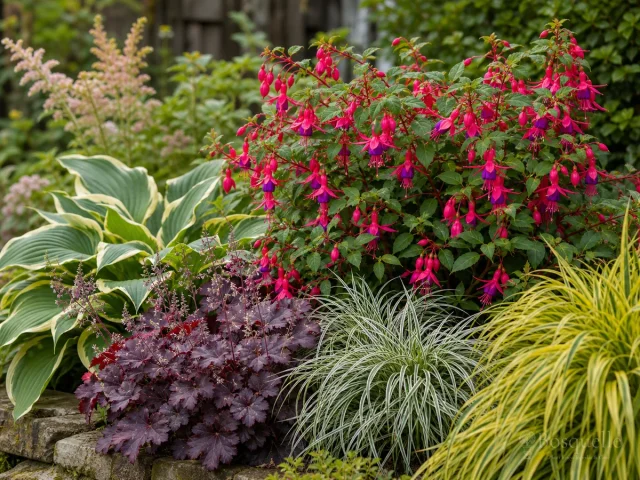
In beds, hardy types carry structure through seasons. Tender and trailing types often perform best as patio color. Full pot and basket setup is on Fuchsias in Containers. Moist part-shade partners live on Fuchsia Companion Plants.
This cluster has no separate prune URL. Pinch young growth here; cut hardy shrubs in spring after you confirm class. Whitefly and fuchsia gall mite show up in some regions — improve airflow and moisture first, then check local extension advice if symptoms persist.
Match class first, keep the mix cool and moist, pinch young growth, then open Types, Containers, Companions, or Overwintering for the job that is not summer method.
FAQ
Are all fuchsias hardy outdoors?
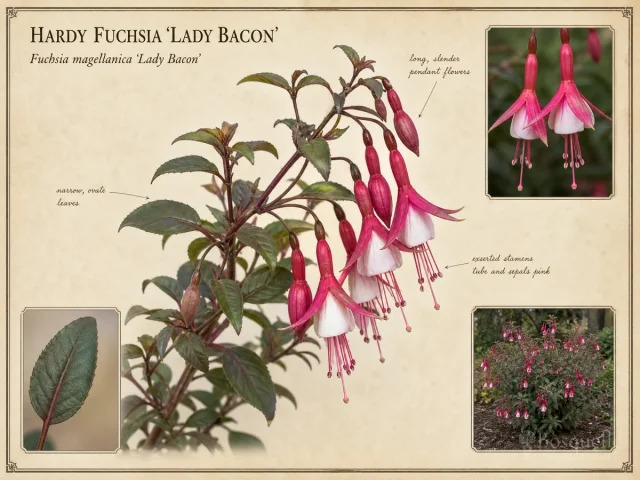
No. Hardy magellanica-type shrubs differ from tender bush and trailing bedding. Confirm class on Types of Fuchsias, then use Overwintering Fuchsias for winter storage.
Do fuchsias need sun or shade?
Part shade or morning sun with even moisture. Hot afternoon sun fades blooms and stresses pots.
Why did my hanging basket crisp so fast?
Wind plus heat dries baskets quickly. Water the mix daily in heat, add afternoon shade, and see Fuchsias in Containers for setup.
Do I need a separate prune guide?
Not in this cluster. Pinch young shoots for bushiness. Harder cuts on hardy shrubs wait until spring after you know the plant’s habit.
Is fuchsia a perennial or an annual?
Hardy magellanica types are perennial shrubs and may die back in a hard winter, then resprout. Most hanging-basket and patio types are frost-tender: treat them as annuals or store them frost-free.
How do I keep fuchsias flowering all summer?
Remove spent flowers and the small seed pod behind them. Keep baskets evenly moist in heat, and feed a high-potassium (bloom) liquid fertilizer every week or two in growth. Do not cut stems hard during bloom.
Related guides
Recommended plants
This note is part of Fuchsia Guides.
More first-season notes by plant are gathered in How to Grow Guides.
Updated: Reviewed by Bosquelle Editors